
Image to help understand the article
A kidnapping in Manila ends safely, but the broader story is about state capacity
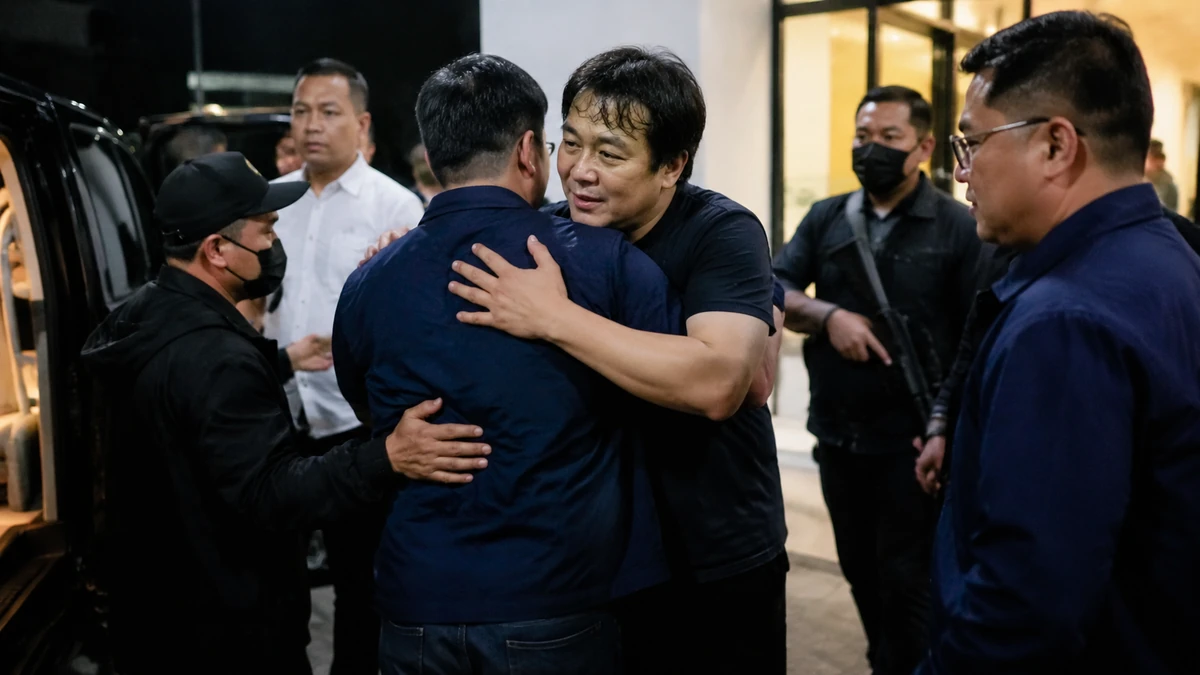
The safe release of a South Korean man who was kidnapped in Manila is, on its face, a straightforward piece of good news. South Korea’s Foreign Ministry said the man, a businessman in his 40s, was freed unharmed after five days in captivity in the Philippine capital and is in good health. The case began on May 16, when he was allegedly abducted by unidentified men believed to be locals, according to South Korean media reports, and ended with confirmation of his release on May 21.
But for readers in the United States, the significance of this episode goes well beyond one individual case. It offers a clear window into how governments protect their citizens abroad, how embassies function in a real crisis, and how international police cooperation works when time is short and information is limited. In that sense, this is less a one-day crime story than a measure of institutional readiness.
Americans are used to thinking of diplomacy in terms of summits, military alliances and trade disputes. Yet for ordinary travelers, expatriates, students and businesspeople, diplomacy often becomes real in far more practical ways: a lost passport, a medical emergency, a natural disaster — or, in the worst cases, a violent crime. When a citizen is abducted overseas, the public sees whether a government can do more than issue statements. It sees whether officials can build trust with local authorities, gather reliable information and help drive a response without jeopardizing the victim’s safety.
That is what makes this case notable. South Korean officials did not present the release as a dramatic rescue narrative, and they have disclosed few operational details while the Philippine investigation continues. That caution is itself meaningful. In kidnapping cases, governments often say less in public precisely because loose details can complicate negotiations, tip off suspects or endanger the victim. The message from Seoul was restrained but unmistakable: the victim is safe, the channels of cooperation worked, and the investigation is not over.
For a country like South Korea — a U.S. ally with a globally mobile population, major corporate investments across Asia and a large number of citizens traveling or working overseas — that matters politically as well as diplomatically. Protecting nationals abroad is not a side issue. It is one of the most concrete ways a government proves its competence.
How the response worked: Embassy leadership, local police power and a Korean liaison system
According to the South Korean Foreign Ministry, the Korean Embassy in the Philippines received the report of the kidnapping on May 17 and quickly established an on-site task force led by the ambassador. That matters because it suggests the case was treated not as a routine consular matter but as an emergency requiring centralized coordination. In bureaucratic terms, that is a significant escalation. In human terms, it means the embassy switched from handling paperwork and citizen assistance to operating as a crisis-management hub.
The structure described by South Korean officials and local reporting is also worth attention. The Philippine National Police took the lead on the investigation because the crime occurred on Philippine soil and local authorities hold the primary law-enforcement power. Supporting that effort were the Korean Embassy, South Korea’s Foreign Ministry in Seoul and what is known as the “Korean Desk,” a liaison mechanism involving Korean police personnel stationed in the Philippines to assist with cases involving Korean nationals.
That kind of arrangement may sound technical, but it is often decisive in cross-border crises. Language barriers, differences in legal systems and the simple problem of incomplete information can slow everything down. A victim’s family may know facts that local police do not. Local police may have operational intelligence that diplomats cannot access directly. A liaison structure helps bridge those gaps. It cannot replace local sovereignty or local investigators, but it can make sure key information moves faster between the right people.
South Korea’s handling of the case reflects a broader reality of overseas citizen protection: embassies do not solve kidnappings on their own, and foreign ministries do not command another country’s police. What they can do is organize, pressure, coordinate and support. They identify the victim, stay in touch with family members, communicate with investigators, share contextual information and help keep multiple institutions aligned around a single objective. In a kidnapping case, where every delay can raise the danger, that connective role is not secondary — it is the response.
The emphasis from Seoul that the man was released safely and remains in good health is also more than a reassuring phrase. It indicates that officials were able to confirm not only the end of the abduction but also the victim’s immediate physical condition. In many overseas cases, the first public milestone is not justice but stabilization: ensuring the person is alive, medically secure and out of immediate danger. Only after that comes the longer legal process of identifying suspects, establishing motive and pursuing prosecution.
Why this matters in South Korea: protecting citizens abroad has become a core diplomatic measure
In South Korea, this case lands in a particularly sensitive space. The country has a large and highly mobile population that travels widely for tourism, education, missionary work and business. Korean companies operate across Southeast Asia, and private citizens often move through the region in ways that are far less visible than headline-grabbing trade deals or presidential visits. For many South Koreans, then, foreign policy is judged not only by how a president performs at a summit but by whether the government can respond when an ordinary citizen faces danger overseas.
That is why the embassy’s rapid formation of a field task force and the involvement of multiple Korean institutions carry symbolic weight. They show that the machinery for overseas protection is expected to activate quickly and visibly. In South Korea, where public expectations for government responsiveness can be intense, failures in overseas protection can become major political issues. Successes, by contrast, are often quiet and procedural — exactly the kind of outcome seen here.
The reference to the Korean Desk is especially important in this context. South Korea has built practical law-enforcement partnerships in places where sizable Korean communities live or travel. These liaison arrangements are not glamorous, but they reflect a modern view of state responsibility: if citizens move globally, the institutions that protect them must build global routines, too. That means police-to-police cooperation, embassy readiness and a foreign ministry able to coordinate across agencies rather than operate in isolation.
There is also a deeper diplomatic lesson. International cooperation is often discussed in abstract terms — strategic partnership, bilateral ties, regional stability. Yet those phrases are tested in very concrete moments. A kidnapping case is one of them. If a partner government responds seriously, shares information and works the problem, the relationship acquires real-world meaning beyond communiques and ceremony. In that sense, the South Korea-Philippines relationship was not merely on display here; it was operationalized.
At the same time, South Korean officials have been careful not to overstate what is known. They have said the local investigation is continuing and have not publicly filled in details about the abductors, motive or precise circumstances of the release. That restraint is important. In high-stress overseas cases, speculation can spread quickly, especially online. Official caution protects the victim’s privacy and avoids prejudging an active investigation. For news consumers accustomed to instant narrative closure, that can feel unsatisfying. But it is often the more responsible posture.
What this means for the United States: a reminder that consular protection is part of national power
For Americans, the most relevant lesson may be how familiar this challenge actually is. The United States also has millions of citizens living, traveling and working overseas, and it maintains an enormous diplomatic and consular network designed in part to protect them. When Americans run into trouble abroad — from political unrest to violent crime to wrongful detention — the strength of that system becomes visible in much the same way.
There are obvious differences in scale. The U.S. has more embassies, more resources and a more expansive global security footprint than South Korea. But the basic constraints are similar. If an American is kidnapped in another country, U.S. diplomats cannot simply take over a local police investigation. They must work through host-country authorities, gather information carefully, protect the victim and coordinate among agencies with different roles. That can include the State Department, the embassy, the FBI, regional security officers and local law enforcement, depending on the case.
In that sense, the Manila case is a useful reminder that consular protection is not a soft, ceremonial function. It is an essential part of national power. Americans often associate power with aircraft carriers, sanctions or intelligence agencies. Yet for citizens abroad, the ability of an embassy to answer the phone, elevate a case, mobilize local contacts and maintain pressure can be just as consequential. The public rarely notices that machinery when it works. It notices immediately when it does not.
This also matters because the U.S. relationship with both South Korea and the Philippines is extensive. South Korea is one of America’s closest allies in Asia, deeply tied to the United States through security commitments, trade, technology investment and cultural exchange. The Philippines, meanwhile, is a treaty ally of the United States and a central player in Washington’s Indo-Pacific strategy. When South Korea and the Philippines demonstrate effective law-enforcement and diplomatic cooperation in a crisis, U.S. officials and analysts have reason to pay attention. It speaks to the resilience of institutions in a region where American interests are substantial.
There is a commercial and social angle, too. American companies operate throughout Southeast Asia, and U.S. citizens travel heavily across the region for work and leisure. Korean firms do the same. As global business networks become denser, crises involving expatriates and traveling executives are not isolated events; they are part of the risk environment of international commerce. For American readers, the story resonates not because the victim was Korean rather than American, but because the underlying vulnerability is shared.
There is also a cultural parallel with how Americans understand government accountability. In the United States, cases involving detained or harmed citizens abroad often trigger sharp questions: Did officials act fast enough? Was the embassy responsive? Did agencies coordinate effectively? South Koreans ask many of the same questions. That common expectation — that the state has a duty to protect its citizens beyond its borders — is one reason this case travels beyond Korean domestic news.
The Philippines context: why cooperation matters more than easy assumptions
Any kidnapping in Manila, or in any major city, risks feeding broad stereotypes. That should be resisted. The available facts here are limited, and the Philippine investigation is ongoing. What can be said responsibly is that the case underscores the need for trusted bilateral channels when crimes involve foreigners and unfold under intense time pressure.
The Philippines has long been a destination for Korean tourists, retirees, students, missionaries and businesspeople. That sustained people-to-people relationship means both countries have had practical reasons to build mechanisms of cooperation over time. It also means incidents involving Korean nationals can quickly become diplomatically sensitive, even when they are handled through ordinary criminal-justice procedures.
For Philippine authorities, successful cooperation in a case like this carries its own importance. It demonstrates responsiveness to a partner country and signals that foreign victims will not be ignored. For South Korea, working through Philippine institutions rather than around them is equally important. It acknowledges legal reality while preserving the trust needed to solve urgent problems. Neither side can do much alone. The host country has the investigators, territorial jurisdiction and on-the-ground intelligence. The victim’s home country has family contact, background information and a strong incentive to keep political attention on the case. The outcome depends on how well those pieces fit together.
That is one reason the story should be read as a case study in institutional cooperation, not simply as a crime blotter item. The central question is not only who committed the kidnapping. It is also whether the interlocking systems of embassy response, police liaison and ministry coordination can function under pressure. In this case, the evidence so far suggests they did.
Beyond one case: what to watch next in an era of globally mobile citizens
The most important question now is not whether this case generated a moment of relief. It clearly did. The more consequential question is what it reveals about the future of citizen protection in an age of constant international movement. South Korea, like the United States, is dealing with a world in which business travel, short-term relocation and cross-border communities have become normal. That reality changes what the public expects from diplomacy.
Embassies are no longer judged only by how well they host dignitaries or report on political developments. They are judged by whether they can manage emergencies that feel intensely personal and immediate. A kidnapping, an evacuation, a disaster response or a major criminal case involving a citizen abroad can reshape public trust much faster than any policy paper. The same is true in the United States. Americans may not know the details of consular law, but they understand very quickly whether their government appears present or absent when people are in danger.
Another lesson concerns communication. Governments handling abduction cases face a difficult balance: provide enough information to reassure the public without revealing details that could interfere with the investigation or endanger the victim. In the social media era, that balance is even harder. Silence can be misread as inaction; too much disclosure can become operationally reckless. South Korea’s public messaging in this case was restrained, focused on the victim’s release and health, and careful not to speculate on unresolved details. That approach may frustrate audiences seeking a complete narrative, but it reflects the logic of crisis management rather than public relations.
What to watch next is relatively clear. First, Philippine authorities will continue investigating the abductors and the circumstances of the crime. Second, South Korean officials will likely keep their focus on the victim’s recovery and privacy while maintaining contact with Philippine counterparts. Third, analysts of regional diplomacy will read the case as another example of how middle-power states such as South Korea increasingly rely on dense operational partnerships — not just high-level diplomacy — to protect their interests and their people abroad.
For Americans, the broader takeaway is straightforward. In a globalized world, the real measure of an alliance or a diplomatic network is often not found in the language of strategy documents. It is found in the moments when an individual citizen is in danger and institutions either perform or fail. A Korean businessman’s safe release in Manila is, above all, a human relief story. But it is also a reminder that diplomacy is not only about geopolitical theater. Sometimes it is about whether a government can help bring one person home alive.


0 Comments