
Image to help understand the article
A suicide note that became a political manifesto
In late 1905, as imperial Japan tightened its control over Korea, a senior Korean statesman named Min Yeong-hwan made a choice that has kept his name alive in the country’s modern memory. After repeatedly urging the Korean court to reject the Eulsa Treaty — the agreement that stripped Korea of its diplomatic sovereignty and made it a Japanese protectorate — Min took his own life and left behind an appeal to the nation. It was not merely a farewell. It was a political statement, a call for education, unity and the recovery of independence.
For many Americans, Min is not a household name in the way figures from other anti-colonial struggles might be. But his life opens a revealing window into a moment that shaped modern Korea and, eventually, the U.S.-Korea relationship itself. Long before South Korea became a treaty ally of the United States, a global technology powerhouse and one of the world’s most influential cultural exporters, Korean officials were already looking abroad for models of reform and, in moments of crisis, for foreign support. Min was one of them.
His story also complicates any simplistic picture of Korea’s late-19th-century elite. He was born in 1861 into a powerful clan tied by marriage to the royal family in the waning years of the Joseon Dynasty, Korea’s last long-ruling kingdom before the proclamation of the Korean Empire in 1897. In modern American terms, Min was born into something close to a political dynasty — the sort of family network that gave him access, advancement and influence from a young age. Yet the same official who benefited from the old order eventually came to argue that Korea needed not just new weapons or imported technology, but systemic reform and broader rights for its people.
That arc — from insider to reform-minded critic of a failing system — is one reason Min still matters. His final act is often remembered as an expression of patriotic sacrifice. But if that is all we see, we miss the deeper significance. His life charts Korea’s painful transition from a court-centered state trying to survive among empires to a nation forced to confront the price of delay, division and foreign coercion.
Born to privilege, tested by violence
Min rose quickly through the bureaucracy after passing the state civil service examination in 1878, an achievement that in premodern Korea functioned much like entry into an elite governing class. He moved through important posts with unusual speed, helped by family status and proximity to the throne. That kind of ascent was common in monarchic systems where kinship and office were tightly intertwined.
But privilege did not insulate him from the violence consuming Korea in the late 19th century. In 1882, during the Imo Military Mutiny, his biological father was killed. The uprising was one of several internal upheavals that exposed how fragile the Korean state had become under pressure from domestic factional conflict and outside powers, especially China, Japan and Russia. Min stepped away from office to mourn his father, confronting firsthand a reality that would define his generation of officials: politics in Korea was no longer a matter of palace intrigue alone. It had become a struggle in which family, office and national survival could not be separated.
When he returned to government in 1886, he built an unusually broad administrative résumé. He served in posts handling royal communications, personnel, rites and education, judicial affairs, the administration of Seoul and internal governance. That experience matters because it helps explain why Min later approached reform as more than a slogan. He had seen the machinery of state from the inside. He understood that a country facing coordinated imperial pressure could not survive with piecemeal change.
In the American context, it may help to think of Min not as a single-issue nationalist but as a senior establishment official who gradually concluded that his country’s institutions were not equipped for the geopolitical age it had entered. His trajectory resembles that of reformers in other threatened states who came to believe that sovereignty required administrative modernization, diplomatic agility and political legitimacy at home.
Travel abroad changed how he saw Korea’s future
One of the turning points in Min’s life came through overseas travel. In 1895 he was appointed minister to the United States, though he never assumed the post after the assassination of Queen Min, better known internationally as Empress Myeongseong, in what Koreans call the Eulmi Incident. The killing, carried out amid intensifying Japanese interference, shocked the Korean court and underscored how dangerous the regional power struggle had become.
The next year, Min traveled as a special envoy to the coronation of Tsar Nicholas II of Russia. On the way, he passed through Japan, the United States and Britain, encountering Western society and institutions directly. In 1897 he traveled again as an envoy to six European countries: Britain, Germany, France, Russia, Italy and Austria-Hungary. For a Korean official of his era, this was no small matter. These trips offered not just ceremonial exposure but comparative political education.
To American readers, that point is crucial. Korea’s late-19th-century reform debates were not simply about whether to “open” to the West in a vague sense. They were arguments over what, exactly, should be borrowed and how far the transformation should go. Some officials wanted technical fixes, such as military improvements, while preserving the old political order. Min came to believe that borrowing Western methods without changing governance itself would not be enough. According to the historical account summarized here, he urged King Gojong to reform political institutions and expand the rights of the people, not merely import foreign tools.
That distinction is strikingly modern. Countries under pressure often discover that modernization is not a shopping list. Railroads, rifles and diplomatic protocol do not by themselves create national resilience. Min’s exposure to foreign systems appears to have convinced him that state strength depended on institutions and civic capacity as much as hardware. That view placed him at odds with a monarchy still inclined toward centralized royal authority.
He supported the Independence Club, a reformist organization that advocated modernization and stronger public participation. His stance also alienated conservative elements, including people within the same broader Min clan network that had helped propel his rise. In other words, the man often associated with aristocratic privilege had begun pressing for changes that threatened entrenched interests. That tension helps explain why his career included repeated dismissals and returns to office. He remained central to power, but never fully secure within it.
The Eulsa Treaty was more than a diplomatic document
The episode that turned Min into a symbol came in November 1905, when Japan imposed the Eulsa Treaty on Korea. In Korean historical memory, the agreement is often described not simply as a treaty but as a coerced pact, one signed under duress and without legitimate national consent. It effectively took away Korea’s diplomatic sovereignty, placing foreign affairs under Japanese control and accelerating the country’s path toward full annexation in 1910.
For American audiences, it may be useful to compare the Eulsa Treaty not to an ordinary bilateral agreement but to the kind of imposed arrangement that marks the collapse of meaningful self-rule. The issue was not a bad bargain at the negotiating table. It was whether Korea still had the power to decide its own fate at all.
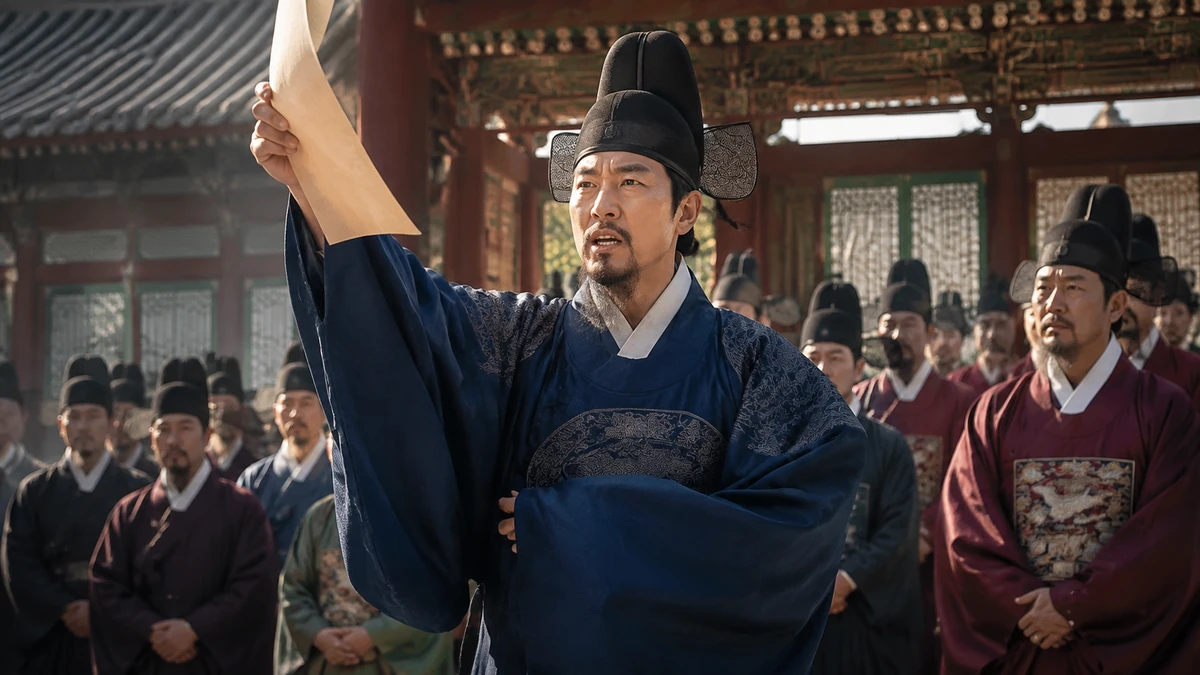
Min recognized that point immediately. He repeatedly submitted memorials — formal written appeals to the monarch — denouncing the agreement alongside other officials such as Jo Byeong-se. Yet even a high-ranking minister operating through official channels could not reverse the outcome. Japanese military police suppressed resistance. The failure of those appeals exposed the brutal truth of the moment: Korea still had a court, offices and titles, but its capacity to act as a sovereign state was rapidly being hollowed out.
Min’s death on Nov. 30, 1905, came after those failed efforts. In his final statement to “the 20 million compatriots” of the Korean Empire, he lamented the humiliation of the nation and urged his countrymen not to give in to despair. He called for learning, unity, cooperation, freedom and the restoration of independence. Those themes would resonate through later Korean nationalist movements. His message did not stop at grief. It assigned responsibility to the living.
That is part of why Min’s death endures in Korean public memory as more than personal tragedy. It helped define a moral vocabulary of resistance: that national survival required sacrifice, education and collective resolve. In a country later shaped by colonial rule, liberation, war, authoritarianism and democratization, that vocabulary has had a long afterlife.
Why this matters in the United States
For Americans, Min’s story matters not only because it belongs to Korean history, but because it intersects with an uncomfortable chapter in America’s own role in East Asia. The summary of this episode notes that Min was involved in efforts to use U.S. channels in 1904 and 1905, including a mission linked to Syngman Rhee, the future first president of South Korea, to reach President Theodore Roosevelt’s administration. Rhee met Secretary of State John Hay and later reported back, though no decisive U.S. intervention followed.
That detail is small in scale but large in implication. It shows that Korean officials and activists were already looking to the United States as a possible diplomatic counterweight at the very moment Korea’s sovereignty was collapsing. It also highlights a hard reality: American policymakers, like other great powers, weighed Korean appeals against their own strategic calculations. For U.S. readers accustomed to viewing the alliance with South Korea through the lens of shared democratic values and military cooperation, this earlier period is a reminder that the relationship did not begin as a simple story of principled support.
That history still shadows how Koreans interpret external guarantees and great-power politics. In modern South Korea, debates over alliance management, deterrence, diplomacy with neighboring powers and strategic autonomy all unfold against a deeper historical memory of moments when international order failed to protect Korean sovereignty. Min’s failed appeals belong to that memory.
There is also a cultural dimension Americans should recognize. Today, many Americans encounter Korea first through K-pop, Korean film, television dramas, beauty products or cuisine. The global success of Korean culture can create the impression of a confident middle power whose international place is secure. But stories like Min’s remind us how recent that confidence is, and how deeply modern Korean identity has been shaped by the experience of threatened independence and the struggle to modernize on its own terms.
That matters for American businesses and audiences, too. U.S. entertainment companies, streaming platforms and consumer brands that work with Korean partners are engaging a society whose global outlook was forged not only by economic success, but by generations of intense awareness about foreign influence, national dignity and institutional survival. Understanding that context does not require turning every cultural exchange into a political lesson. It does mean recognizing that Korean global engagement has roots in a much longer story about sovereignty and modernity.
From court reformer to national symbol
One of the most revealing aspects of Min’s life is that he cannot be neatly categorized. He was not a street activist or a revolutionary outsider. He was a man of the court, a senior official who held some of the state’s most important posts, including roles equivalent to high ministerial office. He was decorated, repeatedly restored to prominence and deeply embedded in the machinery of the Korean Empire.
Yet he also backed reformist causes, criticized Japanese encroachment and tried to steer Korea toward institutional change after seeing foreign systems firsthand. That combination is important because it shows how broad the crisis had become. By the early 20th century, alarm over Korea’s future was not limited to radicals. It extended into the heart of government.
In American historical terms, Min resembles those establishment figures who come to embody a nation’s late awakening to danger — people who had faith in the state, served it loyally, then discovered that loyalty required opposing the very habits and assumptions on which their careers had been built. That is often when political symbols become powerful: when they represent not just resistance, but recognition.
After his death, Min was honored posthumously, and his memory was later commemorated in public space, including the naming of Chungjeongno in Seoul after his posthumous title. Such memorialization reflects how South Korea, especially after liberation from Japan, constructed a lineage of patriotic resistance stretching across the colonial divide. Min became part of that lineage not because he won, but because he articulated what had been lost and what still had to be recovered.
That pattern is familiar beyond Korea. Nations often build civic memory around those who dramatized a moral truth before political success was possible. Their significance lies in clarifying a national stakes statement. In Min’s case, the statement was that sovereignty without reform was fragile, and reform without unity might come too late.
What to watch in how Korea tells this story now
The renewed attention to Min Yeong-hwan is best understood not as nostalgia for a single martyr, but as part of a broader effort to revisit how Korea entered the modern world. In South Korea today, public history often serves several functions at once: honoring sacrifice, teaching younger generations and reexamining the choices of elites under pressure. Min’s story touches all three.
It also speaks to an enduring question in many countries, including the United States: How should a society judge powerful insiders who belatedly turn toward reform? Americans have their own arguments about establishment figures who recognized systemic failure only after benefiting from the system. Korea’s debate is different in substance, but similar in moral structure. Min’s life invites admiration, but also scrutiny. He was a product of hereditary privilege who became a critic of national weakness. His patriotism became clearest when the state was already close to losing control. That tension does not diminish his importance; it makes him more historically legible.
For U.S. readers following Korea beyond the headlines of pop culture or North Korea, this is the larger takeaway. Modern Korea was shaped not only by colonization and war, but by late-imperial debates over reform, rights, diplomacy and the role of foreign powers. Min stands at the center of those debates. He saw that Korea’s challenge was not simply to keep outsiders at bay, but to build institutions and civic strength capable of surviving a world dominated by empires.
That lesson still travels. In an era when middle powers again face pressure from larger rivals, Min’s life feels less like a relic than a warning. Sovereignty is not preserved by ceremony alone. It depends on institutions, public trust, strategic realism and a citizenry that believes national freedom is worth the work of defending. More than a century after his death, that is the part of his message American readers can most readily understand.
His final appeal asked compatriots not to despair. History did not grant him the outcome he wanted in his lifetime. Korea would lose its sovereignty, endure colonial rule and suffer immense upheaval before emerging as the democratic, globally connected nation Americans know today. But in retrospect, Min’s insistence on learning, unity and independence reads less like a doomed cry than an early draft of the political language modern Korea would eventually make its own.


0 Comments