
Image to help understand the article
South Korea’s Search Trends Offer a Snapshot of Everyday Concerns in 2026
South Korea’s most searched topics on Google on September 3, 2026, reflected a country balancing familiar daily concerns with global technological and economic shifts. The day’s rising search terms ranged from labor disputes and extreme weather to artificial intelligence, personal data security, international sports and political developments.
Unlike a simple list of popular stories, real-time search rankings provide a window into what captures public attention at a specific moment. In South Korea, where smartphone use is among the highest in the world and online communities strongly influence news consumption, search trends often reveal which issues are moving from specialized discussions into broader public conversation.
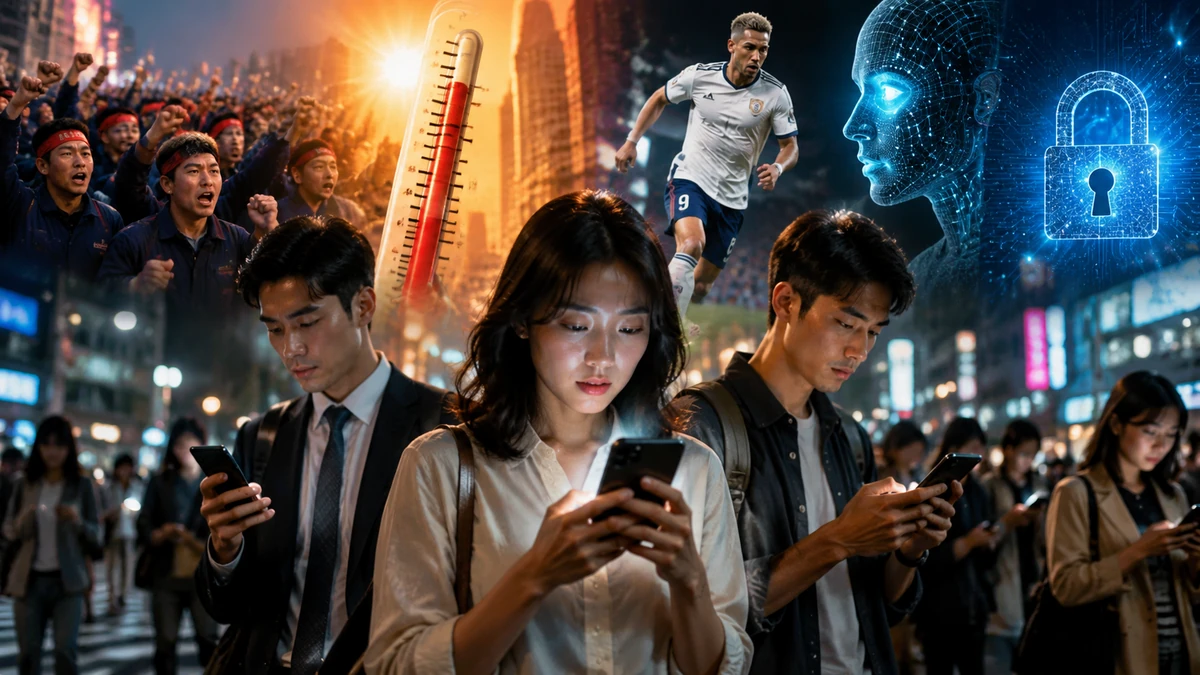
The top-ranked search term was “labor dispute,” followed by major interest in temperature trends, China Open badminton coverage, privacy concerns and artificial intelligence. Some keywords were linked clearly to news reports, while others had unclear origins because related headlines were not available. The overall pattern, however, showed a society watching several major transitions at once: workplace negotiations, climate pressures, rapid AI development and the risks of an increasingly digital economy.
For American audiences, South Korea’s search behavior may resemble the way topics trend across platforms such as Google, X, Reddit and other online communities in the United States. The difference is that Korea’s compact geography, highly connected population and strong relationship between technology companies and everyday life can make national conversations move extremely quickly.
Labor Disputes and Semiconductor Workers Highlight Korea’s Industrial Challenges
The keyword “labor dispute” ranked first among South Korea’s rising searches, with an estimated Google search volume above 1,000. The attention was connected to reports involving wage negotiations, performance incentives and semiconductor-related labor issues.
One of the headlines drawing attention involved discussions around whether certain demands related to performance bonuses and semiconductor issues qualified as grounds for industrial action. Another report focused on the possibility of a dispute involving Samsung Electronics workers and questions surrounding legal requirements for labor action.
For readers unfamiliar with South Korea’s labor system, large technology companies occupy an especially important role in the country’s economy and national identity. Samsung Electronics, for example, is not simply a consumer electronics brand; it is one of the companies most closely associated with South Korea’s transformation from a developing economy into a global technology powerhouse.
Labor issues at major manufacturers can attract national attention because they connect several sensitive issues at once: corporate competitiveness, worker compensation, semiconductor supply chains and South Korea’s position in global technology markets.
The search trend does not confirm that a strike or major labor action occurred. Based on the available headlines, the increase in attention appears connected to public discussion about whether certain workplace disputes fall within legal boundaries and how companies and workers negotiate in strategic industries.
This discussion has relevance beyond Korea. The global semiconductor industry has become a key area of competition involving South Korea, the United States, Taiwan and China. Questions about workforce stability, investment and production capacity are closely watched by governments and companies around the world.
Extreme Weather Becomes a Major Public Concern as Climate Issues Enter Daily Life
The search term “temperature” ranked among the highest-interest topics, with an estimated volume above 2,000. The attention was linked to reports describing South Korea’s unusually challenging summer weather, including high temperatures, drought conditions and periods of heavy rainfall.
Climate-related stories often gain immediate attention in South Korea because weather directly affects daily routines. A heat wave can influence electricity demand, transportation, agriculture and outdoor work conditions. Heavy rainfall can quickly become a national concern because South Korea’s urban areas contain many densely populated neighborhoods vulnerable to flooding.
Reports highlighted that the summer average temperature ranked among the highest recorded levels, while other coverage discussed the combination of heat, drought and later extreme rainfall events. Regional reports, including coverage of conditions in Chungcheongbuk-do province and nighttime heat conditions in July, also contributed to public interest.
For American readers, the pattern may look familiar. In the United States, searches around hurricanes, wildfires, droughts and heat waves often surge when weather events affect communities directly. South Korea’s experience reflects a broader global trend: climate change is increasingly discussed not only as an environmental issue but as a practical question involving health, food prices, infrastructure and economic planning.
South Korea’s climate concerns also matter internationally because the country is a major industrial economy. Its companies are deeply connected to global supply chains, meaning environmental policies and energy decisions can influence international business relationships.
AI Development and Privacy Concerns Show the Two Sides of Korea’s Digital Economy
Technology-related searches also played a significant role in South Korea’s September 3 rankings. The keyword “Gemini 3.8” gained attention after reports about Google’s introduction of Gemini 3.8 Flash and Gemini 3.8 Flash Cyber models. Coverage focused on improvements in artificial intelligence capabilities, including coding-related performance.
South Korea has become one of the world’s most active markets for artificial intelligence adoption. The country’s technology companies, universities and government agencies have invested heavily in AI research and digital transformation. For many Koreans, AI is not viewed as a distant future technology but as something already affecting education, business, entertainment and office work.
At the same time, another major technology-related search term was “personal information,” which reached an estimated search volume above 1,000. The interest was linked to reports about a privacy incident involving TVING, a South Korean streaming platform, and concerns over security practices including key management and vulnerabilities.
The combination of AI excitement and privacy anxiety represents a global challenge. As more services collect personal information and use artificial intelligence, users increasingly expect companies to provide stronger security protections.
For the United States, this issue is particularly relevant because American technology companies operate in a global environment where privacy expectations vary by region. South Korea’s experience offers another example of how digital trust has become a competitive factor for technology businesses.
What South Korea’s Search Trends Mean for the United States and Global Markets
South Korea’s online conversations often provide early signals about issues that later become international business topics. For American companies, investors and policymakers, the September 3 search trends highlight several areas worth watching: semiconductor labor relations, climate adaptation, artificial intelligence competition and cybersecurity.
The labor-related searches connect directly to the United States because Korean semiconductor companies are major players in global technology supply chains. American industries rely on advanced chips for artificial intelligence systems, automobiles, consumer electronics and defense-related technologies. Stability in Korea’s manufacturing sector therefore has implications far beyond the Korean domestic market.
The AI discussion also reflects growing competition between American technology companies and Asian technology leaders. Companies developing advanced AI models are competing not only on technical performance but also on safety, cost efficiency and enterprise adoption. South Korean businesses and consumers represent an important market for global AI platforms because of the country’s advanced digital infrastructure and high technology adoption rates.
Privacy concerns provide another point of comparison between South Korea and the United States. American consumers have also experienced growing concerns about data breaches, online tracking and the protection of personal information. As streaming platforms, financial services and AI applications expand, companies in both countries face pressure to improve cybersecurity standards.
South Korea’s entertainment, sports and consumer markets also remain closely connected with American audiences. Although many of the day’s top searches were domestic issues, global interest in Korean athletes, technology and culture continues to grow. The same digital networks that spread Korean pop culture internationally also amplify discussions about business, politics and social issues.
For American observers, the key lesson is that South Korea’s online trends are not isolated cultural signals. They often reflect broader questions facing advanced economies: how workers share the benefits of technological growth, how societies respond to climate change, and how citizens maintain trust in increasingly digital systems.
Sports and Entertainment Searches Reflect Korea’s Global Connections
Sports remained another important category in the September 3 search rankings. The football player Richarlison gained attention through reports about a possible move involving Tottenham Hotspur and Turkish club Trabzonspor. Although the available information does not identify the exact reason for the search increase, international football continues to attract strong interest among Korean fans.
The keyword “China Open” also ranked highly, with interest connected to badminton coverage involving South Korean player An Se-young and her progress in a Chinese tournament. Badminton has a significant following in South Korea, and major international competitions can quickly become national talking points when Korean athletes perform well.
These sports searches demonstrate how South Korea’s public attention is connected to global events. Korean audiences closely follow European football leagues, international tournaments and athletes competing abroad. This creates cultural links between Korea and markets such as the United Kingdom, Europe and the United States.
Other rising searches included “makeup,” connected to entertainment programming coverage, “solar power generation,” linked to industrial sustainability efforts, and “retrial,” related to political news. Together, these topics show that Korean public interest does not center on a single category but moves rapidly across society, technology, entertainment and politics.
A Digital Society Watching Multiple Transformations at Once
The September 3, 2026 Google search rankings in South Korea present a picture of a society experiencing several major changes simultaneously. Labor negotiations show tensions around economic growth and worker compensation. Weather searches reflect growing awareness of climate risks. AI and privacy searches reveal both enthusiasm and concern about digital transformation.
For international audiences, particularly in the United States, South Korea’s search trends provide a useful look at issues shaping one of Asia’s most technologically advanced economies. The country’s online conversations frequently connect local events with global industries, from semiconductors and artificial intelligence to sports and entertainment.
Search rankings alone cannot explain every public reaction or predict future developments. Some keywords rise because of major news events, while others may reflect temporary curiosity. However, when viewed together, these trends show the priorities of a highly connected society navigating economic competition, technological change and environmental uncertainty.
As South Korea continues to play a larger role in global technology and culture, monitoring these conversations can help international audiences better understand the challenges and opportunities emerging in one of the world’s most dynamic economies.


0 Comments