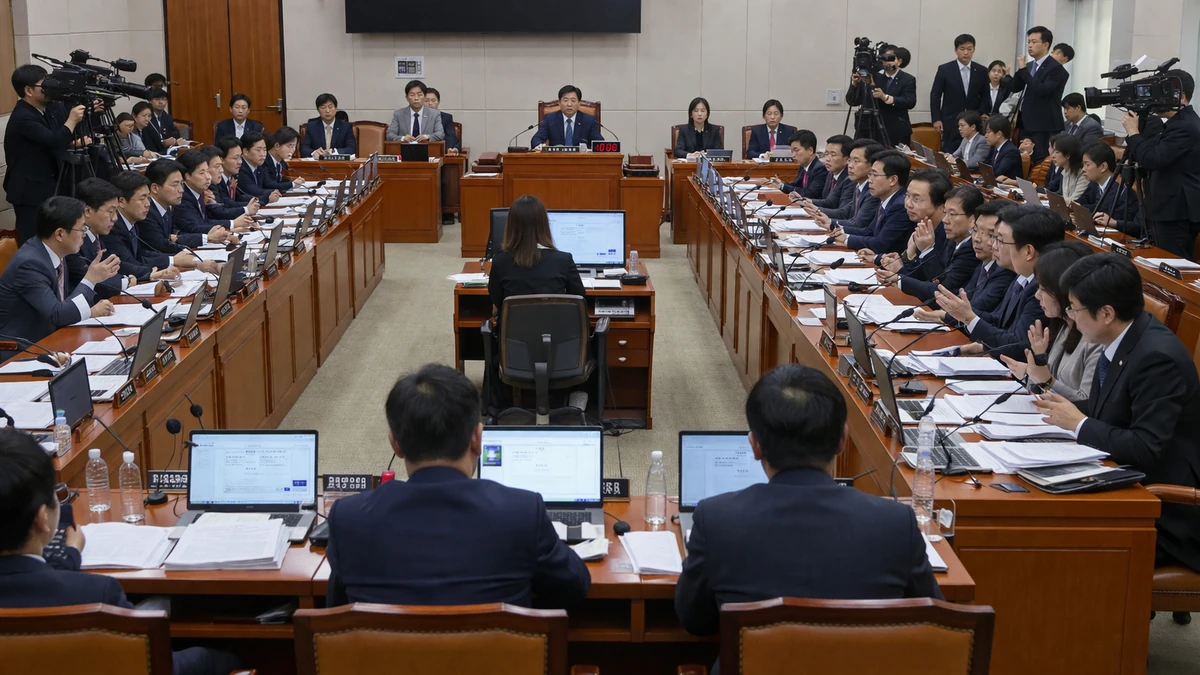
The Heated Debate Over South Korea's Supplementary Budget
On April 7, 2026, a fierce political battle erupted in South Korea’s Budget and Accounts Committee over the government’s proposed supplementary budget. The ruling party and the opposition are engaged in a heated exchange, each accusing the other of manipulating the budget for political gain. The debate comes just ahead of upcoming elections, raising questions about whether the budget is a genuine response to economic hardship or a strategic move to secure voter support.
The Ruling Party’s Argument: A Lifeline for the Public
The ruling party insists that the supplementary budget is a crucial measure aimed at supporting vulnerable populations and stimulating the economy. Their primary focus is on direct financial aid for low-income groups, subsidies for small businesses, and investments in local infrastructure. The ruling party argues that these steps will provide immediate relief to struggling citizens, particularly in the wake of a sluggish economy exacerbated by the COVID-19 pandemic. Lawmakers from the ruling party emphasize that this budget is not about politics—it is about responding to the economic realities faced by everyday Koreans.
The Opposition's Counterargument: A Politicized Budget
In contrast, the opposition party is accusing the ruling party of using the supplementary budget for political purposes. They claim that the government is attempting to gain favor with voters ahead of critical national and local elections by creating a budget that appears to prioritize public welfare. The opposition has also raised concerns about the timing of the budget, asserting that it is no coincidence that the budget proposal has come just months before elections. They argue that the allocation of funds is more about securing political leverage than addressing the real needs of the public.
The Budget’s Key Proposals and the Controversy
The supplementary budget includes several key proposals, including financial assistance for vulnerable groups, support for small businesses, and the expansion of public infrastructure. However, there is significant controversy surrounding how these funds are being allocated. The opposition has questioned whether the ruling party's priorities are genuinely aligned with public welfare or whether some of the funding decisions have been strategically made to appeal to key voter bases. The debate has centered on whether the budget is truly aimed at economic recovery or whether it is being manipulated for political purposes.
The Political Implications: A High-Stakes Showdown
As the debate over the supplementary budget continues, it is clear that the issue has transcended beyond mere economic concerns and become a political battleground. Experts warn that if the budget does not pass the National Assembly, the government’s ability to implement key policies will be severely compromised. With elections on the horizon, this budget proposal is poised to remain a hot topic in South Korean politics, potentially influencing public opinion and shaping the political landscape for months to come.
The Outlook: A Future of Political Tug-of-War
The current debate over the supplementary budget is only the beginning of what is expected to be an ongoing political struggle. Political analysts suggest that the discourse around this budget will intensify, with the ruling party and opposition both jockeying for political advantage. The future of the budget, and the fate of the government’s ability to enact meaningful economic reforms, will depend on how the political dynamics play out in the coming months.
Comments
Post a Comment