A milestone that says more than it seems
In a country better known abroad these days for K-pop, Oscar-winning films and globally streamed dramas, a 30th anniversary celebration for a graduate school might sound like a minor, even ceremonial event. But in South Korea, where education, media and public life are tightly intertwined, the 30th anniversary of Konkuk University’s Graduate School of Journalism and Mass Communication tells a broader story about how the country has trained the people who shape its public conversation.
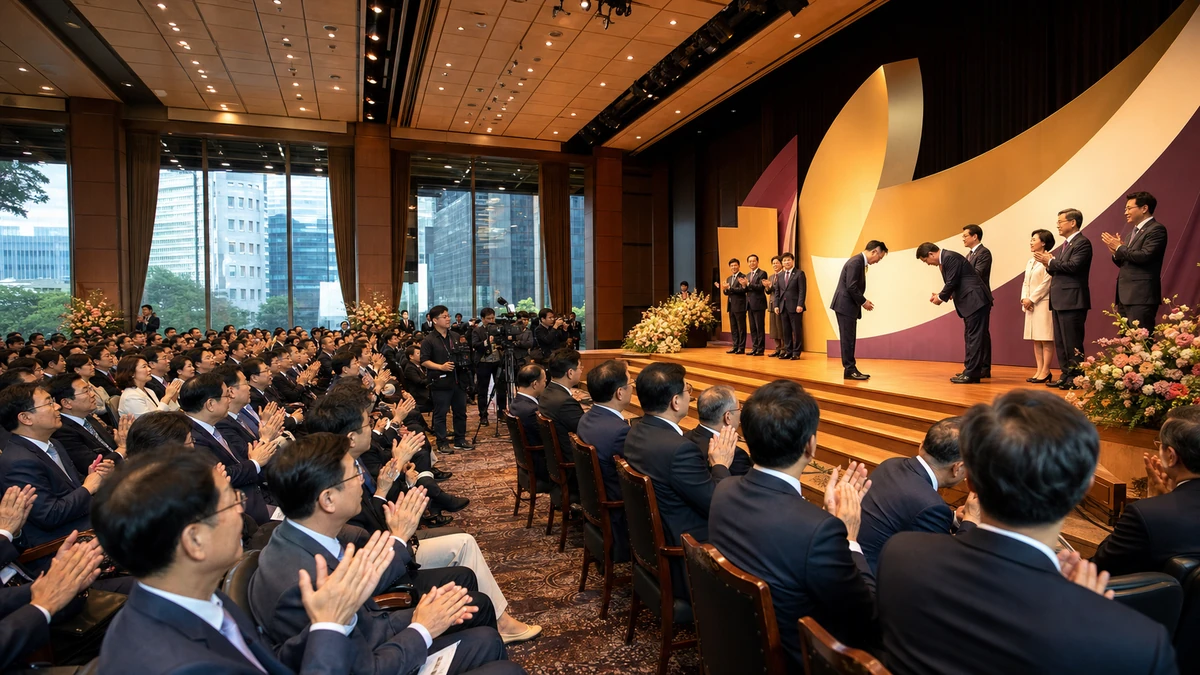
The school marked its 30th anniversary on June 25 at the Korea Press Center in central Seoul, according to Yonhap News, drawing about 130 attendees, including Konkuk University President Won Jong-pil and alumni association chief Lee Ja-yeon. Founded in 1995, the graduate school has produced roughly 650 alumni over three decades. On paper, those details read like the standard ingredients of an institutional commemoration: a formal venue, university leadership, alumni, speeches and a look back at the past.
But the event also served as a compressed history of South Korea’s media evolution. Since the school opened, the country has moved from a media environment dominated by newspapers and terrestrial television to one defined by smartphones, social platforms, streaming video and the rapid-fire circulation of information. A program dedicated to journalism, public relations and communication has existed through all of that change, training professionals not only to write, report or promote, but increasingly to understand how messages move through a digitally saturated society.
For American readers, one useful comparison might be the role played by long-established journalism schools and communications programs in the United States, from Columbia to Northwestern to Syracuse, in shaping generations of reporters, editors, public information officers and media executives. South Korea’s media education system is smaller and structured differently, but the underlying idea is familiar: institutions help create the professional class that informs, persuades and interprets public life. What makes the Konkuk anniversary notable is that it highlights how intentionally South Korea has built that infrastructure during a period of national transformation.
In South Korea, anniversaries like this are rarely just nostalgic. They are often used to reaffirm institutional purpose and social standing. That was true here. The celebration was less about nostalgia for a campus program and more about recognizing a school that has developed alongside a country whose cultural influence now reaches far beyond its borders.
Why the venue matters in South Korea
The anniversary was held at the Korea Press Center, a venue whose symbolism would not be lost on anyone familiar with the country’s media world. Located in Seoul’s Jung District, the building functions as one of the most recognizable institutional hubs for the Korean press. Hosting the event there gave the commemoration a significance beyond internal university pride. It placed the school’s anniversary inside a space associated with the practice, politics and industry of Korean journalism itself.
For readers in the United States, the Korea Press Center can be understood less as a generic conference hall and more as a civic-media landmark, the kind of place where the country’s information establishment becomes visible. In a nation where the capital city exerts enormous political and cultural gravity, spaces like this matter. Seoul is not simply the country’s largest city; it is the center of government, major news organizations, corporate headquarters and many of the elite universities that feed talent into those systems. When a graduate media program marks its 30th year in a venue like the Press Center, it signals that the institution sees itself as part of a national communications infrastructure.
That relationship between educational institutions and prestige venues is especially important in South Korea, where social networks, alumni ties and institutional affiliations often carry substantial weight in professional life. The fact that university officials and alumni gathered together in this setting underscored a point the event quietly made: media expertise in South Korea is not produced in isolation. It is built through schools, professional associations, peer networks and public institutions that overlap and reinforce one another.
That does not mean the event was a major policy announcement or a headline-grabbing media summit. By the standards of breaking news, it was modest. No sweeping regulatory overhaul was unveiled. No major industry merger was announced. But its modesty is part of what makes it revealing. Sometimes the most telling indicators of a society’s priorities are not dramatic conflicts or market disruptions, but the institutions it continues to honor, fund and reproduce.
South Korea’s public sphere is often described through its speed: fast internet, fast-moving headlines, fast-changing trends. The Press Center setting offered a reminder that underneath that speed are formal structures and training grounds designed to produce the people who keep that system running.
From 1995 to the smartphone age
The year 1995 now looks like a hinge point in modern media history almost anywhere in the world, but especially in South Korea. It was a moment when analog habits still shaped everyday life, even as the foundations of the digital era were beginning to take hold. A graduate school founded then would have been preparing students for a profession that still revolved heavily around newspapers, broadcast outlets and conventional public relations. Over the next 30 years, nearly every part of that ecosystem would be transformed.
In South Korea, that transformation happened at exceptional speed. The country became one of the world’s most connected societies, with high broadband penetration, widespread smartphone adoption and a deeply networked urban culture. It also became a place where digital publics could mobilize quickly, whether around elections, protests, celebrity controversies or major national tragedies. Media professionals were no longer simply filing stories or drafting press releases. They were operating in a crowded and increasingly volatile information environment where trust, speed and narrative framing could all shift within hours.
That makes the graduate school’s cumulative alumni figure, about 650 over three decades, more meaningful than it may first appear. It is not a mass-production number. Rather, it suggests a smaller pipeline of trained specialists entering fields that influence how information is produced and distributed. Those alumni may work across journalism, corporate communications, government messaging, nonprofit advocacy and content strategy. The source summary does not specify where they all landed, and it would be wrong to overstate the number as a measure of the entire Korean media sector. But it does indicate continuity: year after year, the school helped place trained communicators into institutions that shape public understanding.
Americans will recognize the broader pattern. In the United States, the line between journalism, strategic communications, public affairs and digital media has become increasingly porous. The same is true in South Korea, though with its own local dynamics. Media workers often navigate public expectations shaped by intense online engagement, fierce competition among outlets and an audience highly attuned to reputation, status and social accountability. In that environment, a specialized graduate program does more than teach a craft. It helps define what professional communication ought to look like in a particular era.
The school’s 30-year anniversary, then, overlaps with the rise of modern South Korea as a media-intensive democracy and cultural powerhouse. It spans the period in which Korean news organizations digitized, Korean corporations globalized and Korean entertainment became an export with real geopolitical and economic weight. Even if the anniversary itself was quiet, the timeline it marks is anything but.
The expanding definition of media education
The clearest signal from the anniversary came in remarks by Kim Dong-gyu, dean of the graduate school, who said the institution would continue, over the next 30 years, to cultivate creative media professionals equipped with theory, practical skills, technology and grounding in the humanities. That formulation matters because it captures how South Korea’s understanding of media expertise is broadening.
Not long ago, many communications programs in Korea and elsewhere were more narrowly associated with reporting techniques, editing, broadcasting or promotional practice. Those functions remain essential, but they are no longer sufficient by themselves. Kim’s formulation points to a deeper shift: media professionals are increasingly expected to combine technical competence with ethical judgment, social analysis and cultural literacy.
That combination is especially important in a society like South Korea’s, where digital platforms have compressed the distance between message creation and public reaction. A communicator today may need to understand audience analytics, platform mechanics and visual storytelling while also grasping the social consequences of framing, misinformation, polarization and public trust. In American terms, this is the difference between teaching someone only how to use the tools and teaching them to understand the civic environment in which those tools operate.
The humanities component in Kim’s remarks is particularly striking. In South Korea, as in the United States, higher education is under pressure to demonstrate practical, career-oriented value. Emphasizing humanities alongside technology and practice suggests that the school sees media not just as an industry but as a social responsibility. The humanities, broadly understood, offer ways of thinking about history, ethics, language, culture and power. For journalists and public communicators, those are not ornamental concerns. They are central to deciding what stories matter, how they should be told and whose voices are recognized.
That vision also reflects the realities of the Korean Wave, or Hallyu, the global spread of South Korean popular culture. International audiences often encounter South Korea through polished cultural products: a hit Netflix series, a K-pop group, a beauty brand or a viral social trend. But behind those exports are layers of communication strategy, public storytelling, institutional messaging and cross-cultural translation. The professionals trained in schools like this one may not be celebrities, but they help build the context in which Korean content circulates and is understood.
For English-speaking readers, this is an important corrective to the idea that South Korea’s media prominence appeared overnight. It did not. It grew out of decades of educational investment, professionalization and adaptation to technological change. The dean’s remarks suggest that the next phase will demand even more hybrid talent: people who can move across journalism, PR, digital systems and human-centered interpretation.
Journalism, public relations and the Korean public sphere
One of the most revealing aspects of the school is embedded in its name: journalism and public relations are housed together. In the American context, those fields are often treated as neighboring but distinct professions, sometimes even as professions with competing obligations. Journalism is ideally oriented toward the public interest, accountability and independent verification. Public relations is oriented toward representing organizations, shaping messages and maintaining trust with stakeholders. South Korea recognizes those distinctions too, but the decision to educate them in proximity says something about how modern communication work is understood.
In fast-moving democracies, the public sphere depends on both functions. Citizens need reliable reporting to understand events and institutions. They also need clear communication from governments, universities, companies and civic organizations. When either side fails, trust can erode quickly. A society that moves as quickly online as South Korea does has strong incentives to train professionals who understand not only their own roles but the broader ecosystem in which those roles operate.
That matters because South Korea is often described abroad through its spectacle: the polished entertainment industry, the highly connected consumer culture, the intensity of online fandoms and political debates. Yet everyday information systems may be even more consequential. How do public agencies explain policy? How do universities communicate their mission? How do organizations respond to controversy? How do news outlets balance speed with verification? Those are practical questions, but they are also democratic ones.
The anniversary celebration highlighted that quieter infrastructure. It suggested that communication in South Korea is not merely about publicity or content production. It is part of how institutions maintain legitimacy and how citizens process public life. In a country where education is highly valued and credentials remain powerful, specialized graduate programs can serve as trust-building mechanisms in themselves. They signal that communication work is not improvised, but studied, refined and professionalized.
That said, it is important not to romanticize the landscape. South Korea’s media environment, like America’s, faces real pressures: shrinking trust, political polarization, platform disruption and commercial competition. None of those problems are solved by an anniversary ceremony. But the event did show that at least one institution is framing the challenge in expansive terms. The goal is no longer simply to prepare students for a job title. It is to prepare them for a complex and contested information order.
The role of alumni networks in Korean professional life
The presence of alumni association leader Lee Ja-yeon at the event underscored another element that is especially significant in South Korea: the continuing role of alumni networks. In many parts of Korean professional culture, school ties can be a durable source of mentorship, referrals, credibility and social cohesion. That is true in business, law, government and media alike.
To an American audience, alumni networks are hardly unique; elite colleges and graduate schools in the United States also cultivate them aggressively. But in South Korea, where institutional affiliation often carries a pronounced social and professional meaning, those networks can function as long-term connective tissue linking classroom education to the workplace. For a communications graduate school, that matters because the profession itself is networked. Journalists depend on sources and professional communities. PR practitioners depend on relationships and credibility. Public communicators operate in environments where trust is built over time and across institutions.
The 650 or so alumni produced by the school over 30 years likely represent more than a simple roster of graduates. They form a distributed community across multiple sectors of Korean public life. Even without a detailed breakdown of their careers, it is reasonable to see the group as a network of people involved in producing, interpreting or circulating messages in society. Some may work in newsrooms, others in corporate communications, cultural institutions, government offices or content planning roles. Together, they embody one of the most practical outcomes of graduate education: not just credentials, but a durable professional ecosystem.
That ecosystem also reflects a broader urban pattern in Seoul, where universities, media institutions and industry networks overlap in dense ways. In a city as concentrated and competitive as Seoul, professional communities are often spatially and socially close to one another. The anniversary event, bringing alumni and administrators together in a central press venue, illustrated that concentration. It was a portrait of how expertise is reproduced in everyday Korean city life.
In that sense, the celebration had a social meaning that extends beyond the campus. It showed how education feeds into professional identity, and how professional identity feeds back into the information environment ordinary people inhabit every day, whether they are reading the news, receiving public guidance or consuming cultural content.
What global readers should take from this
For international readers, especially those whose view of South Korea is shaped mainly by entertainment exports, the anniversary offers a useful lens into the less visible institutions behind the country’s media success. South Korea’s global cultural profile did not emerge solely from talent, market demand or government branding. It also rests on a deeper bench of trained professionals who understand messaging, audiences, platforms and public context.
That is one reason this story matters beyond academia. A graduate school anniversary is not a flashy K-culture headline. It is not a chart-topping music release, a film festival debut or a diplomatic dispute. But it helps explain the underlying system that allows South Korea to communicate so effectively with itself and with the world. Whether the subject is entertainment, public policy, crisis response or corporate image, societies rely on trained communicators to make meaning legible.
The emphasis on the “next 30 years,” as expressed during the event, also suggests that South Korean institutions know they cannot rely on past success alone. The future of media education will likely be shaped by artificial intelligence, automated translation, platform fragmentation and deepening concerns over trust and manipulation. In that landscape, the combination highlighted by the school’s dean, theory, practice, technology and humanistic understanding, may become even more essential.
There were no detailed announcements in the available summary about new degree programs, policy changes or major institutional initiatives. That distinction matters. The significance here lies not in any unverified future project, but in the direction the event articulated. The school used its anniversary to say that media education must evolve with society, and that professional communication now demands technical fluency as well as social responsibility.
For American readers, that message should sound familiar. The United States is having its own debates about the future of journalism education, the value of communications degrees and the need for ethical frameworks in a platform-dominated era. South Korea’s experience offers a parallel case, one shaped by its own history but facing many of the same pressures. The anniversary at Konkuk University was, in that sense, both local and broadly legible: a reminder that behind every modern media system is a long, deliberate process of training the people who keep it functioning.
Thirty years after its founding, the graduate school’s celebration stood as a quiet but meaningful marker. It recognized not just an institution’s survival, but a generation-spanning effort to build a professional class capable of navigating one of the world’s most intense and sophisticated information environments. In a country now deeply woven into global culture, that may be one of the most important stories happening offstage.
Comments
Post a Comment