A first album built around what is still unresolved
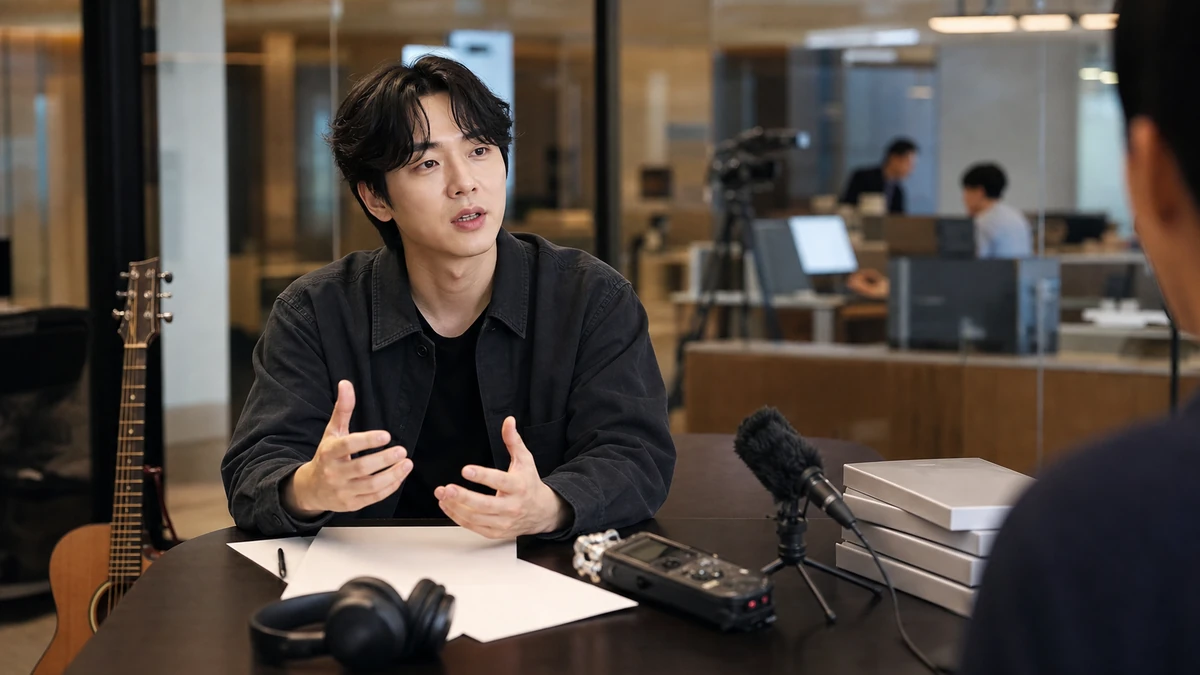
In the global conversation about Korean music, the spotlight often lands on stadium-filling K-pop groups, polished choreography and tightly managed star systems. But another part of South Korea’s music scene has been growing steadily alongside that export juggernaut: singer-songwriters whose work is quieter, more intimate and less concerned with spectacle than with interior life. Kim Seungju, a South Korean singer-songwriter preparing to release a first full-length album on June 29, is making his entrance through that lane — and doing so with a project that turns emotional incompleteness into its central theme.
The album, titled Incomplete Virus, or Miwanseong Virus in Korean, is not framed as a triumphant debut from a young artist announcing that he has found himself. Instead, it is built on a more uneasy and arguably more relatable proposition: that a person can acknowledge what still feels broken, unfinished or unresolved and keep moving anyway. In interviews ahead of the release, Kim said he wrote, composed, arranged and produced all 11 tracks himself, an unusual level of authorship for any debut album and a strong signal that this record is intended as a personal statement rather than a manufactured introduction.
That distinction matters in South Korea, where the broader music industry includes both highly industrialized idol production and a parallel ecosystem of indie musicians, soloists and self-producing artists. A first full-length album carries particular weight there, much as a debut novel or breakout independent film does in the United States. Singles can generate buzz, and EPs can establish a voice, but a studio album remains a more complete test of whether an artist can build a world, sustain a point of view and hold a listener’s attention over time.
Kim appears to understand that pressure well. He has spoken about nervousness ahead of the album’s release, saying he struggled to sleep before interviews and found himself listening again to the new songs in the early morning hours, overwhelmed enough to cry. That kind of confession can sound like a publicity hook, but in the case of a self-written singer-songwriter album about childhood feelings, absence and old wounds, it reads more as confirmation that the material remains emotionally active for the person who made it.
For American listeners unfamiliar with the nuances of the Korean music market, Kim’s debut may be easiest to understand not as an attempt to compete with the biggest K-pop names, but as part of a lineage closer in spirit to confessional indie-pop, alternative folk or art-pop traditions — the kind of album that asks to be absorbed front to back, not just sampled one track at a time.
Why “unfinished” is the point, not the flaw
The conceptual heart of Incomplete Virus lies in a phrase that could sound contradictory at first: the “completion of incompleteness.” Kim’s interviews suggest he is not trying to romanticize pain or market vulnerability as a brand. Rather, he seems to be rejecting a familiar narrative arc in popular music — the one in which damage is neatly overcome, lessons are learned and healing arrives on cue by the final chorus.
That refusal gives the project much of its interest. American pop culture is hardly free of unresolved storytelling, but commercial music still often rewards clarity: empowerment anthems, revenge songs, breakup recovery tracks, comeback records. What Kim is describing sounds more provisional than that. His songs do not appear to promise that hurt disappears. They suggest, instead, that unresolved feelings may remain part of a person’s emotional architecture, and that recognizing them honestly can be a form of progress in itself.
There is a Korean cultural resonance to that approach, even if the emotional core is widely legible beyond Korea. South Korean society is often described through the language of speed, competition and achievement — educational pressure, career pressure, social pressure, the push to keep up. Within that context, declaring satisfaction with work that is built around imperfection can carry a subtle defiance. Kim said he was “100 percent satisfied” with the album, while also stressing that listeners are free to hear it however they wish. The confidence in that statement is notable not because it claims perfection, but because it does not apologize for the record’s rough edges or emotional ambiguity.
For younger artists especially, public language around creative work is often full of caution, self-correction and preemptive humility. Kim’s version of confidence seems different. He has suggested that his satisfaction comes from trying to see the beauty in his own music, not from insisting it cannot be criticized. That is a sophisticated distinction. It frames self-belief not as denial of flaws, but as a willingness to embrace what the work is — and what the artist is — before either has resolved into something cleaner or more complete.
That idea may help explain why the album’s title is so striking. A virus is intrusive, invisible, hard to contain. To pair that image with incompleteness is to suggest that lack itself can spread, linger and shape a life. But a virus also prompts response, adaptation and attempts at recovery. The title leaves room for both affliction and endurance.
An album structured like a cycle of injury and repair
Kim has described the album as unfolding across three emotional phases: virus, vaccine and lull. Those labels function less like a medical concept than a map of psychological weather. “Virus” evokes the arrival or persistence of anxiety, deficiency and emotional disturbance. “Vaccine” suggests not a magical cure but the process of building resilience against what harms you. “Lull,” a term that in English might suggest a pause or temporary easing, points to a state short of total resolution — a moment to catch one’s breath rather than a permanent end to pain.
That structure alone sets the album apart from many debut releases, which often aim to showcase range without necessarily offering a cohesive emotional architecture. Kim’s framing invites listeners to hear the album as a sequence rather than a playlist, with songs carrying distinct roles inside a larger narrative. In an era when streaming platforms can flatten albums into loose bundles of tracks, that kind of intentional design feels almost old-fashioned in the best sense. It recalls records that ask listeners to sit with a mood, trace a progression and recognize that meaning accumulates across songs, not only within them.
Three tracks have been designated as title songs: “History of Misfortune,” “Diary” and “To the Old Town.” In Korean pop marketing, it is not unusual for one album to feature more than one promoted track, but choosing three title songs here seems especially revealing. The titles alone offer three separate doorways into the same emotional house. “History of Misfortune” suggests wounds with a timeline — pain that is not isolated but layered. “Diary” points toward private writing, confession and the act of recording one’s inner life before it is legible to anyone else. “To the Old Town” evokes place, return and memory, as if the geography of the self includes neighborhoods one may wish to leave but cannot entirely escape.
Those titles also make sense inside the broader thematic structure. If the album’s emotional movement runs from intrusion to coping to temporary calm, then memory is not just background material; it is one of the engines driving the record. A history of hurt must be named. A diary must be opened. An old town — whether literal or metaphorical — must be revisited.
Kim has said the project took about two years if he includes the time spent thinking through it. That is an important qualifier. Albums like this are not built only in studios. They are built in the long period before recording, when an artist is trying to determine what emotions deserve shape, what fragments belong together and how private feeling can become communicable art. By the time a listener hears the finished songs, the most difficult work may already have been done in silence.
The meaning of the “old town” in a Korean emotional landscape
Among the album’s recurring images, the contrast between “new town” and “old town” may be the most culturally rich. In the Korean summary of Kim’s remarks, he described a desire to escape to a “new city” or “new district,” only to find himself returning to the “old town.” On a literal level, that contrast would be readily recognizable in South Korea, where urban development has transformed neighborhoods at breakneck speed. Sleek apartment complexes, newly planned districts and hypermodern commercial areas often exist alongside older neighborhoods marked by narrower streets, layered histories and a different rhythm of life.
But Kim’s use of the image appears to be metaphorical as much as spatial. The “new town” can be read as the self one wants to become — more stable, more successful, more healed, less burdened by the past. The “old town” is the emotional terrain one keeps returning to, whether by choice or by force of memory. For American readers, the metaphor may call to mind the experience of leaving a hometown, reinventing oneself and then realizing that old anxieties or early injuries traveled along for the ride. Geography changes more easily than identity.
That is one reason the album’s message could resonate far beyond Korea. It does not depend on local knowledge of a specific district in Seoul or a specific cultural code. It depends on an experience many people recognize: trying to outgrow a version of yourself and discovering that growth is not the same as erasure. In that sense, Kim’s music seems less interested in escape than in acknowledgment. He is not offering a dramatic break from the past. He is asking what it means to live with it more honestly.
This is where the album’s idea of an “unfinished” life becomes emotionally persuasive rather than merely conceptual. The return to the old town is not presented as failure in the simple sense. It is not just regression. It may be acceptance that some places inside us remain inhabited, no matter how badly we wanted to leave them behind. That is a mature, if uncomfortable, insight for a debut full-length record.
Popular music often treats return as either nostalgia or defeat. Kim’s framing appears more complicated. Return can be clarifying. It can reveal the contours of what still hurts. It can also expose the limits of self-help narratives that promise a one-way journey toward a better self. Sometimes life does move forward. Sometimes it loops. Much of adulthood consists of learning the difference.
A different route into Korean music than the idol system
For English-speaking audiences whose entry point to Korean music has largely been K-pop’s global boom, artists like Kim can complicate the picture in useful ways. South Korea’s music scene is not monolithic, and the term “K-pop” often functions in the United States as both a genre label and a catchall shorthand for all Korean popular music. In reality, the industry contains multiple overlapping traditions: idol pop, hip-hop, R&B, rock, electronic music, OST ballads, indie folk and an active singer-songwriter culture.
Kim belongs to that latter world, where authorship itself can be part of the appeal. His full involvement in writing, composing, arranging and producing all 11 tracks matters not only because it signals artistic control, but because it positions the album within a Korean lineage of self-articulating musicians who build careers outside the most heavily commercialized idol framework. That does not make the work inherently more authentic than mainstream pop, but it does shape expectations. Listeners may come to a record like this for coherence, voice and emotional specificity rather than hooks engineered for maximum viral spread.
There is also a practical reason albums like Incomplete Virus can travel internationally even without blockbuster promotion. Global audiences increasingly listen across language barriers, and streaming has made it easier for niche records to find devoted listeners abroad. The success of Korean cultural exports over the past decade — not just music, but film, television and literature — has created a broader curiosity about Korean interiority. Audiences who discovered South Korea through a survival drama like Squid Game, a class satire like Parasite or the diaristic essays of translated Korean fiction may be primed to hear a singer-songwriter album that dwells on emotional contradiction rather than performative confidence.
Kim’s record may also align with a wider shift in music consumption, especially among younger listeners who value album worlds, lore and conceptual framing. The presence of three title tracks and a tripartite emotional structure gives audiences multiple access points. A listener could arrive through one song and then be pulled toward the rest of the album as a narrative environment. That is a different strategy than chasing a single breakout hit, and it may be particularly effective for an artist whose strongest asset is not a viral gimmick but a carefully constructed emotional universe.
Support, pressure and the significance of a debut
The album was produced with support from CJ Cultural Foundation’s Tune Up program, an initiative designed to help music creators in South Korea. To American readers, the closest analogy may be a grant-making arts foundation or an incubator that gives emerging musicians the resources to complete serious work without demanding immediate commercial conformity. That support matters because first full-length albums can be both artistically liberating and financially risky, especially for musicians whose work sits outside the most profitable corners of the market.
Institutional backing does not reduce the personal stakes. If anything, it can heighten them. A debut full-length often becomes the record on which an artist feels compelled to explain everything at once: identity, influences, ambitions, emotional vocabulary, technical skill. That pressure is familiar across cultures. In American music, too, the first album can become a referendum on whether years of private labor cohere into a public statement. Some artists spend their debut trying to prove versatility. Others try to define a singular voice. Kim appears to be doing both, but under one governing principle: honesty about what remains unsettled.
His reported reaction to hearing the songs again — breaking down in tears in the early hours before release — underscores the degree to which this album functions not simply as a commodity but as a record of self-confrontation. That does not guarantee great art, of course. Emotional sincerity is not the same thing as musical achievement. But it does suggest that Incomplete Virus aims for more than mood. It wants to translate felt experience into structure, sequence and sound.
There is another reason the album’s arrival feels timely. In both South Korea and the United States, younger adults are navigating a culture saturated with self-optimization. Everywhere there are instructions to heal, improve, upgrade, outperform, reinvent. A record that instead says, in effect, “You may still be unfinished, and that may still be a life,” lands as a counter-message. It is not as clean or marketable as empowerment, but it may be truer to how many people actually live.
What American listeners might hear in it
Without hearing the full record, it would be premature to make sweeping claims about its sound or impact. But the themes Kim has laid out already help explain why this release could find an audience beyond Korea. The appeal is not exoticism. It is recognition. Childhood emotions that linger into adulthood, private wounds that refuse to disappear, the feeling of returning to an old emotional address after believing you had moved on — these are experiences that need little translation.
What may require explanation is not the feeling, but the context. South Korean artists often work in an environment where public image, discipline and polish are intensely scrutinized. In that setting, foregrounding lack and incompletion can carry a particular charge. It says something about permission: permission to make work that does not resolve cleanly, permission to value one’s own art without pretending it is flawless, permission to face scars rather than hide them.
That sensibility could resonate with American fans who have embraced confessional songwriting in every form from indie folk to bedroom pop to alternative R&B. It could also appeal to listeners who have aged out of the need for tidy messages. There is comfort in art that does not overpromise transformation. Sometimes the most generous thing a song can offer is not a solution, but company.
When Incomplete Virus arrives on June 29, its success will not necessarily be measured by whether it produces a crossover hit. For a record like this, the more important question may be whether it establishes Kim Seungju as a songwriter capable of turning private uncertainty into durable public language. If the album does that, it will mark an important debut not just because it introduces a new Korean artist, but because it joins a larger global body of music insisting that unfinished people are still worth hearing.
That is a modest message on the surface. It is also, in a culture obsessed with polished outcomes, a quietly radical one.
Comments
Post a Comment