Nearly 1 in 5 Preschoolers in Seoul Are Overweight or Obese, Raising Broader Questions About How Young Children Live and Play
A troubling snapshot from one of the world’s most wired cities
In Seoul, a city often admired abroad for its high-tech efficiency, fast pace and polished urban life, health officials have released a finding that points to a quieter, more intimate challenge: how very young children are growing up. According to results announced by the Seoul city government and the Korean Society for the Study of Obesity, nearly 2 in 10 children ages 3 to 5 enrolled in daycare centers across the South Korean capital were classified as overweight or obese.
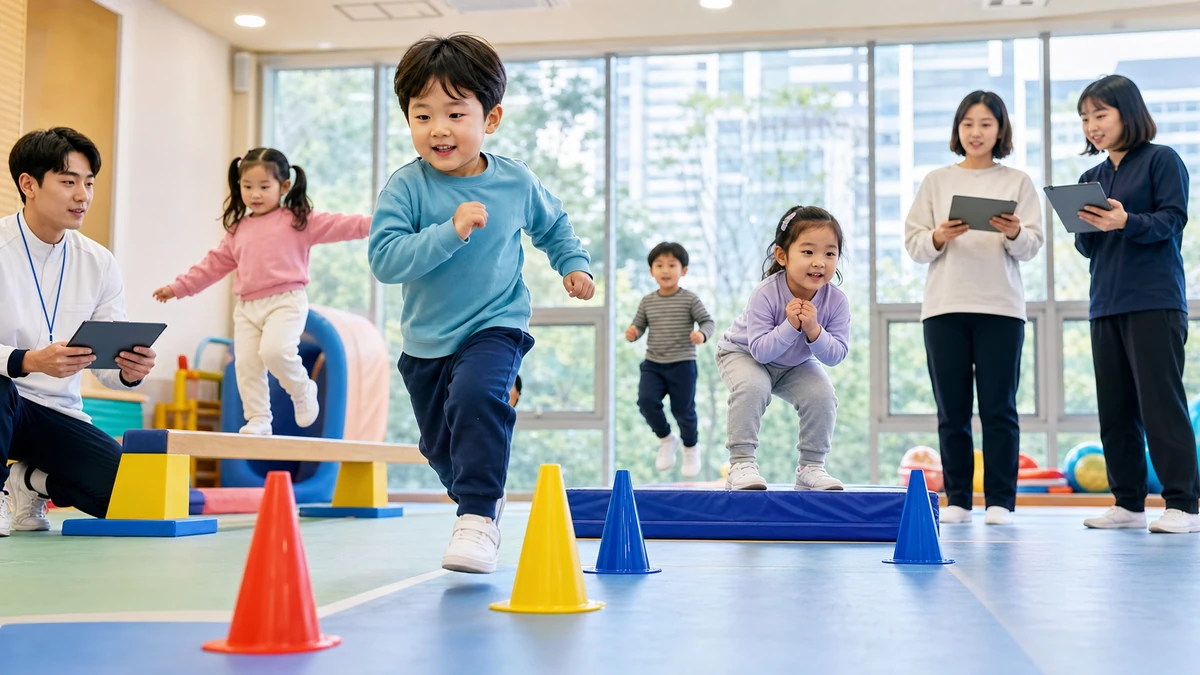
The figure came from a survey of 6,850 preschool-age children conducted through what Seoul calls a “visiting preschool fitness program,” a city initiative that brings physical assessments directly to childcare centers rather than waiting for families to seek help in hospitals or clinics. For American readers, the closest comparison might be a hybrid of an early-childhood wellness screening and a mobile field day, with specialists evaluating not only body size but also how well children move.
That distinction matters. The headline number — nearly 1 in 5 — is striking on its own. But the deeper concern in the Seoul findings is not simply that some children weigh more than recommended for their age. Officials also said children in the overweight group tended to score lower in balance, agility and explosive movement, the kinds of physical skills young children normally develop through active play: running, stopping suddenly, hopping, turning corners, catching themselves when they stumble and learning how their bodies work in space.
In other words, the concern is not just about what shows up on a scale. It is about a broader way of life. In early childhood, weight, movement, play, meal routines and the built environment are tightly linked. A child who spends too much time sitting still, has limited access to active play, relies on convenience snacks or follows a rigid daily schedule with little room for movement may show the effects not only in body size, but in physical confidence and coordination.
That message resonates far beyond South Korea. From New York to Los Angeles, from London to Singapore, parents and public health officials are grappling with a similar question: What happens when children are raised in dense, screen-saturated, schedule-driven cities where safe outdoor play can be scarce and convenience often beats physical activity?
Seoul’s new data does not provide every answer. But it does serve as an early warning sign from one of Asia’s most influential capitals, suggesting that even in a country known for educational intensity and high parental involvement, basic movement in early childhood may be slipping.
Why ages 3 to 5 matter so much
The ages covered in the Seoul survey are especially important because they are years when lifelong habits begin to take shape. In the United States, pediatricians often stress that preschool is not simply a pre-academic stage. It is also a period when children develop rhythms around sleep, snacks, family meals, independent movement and emotional associations with food and exercise. By the time a child enters elementary school, many of those patterns are already becoming familiar.
That is part of why the Seoul findings have drawn attention in Korean health circles. A 4-year-old who is struggling with balance or spending long periods inactive is not just having a passing phase; that child may be setting a trajectory. Experts worldwide have long noted that childhood obesity is associated with increased risk of later health problems, including diabetes, cardiovascular disease and social stigma. But the Seoul results highlight something more immediate and less abstract: children who weigh more may also be moving less well right now, during a stage of life when the body is supposed to be learning through motion.
To American readers, the cultural context is worth explaining. In South Korea, many children this age attend “eorini-jip,” or daycare centers, as both parents often work and urban family life can be highly structured. These centers are not simply babysitting services. They are a major part of a child’s daily routine, often shaping meals, nap schedules, playtime and social development. That means childcare settings are a crucial window into how children actually live, not just how parents hope they live.
Seoul’s program is significant partly because it assesses children where they spend their days. Rather than treating obesity as a private household issue or as a medical problem to be addressed only after it becomes severe, the city is approaching it as a public health concern visible in everyday environments. That approach mirrors a broader shift seen in many countries, including the U.S., toward prevention over treatment.
It also reflects a reality that parents know well: preschoolers do not choose their own routines. They do not design menus, decide how much outdoor space is available or regulate how many hours adults keep them seated. If a 5-year-old is not moving enough, that is usually not a matter of willpower. It is a matter of environment.
That is why the Seoul findings should not be read as a judgment on individual children or families. Rather, they raise a structural question: Are the adults and institutions surrounding young children making it easy enough for them to move, play and eat in balanced ways?
What the fitness findings suggest beyond the scale
Officials said overweight preschoolers in the survey tended to show lower performance in balance, agility and quick-force movement. Those may sound like technical fitness terms, but for young children they describe ordinary acts of play. Balance is what helps a child walk along a curb or stand on one foot for a moment. Agility is what helps a child dart around another kid on a playground or change direction during tag. Explosive movement — sometimes discussed in sports science as power — is what allows a child to jump, spring forward or push off the ground quickly.
These are not elite athletic abilities. They are part of normal childhood. They help children participate in games, avoid falls, build confidence and enjoy movement for its own sake. When those capacities are weaker, the consequences can create a feedback loop. A child who moves less confidently may be less likely to join active games, which can mean even less movement, lower fitness and greater long-term weight gain.
That is why the Seoul findings are especially notable. They suggest that body weight and physical function are intertwined even before children reach elementary school. In public discussions of childhood obesity, adults often focus on food first: sugary drinks, oversized portions, snacks, fast food. Those are important concerns. But the Seoul data supports a more complete view, one that treats movement itself as a core part of health.
That perspective may feel familiar to American readers who have seen debate over reduced recess time, shrinking neighborhood play, rising screen use and the decline of free-range childhood. In the U.S., concerns about childhood obesity have often centered on school lunch standards or junk food marketing. But a growing body of evidence has also pointed to the loss of physical play as a major factor. Children need room to run, fidget, tumble, climb, throw and recover. Without those opportunities, fitness does not develop naturally.
In Seoul, as in many large cities, the issue may be intensified by urban density and routine. Apartment living can limit indoor rough-and-tumble play. Long childcare hours can make days feel highly scheduled. Heavy traffic and safety concerns can discourage independent outdoor movement. And in homes where both parents are exhausted after work, convenience food and quiet indoor entertainment may become understandable defaults.
None of that means city life inevitably produces poor child health. Plenty of urban children thrive. But it does mean that active play often has to be planned and protected rather than assumed. The Seoul survey appears to underline exactly that point.
Urban life, family pressure and the Korean context
To understand why these numbers matter in South Korea, it helps to see them against the country’s broader social backdrop. Seoul is one of the most densely populated major cities in the developed world. It is a place where many families live in high-rise apartments, commute long hours and navigate an intensely competitive culture that can shape family schedules from a very early age. South Korea is widely associated overseas with K-pop, K-dramas, beauty trends and cutting-edge technology. Less visible to foreign audiences is the degree to which everyday life, especially for parents, can feel compressed and demanding.
Childcare centers play an outsize role because they bridge work and family life. Many children spend long stretches there on weekdays. That makes those centers a logical place for intervention, but it also means broader social pressures inevitably show up there. If children are arriving tired, spending too much time in sedentary routines or relying on overly convenient foods, childcare workers are seeing the effects in real time.
There is also a cultural nuance worth noting. In many Asian societies, including South Korea, conversations about children’s health can sometimes be filtered through adult concerns about academic achievement, emotional well-being and social presentation. While public awareness of nutrition and exercise is high, weight can still be a sensitive subject, especially when it involves young children. Health advocates therefore tend to emphasize prevention and routine-building rather than blame.
That emphasis appears in how Seoul has framed the issue. The message is not that toddlers need strict dieting or adult-style fitness regimens. It is that families and childcare providers should pay closer attention to daily patterns: how long children sit, whether they get enough energetic play, how snacks are structured and whether physical activity is integrated into ordinary life.
That is a crucial distinction. In both Korea and the United States, experts warn against stigmatizing children over weight. For preschoolers, body image pressure can be harmful, confusing and counterproductive. A 4-year-old does not need to hear that they are “too big.” They need adults who create routines where movement is fun, food is balanced and health is not framed as shame.
The Seoul findings, then, are best understood not as a moral panic, but as a practical signal. They suggest that urban childhood in a prosperous, modern city may be drifting away from the kinds of movement young bodies need.
What parents and caregivers can actually do
One reason the Seoul report may resonate internationally is that its practical lesson is straightforward. Preventing obesity in early childhood is not just about cutting calories or banning specific foods. It is about aligning eating and movement in a way that feels natural to a child.
For parents, that can begin with a simple audit of the day. How many hours is a child sitting still? How often do screens substitute for active play? Are snacks becoming constant rather than occasional? Is there time each day for big-body movement — not just walking from one place to another, but actual play that involves running, balancing, kicking, climbing or dancing?
For American readers, this may sound similar to advice from pediatricians who urge families to build “movement snacks” into the day, especially when formal sports are not realistic. A preschooler does not need a trainer or a specialized class. They need repeated chances to use their body with joy. That might mean playing catch in a park, doing obstacle courses in a living room, walking up stairs together, racing down a hallway, dancing to music in the kitchen or spending extra time on a playground instead of in a stroller.
Meals matter too, but here again the lesson is balance rather than punishment. Health officials are not saying that one snack caused a citywide problem. Rather, they are pointing to a pattern in which food habits and movement habits reinforce one another. If young children are routinely given calorie-dense snacks while spending long periods sedentary, the combined effect can show up quickly.
In Korean households, as in American ones, the challenge often lies in the mismatch between ideal parenting and real parenting. Families know vegetables are good. They know movement matters. But busy work schedules, limited space, child fatigue and the lure of convenience make consistency hard. That is why public health researchers increasingly focus not on individual discipline alone, but on systems: childcare design, neighborhood play access, food environments and social supports for parents.
The reassuring part of the Seoul report is that early childhood is also a stage when changes can be effective. Habits are still forming. A child who begins moving more, sleeping better and eating in a more structured way can often improve fitness and well-being without the emotional baggage that older children and adults may carry around weight.
The role of daycare centers and local government
The Seoul survey also highlights the role institutions can play. Because the children studied were enrolled in daycare centers, the findings implicitly point to those centers as one of the most important frontline settings for prevention. In both South Korea and the U.S., early-childhood education has increasingly taken on responsibilities that go well beyond academics: nutrition, social development, safety screening and basic health observation.
A program that brings fitness assessments to childcare facilities can be powerful because it catches patterns early. Preschoolers often cannot explain that they feel sluggish, avoid active games or struggle with certain movements. Adults have to notice. And if those adults are equipped with better tools, they can intervene before habits harden.
For local governments, there is also a policy lesson here. Child health cannot be addressed only in clinics. It must be built into neighborhoods, parks, childcare standards and family support systems. A city that wants healthier preschoolers may need more than pamphlets about nutrition. It may need better access to safe play spaces, more outdoor programming, clearer guidance for childcare centers and public messaging that frames active play as essential development rather than optional recreation.
That idea is especially relevant in major global cities where childhood has become increasingly indoor and supervised. From Seoul to San Francisco, a child may spend much of the day moving from apartment to car seat to classroom to screen. The result can be a childhood that is busy but not physically rich.
Seoul’s “visiting preschool fitness program” suggests a more hands-on model. By meeting children in their actual care settings, the city is acknowledging that health is lived in context. A child’s body does not exist separately from daily routine. It reflects routine.
The Korean Society for the Study of Obesity’s participation also lends weight to the message that obesity is not merely a cosmetic issue or a number to monitor. It is a condition linked to growth, function and environment, especially in children. The more integrated the response, the better the odds of meaningful prevention.
A global warning wrapped in a local story
It would be easy to treat this as a small-bore local health item from South Korea: a city survey, a batch of preschool data, a familiar warning about diet and exercise. But that would miss the larger significance. Seoul is often seen as a preview of where urban life is heading — highly connected, highly efficient, highly pressured and increasingly indoors. If nearly 1 in 5 preschoolers in that environment are already overweight or obese, and if excess weight is appearing alongside weaker physical skills, the story becomes bigger than one city.
It becomes a question about modern childhood itself.
Across developed societies, adults are asking children to adapt to environments that are not always designed for their bodies. We ask them to sit still, stay tidy, stay supervised, stay on schedule and stay entertained indoors. Then we worry when they move less, gain weight or seem physically tentative. Seoul’s findings expose that contradiction in unusually concrete form.
The most important takeaway may be the simplest one: for young children, health is not best understood through stigma or alarm. It is best understood through ordinary life. Do they have room to run? Do they have adults who make movement a routine? Do they eat in patterns that support growth rather than constant grazing? Do the institutions around them treat play as development, not downtime?
Those questions apply in Seoul, but they also apply in Chicago, Houston and countless other cities where parents are trying to raise healthy children amid crowded calendars and digital distractions. The Seoul data does not tell parents to panic. It tells them to pay attention.
That may be why this Korean story deserves international notice. It is not really about a single statistic, even one as memorable as “nearly 2 in 10.” It is about the fact that in early childhood, weight and fitness are part of the same story, and both are shaped long before a child can advocate for themselves. The adults in charge — parents, teachers, doctors, city officials — have to do that work for them.
And in a world where childhood is increasingly lived indoors, on schedules and under pressure, that work may be more urgent than many modern cities have been willing to admit.
Comments
Post a Comment