South Korea Delays Early-Morning Stock Trading Launch, Betting Market Stability Matters More Than Speed
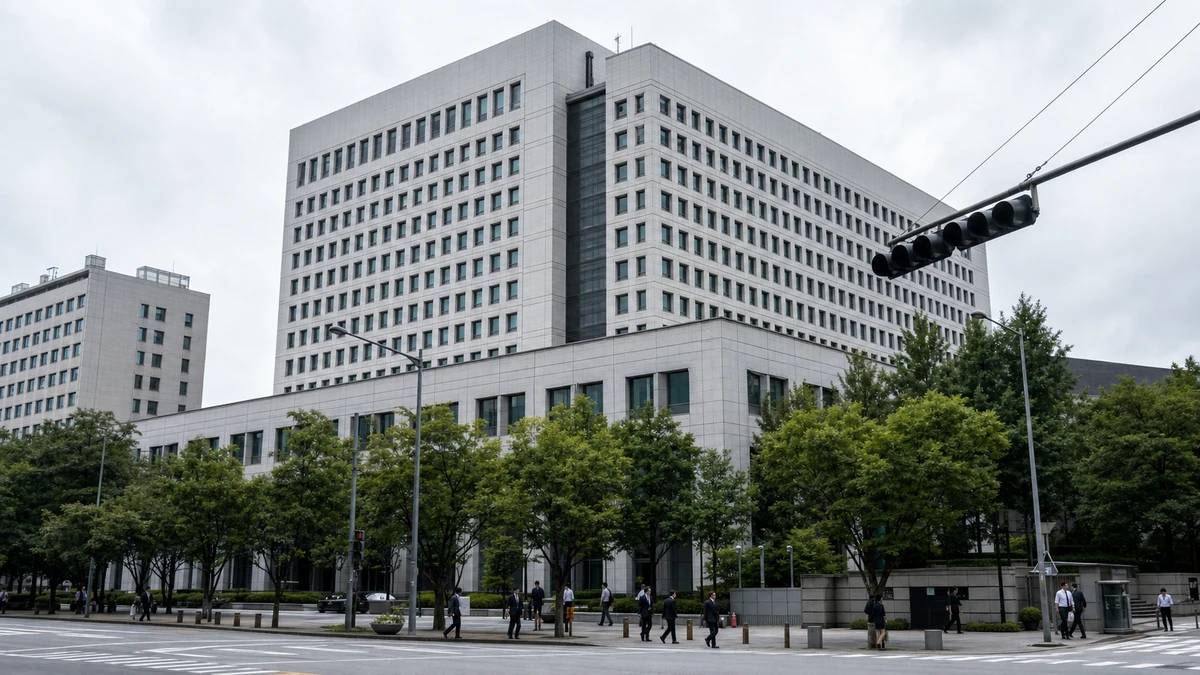
South Korea’s exchange is slowing down a major trading overhaul
South Korea’s main stock exchange is putting the brakes on one of its most closely watched market-structure changes, delaying a planned 7 a.m. premarket session until the end of 2027 as it works on a broader technology upgrade designed to make longer trading hours run more smoothly.
The Korea Exchange, or KRX, said the early session, which had been scheduled to begin Sept. 14, will now be pushed back by a little more than two years. The move, according to the exchange, is tied to the development of a unified trading system that would allow unfilled orders to move seamlessly from the premarket into the regular session and, eventually, into an after-hours market.
For American readers, the idea may sound familiar at first glance. U.S. investors have long grown used to trading outside traditional market hours, with premarket and after-hours sessions on major brokerage platforms forming a routine part of earnings-season strategy and retail-investor culture. But South Korea’s market works differently, both structurally and culturally. What KRX is trying to build is not simply an earlier opening bell. It is redesigning how the country’s entire trading day fits together.
That makes this more than a scheduling change. It is a signal about priorities inside one of Asia’s most closely watched financial markets: South Korea wants to expand access, but not at the expense of trust in the system.
In practical terms, KRX is saying that if investors are eventually going to trade from early morning through the evening, the handoff between those sessions must be reliable. Orders that do not execute in one session need predictable treatment in the next. Matching engines, brokerage systems and investor notifications all have to work in sync. In a market where millions of retail investors are active and where global interest in Korean companies has grown steadily, even a short-lived technology glitch could carry outsized consequences.
So while some investors may see the delay as frustrating, the exchange is framing it as a choice to favor stability over speed. That distinction matters. In capital markets, convenience attracts users, but confidence keeps them there.
What exactly is changing in South Korea’s stock market?
Under the plan outlined by KRX, the delayed premarket session would run from 7 a.m. to 7:50 a.m. local time. South Korea’s regular stock market now runs from 9 a.m. to 3:30 p.m. The exchange has separately proposed an after-market session from 4 p.m. to 8 p.m., and said that piece of the broader reform is still being pursued on its original timetable, with implementation tied to consultations with brokerage firms.
That may sound like a straightforward extension of the trading day, but it reflects a meaningful shift in how South Korea is thinking about investor access. In the United States, trading outside regular hours is often associated with corporate earnings, breaking news, economic data releases and traders seeking an edge before the opening bell. In South Korea, the discussion is also about modernizing the market for a broader investor base, including office workers who may have trouble placing trades during standard business hours and individuals reacting to overseas developments that occur after Seoul’s main market closes.
Because South Korea sits in a time zone that overlaps poorly with major Western markets, timing matters. U.S. market moves unfold overnight for Korean investors. News from Europe may develop during Korea’s late afternoon or evening. A longer domestic trading day could give investors more opportunities to respond without waiting until the next morning’s regular session.
Still, expanding market hours is not as simple as turning on the lights earlier and keeping them on later. Every additional session raises questions about price discovery, liquidity, volatility and fairness. If fewer traders participate in off-hours markets, prices can move more sharply on smaller orders. If different rules or technical procedures apply at different times of day, investors may struggle to understand how their orders will be handled.
That is why KRX has put so much emphasis on what it calls a single-system structure, sometimes described conceptually as a unified board. The goal is to create one integrated framework across premarket, regular trading and after-hours trading, rather than treating each session as a separate universe. For investors, that could mean fewer surprises. For brokers, it could mean cleaner order management. For the exchange, it could mean fewer operational risks when traffic and orders shift from one session to another.
Put another way, South Korea is not merely adding extra hours. It is trying to reengineer the plumbing underneath the market day.
Why the technology behind stock trading matters so much
Financial infrastructure rarely grabs headlines the way a blockbuster merger, a semiconductor breakthrough or a central bank decision does. Yet exchanges run on invisible systems that are every bit as important as the companies listed on them. If those systems fail, investor confidence can erode quickly.
That is the real backdrop to KRX’s decision. The exchange said the premarket launch will be linked to the development of a unified platform capable of preventing potential computer-system problems and managing the transfer of unfilled orders across sessions. In plain English, the exchange does not want to create a fragmented setup where an investor’s order behaves one way at 7:20 a.m., another way at 9:01 a.m. and still another at 4:15 p.m.
For people outside finance, an unfilled order simply means a trade request that was placed but did not find a matching buyer or seller at the desired price. In a multi-session market, what happens next can become complicated. Does the order expire? Does it roll into the next session automatically? Does it keep its priority in line, or does it re-enter from scratch? Different answers can affect outcomes for investors and shape perceptions of fairness.
Those details are not just technical footnotes. They are part of the rulebook investors rely on when they make decisions. If the market’s architecture is confusing or inconsistent, participation can suffer. If the system breaks during a transition between sessions, confidence can be shaken in ways that linger long after the bug is fixed.
American investors have seen enough high-profile trading outages and technology-driven market disruptions over the years to understand why an exchange would act cautiously. From temporary brokerage outages during periods of extreme volatility to exchange malfunctions that delayed or disrupted trading, market operators everywhere know that reliability is not optional. A stock exchange is not a consumer app where a glitch is an annoyance. It is a core piece of financial infrastructure, and failures carry real financial and reputational costs.
That helps explain why KRX appears to be making a calculated trade-off. The exchange may lose some momentum by delaying the premarket session, but it could avoid bigger problems by launching only after the underlying system is ready. In market design, there is usually no prize for being early if the rollout goes badly.
The after-hours market is still moving ahead, at least for now
Even as the premarket session is postponed, KRX said it will continue pursuing the after-market segment, which is envisioned to run from 4 p.m. to 8 p.m. The exchange said the exact implementation date will be determined through working-level consultations with brokerage firms.
That detail is important because it shows the broader reform is not being abandoned. Instead, it is being staged. South Korea’s exchange appears to be separating the pieces that can move forward sooner from those that require more extensive systems integration.
Brokerages are central to that process. In South Korea, as in the United States, exchanges do not operate in isolation. Investors place orders through securities firms, which then route those orders to the market. Extending trading hours therefore requires not only exchange readiness but also updates inside broker systems: order-entry screens, mobile apps, customer disclosures, back-office processing, risk controls and support desks all need to align.
For retail investors, that may translate into practical questions that sound mundane but matter a great deal. Will a smartphone app clearly show which session an order is being entered into? Will price limits or settlement rules change after regular hours? Will there be enough liquidity to trade efficiently? How will customer-service teams explain order status when a trade remains open across multiple sessions?
In a country where retail investors play a highly visible role in the equity market, those questions are not academic. South Korea has a large and engaged base of individual traders, sometimes compared in intensity to the surge of retail activity Americans saw during the meme-stock era. Local investors closely follow market-moving headlines, tech shares and policy shifts. Any reform that changes access to the market is likely to be scrutinized not only by institutions but also by everyday traders.
The after-hours session, if launched as expected, could appeal especially to people who are working during the day and want more flexibility to respond to news. It could also help investors who track U.S. and European markets and prefer to adjust positions after South Korea’s regular close. In that sense, the after-market session may serve as a test case for whether longer hours can deepen participation without undermining market quality.
Still, even that step is not guaranteed to proceed without adjustments. KRX’s emphasis on consultation with brokerage firms suggests the exchange is aware that implementation depends on broad operational readiness, not simply on a top-down announcement.
Why this matters beyond South Korea
At first glance, a delayed premarket session in Seoul may seem like a niche domestic issue. In reality, it speaks to a broader question facing markets around the world: how to make trading more accessible in an era of global capital, around-the-clock news and increasingly mobile investors.
South Korea punches above its weight in the global economy. It is home to major exporters, world-class chipmakers, battery manufacturers, automakers and consumer brands with international reach. For global investors, Korean stocks are not peripheral. They are a window into sectors critical to the modern economy, from semiconductors to electric vehicles to cultural exports tied to the Korean Wave, or Hallyu, the broad surge of South Korean influence in entertainment, beauty, fashion and food.
As international interest in Korean companies has grown, the accessibility of the Korean market has taken on greater significance. Longer trading hours can make a market easier to engage with from overseas, at least at the margins. They can also help domestic investors react more quickly to developments abroad. But expanded hours alone do not make a market more attractive. Foreign investors also care about transparency, system stability, predictable order handling and clear operating rules.
That is one reason this KRX decision deserves attention. It reveals how South Korea is balancing modernization with market integrity. Rather than treating extended hours as a simple convenience feature, the exchange is treating them as an infrastructure project. That approach may be less flashy, but it is arguably more important in the long run.
There is also a strategic dimension. Financial centers compete not only on the strength of listed companies but on the quality of market operations. Exchanges want to be seen as efficient, technologically advanced and investor-friendly. Yet they also know that a poorly managed upgrade can damage the very reputation they are trying to strengthen. In that sense, KRX’s delay is part of a familiar global story: markets want innovation, but they need resilience first.
For American readers, the closest comparison may be the ongoing debates over market structure in the United States, where regulators, exchanges and brokerages regularly spar over access, transparency and fairness in an increasingly fragmented trading environment. South Korea’s situation is not identical, but the underlying tension is recognizable. How do you expand opportunity without introducing confusion or fragility?
KRX’s answer, at least for now, is to build the foundation before opening the extra door.
A cultural and economic shift, not just a timetable change
There is also a deeper social context to the conversation around longer trading hours in South Korea. The country has one of the world’s most digitally connected populations and a highly active retail-investing culture. Personal finance conversations regularly spill onto social media, online forums and television. Trading is not a fringe activity reserved for professionals on Yeouido, Seoul’s financial district often compared to Wall Street. It is part of mainstream economic life for many households.
That broader participation helps explain why market-hour reform carries symbolic weight. Longer trading windows can be framed as a matter of convenience, but they also reflect changing expectations about when people should be able to access financial tools. In a society shaped by fast-moving technology and intense competition, there is pressure to make core systems more flexible and more responsive to users’ schedules.
At the same time, South Korea is no stranger to public sensitivity around fairness and institutional trust. When rules appear uneven or systems fail under stress, backlash can be sharp. That makes the exchange’s emphasis on reliability especially noteworthy. KRX is effectively saying that in a market serving both sophisticated institutions and highly engaged retail traders, credibility is part of the product.
The decision also fits a wider pattern in South Korea’s economic governance, where policymakers and institutions often face competing demands to modernize quickly while minimizing disruption. Whether the issue is housing policy, technology regulation or capital-market reform, there is frequently a tension between urgency and caution. Here, the exchange has come down on the side of caution.
That does not mean investors will welcome the delay. Some may argue that South Korea risks moving too slowly as global trading becomes more flexible. Others may worry that prolonged delays could reduce the practical benefits of reform or make implementation more complicated later. Those are fair questions. But KRX seems to be betting that investors will ultimately prefer a market that starts later and works cleanly over one that launches sooner with unresolved technical risks.
There is logic to that bet. Extended trading hours only add value if investors trust the process. If order rollovers are confusing, if brokerage systems are unevenly prepared, or if outages occur at session boundaries, the reform could do more harm than good. In that case, the extra hours would not feel like progress. They would feel like a source of friction.
What investors should watch next
The next key milestone will be the proposed launch of the after-hours market, still targeted around Sept. 14 but subject to coordination with brokerages. Whether that timeline holds will offer an early indication of how smoothly KRX and market participants can execute the first phase of the broader trading-hours expansion.
Investors and analysts will also be watching for more detail about the unified system architecture that KRX says must be in place before the premarket session begins. The exchange has made clear that the core issue is continuity across sessions. The specifics of that continuity, including how unfilled orders are transferred and how the rules will be communicated to investors, will likely shape market reaction as much as the timetable itself.
Another question is whether longer hours will meaningfully improve liquidity or simply spread existing trading activity over more time. That is a challenge in many off-hours markets around the world. If participation is thin, price discovery can be less efficient and trading costs can effectively rise. The success of South Korea’s plan may therefore depend not only on technology but also on whether enough investors see value in using the added sessions.
For global investors, the broader message is straightforward. South Korea is still moving toward a longer trading day, but it wants that expansion to rest on stronger infrastructure. The premarket delay does not signal retreat. It signals sequencing.
That may be less exciting than a rapid rollout, but it is probably the more consequential story. Exchanges exist to match orders, yes, but also to uphold confidence in the rules, the systems and the continuity of the market itself. KRX’s decision suggests that as South Korea modernizes its capital markets, it wants to compete not just on access, but on reliability.
In an age when investors can react to headlines in seconds and move money across borders with a tap, that may be the more durable advantage.
Comments
Post a Comment