
Seoul’s first reaction goes beyond diplomacy-as-usual
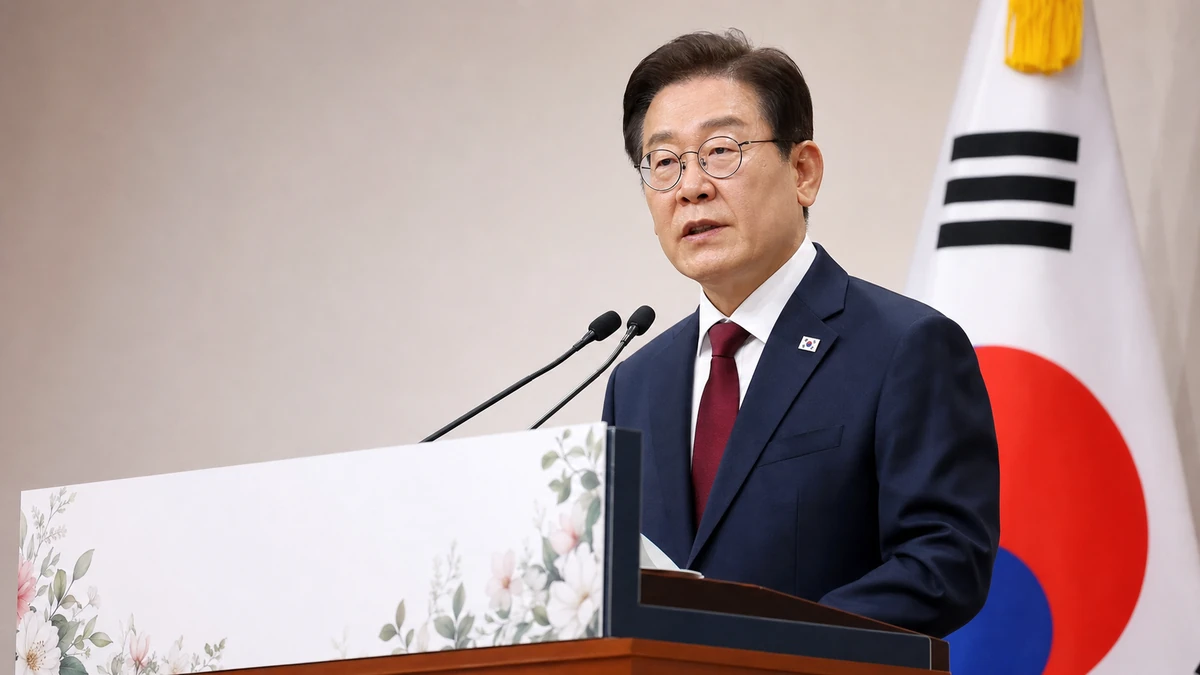
South Korean President Lee Jae-myung has welcomed news that the United States and Iran reached a war-ending agreement, calling it a major step toward resolving a crisis the international community had long hoped would be defused. On its face, the statement looked like a familiar piece of diplomatic language: praise for negotiations, support for peace and thanks to the governments that made the breakthrough possible.
But in Seoul, the significance of Lee’s message lies in what he chose to emphasize. Rather than treating the agreement as a faraway geopolitical event limited to the Middle East, Lee framed it as a development with direct consequences for global shipping, energy markets and economic stability. In other words, this was not simply South Korea applauding peace from a polite distance. It was South Korea making clear that what happens in the Persian Gulf can quickly affect factories, fuel prices and freight routes half a world away.
According to South Korean reporting, Lee said the agreement should contribute not only to calmer conditions in the Middle East but also to global peace and prosperity. That pairing — peace and prosperity — is central to how export-driven countries such as South Korea read international crises. For Americans, a useful comparison might be the way Washington talks about freedom of navigation in the South China Sea: the principle is diplomatic, but the stakes are practical, touching everything from supply chains to consumer prices.
Lee’s remarks also matter because they amount to South Korea’s first clear public message after the reported agreement. First reactions in diplomacy are rarely casual. Governments choose words carefully, especially when a major power such as the United States is involved and when the issue touches on military conflict, oil supplies and the safety of civilian shipping. By responding quickly and positively, Seoul signaled that it sees de-escalation not as an abstract moral good but as something tied to the country’s own national interest.
That helps explain why Lee’s statement was broader than a simple congratulatory note. He praised the leadership of President Donald Trump in helping secure the agreement, while also recognizing the diplomatic efforts of the negotiating parties and other related countries. That balance is classic middle-power diplomacy: acknowledge Washington’s role, avoid framing the moment as a one-country victory lap and emphasize the value of negotiation itself.
For American readers who may be more accustomed to seeing South Korea through the lens of North Korea, semiconductors or K-pop, the episode is a reminder that Seoul’s foreign policy is increasingly global. South Korea is still defined by the unresolved tensions on the Korean Peninsula, but its leaders also now speak more openly about issues far beyond Northeast Asia when those issues affect trade, energy and international order.
Why the Strait of Hormuz matters in Seoul
The most revealing part of Lee’s message may have been his explicit reference to the Strait of Hormuz, the narrow maritime passage that links the Persian Gulf to the open ocean. To many Americans, the name surfaces mainly during oil shocks or military standoffs. In South Korea, it carries a more constant sense of vulnerability.
South Korea imports the vast majority of its energy, and a large share of that supply has long come from the Middle East. It is also one of the world’s most trade-dependent industrial economies, built on moving goods across oceans. That means the safe passage of commercial vessels through strategic chokepoints is not a secondary issue for Seoul. It is a frontline economic concern.
Lee said he hoped stable global energy supply conditions would be restored and that all ships — including South Korean vessels and sailors that had faced restrictions linked to the tensions around Hormuz — would be able to resume safe operations quickly. That wording is important. He did not limit his comments to South Korean ships alone. He linked South Korea’s interests to the broader principle of safe navigation for everyone, a formulation meant to place national concerns within the framework of international public goods.
For Americans, the easiest comparison may be the Strait of Hormuz’s relationship to global energy markets. Even for countries that produce significant energy domestically, disruptions there can ripple outward through world oil prices, insurance costs, shipping schedules and broader market confidence. For a country like South Korea, which depends heavily on imported crude and liquefied natural gas, those ripples can hit faster and harder.
That is why Seoul’s statement should not be mistaken for generic diplomatic optimism. When a South Korean president mentions shipping lanes, energy supply and the safety of sailors in the same breath, he is describing a real policy problem. This is about container ships, tanker routes, manufacturing costs and the lived reality of an economy that cannot insulate itself from maritime instability. If the Korean news summary has one central insight, it is this: South Korea does not see Middle East tensions as somebody else’s regional conflict. It sees them as a factor that can affect its own households and industries almost immediately.
There is a domestic dimension as well. South Korean voters, like American voters, feel international instability through prices and livelihoods more than through diplomatic communiques. Higher fuel costs, more expensive imports or disruptions to major export sectors become political issues at home. So when Lee highlights maritime safety and energy flows, he is speaking simultaneously to international partners and to a domestic audience that understands the economic stakes.
A middle power trying to act responsibly, not theatrically
South Korea was not a direct party to the U.S.-Iran negotiations, and Lee’s statement reflected that reality. He did not promise unilateral action or suggest Seoul would reshape the regional balance on its own. Instead, he said South Korea would work closely with the United States and the broader international community and would do what is necessary to support the process.
That approach fits South Korea’s diplomatic style when dealing with conflicts outside its immediate region. Seoul often presents itself as a responsible stakeholder: not the lead architect of a major settlement, but a country prepared to contribute where its economic weight, diplomatic reach and alliance relationships allow. The language of “support and cooperation,” even when not yet backed by specific measures, is a way of announcing political will without overpromising operational details.
In Washington terms, this is the language of coalition politics rather than grandstanding. South Korea is signaling that it wants the agreement to hold, wants the trade routes to stabilize and wants to coordinate with allies and partners rather than improvise a solo role. In a region as complex as the Middle East — where military deterrence, commercial shipping, energy supply and regional rivalries all overlap — that kind of cautious positioning may be the most credible course available to a government like Seoul.
It is also notable that Lee appears to have welcomed the diplomatic outcome more than any one side’s advantage within it. That distinction matters. South Korea has every incentive to maintain close coordination with the United States, but it also has reason to avoid rhetoric that would make the agreement sound like a zero-sum geopolitical win. A settlement that lowers the risk of escalation is more useful to Seoul if it is seen as durable and broadly supported, not merely as a momentary triumph for one capital.
That is part of why Lee’s acknowledgment of Trump’s leadership was paired with praise for the diplomatic efforts of the parties involved and related countries. The formula allows Seoul to recognize the White House while still underscoring a broader diplomatic process. In plain terms, South Korea is saying: America mattered, but negotiations succeed because multiple actors choose compromise over confrontation.
That kind of language may sound routine, but in diplomacy routine language often carries the most meaning. It shows what a government is trying not to say as much as what it is willing to say outright. Seoul does not want to appear indifferent to Washington’s role. It also does not want to reduce a delicate regional settlement to a personalized political narrative. The balancing act is deliberate.
What Lee’s quick response says about South Korea’s global ambitions
Another striking feature of the episode is timing. Lee issued the message while traveling in Europe, according to South Korean reports, and posted his reaction on X, the platform formerly known as Twitter. The fact that he responded while abroad may seem minor, but it says something important about how South Korean presidents now operate.
Foreign trips used to be easier to compartmentalize. A leader visiting Europe could focus mainly on bilateral ties, trade promotion, summit meetings and events with expatriate communities. Today, presidents are expected to react in real time to crises and breakthroughs anywhere in the world, no matter where they happen to be physically. Diplomacy has become permanently live.
For South Korea, that shift carries special meaning. The country has spent decades managing the immediate security threat posed by North Korea, often leaving the impression that its diplomacy begins and ends on the peninsula. That has not been true for some time, but moments like this underscore the point. A South Korean president on a European trip responding to a U.S.-Iran settlement by discussing Middle East stability, maritime security and global energy flows is acting like the leader of a deeply networked middle power, not a narrowly regional actor.
That matters to Seoul’s international identity. South Korea is a treaty ally of the United States, a major manufacturing power, a top-tier trader and an increasingly visible diplomatic player in forums that range from climate policy to development aid to technology governance. Its leaders want the country to be seen as more than a state that reacts to North Korean provocations. Lee’s statement fits that broader effort to present South Korea as a country with both interests and responsibilities across regions.
There is also a symbolic layer here. South Korean political culture places high value on presidential messaging, and statements from the Blue House’s successor institutions — or directly from the president’s own public channels — are often scrutinized closely for nuance. A quick overseas response tells allies, investors and domestic audiences that Seoul is alert and engaged. It says the government understands that the world’s crises are interconnected.
Americans may take such expectations for granted because the United States sits at the center of so many security arrangements and economic networks. For South Korea, however, there is still domestic significance in demonstrating that the presidency can think globally while juggling the pressures of local politics. It reflects a country that is no longer content to be treated as a secondary voice on major international issues simply because its neighborhood remains tense.
The politics of praising Trump — and the caution built into it
Lee’s praise for Trump’s leadership is likely to draw particular attention in both Seoul and Washington. Any foreign leader’s public wording about an American president can carry political implications, and that is especially true when the president in question is Trump, whose diplomatic style has often been polarizing at home and abroad.
Still, the context matters. Lee’s statement, as described in the Korean summary, was not a broad ideological endorsement. It was a targeted acknowledgment tied to a specific diplomatic outcome. South Korea’s government appears to have calculated that publicly crediting the U.S. president for helping bring about a settlement was both courteous and strategically useful, especially given the importance Seoul places on the alliance.
At the same time, the wording appears to have been carefully constructed to avoid making the message solely about Trump. By also crediting the negotiating countries and other relevant governments, Lee placed the result within a multilateral frame. That makes the statement easier to defend as pragmatic diplomacy rather than partisan signaling.
This is a familiar move for U.S. allies. When Washington produces or helps produce a breakthrough, allied governments often want to reinforce the outcome without becoming entangled in America’s domestic political arguments. They may praise the administration in power while keeping the emphasis on stability, deterrence, alliance coordination or diplomatic success. Lee’s message appears to follow that pattern.
For South Korea, the stakes are higher than optics. The alliance with the United States remains the anchor of its national security, and Seoul has little interest in appearing grudging when Washington is credited with reducing the risk of war in a region vital to global commerce. At the same time, South Korea also trades with a broad range of partners and generally prefers diplomatic environments that are not arranged around blunt winner-loser narratives.
That is why Lee’s formulation matters. It allows Seoul to show alignment with Washington while maintaining its own preferred story line: this is a victory for negotiations, for de-escalation and for international coordination. The message is not that one capital dominated another. The message is that diplomacy worked, and the world economy stands to benefit if the agreement holds.
Why this story matters beyond Korea
For global readers, South Korea’s reaction is not just a piece of foreign-ministry choreography. It offers a concise example of how middle powers think about security in the 21st century. The lines between regional conflict, global trade and domestic economic wellbeing are thin. A diplomatic breakthrough in the Middle East is immediately interpreted in Seoul through the lens of shipping lanes, energy supply and the safety of civilians at sea.
That way of thinking is increasingly common among countries whose prosperity depends on open trade. South Korea, Japan, Singapore and many European economies all watch strategic chokepoints with the understanding that a disruption can travel quickly through insurance markets, logistics networks and consumer costs. If American readers wonder why a Korean president would react so directly to a U.S.-Iran agreement, the answer is straightforward: South Korea has too much at stake not to.
There is also a lesson here about how South Korea wants to be seen. Its message did not retreat into narrow self-interest, even though its national interests are obvious. Lee referred not only to South Korean ships and crews but to all vessels, and not only to Korean needs but to global peace and prosperity. That phrasing is diplomatic, certainly, but it also reflects an argument about legitimacy. Governments can defend their own economic interests more effectively when they present those interests as aligned with broader international norms such as freedom of navigation and collective stability.
None of this guarantees what comes next. Public statements of welcome are easier than the long work of sustaining a settlement, and Seoul has not yet laid out detailed measures it may take in support of the post-agreement environment. Any concrete role — whether diplomatic, economic or logistical — would likely depend on how the agreement is implemented and how other major actors respond.
But even without those details, Lee’s statement is revealing. It shows a South Korean government trying to connect distant conflict to everyday economic realities, trying to support the U.S. alliance without reducing the story to American politics and trying to present South Korea as a serious participant in international crisis management. In that sense, the message is about more than one agreement. It is about the kind of country South Korea believes it has become.
For Americans, that is worth noticing. South Korea is often introduced to U.S. audiences through cultural exports — K-pop, Korean dramas, Oscar-winning films, skin care, food trends — or through the enduring security drama with North Korea. Both are real parts of the story. But neither fully captures the country’s place in the world. Seoul is also a global economic actor whose leaders increasingly speak the language of maritime security, supply-chain resilience and multiregional diplomacy.
If the U.S.-Iran agreement marks a genuine turning point, South Korea wants to be counted among the countries that helped legitimize the diplomatic opening and prepare the ground for stability. If it falters, Lee’s statement still stands as a record of what Seoul prioritized: safe passage, stable energy flows, international coordination and the idea that peace has to be measured not only in ceasefires but also in whether ordinary economic life can resume.
That is a practical, unsentimental way to define peace. It is also one that many Americans, watching gasoline prices, shipping disruptions and global market swings, would likely understand very well.



0 Comments