South Korean prime minister opens China trip with business outreach, signaling economics-first diplomacy
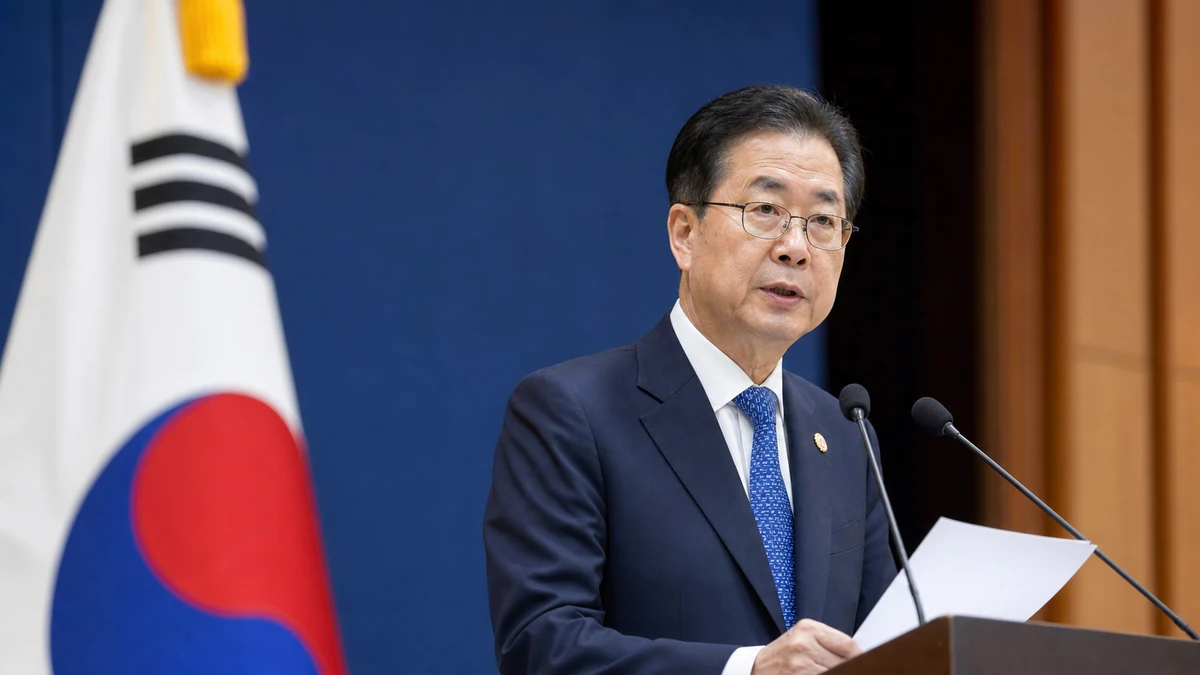
Business comes first in Beijing
South Korean Prime Minister Kim Min-seok opened his visit to China not with a ceremonial photo op or an extended public meeting with senior Chinese officials, but with a conversation with business leaders in Beijing — a choice that says a great deal about what Seoul wants this trip to accomplish.
According to South Korean media reports, Kim met Chinese executives on Tuesday at the South Korean ambassador’s residence in Beijing and used the occasion to underscore continuity in ties between Asia’s fourth-largest economy and its biggest trading partner. “South Korea and China, since establishing diplomatic relations, have been walking an even stronger path on the foundation of a long shared history,” Kim said, framing the relationship as something sturdier than whatever short-term political turbulence may come and go.
For American readers, the significance of that first event may be easy to miss. In high-level diplomacy, opening moves matter. The first formal stop on an overseas trip often acts like a thesis statement. A leader who begins with a military site is emphasizing security. One who starts with a summit meeting is signaling politics. Kim’s decision to begin by sitting down with corporate figures points to something more practical: South Korea wants to stabilize and expand economic ties with China even as the broader geopolitical environment remains tense and complicated.
That emphasis is especially notable because the visitor is not just a trade minister or investment official, but the prime minister — one of the highest-ranking figures in the South Korean government. In the South Korean system, the president sets the broad political direction, but the prime minister often plays an important role in implementing policy, coordinating ministries and translating big diplomatic messages into government action. When a prime minister makes economics the first order of business on a China trip, it suggests Seoul is trying to send a message not just to Beijing, but to markets, manufacturers and investors.
Kim also told the gathering that one of the biggest reasons he wanted to come to China was to see the country’s economic development firsthand. That line may sound polite, even formulaic, but in diplomatic settings it serves a purpose. It tells the audience that South Korea is not approaching China as an abstraction or as a talking point in a broader U.S.-China rivalry. Instead, it is signaling that it wants direct observation, direct dialogue and a direct read on where the Chinese economy is headed.
At a moment when governments around the world are reassessing supply chains, industrial policy and exposure to China, that sort of statement carries weight. Seoul appears to be telling Chinese companies: We are still watching closely, still engaged and still interested in practical cooperation.
Why this meeting matters beyond symbolism
There were no reports of a headline-grabbing contract, a splashy new investment package or a dramatic bilateral breakthrough coming out of the meeting. In some ways, that makes the event more revealing, not less. Much of diplomacy — especially economic diplomacy — is not about immediate deliverables. It is about restoring channels, shaping expectations and creating enough confidence for businesses to keep making long-term decisions.
That is particularly important in the South Korea-China relationship. The two countries are deeply intertwined economically and geographically close, but their ties have also been tested in recent years by broader strategic pressures, shifting supply chains and political distrust between Washington and Beijing. For South Korea, which relies heavily on exports and sits at the center of global manufacturing networks, China is too important to ignore and too complex to approach casually.
American audiences may think of the relationship through familiar categories: semiconductors, electric vehicle batteries, consumer electronics and trade dependence. Those are all part of the story. South Korea is home to some of the world’s best-known technology and industrial brands, and many of those companies have spent decades building businesses that intersect with China as a market, a manufacturing base or a competitor. That interdependence makes predictability especially valuable.
And predictability was, in effect, the subtext of Kim’s remarks. By describing the bilateral relationship as built on a “long historical foundation” and walking a “stronger path,” he was not merely being diplomatic. He was offering reassurance. Companies deciding where to invest, whom to source from and how to structure operations want to know whether relations between governments are stable enough to support long-term planning. Business leaders can usually handle competition and risk; what they dislike most is uncertainty they cannot model.
That is why meetings like this one often matter more than they appear to. A roundtable with executives may not produce a viral headline, but it can help reset tone. It can tell Chinese firms that the South Korean government is open for conversation and wants cooperation to continue. It can also tell South Korean companies, many of which watch official rhetoric closely, that Seoul is trying to preserve room for business engagement even amid a harder-edged regional climate.
In that sense, this was less a performance of diplomacy than an exercise in maintenance. And for two economies as connected as South Korea and China, maintenance is itself a serious policy goal.
The bigger picture in Seoul’s China strategy
Kim’s Beijing stop does not exist in isolation. In his public remarks, he referenced recent exchanges at the top level of government, including Chinese President Xi Jinping’s visit to South Korea around the Asia-Pacific Economic Cooperation forum last year and South Korean President Lee Jae-myung’s state visit to China in January. By invoking those meetings, Kim placed his own visit in a broader sequence of high-level contact rather than presenting it as a standalone outreach effort.
That is an important distinction. In diplomacy, leaders often try to show continuity because continuity lowers the perceived risk of engagement. If summit meetings establish the broad political framework, a prime ministerial visit helps operationalize it. It brings the relationship down from lofty statecraft to ministries, companies, investment decisions and policy follow-through.
For Americans, a rough analogy might be this: If a presidential summit is where the White House sets the headline direction, a subsequent trip by a Cabinet-level official or vice president might be where the government starts translating that direction into conversations with industry and regional stakeholders. The exact institutions are different, of course, but the logic is similar. Big diplomacy sets the stage; working-level and sub-presidential diplomacy fills in the details.
That may be especially necessary in the case of China. South Korea has to navigate a difficult balancing act. The United States is its treaty ally and its core security partner. China is a crucial economic counterpart and a central player in East Asian regional affairs. Seoul cannot reduce its China policy to either embrace or confrontation. Instead, it often tries to operate on several tracks at once: protecting its alliance with Washington, addressing regional security concerns and keeping economic dialogue with Beijing alive.
Kim’s business-first itinerary fits that multi-track approach. It suggests South Korea is trying to engage China where interests remain tangible and mutual, particularly in trade and industrial cooperation, without pretending that all strategic tensions have disappeared. That is not unusual for middle powers, but South Korea’s case is especially important because of how exposed it is to both security shocks and market disruptions.
The message coming out of Beijing, at least from the first day of the trip, appears to be that Seoul wants to keep relations with China grounded in practical interests. Rather than leading with ideology or confrontation, Kim led with economics, investment climate and direct contact with the people who shape commercial outcomes.
Understanding the Korean context
To fully grasp why this visit is being watched closely in South Korea, it helps to understand how economic statecraft works there. South Korea is not just an export economy; it is one of the most trade-dependent advanced economies in the world. Its global profile — from Samsung smartphones to Hyundai cars to Korean dramas and K-pop — often highlights consumer culture and technological success. But beneath that cultural visibility is a national model deeply tied to manufacturing, shipping and cross-border business networks.
That makes the country unusually attentive to the mood of the international marketplace. Changes in relations with China are not abstract foreign policy developments in Seoul. They can affect factory orders, investor confidence, logistics costs and the strategic planning of major firms.
There is also a domestic political culture in South Korea that places real value on visible engagement by senior officials. When a top leader says he wants to see China’s economic development firsthand, the phrase does more than flatter the host country. It signals diligence — the idea that the government is not relying solely on reports, assumptions or ideological filters, but is sending senior officials to observe conditions directly. In the Korean political context, that can be read as a practical, hands-on style of governance.
Another cultural point worth explaining for foreign readers is the importance of “gan damhoe,” or a discussion meeting or roundtable. In Korean political and business life, these gatherings can be highly meaningful even when they produce no immediate formal agreement. They function as spaces for testing tone, building trust and showing that communication channels are active. In American terms, think less of a ceremonial banquet and more of a closed-door listening session with CEOs where the optics are designed to show openness and seriousness.
That is one reason analysts will likely pay close attention not only to what Kim said publicly, but to the simple fact that he made time for the event at the very start of his trip. In diplomacy, sequencing is substance. Beginning with business leaders was itself a message.
It is also worth noting that South Korea’s governments, regardless of political stripe, often talk about “pragmatism” in foreign affairs when dealing with major powers. That concept generally means pursuing the national interest through workable, concrete cooperation rather than sweeping rhetoric. Kim’s comments about seeing China’s economic rise directly and emphasizing a strengthened path since diplomatic normalization fit neatly into that tradition.
Beijing, Dalian and the economics of regional influence
Kim’s trip extends beyond the Beijing roundtable. His itinerary reportedly includes a special speech at the Summer Davos forum, meetings with senior Chinese officials and events tied to economics and veterans’ affairs, with stops in both Beijing and Dalian. Taken together, those plans suggest a layered visit, one that is meant to speak to multiple audiences at once.
For readers unfamiliar with the Summer Davos forum, it is the informal name often used for the World Economic Forum’s annual meeting in China, a gathering that aims to do for business and policy elites what the better-known Davos meeting in Switzerland does each winter. Attending or speaking there allows governments to project their economic message to a broader international audience, including investors, executives and policymakers from outside the immediate bilateral relationship.
If the Beijing meeting with Chinese business leaders was about direct reassurance, a Summer Davos appearance is more about narrative positioning. It gives South Korea a platform to present itself as an economically sophisticated, globally connected country that still sees value in regional cooperation even in an era of strategic fragmentation. That matters for Seoul, which has increasingly had to explain how it can deepen alignment with the United States while remaining commercially engaged with China and plugged into broader Asian growth.
Dalian, meanwhile, carries its own symbolism. A major northeastern Chinese port city with a long commercial history, it offers a fitting backdrop for discussions that blend economics, logistics and regional ties. A two-city itinerary that combines the political center of Beijing with the commercial and international-facing environment of Dalian reinforces the practical character of the trip.
The addition of veterans-related events also suggests that South Korea is trying to present the relationship with China as multi-dimensional rather than purely transactional. In East Asia, historical memory often sits close to present-day diplomacy. Governments frequently weave together economic dialogue, political meetings and gestures linked to history or national sacrifice. For American audiences, that may seem like an unusual blend of categories. In the region, however, diplomacy often operates through exactly that kind of layered symbolism.
Still, the economic emphasis remains unmistakable. By front-loading the visit with business engagement and then moving into broader forums and official meetings, Seoul appears to be treating commerce not as a side conversation but as one of the central pillars of the relationship.
What businesses on both sides are listening for
For Chinese business leaders, the most important takeaway from Kim’s remarks may be less the praise for China’s economic development than the assurance that South Korea wants sustained communication. In uncertain times, tone from senior officials can shape whether companies perceive a relationship as open, frozen or drifting.
For South Korean businesses, the value of the trip may lie in its signaling function. Many Korean firms have spent the last several years adjusting to a world in which China is simultaneously an essential market, a sophisticated competitor and a focal point of great-power rivalry. They have had to think harder about risk concentration, compliance and future investment strategy. When the prime minister publicly emphasizes dialogue, continuity and firsthand observation, that can be interpreted as a sign that the government wants to keep its policy options broad and its channels open.
There is also the matter of government credibility. Businesses often look not just at official statements, but at the rank of the person making them. A message delivered by a junior trade official has one kind of weight; the same message delivered by a prime minister on the first day of an overseas visit carries more. It says this is not a box-checking exercise. It is a priority.
That does not mean the relationship is suddenly uncomplicated. It is not. Seoul and Beijing still operate in a region shaped by strategic mistrust, competition over advanced industries and the persistent shadow of U.S.-China tensions. South Korea must manage its alliance commitments, economic interests and domestic politics all at once. China, for its part, is dealing with its own economic pressures and international frictions.
But diplomacy is not only for easy relationships. Often it is most necessary where interests overlap even when outlooks do not. In that sense, Kim’s Beijing meeting with Chinese business leaders reflects a sober recognition of reality. South Korea cannot afford to stop talking to China. China, likewise, has reason to keep channels with South Korea functioning, especially given the latter’s importance in technology, manufacturing and regional economic networks.
The meeting also offered a reminder that not every consequential diplomatic moment comes with a treaty, a signed contract or a dramatic communiqué. Sometimes the real significance lies in what a government chooses to prioritize, whom it chooses to meet first and what kind of language it uses to frame the future.
A message to the region — and beyond
Viewed from Washington, Beijing or Tokyo, Kim’s first official stop in China may look like a modest event: a prime minister, a residence in Beijing, a room full of executives, a short statement about a stronger path forward. But in the context of Northeast Asian diplomacy, it reads as something more deliberate.
South Korea is signaling that it wants high-level political engagement with China to produce practical economic conversations, not just symbolic summitry. It is also signaling that, despite a harsher geopolitical climate, there is still value in showing up in person, taking stock of economic conditions and speaking directly to the people who will decide whether cross-border cooperation expands, stalls or quietly endures.
That has implications well beyond the bilateral relationship. Other countries in the region are making similar calculations about how to deal with China: how to protect security partnerships, how to reduce strategic vulnerability and how to avoid severing economic ties that remain deeply embedded. South Korea’s approach this week offers one example of how a close U.S. ally is trying to manage that balancing act in public.
For American readers who often encounter South Korea in headlines about North Korea, semiconductors or the global spread of K-pop, this episode is a reminder of another side of the country’s role in the world. South Korea is not only a cultural powerhouse or a front-line security state. It is also a nimble middle power, one that spends much of its diplomatic energy trying to connect politics, commerce and regional stability in ways that serve its long-term interests.
Kim’s opening message in Beijing — grounded in history, economic pragmatism and a call for steadier cooperation — does not solve the structural challenges in the South Korea-China relationship. It was never going to. But it does clarify how Seoul wants to approach them: not by pretending tensions do not exist, and not by allowing those tensions to shut down contact, but by trying to build enough confidence for the relationship to remain workable.
That may not be dramatic diplomacy. It may, however, be the kind that matters most.
Comments
Post a Comment