A title race starts to take shape in South Korea
In many soccer leagues, the middle of summer can feel like a holding pattern — hot weather, tired legs and a long season still stretching ahead. But in South Korea’s top professional division, K League 1, the race at the top is beginning to look more defined. FC Seoul, one of the league’s most recognizable clubs and one of the best-supported teams in the country, strengthened its grip on first place with a 3-1 win over Pohang Steelers on July 22 at Seoul World Cup Stadium, powered by a two-goal performance from winger Jung Seung-won.
The result mattered for more than the standings, though those alone are striking. FC Seoul moved to 42 points after 19 rounds, opening a 10-point gap over second-place Gangwon FC, which sits on 32. In American sports terms, that is not quite a division clincher, but it is the kind of cushion that changes the conversation. A team is no longer simply having a good run. It is setting the pace, forcing everyone else to chase and making each close victory feel like part of a larger pattern rather than a lucky break.
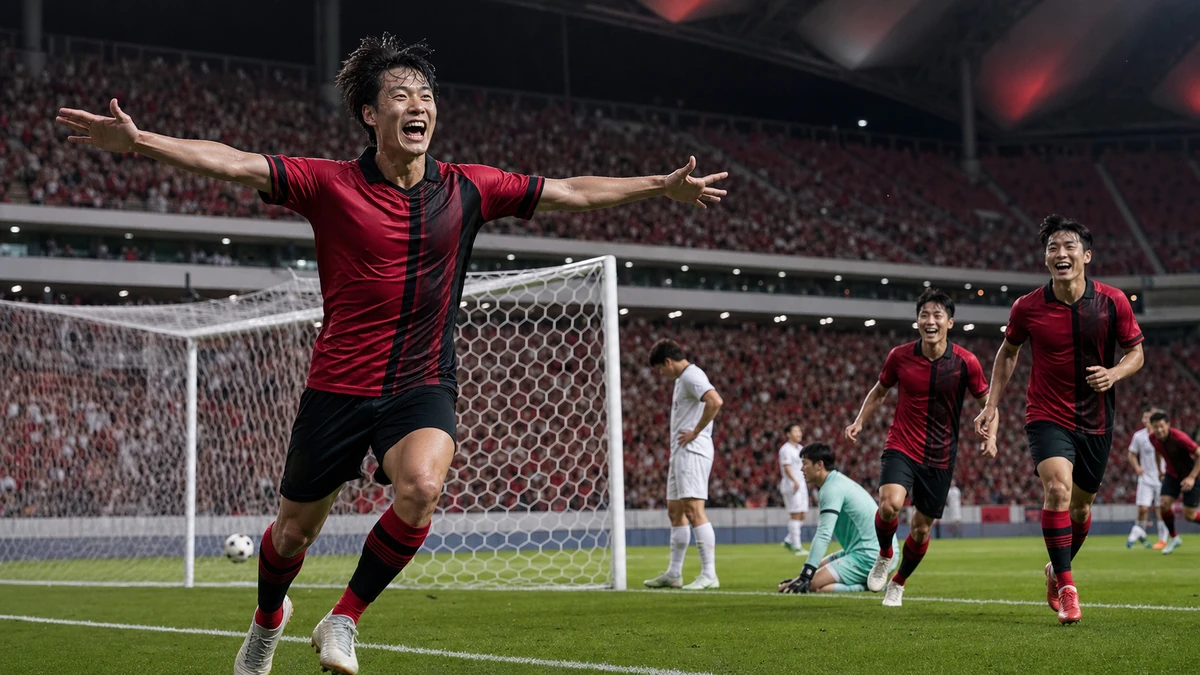
What made this win stand out was not only that Seoul beat a respected opponent in Pohang, a club with a deep history in Korean soccer, but how it happened. The match was tied 1-1 well into the second half before Jung broke the deadlock in the 69th minute. Then, in the 88th minute, he added another goal to shut the door. If the first goal turned anxiety into belief, the second turned belief into certainty.
For American readers less familiar with the rhythms of Korean soccer, FC Seoul is not some upstart story. It is one of the marquee brands in the K League, based in the capital and playing in one of the country’s largest venues, the stadium built for the 2002 FIFA World Cup. But even big clubs can drift, and even traditional powers can spend years trying to live up to their billing. What has made Seoul’s recent form compelling is that it combines stature with substance. This is a team not only carrying the weight of expectation, but increasingly meeting it.
Jung’s emergence as a timely scorer has become one of the clearest signs of that transformation. He did not open the season as the league’s hottest name. In fact, he spent much of the early campaign waiting for his first goal. Now, in a span of just a few weeks, he has become the player Seoul fans look to when a tight game needs a decisive moment.
The player who keeps scoring the goal that matters most
There are scorers who pad totals in blowouts, and then there are players whose goals alter the emotional architecture of a season. Jung, at least lately, belongs in the second group. His two goals against Pohang gave him another multi-goal highlight, but the more telling detail is that every match in which he has scored this season has featured a game-winning goal from him.
That pattern began on July 4 against Incheon United, when he finally scored his first goal of the season. It was the only goal in a 1-0 victory, which meant it was, by definition, the winner. He followed that on July 19 against Bucheon FC, when he scored again in a 3-1 win. And against Pohang, he raised the stakes further: not only the winner, but also the insurance goal that removed lingering doubt.
In baseball, broadcasters often talk about “clutch hitting,” even if modern analytics sometimes push back on the idea as more complicated than fans assume. Soccer has its own version of that debate. But whatever label one prefers, there is no denying the practical value of scoring when the score is level, the pressure is rising and a title contender needs to turn one point into three. Jung’s recent goals have not been decorative. They have been consequential.
That helps explain why his surge is getting so much attention in Korea. It is not merely that he found his scoring touch after a dry spell. It is that the timing of his goals has aligned with the most sensitive phase of the season, when the league leader is trying to prove that its position is sustainable. Every first-place team can rack up wins when confidence is high and margins are comfortable. The real test comes in games that threaten to slide sideways. Jung has become the player helping Seoul drag those matches back under control.
His comments after the game offered a simple explanation, one that felt both understated and revealing. He said he likes summer the most and that he managed his body well during the break. In a sport where players and coaches often rely on carefully polished clichés, the remark stood out because it connected directly to what fans had just watched. Both of his goals came in the second half. He looked sharp late in the match, not drained by the heat or the stakes. In a humid East Asian summer, that is not a small detail. Fitness can decide as much as tactics.
Why the match against Pohang felt bigger than one night
On paper, a 3-1 home win looks convincing. In real time, it felt more fragile for much of the evening. Seoul and Pohang were tied 1-1 into the middle stages of the second half, and the game still carried the kind of uncertainty that can haunt title challengers. A draw would not have been disastrous, but it would have left room for questions. Was Seoul in command, or simply holding on? Was the lead at the top sturdy, or beginning to wobble?
Jung’s go-ahead goal in the 69th minute answered those questions with force. Korean sports coverage often uses the term “resolving” or “problem-solver” to describe a player who produces in pivotal moments. It is a common and culturally resonant sports phrase in South Korea, one that suggests reliability under pressure rather than just star power. Jung is increasingly being cast in that role for Seoul. He is the player who appears when the script stalls and pushes it forward again.
The second goal mattered almost as much as the first. In soccer, especially in leagues where parity keeps many games competitive deep into the second half, a one-goal lead can feel psychologically unstable. A deflected cross, a set piece, a brief lapse in concentration — any of those can erase what seemed like control. By scoring again in the 88th minute, Jung did more than improve his stat line. He removed the possibility of a frantic finish and allowed Seoul to celebrate a result that looked definitive.
For an American audience, it may help to think of it this way: the first goal was the late fourth-quarter touchdown that puts a team ahead; the second was the final defensive stop, except done by the same player and expressed through attack. It was both the breakthrough and the seal.
Pohang, meanwhile, is not the kind of opponent a contender can dismiss. The Steelers are one of Korea’s historic clubs, known for structure, discipline and a tradition of competitiveness. A strong performance against them carries more weight than a routine win over a struggling side. That made Seoul’s response after the game was tied all the more meaningful. Rather than settling into caution, it found another level.
FC Seoul’s recent form suggests more than a hot streak
Zoom out from one match, and the broader shape of Seoul’s season becomes clearer. The club is unbeaten in its last six matches, going 5-0-1 over that stretch. Its last two wins have both come by 3-1 scores. Those are the kind of numbers that do not guarantee a championship, but they do suggest a team with repeatable habits.
Just as important as the results is the manner of them. Against Bucheon, Seoul built a lead, conceded a goal and still managed the game well enough to add a late insurance score. Against Pohang, Seoul faced a 1-1 deadlock and broke it open late. The common thread is not simply that Seoul won, but that it navigated moments when momentum could have shifted elsewhere.
Manager Kim Gi-dong underscored that point after the Pohang match, saying the players have developed a mentality geared toward winning and a better ability to manage difficult moments. In Korean sports culture, as in American sports culture, talk of mentality can sometimes sound vague or ceremonial. But here it reflects something visible. Seoul has not looked like a team rattled by adversity in recent games. It has looked like a team expecting to solve it.
That matters enormously in a league season. Title races are rarely won by brilliance alone. They are won by limiting the damage on imperfect nights, by squeezing maximum value from tense matches and by maintaining emotional balance through the long calendar. Seoul’s 10-point lead over Gangwon is not just a function of talent. It is a function of consistency, and consistency often reveals itself first in close games.
There is also a symbolic layer to Seoul’s rise. This is a club from the capital, playing before a large, demanding fan base in a country where regional loyalties can be intense and sports identities can carry a civic dimension. When FC Seoul is strong, it tends to become part of the broader conversation around Korean sports, not just because it wins, but because it sits at the center of the country’s media and population hub. That adds pressure, but it also magnifies momentum.
Right now, that momentum is unmistakable. With 42 points through 19 rounds and a double-digit advantage over second place, Seoul is no longer just setting a standard week to week. It is beginning to force the rest of the league into a different kind of math. Chasing teams do not merely need to improve; they need Seoul to slip. And lately, Seoul has shown little interest in helping them.
The Korean soccer context American readers may miss
For readers in the United States, K League 1 may not be as immediately familiar as the Premier League, MLS or the UEFA Champions League, but it occupies an important place in Asian soccer. Founded in 1983, the K League is one of the continent’s oldest professional leagues and has long played a major role in developing talent, shaping coaching careers and sustaining intense regional rivalries. It is also a key part of the sports ecosystem in a country where baseball may command broader mainstream attention, but soccer enjoys deep roots and major international prestige, especially after South Korea’s run to the World Cup semifinals in 2002.
Seoul World Cup Stadium, where this game was played, is itself a reminder of that era. To American readers, it might be compared to an Olympic venue that later became home to a pro team — a place built for global spectacle that still carries historical memory each time supporters fill it for domestic competition. Matches there can feel bigger because the setting itself tells a story.
There is also a style to Korean sports fandom that deserves explanation. Supporters’ groups in K League stadiums are organized, vocal and often highly choreographed, with songs, banners and coordinated chanting that can sustain energy even during quieter stretches of a match. In that environment, a late goal in a close contest does more than change the score. It can trigger a collective eruption that feels closer to a concert release than a routine cheer. When a local report says fans roared louder because Jung’s goals came in decisive moments, that is not poetic exaggeration. It reflects the highly participatory culture of Korean soccer crowds.
Another small but useful point of context: Korean sports coverage often pays close attention not only to outcomes but to the “moment” of the turning point. The question is not simply who scored, but when they scored and how that fit the emotional swing of the game. That focus helps explain why Jung’s record is being framed around game-winning goals rather than just total goals. It is a narrative lens that values timing and dramatic weight.
American fans should find that familiar in spirit, even if the language differs. We do it all the time with playoff basketball shots, two-minute-drill drives in football and ninth-inning heroics in baseball. Statistics matter, but so does leverage. A basket in the final seconds counts the same on the box score as one in the second quarter, yet no one experiences them as equivalent. Korean soccer storytelling often leans into that distinction very directly.
From early-season drought to midsummer spark
Part of what makes Jung’s recent run compelling is the contrast with how his season began. He endured a lengthy stretch without scoring, the kind of run that can invite scrutiny for attacking players, especially at a club with championship ambitions. Goals are the most visible currency in soccer, and prolonged droughts can distort how a player is viewed. One finish can change that, but only if more follow.
That is exactly what has happened. Once Jung scored his first goal against Incheon, the trajectory changed quickly. He followed it with another winner against Bucheon and then produced his most emphatic performance yet against Pohang. In a short span, he went from waiting for a breakthrough to becoming one of the clearest symbols of Seoul’s surge.
There is a lesson in that arc that extends beyond one player. Seasons are rarely linear, and form in soccer can shift with startling speed. A forward may struggle for weeks and then suddenly begin finding the right spaces, the right touches, the right confidence. Coaches talk about rhythm; players talk about feeling light; fans call it heating up. Whatever the vocabulary, Jung appears to be in that zone now.
His own explanation — that he thrives in summer and benefited from careful conditioning during the break — may sound modest, but it offers insight into the demands of the Korean calendar. Summer in Korea is hot and humid, and matches in those conditions can expose players whose fitness has dipped. If Jung is peaking physically at the very moment the schedule becomes more taxing, that could help explain why his influence is showing up late in games rather than fading as matches wear on.
It also suggests that his run may not be purely accidental. Confidence always matters, but confidence often grows out of preparation. Players who trust their legs are more willing to make the extra run, press one more time or attack a half-chance in the 88th minute. The best evidence for Jung’s current form is not a quote or a theory. It is the fact that he scored twice after halftime in a match Seoul needed to control.
What the standings say, and what they do not
A 10-point lead after 19 rounds is substantial in any league. It gives Seoul margin for error and places pressure on every team behind it. Yet title races can tighten quickly, especially if injuries, fatigue or fixture congestion complicate the picture. Kim has reportedly emphasized maintaining the current gap over second place, a practical target that reveals both confidence and caution.
That is the right mindset for this stage of the year. Seoul’s position is strong, but not invulnerable. The value of a player like Jung, then, is not simply that he can score spectacularly. It is that he seems able to decide the kind of match contenders cannot afford to let drift into draws.
There is a difference between leading the table and owning the race. Seoul is moving closer to the latter, but the work is unfinished. If the club continues to collect results in high-pressure spots, the narrative will shift further from “surprise leader” to “clear favorite.” Performances like the one against Pohang accelerate that process because they combine quality, resilience and timing.
For now, Jung stands near the center of that story. He is not carrying Seoul by himself, and soccer rarely works that way. But he has become the player most vividly representing the team’s current identity: efficient, opportunistic and increasingly decisive when the game hangs in the balance.
That identity may prove as important as any individual statistic. Fans and analysts often search for a season’s turning point after the fact — the week when a contender began to look inevitable, the player who emerged as its emblem, the moment a good team learned how to win hard games. FC Seoul’s 3-1 victory over Pohang may not be the final answer to those questions, but it looks a lot like one of the strongest candidates yet.
And if Jung Seung-won keeps scoring the goal that matters most, Seoul’s lead atop K League 1 may only grow more convincing from here.
Comments
Post a Comment