In South Korea, School Trips Are Shrinking. In One Province, Educators Warn Students Are Losing More Than a Getaway.
A staple of student life is fading in one corner of South Korea
For generations of students in South Korea, the school trip has been more than a break from routine. It has been a rite of passage, a shared memory factory and, in a country where academic life is often intensely structured, one of the few chances for students to learn outside the classroom with their classmates overnight. But in North Jeolla Province, now officially known as Jeonbuk State, that tradition is shrinking fast.
Officials in the provincial council heard a warning this week that overnight experiential school trips, a category that includes the Korean equivalent of class trips and educational travel, have dropped sharply across local schools. According to figures cited at a session of the Jeonbuk State Council, the share of schools conducting overnight field-based learning programs fell from 82.4% in 2023 to 62.2% this year, a decline of 20.2 percentage points in just one year.
The drop was especially steep in elementary schools. In the first half of this year, only 42.8% of elementary schools in the province held school excursions, meaning roughly six in 10 did not. That matters because these trips are not treated in South Korea as optional entertainment in the way some Americans might think of a reward outing to an amusement park. They are generally framed as part of the educational process: a chance for children to encounter unfamiliar places, local history, regional culture and communal living with peers.
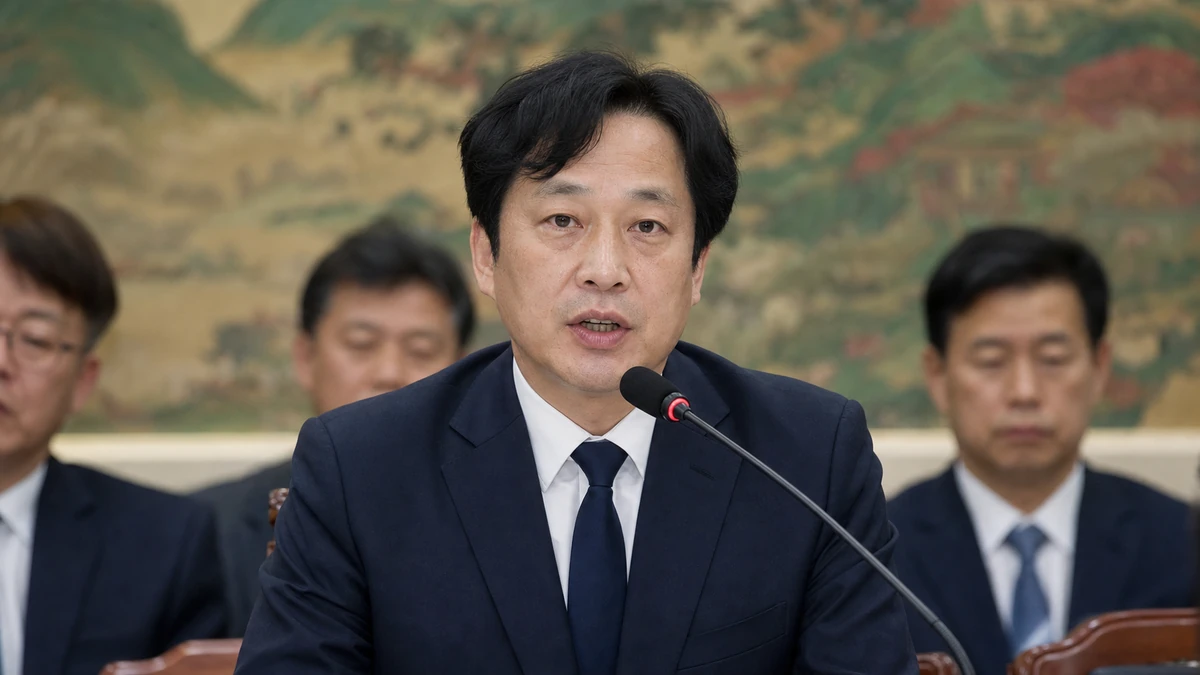
The issue was raised by provincial council member Jang Yeon-guk, who called for measures to reduce the burden on teachers. That detail may be the most important one. The debate is not simply about nostalgia for a disappearing tradition. It points to a deeper question facing South Korean schools: If educators are overwhelmed by planning, supervision, safety responsibilities and logistics, can a country that values experiential learning still make room for it?
In the United States, many adults remember school trips to Washington, D.C., a science camp, Colonial Williamsburg or an overnight band competition as memorable extensions of classroom learning. In South Korea, the emotional and educational role of these trips can be similar. So when they start disappearing at this pace, the loss is not just recreational. It reshapes how children encounter their own country.
What a Korean school trip means — and why it matters
To American readers, the Korean term often associated with these trips, "suhak yeohaeng," literally means something closer to "study travel" than vacation. The phrase is commonly translated as a school excursion or field trip, but that can understate what it involves. In practice, these trips often combine travel, history, civics, cultural exposure and social development. Students may visit museums, historical sites, farms, research centers or other regions of the country while also spending one or more nights away from home with classmates.
That overnight component is a major part of the educational value many Korean educators and parents see in the experience. Students are not just touring a place; they are navigating a new environment together. They learn how to share space, follow group schedules, manage basic responsibilities and interact with teachers and classmates outside the rigid rhythms of the ordinary school day. In a society where academic competition can begin early and school schedules are often highly demanding, these trips can become some of the rare moments when learning feels exploratory rather than test-driven.
That is one reason the numbers from Jeonbuk have drawn attention. A fall from 82.4% to 62.2% is not a minor fluctuation. It suggests a structural retreat from a form of education long seen as part of growing up in Korea. The lower elementary school rate, 42.8%, is particularly striking because it shows the gap opening earliest among younger children, at the stage when first exposure to different regions and ways of life may be most formative.
In a country as geographically compact as South Korea, it can be easy for outsiders to assume distance does not matter much. But regional identity still matters deeply. Jeonbuk, in the country’s southwest, is known for its food, agricultural landscapes and historic sites, including the traditional architecture of Jeonju Hanok Village. Travel between regions can expose children to differences in dialect, cuisine, local customs and economic life. For a student who spends most of the year moving between home, school and after-school study, those experiences may be one of the few direct ways to understand how varied life in South Korea can be.
That is why the decline has broader cultural meaning. When school trips vanish, students do not just miss a bus ride and a group photo. They lose an organized, relatively equal opportunity to connect textbook knowledge to real places and to see beyond the boundaries of their own neighborhood.
The likely reason: teachers are carrying too much of the load
The debate in Jeonbuk is centered on a familiar problem in education systems around the world: adults charged with caring for children are being asked to do more with limited support. Jang, the council member who raised the issue, did not merely point to lower participation rates. He explicitly called for ways to ease teachers’ burden, suggesting that educator workload is central to the problem.
That makes sense. Organizing an overnight student trip is labor-intensive anywhere, and South Korea is no exception. Teachers and school administrators may be responsible for transportation, accommodation, safety planning, medical needs, meal arrangements, itinerary design, student behavior management, communication with families and emergency response planning. Once a trip begins, the work does not stop. Supervising children overnight, ensuring attendance, handling conflicts and responding to unexpected problems can place enormous pressure on school staff.
For American readers, there is a parallel in the way many U.S. teachers describe field trips as rewarding but exhausting. A museum visit across town can require weeks of paperwork, parent permissions, liability planning and staffing coordination. Multiply that by overnight lodging, long-distance travel and dozens or hundreds of students, and the challenge becomes much clearer.
In South Korea, that burden can feel especially acute because teachers already operate in a high-pressure educational environment. Schools face strong expectations from parents, administrators and local governments. Safety concerns also carry significant weight in public debate. When something goes wrong on a student trip, even a relatively minor incident can trigger intense scrutiny. That reality can make schools reluctant to move forward with programs that are educationally valuable but administratively risky.
The public information discussed so far does not include a new support policy or a confirmed implementation timeline. That is important. The council discussion signals concern and the start of formal debate, not the announcement of a completed fix. But even without a new policy on the table yet, the underlying message is clear: if schools believe the operational and personal burden on educators is too high, they may decide that the safest option is not to travel at all.
That can create a downward spiral. Fewer trips mean less institutional experience in running them smoothly. Less experience can produce more caution. More caution can lead to more cancellations, especially at the elementary level, where supervising younger children is particularly demanding.
The children who miss out are often the ones with the fewest alternatives
One of the most important points in the Jeonbuk debate is easy to miss if school trips are viewed only as occasional extras. Organized student travel can help level the playing field. When a school takes students to another city or province, the experience is available regardless of whether a child’s family has the time, money or habit of traveling on their own.
That matters in South Korea just as it does in the United States. Family resources and schedules differ widely. Some children grow up taking regular vacations, visiting museums and exploring different parts of the country. Others do not. A school-based trip can narrow that experience gap, giving students a shared encounter with history, geography and culture that does not depend entirely on family circumstance.
When elementary schools stop offering these trips, the loss may be greatest for children who otherwise have limited chances to travel. A class excursion can transform places from textbook abstractions into lived memory. A lesson about another province becomes more tangible when students have seen its streets, tasted its local food or heard residents describe daily life there. For younger children especially, those moments can shape curiosity in ways that no worksheet can fully reproduce.
There is also a social dimension. Overnight trips can be among the few school activities where students spend extended, less formal time with classmates outside academic competition. In a culture where many children spend long hours in private tutoring academies, known in Korea as hagwons, the ordinary school community can feel compressed by schedules and pressure. Trips create space for friendship, collaboration and collective memory. Those benefits can be hard to quantify, but they are often the very parts students remember years later.
The Jeonbuk data therefore raise a question larger than logistics: What happens to a generation’s sense of shared experience when one of its most common forms of group exploration starts to disappear? The answer may not show up immediately in test scores or school rankings. But it can appear over time in narrower cultural horizons, weaker regional familiarity and fewer opportunities for students to understand one another outside the usual hierarchy of classrooms and exams.
Why this matters beyond schools: regional tourism and national identity
The decline in school travel also sends a signal beyond education. Student trips often serve as a first introduction to destinations that children may revisit later with friends, family or eventually their own children. In that sense, they are not just school programs. They are an early pipeline into domestic tourism and regional cultural awareness.
Officials and analysts in Korea increasingly view local tourism through that lens. A child who visits a historical district, coastal town or agricultural village on a school trip is not simply counted as a one-time visitor. That child may become a future traveler with an emotional connection to the place. Memories made at age 11 or 15 can influence where someone wants to return as an adult.
That dynamic should sound familiar to Americans. Many people in the United States first encountered major landmarks, national parks or historic institutions through school-organized travel. Those early visits often made places feel personally meaningful long before adulthood. South Korea’s domestic travel ecosystem works in a comparable way, even if the distances are shorter and the sites are different.
For regional governments, that makes the Jeonbuk numbers significant. A decline in overnight school trips is also a decline in one of the country’s most reliable channels for connecting young people to places outside their home base. If fewer children travel in structured educational settings, then fewer are building those first impressions of regional history, local food, cultural traditions and everyday life.
That loss may be especially consequential in a country where Seoul’s dominance often overshadows other regions. School trips can counterbalance that centralization by introducing students to places that are culturally rich but less globally famous. They help show that Korea is not only the capital, K-pop districts and headline tourist sites, but also farming communities, industrial centers, mountains, coastlines and historic towns with distinct identities.
Seen that way, the Jeonbuk debate is about more than whether students get to spend a night away from home. It is about whether schools can continue acting as a bridge between young people and the broader map of their country.
No solution yet, but the policy question is becoming harder to ignore
For now, the council discussion in Jeonbuk has surfaced a problem rather than solved it. No detailed plan has been publicly laid out in the material available so far, and there is no indication that a new provincewide system has already been approved. But the fact that the issue was raised in an official deliberative setting matters on its own. It marks school travel as a policy issue, not just an administrative inconvenience.
The core challenge is straightforward to describe and hard to fix: schools are unlikely to expand overnight educational programs unless teachers believe they can do so safely and sustainably. That could mean more staffing support, clearer guidelines, outside logistical assistance, simplified procedures or stronger institutional backing when trips are planned and carried out. The exact mechanism remains unclear. What is clearer is that appeals to the educational value of travel alone may not be enough to reverse the decline.
The numbers cited in Jeonbuk show why. A drop from 82.4% to 62.2% in overall implementation, coupled with an elementary school rate of just 42.8%, suggests the current system is not merely under strain. It is already producing retrenchment. And once schools stop offering these experiences, restoring them can be more difficult than preserving them in the first place.
There is also a broader lesson here for anyone watching South Korea’s education system. The country is often discussed internationally through the lens of high achievement, exam performance and academic intensity. Less attention is paid to the quieter infrastructure of student life: the trips, clubs, social experiences and regional encounters that make education feel connected to the world beyond rankings. Yet those elements matter deeply in shaping how children understand their society.
The question now emerging from Jeonbuk is one that educators far beyond South Korea can recognize. How do you preserve meaningful, hands-on learning when the adults responsible for delivering it are already stretched thin? It is a question American school districts, too, have wrestled with as liability concerns, staffing shortages and administrative demands complicate everything from museum outings to overnight competitions.
In Jeonbuk, the answer will likely determine more than next year’s travel calendar. It will help decide whether students continue to experience Korea as a lived landscape of regions, cultures and communities — or increasingly encounter it only through textbooks, screens and the view from home.
A small statistic with a larger story behind it
At first glance, the Jeonbuk figures might seem like the sort of local education data that rarely travels far: percentages presented at a provincial council meeting, concern voiced by one lawmaker, no dramatic confrontation and no immediate policy resolution. But the story resonates because it reflects a wider tension found in many modern education systems.
Schools are asked to offer not just academic instruction, but also social development, cultural literacy, safety, emotional support and real-world experience. Families, meanwhile, want children protected and enriched at the same time. Teachers are expected to make that balance work, often while carrying a growing load of administrative and supervisory responsibilities. When something has to give, enrichment outside the classroom is often among the first things to shrink.
That is why this story from southwestern South Korea deserves attention beyond the province itself. It reveals how educational culture can change not because people no longer value an experience, but because the system around it becomes too burdened to sustain it. Few in Korea would argue that students gain nothing from seeing new regions, sharing time with classmates and learning in unfamiliar settings. The debate is over whether schools can realistically keep providing that opportunity.
For Americans looking at South Korea through the usual frames of pop culture, technology and academic rigor, this is a reminder that ordinary school life there contains tensions that feel surprisingly familiar. The settings are different, and the cultural context matters, but the underlying issue is not foreign at all. It is about who gets to explore, who makes that possible and what a society loses when educational journeys become too difficult to take.
In Jeonbuk, the warning has now been issued publicly. The numbers suggest that the retreat is already underway. What comes next will depend on whether officials can find a way to make school travel manageable for educators without stripping it of the very spontaneity and discovery that make it valuable for students in the first place.
Comments
Post a Comment