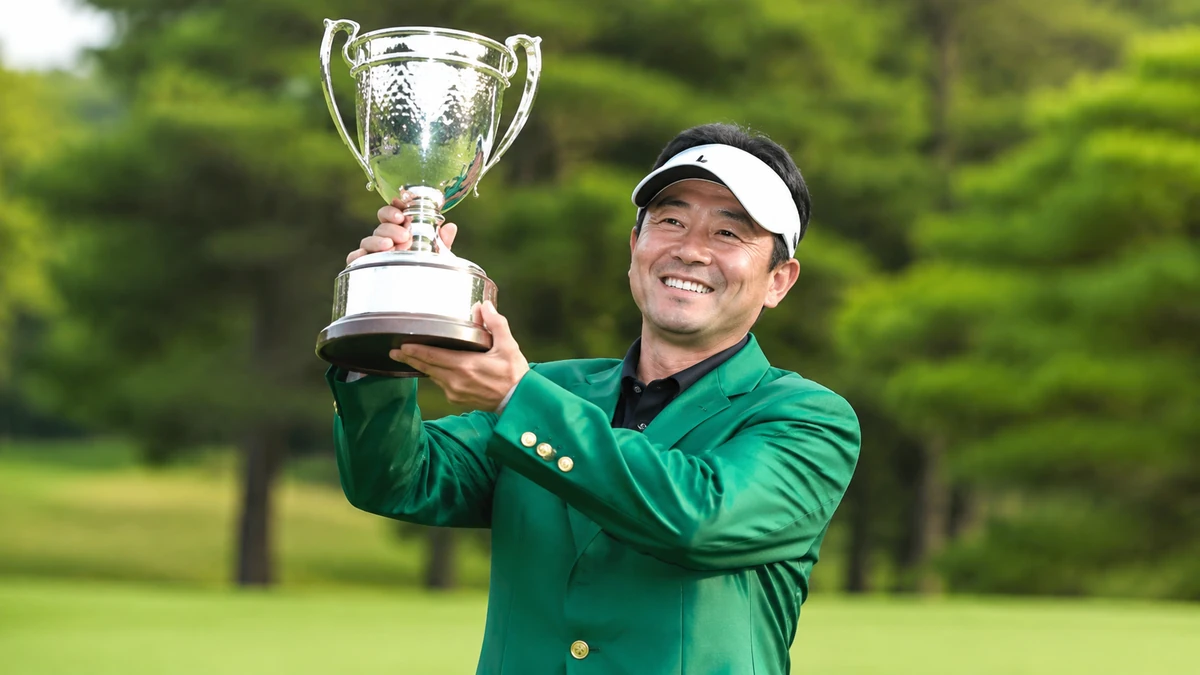
Choi Ho-sung Captures Another Career Milestone in Korean Senior Golf
South Korean golfer Choi Ho-sung, the player whose unusual swing made him a global internet sensation, has added another memorable chapter to his long career. Choi won the 14th Grand CC Cup Korean Senior Open on July 15 at Grand Country Club in Cheongju, South Korea, finishing the tournament with a two-round total of 8-under-par 136.
For many international golf fans, Choi is known less for a traditional textbook swing and more for his dramatic follow-through that earned him the nickname “the fisherman swing.” The motion, which resembles a fisherman casting a line, became one of the most recognizable golf swings in the world after videos of his play spread online. But his latest victory was not simply a celebration of an entertaining style. It was a reminder that behind the memorable movement is a veteran competitor with decades of professional experience.
Choi’s victory at Grand Country Club was especially meaningful because it came after years of physical challenges. The win represented not only another trophy but also a comeback story built around persistence, adaptation and confidence.
The “Fisherman Swing” That Made Choi an International Golf Personality
Golf is often associated with precision, consistency and a highly technical approach. Many professional players develop swings that look remarkably similar because coaches emphasize efficiency and repeatability. Choi Ho-sung became famous partly because he appeared to challenge that expectation.
His swing features an exaggerated body rotation after impact, creating a dramatic finish that looks unlike most professional golfers. Korean fans began calling it the “fisherman swing” because the movement resembles the action of casting a fishing rod. The nickname eventually spread beyond Korea as golf fans around the world shared clips of his unique style on social media.
In the United States and other Western markets, Choi’s popularity reflected a broader appreciation for athletes who bring personality and individuality to sports. Similar to how fans have embraced baseball players with distinctive batting styles or basketball players with unforgettable celebrations, Choi showed that professional excellence does not always need to look conventional.
However, his recent senior tournament victory demonstrated that his identity is not limited to entertainment value. The swing may attract attention, but his results have been built on years of competitive discipline.
A Veteran Career Reaches the 10-Win Mark
With this championship, Choi reached 10 career victories across professional tours. Since becoming a regular competitor on the Korean professional golf circuit in 2004, he has earned wins on the Korea Professional Golfers’ Association Tour and Japan Golf Tour, while also collecting victories on senior circuits in both Korea and Japan.
The achievement carries significance because Choi’s career has stretched across multiple stages of professional golf. Unlike athletes whose success comes during a short peak period, Choi has continued to compete through changing physical demands, different tournament environments and the challenges that come with aging as an athlete.
Senior golf is sometimes misunderstood by casual sports audiences as simply a competition for older players. In reality, senior tournaments remain highly demanding. Players must manage distance, stamina, recovery time and strategy while competing against experienced professionals who understand how to handle pressure.
Choi’s one-stroke victory over fellow competitors Kang Ji-man and Seok Jong-yul showed that experience still has measurable value. His final score was not the result of a single spectacular moment but rather a complete performance over two rounds.
A Comeback After Two Years of Elbow Problems
One of the most important elements of Choi’s victory was his recovery from injury. After the tournament, he explained that he had struggled with elbow problems for nearly two years but had now recovered to more than 90 percent of his previous condition.
For golfers, elbow injuries can be particularly difficult because the joint plays a central role in controlling the club throughout repeated swings. Even minor discomfort can affect confidence, shot selection and the ability to maintain consistency during competition.
Choi’s return to winning form suggests that his rehabilitation has restored much of his competitive ability. While one tournament cannot guarantee long-term health, an 8-under-par performance and a championship trophy provide strong evidence that he remains capable of competing at a high level.
For fans who followed his career, the victory carried emotional weight because it showed a familiar athlete overcoming a difficult period. The story was not simply about a golfer with a famous swing winning again. It was about a veteran athlete finding his rhythm after uncertainty.
The Role of Family Support in a Professional Athlete’s Journey
After winning the tournament, Choi credited his wife as one of the biggest reasons behind his success. He said her encouragement and positive attitude helped him maintain confidence during challenging times.
Stories about family support are common in sports, but for athletes dealing with long-term injuries, that support often has practical importance. Recovery periods can involve frustration, limited training, physical discomfort and questions about whether a return to competition is possible.
Choi’s comments highlighted a side of professional sports that is often overlooked. Fans usually see the final result on the course or field, but athletes often rely on a wider network of people who help them continue through difficult periods.
His appreciation for his wife also reflects a broader cultural value often emphasized in South Korea: the importance of close family relationships and shared responsibility during major life challenges. While professional athletes compete individually, their journeys are rarely completely individual.
The Victory Was About More Than a Unique Style
Choi’s second-round performance showed the balance that made his championship possible. He recorded four birdies and one bogey for a 3-under-par 69, maintaining enough aggression to move ahead while avoiding costly mistakes.
The final margin was only one stroke, meaning every decision mattered. Senior tournaments often reward players who understand when to attack and when to protect their score. Choi’s experience allowed him to manage pressure and finish the event successfully.
This victory reinforced an important lesson in sports: personality may attract attention, but performance creates lasting respect. Choi’s fisherman swing made him recognizable, but his competitive achievements made him a champion.
For international audiences discovering him through viral videos, the latest championship provides a fuller picture of who Choi Ho-sung really is. He is not only the golfer with the unusual finish. He is a professional athlete who has spent more than two decades competing at a high level.
What Choi’s Win Means for Korean Senior Golf
Choi’s victory also brought attention to the growing importance of senior golf in South Korea. While younger players often dominate headlines as they pursue international tours and major championships, veteran competitions highlight the long-term nature of the sport.
Golf is one of the rare sports where athletes can remain competitive for many years because experience, strategy and mental strength continue to play major roles. A player may lose some physical advantages over time, but knowledge of course management and pressure situations can become increasingly valuable.
For Korean golf fans, Choi’s championship created a compelling narrative: a recognizable star returning from injury, reaching a career milestone and proving that his passion for competition remains strong.
The Korean Senior Open victory also reflects the changing image of aging athletes. Instead of viewing older competitors only through the lens of decline, modern sports increasingly recognize longevity as an achievement itself.
A Global Golf Story Beyond Korea
Although Choi’s victory took place at a domestic Korean tournament, the themes behind it are universal. Sports fans around the world understand the appeal of a competitor who faces setbacks and returns stronger.
Choi’s story combines several elements that resonate internationally: an unmistakable personal style, a difficult injury recovery, support from loved ones and a championship earned through experience. Those elements make his achievement meaningful beyond Korean golf.
His famous swing may have introduced him to global audiences, but his latest win gives fans a different reason to remember him. At a time when sports often focus on young stars and emerging talent, Choi Ho-sung represents another powerful idea: excellence can continue through adaptation, patience and determination.
The golfer who became famous for a swing that looked different from everyone else has once again shown that success is ultimately measured by results. His 10th career victory is not only a statistic. It is the latest chapter in a career defined by individuality, resilience and an enduring love for the game.
Comments
Post a Comment