Kwak Dong-yeon to Begin South Korean Army Service in 2026, Marking a Familiar Pause in a Rising K-drama Career
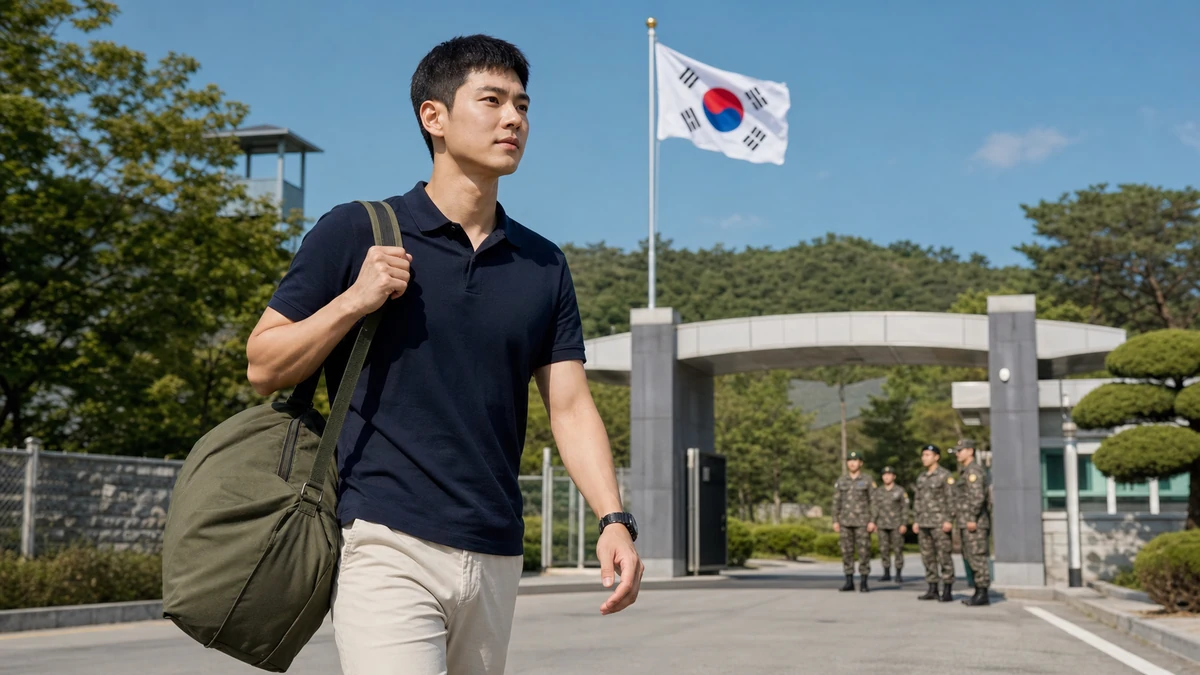
A Korean star’s next role will be offscreen
South Korean actor Kwak Dong-yeon, a familiar face to many international viewers of Korean television, is set to begin his mandatory military service on Aug. 25, 2026, according to his agency, The Black Label. The company said Kwak will quietly enter an Army training center without a public sendoff or formal press event, then complete basic training before receiving his unit assignment for active-duty service.
For American readers, the announcement may sound unusual if they are more accustomed to entertainment careers pausing because of contract disputes, personal choices or Hollywood labor strikes. In South Korea, however, military enlistment is a routine and often unavoidable turning point for male celebrities. It is not just a scheduling update. It is a rite of passage that can reshape careers, temporarily halt momentum and become a major moment in a public figure’s relationship with fans.
Kwak, who has built a reputation over more than a decade as a versatile supporting and character actor, is entering that phase at a time when Korean entertainment has never been more global. His work has reached viewers through network dramas, films, variety programming and, most recently, streaming platforms with worldwide reach. That makes his enlistment more than a domestic entertainment headline. For audiences who discovered him through hit Korean series on Netflix and elsewhere, it marks a pause in a career that has increasingly crossed borders.
The agency’s emphasis was straightforward: Kwak plans to fulfill what South Korea commonly calls the “duty of national defense” sincerely and without fanfare. That wording matters in the Korean context. Military service is deeply tied to citizenship, public image and ideas of fairness in a country that remains technically at war with North Korea because the 1950-53 Korean War ended in an armistice, not a peace treaty.
So while there is nothing cinematic about reporting to boot camp, the symbolism is significant. A working actor in the middle of a busy career is stepping away from the spotlight and into one of the most tightly watched civic obligations in South Korean public life.
Why military service is such a major story in South Korea
To American audiences, celebrity military news may call to mind old Bob Hope performances for troops, occasional National Guard service by politicians or the way athletes and actors sometimes play service members onscreen. In South Korea, the issue is much more immediate and personal. Most able-bodied men are required to serve, typically in their 20s or early 30s, and the timing can affect education, jobs, relationships and public standing.
That reality has made enlistment one of the defining events in the careers of male K-pop idols and actors. Fans track dates closely, agencies manage projects around them and entertainment programs often adjust lineups when stars leave for service. Enlistment can also trigger debate over fairness, exemptions and whether public figures receive special treatment. For that reason, an agency’s choice to announce a quiet enlistment with no public ceremony is often read as an effort to reduce disruption and avoid turning a required national duty into a spectacle.
In Kwak’s case, The Black Label made clear that he will report privately rather than stage a farewell event where fans and media gather in person. That is not unprecedented, but it reflects an increasingly common approach in the Korean entertainment industry, especially when agencies want to limit crowding at military sites and keep the focus on the enlistment process itself.
There is also a practical dimension. South Korean stars today are followed by fans from Seoul to Los Angeles to Jakarta. Even a brief appearance at an enlistment site can draw large crowds and significant online attention. A quiet entry helps reduce confusion and reinforces the message that this is an obligation being carried out through standard procedures, not a publicity opportunity.
That may sound subdued by celebrity standards, particularly in an era when even airport departures can become heavily photographed events. But in Korea, understatement can itself send a message. It signals respect for the institution, awareness of public scrutiny and a desire to separate professional fame from a civic duty shared by ordinary citizens.
Kwak Dong-yeon’s career has been built on range, not just one breakout hit
Kwak’s enlistment announcement has also prompted renewed attention to the body of work he is leaving behind, at least for now. He debuted in 2012 in the KBS drama “My Husband Got a Family,” beginning a screen career that has now stretched roughly 14 years. In an industry where some actors are closely identified with a single star-making role, Kwak has taken a different path. He has assembled a recognizable résumé across genres and formats, building steady familiarity rather than depending on one defining franchise.
That distinction helps explain why the enlistment resonates. Kwak is not merely disappearing after one recent headline role. He is pausing a long, cumulative acting journey that includes historical dramas, contemporary series, films, variety appearances and streaming projects. For many viewers, especially international ones, he is the sort of actor whose face may register even before his name does — the performer who reliably sharpens a scene, changes a show’s energy or makes a supporting character memorable.
Among the works most closely associated with him are the dramas “Love in the Moonlight,” “Vincenzo” and “Queen of Tears,” along with the film “6/45.” Taken together, those titles illustrate the breadth of the modern Korean entertainment machine. Historical romance, dark comedy, legal and crime drama, emotionally charged contemporary storytelling and commercially minded film comedy all occupy space in the same career. That versatility has become one of Kwak’s strongest professional assets.
For U.S. readers who are newer to Korean television, that range is worth underscoring. The K-drama industry is often discussed abroad as if it were a single genre, much the way foreign audiences once flattened American TV into a few categories like police procedurals or sitcoms. In reality, Korean scripted entertainment is a wide field with tonal shifts as dramatic as the difference between a prestige cable series, a broadcast family drama and a broad studio comedy in the United States. Kwak’s credits show that he has been able to move among those modes with relative ease.
That may be why this enlistment news lands with a sense of interruption rather than conclusion. He has continued working consistently enough that viewers have not had much reason to think of his career in retrospective terms. The announcement, by its nature, forces a temporary stock-taking: what he has done so far, how his image has evolved and what kind of actor may return after service.
His recent Netflix appearance underscores how global the audience has become
The timing of the announcement has drawn particular attention because Kwak recently made a special appearance in the Netflix series “Donggung,” released July 17. According to the Korean news summary, he appeared as a crown prince in a guest role that quickly drew interest from global viewers. Even without leading the series, the cameo served as a fresh reminder that his career is now operating in an international streaming ecosystem rather than only within traditional Korean broadcast television.
That is an important distinction. A decade ago, an enlistment notice for a Korean supporting actor might have mattered primarily to domestic fans and a narrower group of overseas drama enthusiasts. Today, thanks largely to Netflix and other streaming services, Korean actors can reach English-speaking audiences at a scale that would have been difficult to imagine even in the early 2010s. A special appearance released days before an enlistment announcement can become, for international viewers, the last new on-screen glimpse of an actor before a long absence.
Guest roles carry their own kind of professional message. In television, a cameo or special appearance often asks an actor to create impact quickly, without the long runway of a lead performance. The role may be brief, but it relies on audience recognition and presence. In Hollywood, viewers might compare it to the way an established actor can lend instant weight to a limited arc in a prestige series. In Korea’s star-driven drama ecosystem, such appearances can function similarly, signaling both credibility and popularity.
In Kwak’s case, the “Donggung” appearance also bridges two eras of Korean entertainment: the traditional star system built through domestic dramas and the newer global circuit shaped by streaming distribution. Fans who know him from “Vincenzo” or “Queen of Tears” can now encounter him again on a platform that puts Korean content beside American crime dramas, British period pieces and Spanish thrillers in the same recommendation feed. That kind of visibility changes the meaning of an enlistment announcement. It is no longer just a pause in a Korean actor’s calendar. It is a break noticed by a transnational audience.
Still, caution matters. The available summary does not provide detailed plot information about his “Donggung” scenes, and there is no official indication yet of what his post-service acting plans will look like. What can be said with confidence is that the cameo became part of the conversation because it arrived so close to the enlistment news and gave fans a recent performance to revisit.
A quiet enlistment fits a broader shift in celebrity culture
One of the more telling details in the announcement is not the date itself but the decision to avoid a formal public event. In South Korea, celebrity enlistments have sometimes been treated almost like media appointments, with cameras capturing stars entering military facilities and fans gathering to say goodbye. Over time, though, there has been a stronger push toward restraint, partly out of safety concerns and partly out of recognition that these are functioning military sites, not red carpets.
Kwak’s agency appears to be following that logic. By laying out both the enlistment date and the absence of a public ceremony in advance, it reduces speculation and helps set expectations for fans and journalists. In effect, the message is simple: there is no hidden event, no last-minute showcase and no need to crowd the entrance.
For American readers, that may resemble how some public figures choose to announce major personal decisions through a written statement rather than through a televised interview. The medium becomes part of the message. Here, the low-key approach reinforces the stated emphasis on fulfilling national service faithfully, rather than making the enlistment a theatrical final bow before a hiatus.
It also shifts attention back to the work itself. Without a high-profile sendoff, fans are more likely to revisit the actor’s catalog — the dramas, films and recent streaming appearances that remain available during his absence. In that sense, the quiet entry is not an erasure of celebrity, but a redirection of it. The connection between actor and audience continues through archived performances rather than a single farewell moment.
That is especially significant in an era when fandom often thrives on constant updates. K-entertainment fans are accustomed to a rapid flow of behind-the-scenes clips, livestreams, social media posts and promotional cycles. A deliberate step back from that rhythm can feel striking. But it also reflects one of the realities of South Korean stardom: even highly visible performers sometimes move into periods where institutional schedules, not promotional ones, define the pace.
Television and variety shows are already adjusting around his absence
The ripple effects of enlistment are not limited to scripted dramas. They also shape variety programming, one of the most distinctive pillars of Korean entertainment culture. According to the summary, Kwak had appeared on tvN’s “Bogum Magical” Season 2 alongside actors Park Bo-gum and Lee Sang-yi, but actor Go Kyung-pyo has joined the new season’s lineup. That adjustment reflects a familiar reality in Korean television: programs often reconfigure casts rather than pause indefinitely when a major participant becomes unavailable.
For viewers outside Korea, variety shows can be one of the hardest formats to map onto an American equivalent. They are not exactly talk shows, not exactly reality TV and not exactly game shows, though they often borrow elements from all three. Star chemistry, improvisation and personality are central to the appeal. So when one cast member leaves, the change is not just logistical. It alters the emotional texture and group dynamic of the program.
Kwak’s participation in variety programming matters because it broadened his public identity beyond scripted roles. Actors in Korea often use variety appearances to show a less formal side of themselves, whether playful, reserved, witty or unexpectedly competitive. Those appearances can deepen viewer affection in a way that mirrors how American audiences might come to know a dramatic actor better through late-night interviews, sketch comedy cameos or documentary-style reality appearances — though Korea’s variety ecosystem is more integrated into mainstream celebrity branding.
The lineup change on “Bogum Magical” suggests that the industry has already started planning for life during Kwak’s absence. Rather than leaving an empty seat, producers are recalibrating. That, too, is part of the Korean entertainment rhythm around enlistment. Careers pause, but productions move on. Agencies, networks and streamers all work around military schedules as a normal part of business.
Fans, meanwhile, are left doing two things at once: looking back on the chemistry of an existing cast while assessing the appeal of a new configuration. The emotional logic is familiar to sports fans when a favorite player leaves a team for a season, or to TV fans when a series replaces a beloved ensemble member. The show continues, but the memory of what came before becomes part of how the new version is watched.
For fans in Korea and abroad, the next year will be about revisiting the work
Because no additional public events or new projects have been announced in connection with the enlistment timeline, the most concrete way for fans to stay connected to Kwak’s career is through the work already released. That includes the recent “Donggung” appearance and earlier projects that helped build his reputation. In practical terms, his absence from new productions may actually send more viewers back to the catalog, especially international audiences who are still discovering Korean dramas at a rapid pace.
That is one of the peculiar dynamics of the streaming era. A career pause does not necessarily mean a disappearance from public view. In fact, on-demand platforms can make old performances feel newly current. A viewer who first meets Kwak through one title can immediately jump to another, tracing his development across years of work in a way that was much harder in the pre-streaming age.
For Korean entertainment, that is a meaningful shift. Military service still interrupts the making of new content, but it no longer cuts off global visibility in the same way. Actors can continue gaining overseas fans while they are away, simply because their shows remain one autoplay recommendation away from a new audience. In that sense, Kwak’s enlistment is both a pause and a continuation: no new performances for a while, but ongoing discovery through the performances already out in the world.
It also invites a reassessment of what kind of actor he has been up to this point. Not necessarily a single-franchise superstar, but a durable and adaptable presence across multiple corners of the Korean industry. Those careers can sometimes age especially well because they are built not only on hype but on accumulated trust. Casting directors know what the actor can do. Audiences know he can fit different tones. And when the hiatus ends, that versatility can matter as much as name recognition.
For now, though, there is no official basis to speculate about his comeback project or eventual return date beyond the standard process already announced: entry into the Army training center on Aug. 25, 2026, completion of basic military training and subsequent assignment to an active-duty unit. In a celebrity ecosystem that often thrives on constant forecasting, the most accurate posture is a modest one. The story at present is not what comes after service, but what this service represents now.
It represents a pause that South Korean audiences understand instantly and international audiences are increasingly learning to read. It marks a moment when a working actor steps away from a globalized entertainment industry and into a national institution that still shapes the lives of South Korean men with unusual force. And it reminds fans that in Korean pop culture, even a quiet entrance into a training center can carry the weight of a major public milestone.
Comments
Post a Comment