Lee Chang-dong’s first film in eight years heads to Toronto, bringing one of Korea’s most exacting auteurs back into focus
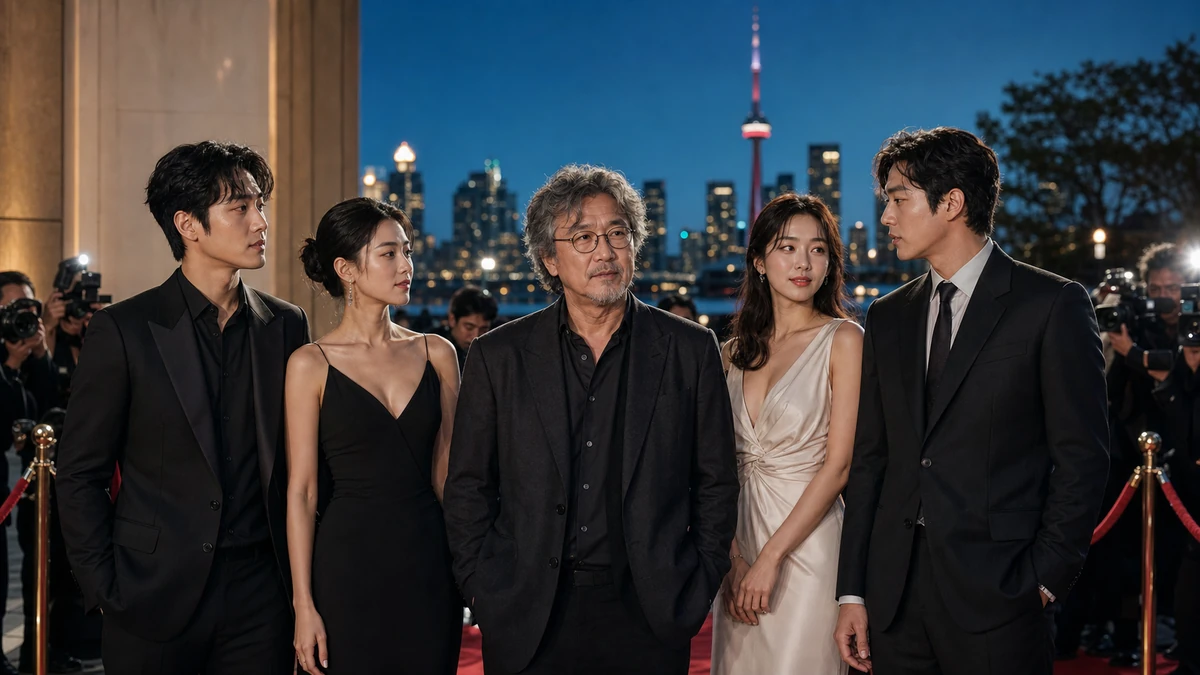
A major festival slot puts a Korean master back on the world stage
One of South Korea’s most acclaimed filmmakers is returning to the international spotlight with a project that already carries the kind of prestige attention usually reserved for directors whose names alone signal an event. Lee Chang-dong’s new film, titled Possible Love, has been invited to the Special Presentations section of the 51st Toronto International Film Festival, according to an announcement from Netflix. The festival is scheduled to run Sept. 10-20 in Toronto.
For many North American moviegoers, the significance of that news starts with the director. Lee is not simply another successful Korean filmmaker arriving on the global circuit at a moment when Korean culture has become more familiar to U.S. audiences through everything from Parasite to Squid Game to K-pop stadium tours. He is widely regarded as one of the foundational modern auteurs of Korean cinema, a filmmaker whose work is often austere, emotionally devastating and morally complex. When Lee makes a movie, critics pay attention. When he returns after eight years away from feature filmmaking, festivals notice.
That gap matters. Lee’s last film, Burning, premiered in 2018 and became one of the most discussed Korean films of the last decade. Adapted loosely from a Haruki Murakami short story, it fused psychological mystery, class anxiety and simmering social unease into a film that many critics considered among the year’s best. For Lee, then, Possible Love is not just a new release. It is the first major statement after a long silence, and that alone gives the Toronto selection added weight.
Toronto’s Special Presentations program is designed for high-profile titles from prominent directors and stars, the kind of films that arrive with built-in anticipation and are expected to be major talking points in the fall movie season. For American readers, the easiest comparison may be to a prestigious berth at Telluride or a gala-world-premiere slot at Cannes, though Toronto occupies its own distinct place in the awards and festival ecosystem. It is both highly curated and unusually public-facing, mixing industry prestige with large audiences in a way that often helps shape the larger international conversation around a film.
In that context, the invitation for Possible Love amounts to more than a scheduling note. It is an early signal that one of the year’s most closely watched Korean films will not be arriving quietly.
Why Lee Chang-dong matters far beyond Korean cinema
To understand why this film’s festival debut is drawing so much attention, it helps to understand Lee’s place in Korean cultural life. Before becoming a film director, Lee was known as a novelist and later served as South Korea’s minister of culture. That background is not incidental. His films often feel as if they are built from a novelist’s patience and moral seriousness, with a politician’s awareness of institutions, class and the hidden costs of social order.
His filmography includes Secret Sunshine, Poetry, Oasis and Burning, works that have won major prizes and shaped how international critics think about Korean cinema outside commercial hits. If Bong Joon Ho is often the Korean director most familiar to mainstream American audiences, and Park Chan-wook is known for sleek, operatic style, Lee occupies a different lane. He is the filmmaker critics reach for when discussing interiority, social realism and the uncomfortable overlap between personal desire and broader structural inequality.
That makes the first public details of Possible Love especially intriguing. The story reportedly centers on two married couples who meet through the making of a documentary, only to find themselves confronting hidden desires. Even without full plot details, that premise reads like fertile Lee territory: intimacy under pressure, social position shaping emotional life, and the camera itself becoming part of the drama.
For American readers less familiar with Korean art-house traditions, Lee belongs to a lineage of directors whose films are often less about plot twists than about the gradual stripping away of self-deception. Think of the emotional rigor of Ingmar Bergman, the moral patience of Asghar Farhadi or the social intelligence of a filmmaker like Mike Leigh, though none is a perfect match. Lee’s movies tend to begin with recognizable human situations and then deepen into something more unsettling, exposing how ordinary relationships are entangled with power, status and unspoken need.
That is why the eight-year wait carries such significance. In Hollywood, long gaps between films can happen for many reasons and do not always add meaning. With Lee, the absence feels different because each film is treated as a carefully considered work rather than a routine entry in a busy production slate. The return itself becomes part of the story.
A premise about two couples, desire and a documentary camera
Much remains unknown about Possible Love, but the outline that has emerged is enough to suggest why festival programmers responded strongly. At the center are two couples whose relationship begins through a documentary production. From there, the story is said to move toward the hidden desires each person is forced to confront.
That setup may sound intimate, even domestic, but it opens several lines of inquiry that Lee has explored before in different forms. Marriage in Korean cinema is often more than a private arrangement; it can also serve as a lens onto status, obligation, gender expectations and the quiet performance of respectability. In South Korea, where social roles and outward stability can carry heavy cultural weight, a story about couples confronting buried desires inevitably touches not just on romance or infidelity but on the fragile structures people build around themselves.
There is also the documentary angle, which gives the film a built-in self-reflexive quality. When a story involves people filming other people, the camera is no longer a neutral observer. It becomes an actor in the drama. Who is looking at whom? What does someone reveal because they believe they are being documented honestly? What do they conceal? And what happens when the version of a person presented on camera collides with private urges or resentments that do not fit the image?
Those questions resonate well beyond Korea. American audiences are used to nonfiction and reality-based formats that promise authenticity while often producing performance instead. From true-crime docuseries to reality television to the social-media habit of curating one’s own life, viewers understand the gap between what is shown and what is lived. A film about couples drawn together through documentary-making therefore arrives with immediate contemporary relevance. It speaks to the modern condition of being seen, recorded and interpreted, even in supposedly intimate spaces.
Toronto festival CEO Cameron Bailey described the film as a powerful exploration of marriage, class and cinema itself. That phrasing is striking because it suggests the film’s concerns are not limited to romantic tension. Class, in particular, has become one of the most recognizable through-lines in recent Korean cinema for global audiences. Parasite made that conversation unavoidable, but Lee was working those tensions long before that movie became an Oscar-winning phenomenon. If Possible Love uses the lives of two couples to probe differences in status and condition, it could extend a central theme of Korean storytelling that has increasingly resonated worldwide: private emotion is rarely separable from social hierarchy.
A cast that signals both prestige and emotional range
The project’s cast would be enough to generate headlines even without Lee’s return. Possible Love stars Jeon Do-yeon, Sol Kyung-gu, Zo In-sung and Cho Yeo-jeong, a lineup that brings together some of the most respected performers in the Korean screen industry.
For American audiences, Jeon may be the most familiar to serious international film watchers because of her long-standing reputation as one of Korea’s greatest actresses. She won best actress at Cannes for Secret Sunshine, which was also directed by Lee, and her performances are known for their emotional fearlessness. If she is in a Lee film again, expectations naturally rise. Their earlier collaboration produced one of the most shattering performances in modern cinema; viewers will wonder what new register they can find together now.
Sol is another heavyweight, an actor associated with intensity, gravitas and psychological depth. His career has included a broad range of work, but he remains especially valued for bringing moral ambiguity and force to complicated characters. Zo, known to many global viewers for drama roles and mainstream screen presence, adds star power of a more overtly recognizable kind. Cho may be best known internationally for Parasite, in which she played the wealthy matriarch of the Park family. Since then, she has become a familiar face to audiences who discovered Korean cinema through Bong’s Oscar-winning film.
What makes this casting notable is not simply celebrity concentration. The reported subject matter demands actors who can communicate emotional shifts with precision: desire that is not confessed directly, resentment that surfaces only in silence, class awareness that shapes behavior before anyone names it. In a film centered on two couples, chemistry cannot be limited to romance. It must work across four people whose alliances, attractions and discomforts may be constantly rearranging.
That kind of ensemble dynamic is often where major adult dramas either become electric or fall flat. Hollywood once produced such films more regularly, especially in the era when relationship-centered dramas could still command broad theatrical attention. Today, many English-language prestige films about marriage, temptation and social performance find smaller audiences unless buoyed by awards momentum. In that sense, the appeal of Possible Love may feel refreshingly old-fashioned: a filmmaker of enormous seriousness, a cast of top-tier adults and a premise that trusts conversation, observation and emotional tension to carry the drama.
Toronto’s role in Korean cinema’s long conversation with the West
The Toronto International Film Festival has played an important role in introducing Korean filmmakers to North American audiences, and this invitation places Possible Love within that longer arc. The festival’s Special Presentations section has previously included Korean films such as Parasite, Decision to Leave, The Handmaiden and The Age of Shadows. Last year, the Netflix Korean film Good News also appeared in the section.
That record should not be treated as a simple predictor of identical success. Every film arrives under different circumstances, with different politics, aesthetics and audience pathways. Still, the pattern matters. It shows that Korean cinema is no longer a novelty on the festival circuit or an occasional breakout category. It is a sustained presence in major international programming, with works that range from genre fare to literary art-house drama.
For American readers, it is worth pausing on how unusual and significant that consistency is. For decades, foreign-language films in the United States were often siloed as specialty viewing, available mostly in urban art houses or academic settings. Streaming has changed that, though unevenly, by making subtitled work more accessible at home. At the same time, the success of Korean films and series has eroded an old assumption that international storytelling can thrive in America only if remade in English.
Toronto has been one of the places where that shift becomes visible in real time. The festival is famous for its audience engagement, which means films do not simply play for critics and buyers; they play for moviegoers whose enthusiasm can help launch a title into broader circulation. A warmly received Toronto premiere can generate awards chatter, distribution momentum and social buzz, particularly when it involves a director with existing international stature.
In Lee’s case, the Toronto selection also bridges different kinds of cinephile attention. He is admired by critics and festival programmers, but his films are not obscure in the way that some austere art cinema can be. They are emotionally accessible even when formally demanding. That makes Toronto an especially fitting launchpad, because the festival often rewards films that can sustain both intellectual discussion and immediate audience engagement.
Netflix, festivals and the changing map of prestige cinema
Another part of the story is what it means for Possible Love to be a Netflix title premiering at a major international festival. That is now familiar terrain, but it remains culturally significant. Streaming platforms have transformed not only how audiences watch films but also how prestige projects are financed, distributed and positioned globally.
For some filmmakers, streaming has offered resources and worldwide reach that traditional theatrical models no longer guarantee, especially for adult dramas that are harder to market as franchise entertainment. For festivals, programming such films reflects the reality that major cinema now emerges from a hybrid ecosystem in which theatrical exclusivity is no longer the only marker of artistic seriousness.
There are still tensions, of course. Festival culture was built around the communal big-screen experience, and many directors continue to insist that their work is best encountered in theaters. At the same time, a Netflix-backed film from Lee can reach viewers in dozens of countries far more easily than a conventional specialty release might. For audiences in the United States outside New York, Los Angeles or a handful of film-centric cities, that can make the difference between hearing about a major work and actually seeing it.
The Toronto invitation underscores that the old line between “festival cinema” and “platform content” has grown increasingly porous. What matters most is whether a film commands artistic attention, not merely where it will eventually be watched. In the case of Possible Love, the festival seems to be signaling that this is not just another streaming acquisition but a work intended to be discussed as cinema in the fullest sense.
That distinction matters because Lee’s films have always invited more than surface-level consumption. They ask viewers to sit with ambiguity, to consider the forces shaping behavior and to resist the temptation of easy moral sorting. If Netflix can bring that kind of filmmaking to a wider international audience, it suggests one promising future for serious world cinema in an era often dominated by algorithms and instant recommendation cycles.
What audiences will be watching for when the film debuts
Until the film screens, the key facts remain limited: Possible Love has been selected for Toronto’s Special Presentations section; it marks Lee Chang-dong’s first film in eight years; and it stars a formidable quartet in a story involving two couples, documentary filmmaking, hidden desire, class and marriage. Much of the film’s meaning will depend on execution, tone and structure, none of which can be judged fully from a synopsis.
Still, expectations are already taking shape. Some viewers will be watching for Lee’s return to questions of class after the way Burning captured economic unease through mood and implication rather than speechifying. Others will be curious about how the documentary device functions: as metaphor, as narrative engine or as a challenge to the idea that cinema can ever represent truth cleanly. Many will come for the cast, especially the reunion between Lee and Jeon, a pairing that carries significant emotional history for cinephiles.
There is also a broader reason this premiere matters. Korean cultural exports have become increasingly legible to American audiences, but familiarity can flatten distinction. “Korean content” is not a genre, and one of the most useful things a film like Possible Love can do is remind viewers of the range within contemporary Korean storytelling. The same national cinema that produces muscular thrillers, pop melodramas and global streaming sensations also produces filmmakers like Lee, whose work moves slowly, thinks deeply and trusts the audience to meet it halfway.
If the film lives up to the promise suggested by its selection and by Bailey’s praise, it could become one of the central international titles of the fall festival season. But even before anyone outside the production has seen the full work, the Toronto invitation has already established the terms of anticipation. This is the return of a director many critics consider one of the finest working today. It comes with a cast built for emotional excavation. And it enters the world through a festival that often helps define what serious movie conversation will look like for the months ahead.
For American audiences who discovered Korean cinema through the shock and satire of Parasite or through streaming-era hits, Possible Love may offer a different kind of revelation: not a fast conversion experience, but a patient one. The pleasures promised here are less about surprise than about depth, less about plot mechanics than about what happens when a great filmmaker studies the fault lines between what people say, what they want and what social life permits them to admit.
That is the kind of material Lee Chang-dong has spent his career turning into art. Toronto will now be the first major stage to find out what he has done with it after eight years away.
Comments
Post a Comment