Na Hong-jin’s New Honor in New York Puts a Korean Auteur — and His Next Film — Back in the Global Spotlight
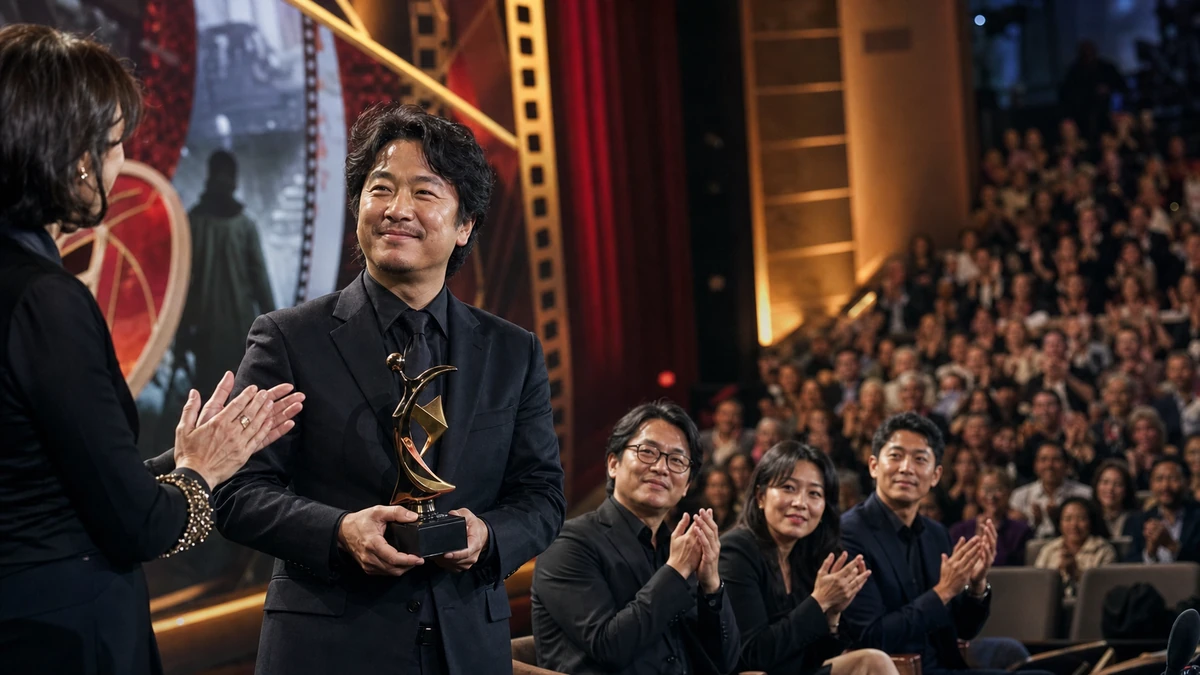
A New York award shines a light on one of South Korea’s most uncompromising filmmakers
Na Hong-jin, the South Korean director behind a small but formidable body of films that have earned cult devotion around the world, has picked up a major honor in New York tied to his upcoming movie, “Hope.” The New York Asian Film Festival said Na received the Daniel A. Craft Excellence in Action Cinema Award during the festival’s 25th edition, according to information released by the Korean distributor Plus M Entertainment.
For American audiences who may not recognize Na’s name immediately, his work is likely more familiar than it first sounds. He is the filmmaker behind “The Chaser,” “The Yellow Sea” and “The Wailing” — dark, intense, meticulously directed features that helped cement South Korea’s reputation as one of the world’s most daring filmmaking hubs long before “Parasite” became a household name in the United States. His movies are not action films in the Hollywood franchise sense, with quips and superheroes and clearly marked heroes and villains. Instead, Na uses violence, pursuit, dread and chaos as cinematic language. In his films, action is rarely just spectacle. It is atmosphere, character and moral pressure all at once.
That makes the New York prize especially notable. The award is not simply a celebration of commercial excitement or box-office-friendly fight scenes. It is given in the spirit of Daniel A. Craft, a co-founder of the festival and a passionate advocate for action cinema as a serious art form. In that context, honoring Na for “Hope” signals something larger than early buzz around a new release. It frames him as a filmmaker whose entire approach to movement, danger and tension has expanded what action can mean on screen.
At a moment when American viewers are increasingly comfortable moving between languages and film traditions — streaming services have done much to normalize subtitles for a broader audience — Na’s recognition in New York also arrives at a useful cultural crossroads. The award introduces his next project to North American viewers while the festival simultaneously revisits the films that built his reputation. That combination of looking backward and forward is what gives this moment unusual weight.
In other words, this is not just another festival trophy. It is a curated statement: Here is an important Korean director, here is the body of work that explains why he matters, and here is the next film global audiences should be watching for.
Why this particular festival honor matters
The New York Asian Film Festival occupies a specific place in the North American movie landscape. Founded in 2002, it has long served as a gateway for U.S. audiences seeking films from across Asia that often fall outside the mainstream art-house circuit. For many New Yorkers — and for many critics and industry watchers who follow the festival’s programming — it has been a place to discover directors before they break into broader American consciousness.
That matters because awards at major film festivals can sometimes blend together for casual audiences. Cannes has the Palme d’Or. Sundance has Grand Jury Prizes. Toronto is a launchpad for Oscar hopefuls. The New York Asian Film Festival does something somewhat different: It helps build cultural bridges for filmmakers whose work may not arrive in the United States with the marketing machinery of a studio-backed awards campaign. In that sense, recognition here often carries a kind of curatorial credibility. It says a filmmaker has not only made notable work, but has mattered within the evolving conversation around Asian cinema and its global influence.
The Daniel A. Craft Excellence in Action Cinema Award is especially revealing in what it values. Its focus is not merely on speed, stunts or pyrotechnics. It honors those who have advanced action cinema as a mode of artistic expression. That distinction is important for understanding why Na is such a fitting recipient. His films are full of motion and menace, but they are never reducible to set pieces. He uses chase, collision and eruptions of violence to trap viewers inside worlds where order is fragile and the truth is always slipping away.
That may sound far from what many Americans picture when they hear the term “action cinema,” which often suggests franchises built around recognizable intellectual property. But one of the lasting contributions of Asian filmmakers — from Hong Kong’s action stylists to Korean genre directors — has been to show that action can be deeply expressive, even philosophical. The way a body moves through danger, the way a scene escalates, the way suspense is stretched to the breaking point: these are not just technical flourishes. They shape meaning. Na’s work has long operated in that space.
His brief acceptance remarks underscored the seriousness with which he appears to be taking the recognition. According to the materials released in Korea, he thanked supporters and said he felt good receiving such a “weighty” award. Even in translation, the choice of that word stands out. It suggests more than excitement. It suggests responsibility — an awareness of the award’s legacy and of the artistic lineage it invokes.
Who Na Hong-jin is, and why film fans pay attention
Na is not a prolific director by Hollywood standards. He has released only three feature films to date: “The Chaser” in 2008, “The Yellow Sea” in 2010 and “The Wailing” in 2016. But scarcity has arguably enhanced his reputation. Each film has arrived as an event for viewers interested in Korean cinema, and each has demonstrated a distinct combination of genre craft and auteur control.
“The Chaser,” his breakout feature, is often described as a thriller, but that label barely captures its velocity or cruelty. The film helped announce a directorial voice unafraid of bleakness and impatient with conventional moral comfort. “The Yellow Sea” expanded that sensibility into a more transnational and physically punishing story, weaving crime, desperation and relentless pursuit into something almost feverish. “The Wailing,” perhaps his most internationally discussed film, moved into supernatural and folk-horror territory, proving that Na could orchestrate dread on a much broader canvas without losing the feral intensity of his earlier work.
For Americans who came to Korean cinema through Bong Joon Ho, Park Chan-wook or the global phenomenon of “Squid Game,” Na belongs to the same larger ecosystem of filmmakers who made South Korea impossible to ignore as a creative force. But his sensibility is uniquely his own. Bong often works through social satire and tonal agility. Park favors elaborate stylization and psychological gamesmanship. Na is more primal. His films tend to feel less like puzzles than like ordeals. They drag viewers into moral panic, confusion and dread, often refusing the clean release that more conventional genre storytelling promises.
That makes him a director’s director and a critic’s director, but also a filmmaker with unusually passionate fans. In the United States, that kind of devotion may resemble the following around a select group of genre auteurs — directors whose names alone signal a certain experience. Think of how horror audiences respond to Ari Aster or how crime-thriller fans once tracked every new David Fincher release. Na inspires a similar anticipation among international filmgoers, except he does so while remaining relatively selective and enigmatic.
So when a festival in New York not only gives him an award tied to a new movie but also programs a full retrospective of his features, it is effectively telling newer audiences: If you have heard the name but not done the homework, now is the time.
What a retrospective means — and why it changes the story
Retrospectives are different from ordinary screenings. At most festivals, a single film appears as one title among many, competing for attention in an overcrowded cultural calendar. A retrospective reframes things. It asks audiences to consider a filmmaker not as the creator of one movie, but as the architect of an evolving body of work.
That is what is happening in New York. Alongside the award for “Hope,” the festival is screening all of Na’s feature films: “The Chaser,” “The Yellow Sea” and “The Wailing.” For longtime fans, that offers the pleasure of rediscovery on a big screen. For newcomers, it creates a crash course in one of Korean cinema’s most unsettling and influential modern voices.
There is something especially compelling about the timing. If the festival had only mounted the retrospective, the event might have been read primarily as a tribute to past achievement — an acknowledgment that Na’s earlier work has endured and deserves reappraisal. If it had only handed out the award for “Hope,” the story might have centered narrowly on speculation about the upcoming film. But by doing both at once, the festival constructs a richer narrative. It invites audiences to revisit where Na has been while directing their attention toward where he is going next.
That dual movement is one reason this New York moment feels larger than a routine entertainment headline. It turns Na’s career into a living continuum rather than a completed chapter. The earlier films are not being treated as museum pieces. They are being presented as active context for understanding “Hope,” even though few public details about the new film have been disclosed.
In American film culture, retrospectives often serve as canon-making exercises. They can elevate a director from admired to essential. When institutions and festivals decide that a filmmaker’s work should be seen together, in sequence, they are asserting that connections exist — thematic, visual, structural — that deserve close attention. For Na, those connections include an obsession with pursuit, a fascination with unstable institutions, and a recurring sense that violence is never just physical. It distorts perception, reshapes communities and exposes the limits of human control.
Seen that way, the retrospective does more than celebrate Na’s past. It clarifies why a new film from him immediately commands interest.
What we know about “Hope” — and what we don’t
One of the more unusual aspects of this story is how much attention “Hope” is receiving even though public information about the film remains limited. The Korean materials introducing the award identify it simply as Na’s new work. Plot details, release timing and other specifics were not included in the summary available from the distributor. That absence might frustrate fans eager for the usual cycle of teasers, casting breakdowns and release-date announcements. But it also says something about Na’s standing.
In today’s entertainment economy, hype is often built through a steady drip of promotional assets: trailer stills, first-look posters, Comic-Con panels, viral campaigns. Here, the attention is being generated less by revealed content than by reputation and institutional endorsement. “Hope” is becoming a point of fascination not because audiences have been shown exactly what it is, but because a major festival has effectively stamped the project with prestige and because the filmmaker behind it has built enough trust that many viewers are willing to wait.
That distinction matters. It suggests “Hope” is entering the public conversation through artistry rather than marketing alone. Of course, every film eventually has to meet its audience on the merits. But the symbolic power of this award lies in its ability to frame anticipation before the standard promotional machine fully kicks in.
It is also wise to resist overreading the title or projecting too much onto the film’s content. “Hope” may sound, to English-speaking ears, like a departure from the bleak emotional weather associated with Na’s earlier films. But titles can mislead, and without verified details, any deeper interpretation would be speculation. What can be said with confidence is that a festival devoted to Asian cinema has singled it out in a way that links Na’s new project to the broader artistic evolution of action on screen.
That alone is enough to make “Hope” one of the more intriguing Korean films on the international horizon, especially for viewers who follow directors rather than brands.
Korean cinema’s long arc in America
Na’s recognition comes at a time when Korean cultural exports no longer occupy a niche position in the United States. Over the past two decades, what is often called the Korean Wave — or “Hallyu,” the Korean term for the global spread of South Korean popular culture — has transformed from a regional trend into a durable international force. K-pop groups headline stadium tours, Korean dramas dominate streaming charts, Korean beauty products fill American retail shelves, and Korean food has become mainstream in cities and suburbs alike.
Film has been one of the most important engines of that wave, even if it sometimes receives less everyday attention than music or television. Long before “Parasite” won the Academy Award for best picture in 2020, South Korean filmmakers had been earning admiration on the festival circuit and among American cinephiles. Directors such as Park Chan-wook, Lee Chang-dong, Kim Jee-woon and Bong Joon Ho helped build the idea of Korean cinema as a place where genre could be smarter, stranger and more emotionally daring than many U.S. viewers expected.
Na belongs firmly in that story. His films emerged during a period when South Korean thrillers and crime dramas were developing a fearsome reputation for intensity and formal confidence. To American audiences accustomed to rigid genre boundaries, Korean filmmakers often seemed liberated by comparison. A thriller could become social commentary. A horror film could become a theological argument. A crime story could mutate into tragedy, grotesque comedy or existential nightmare. Na’s work exemplifies that freedom.
For American readers less familiar with Korean film culture, it is also helpful to understand that domestic prestige in South Korea does not always map neatly onto international fame. Some filmmakers become global ambassadors; others are cherished more specifically by committed film audiences. Na sits somewhere in between. He is widely respected, but he is not a celebrity in the way a K-pop idol or Netflix drama star might be. His influence operates through the force of the films themselves.
That is partly why an event like the New York Asian Film Festival matters. It provides the kind of curated spotlight that helps connect serious Korean filmmakers with North American audiences who may not encounter them through mainstream entertainment news. It turns global cultural exchange into something tangible: a screening room, a retrospective, an award, a city where multiple traditions are constantly in conversation.
Why New York remains a crucial bridge for Asian cinema
There is a reason this story resonates differently because it happened in New York. The city has long functioned as one of America’s key cultural ports of entry — a place where international film can find critics, diaspora audiences, industry insiders and curious moviegoers in the same room. A New York festival devoted to Asian cinema is not just a symbolic venue. It is one of the most practical spaces in the United States for building recognition across communities.
The New York Asian Film Festival has historically thrived on that role. It has introduced audiences to works that might otherwise have circulated only in specialty markets or vanished into the immense churn of global content. For Korean cinema in particular, it has offered a stage on which directors can be contextualized rather than merely consumed as isolated sensations.
That contextualization matters in an era when global streaming can flatten difference. Americans today can watch more international content than ever before, but abundance does not automatically produce understanding. Algorithms may deliver a title; they do not always explain its lineage. Festivals still do that work. They provide narrative and history. They tell viewers why a filmmaker matters, what conversations a film belongs to, and how one work connects to another.
By pairing Na’s award with a full retrospective, the festival is performing exactly that educational function. It is effectively saying that if you want to understand why “Hope” deserves attention, you should also look at “The Chaser,” “The Yellow Sea” and “The Wailing.” That is how serious film culture is built: not through isolated moments of virality, but through institutions that preserve continuity.
For North American audiences, that continuity can deepen appreciation not just of Na, but of Korean cinema more broadly. It reminds viewers that South Korea’s global cultural prominence did not materialize overnight. It was built film by film, director by director, festival by festival, over years of artistic risk-taking and international advocacy.
A career milestone, and a sign of what comes next
What makes this moment memorable is the way it captures several timelines at once. There is the past: the three features that established Na as one of South Korea’s most distinctive directors. There is the present: an award that recognizes his contribution to action cinema as an art form. And there is the future: the unresolved curiosity surrounding “Hope,” now intensified by New York’s endorsement.
For Korean film fans, that combination is a gift. It offers both reflection and anticipation. For American audiences who may still be discovering the depth of Korean cinema beyond its most internationally famous titles, it offers an accessible entry point into an important filmmaker’s work. And for the broader conversation around global film culture, it is a reminder that festivals still have the power to shape attention meaningfully — not just by promoting what is new, but by situating it within a living artistic legacy.
It is too early to say exactly what “Hope” will reveal about Na’s next creative phase. The available facts remain modest: he has received the Daniel A. Craft Excellence in Action Cinema Award, and his complete feature output is being screened in retrospective at the New York Asian Film Festival. But those facts are substantial enough on their own. They signal international confidence in a filmmaker whose output is sparse, severe and deeply influential.
In an entertainment culture often driven by constant content and disposable excitement, Na represents something rarer: a director whose name still carries the promise of an event. The New York honor does not simply celebrate a new film before its details are widely known. It underscores the accumulated force of a career that has made audiences trust the seriousness of whatever comes next.
For now, that may be the most important takeaway. “Hope” remains partly out of view, but Na Hong-jin is very much in focus. And in New York, one of America’s great crossroads for world cinema, that focus has sharpened at exactly the right time.
Comments
Post a Comment