Seoul Turns to Cooking Class Solutions for a Global Health Problem: How to Eat Better as Chronic Disease Rises
A city program with a familiar challenge
In Seoul, city officials are taking on a problem that would sound familiar in Chicago, Los Angeles or Atlanta: how to help middle-aged and older adults eat in a way that lowers the risk of chronic disease without asking them to overhaul their lives overnight.
The Seoul Metropolitan Government’s Agricultural Technology Center said it will run a seasonal produce education program in the second half of 2026 aimed at middle-aged adults, with a focus on preventing chronic illnesses and encouraging healthier daily habits. According to details released this week, the core topic is diet management for two of the most common long-term health concerns in modern societies: high blood pressure and diabetes.
What makes the program notable is not just the health advice itself. Americans have heard plenty of that. Eat less salt. Cut back on sugar. Add vegetables. Watch portions. What stands out in the Seoul approach is its attempt to connect those ideas to the way people actually shop, cook and assemble a meal at home. Rather than present nutrition as a list of restrictions, the course is built around seasonal produce, balanced plates and hands-on meal planning.
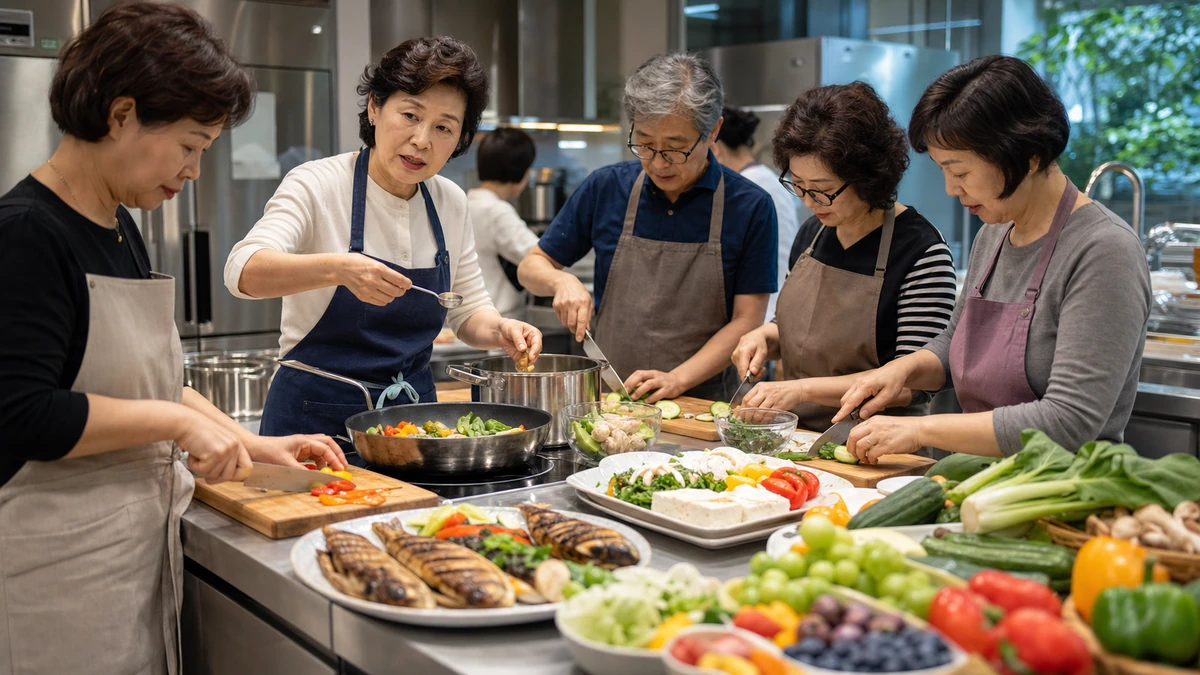
Participants will first learn about the characteristics of major chronic diseases, along with methods of prevention and management. Then they will move into practice, preparing low-sodium and low-sugar meals themselves. In other words, the city is not simply telling residents what not to eat. It is trying to teach them how to build a realistic, repeatable meal using ingredients they already know.
That may sound modest, but it reflects a broader truth in public health: behavior change rarely happens because someone reads a pamphlet. It is more likely to happen when people can imagine dinner on Tuesday night, not just an idealized future version of themselves. Seoul’s program, at least on paper, is built around that principle.
Why this matters in South Korea, and beyond
South Korea is often described abroad through its exports: K-pop, Korean dramas, beauty products, smartphones and cars. But like the United States and many other affluent countries, it is also grappling with an aging population and the steady burden of chronic disease. High blood pressure and diabetes are not glamorous subjects, yet they shape everyday life for millions of households and place long-term pressure on health systems.
That context is important for American readers, who may associate Korean food with barbecue, fried chicken, kimchi and viral restaurant lines in Koreatowns. Korean cuisine can be deeply vegetable-forward and varied, but it can also rely heavily on sauces, broths, pickled side dishes and seasoning bases that are high in sodium. Sweetness, too, shows up in more places than outsiders might expect, from marinades to packaged drinks to everyday convenience foods.
South Korea, like the U.S., has seen the health effects of modern eating patterns shaped by busy work schedules, processed foods and an older population trying to stay healthier longer. The target audience for Seoul’s program, broadly described as middle-aged and older adults, reflects that reality. These are people at a stage of life when hypertension, prediabetes and type 2 diabetes often become more immediate, and when advice that sounds good in theory has to fit around established routines.
There is also a distinctly Korean local-government angle here. Municipal and district offices in South Korea often play a larger role in daily civic life than many Americans might expect, offering everything from community classes to gardening support to family services. The Seoul Agricultural Technology Center is not simply a farming agency in the narrow sense. It also serves an educational role, linking agriculture to household life, food literacy and wellness.
That linkage may sound unusual in the U.S., where agriculture departments and public health programs are often siloed. But it reflects a growing understanding that prevention starts long before a hospital visit. It starts at the market, in the kitchen and in the repeated choices that become habit.
The central idea: Don’t separate health food from normal food
One of the clearest messages in the Seoul program is that healthier eating should not be treated as a special, temporary diet detached from ordinary life. Instead, the city is framing chronic disease management around seasonal produce and familiar ingredients, asking participants to rethink how they combine foods rather than abandon the foods they know.
That may be the program’s most practical insight. In the U.S., people are often introduced to “healthy eating” through dramatic before-and-after language, expensive specialty products or diet trends that imply a clean break from normal routines. Seoul’s approach appears more grounded. It starts from the assumption that people are more likely to succeed if they can work with ingredients already available in everyday shopping patterns.
The emphasis on seasonal produce carries cultural and economic weight in Korea. As in many food cultures, produce that is in season is generally more affordable, more abundant and more familiar in household cooking. In a city context, using seasonal fruits and vegetables can also make nutrition advice feel less abstract. The point is not to praise a miracle ingredient. It is to show what a healthier meal looks like using what is actually on hand.
That distinction matters. Health communication often drifts toward the language of “superfoods,” a term that can flatten nutrition into marketing. The Seoul program appears to avoid that trap. Instead of singling out one ingredient for its supposed special powers, it centers on meal structure: how to reduce salt and sugar while keeping vegetables and protein in balance.
For American readers, that may sound closer to the most durable advice from dietitians than to the churn of wellness culture. It is also easier to picture in practice. A person does not need to reinvent breakfast, lunch and dinner around imported supplements or unfamiliar rules. They need to understand how to adjust seasoning, how to build a plate and how to keep the meal satisfying enough that the change lasts.
Why Seoul is teaching low sodium and low sugar together
Another striking feature of the program is that it treats sodium and sugar as part of the same conversation. That may seem obvious to public health experts, but in everyday life people often separate them into different mental boxes: salt is the problem for blood pressure, sugar is the problem for diabetes, and never the twain shall meet.
Seoul’s course takes a broader view. By addressing hypertension and diabetes in one educational track, it suggests that the bigger issue is the overall pattern of eating, not a single ingredient villain. That is a useful reframing for people who have spent years hearing nutrition reduced to a slogan.
Put simply, a person can eat less sugar and still consume too much sodium. A person can cut back on salt and still build meals that are unbalanced or overly processed. If the goal is long-term prevention and management, the entire meal matters: what is added, what is reduced and what is included to create balance.
The hands-on portion of the program appears designed to make that lesson concrete. Participants will not only hear the idea of “less salty” or “less sweet.” They will prepare a meal themselves using seasonal produce and balanced components. That matters because abstract advice can be hard to apply. Many people understand the concept of moderation but struggle with the mechanics of grocery shopping, seasoning and portioning.
There is a broader lesson here for American public health efforts as well. The most effective nutrition education is often not the most dramatic. It is the most specific. What does breakfast look like if you are trying to keep blood sugar steadier? How do you season a meal so it remains satisfying with less sodium? What combination of vegetables and protein helps a meal feel complete rather than punitive? Seoul’s program appears to operate in that practical zone.
That may also explain why the city is emphasizing direct experience rather than a lecture-only format. People remember what they make. They internalize patterns faster when they see how ingredients come together on the cutting board and the stove, not just on a PowerPoint slide.
The Korean food context American readers should know
For readers who know Korean food mostly through restaurant menus, it helps to understand the role of everyday home meals in Korean life. A typical Korean table is often organized around rice, soup or stew and several side dishes, known as banchan. Those side dishes can include vegetables, seasoned greens, tofu, fish, eggs or pickled items. It is a format that can be highly balanced, but it can also lead to regular exposure to sodium through fermented pastes, soy-based sauces and preserved foods.
Kimchi is the most famous example. It is an iconic Korean staple, usually made from fermented vegetables and deeply woven into national food identity. It also contains significant sodium, which is one reason nutrition conversations in Korea can be more complicated than a simple “traditional food equals healthy” narrative. The same is true in the United States, where beloved regional foods can carry hidden trade-offs.
That does not mean Korean food is uniquely unhealthy. Far from it. Many Korean meals include far more vegetables and plant-based dishes than the standard American plate. But as in any cuisine, the details matter: portion sizes, preparation methods, added sugars, sauces and the balance between fresh and processed items.
Seoul’s program seems to recognize that complexity. Rather than asking residents to reject their food culture, it is encouraging them to fine-tune it. That is often a more culturally intelligent strategy than simply importing generic advice. People are more likely to change when the guidance respects what they already eat and understand.
There is also an important social dimension. In Korea, as in many countries, food is not just fuel. It is family routine, hospitality and memory. Middle-aged adults may be cooking not only for themselves but also for spouses, older parents or children. A class that teaches how to shape one meal for better health can ripple outward through a household. It can influence what gets packed, shared and repeated.
That makes the program more than a nutrition seminar. It becomes, in a small way, a form of community-based preventive care, delivered through the familiar language of cooking.
From information to habit formation
If the program succeeds, it will likely be because it lowers the psychological barrier to healthier eating. That may be its most important function. Chronic disease prevention often fails not because people are indifferent, but because the advice feels exhausting, expensive or impossible to sustain.
By focusing on seasonal produce, low-sodium and low-sugar principles, and a balance of vegetables and protein, Seoul is presenting a simple checklist rather than a rigid doctrine. Is the meal overly salty or overly sweet? Did you make use of seasonal ingredients? Does the plate include a reasonable balance of vegetables and protein? Those are practical questions a person can ask at home without needing specialized equipment or advanced nutrition knowledge.
That is especially relevant for middle-aged adults, who may be navigating the first warnings from doctors while also managing work, caregiving and the habits of decades. Public health messaging often assumes that once people understand the stakes, they will naturally comply. Real life is less orderly than that. A useful program does not just explain disease. It narrows the gap between knowing and doing.
Seoul’s curriculum appears structured with that gap in mind. Participants first learn about hypertension and diabetes as conditions with specific features, risks and management strategies. Then they move directly into meal-making practice. That sequence matters. It frames cooking not as an afterthought but as the place where health advice becomes action.
For Americans, there is something refreshingly unflashy about that. At a time when health content often arrives as influencer branding, quick-fix hacks or moralized talk about “clean eating,” a city-sponsored cooking education program may sound almost old-fashioned. But sometimes old-fashioned is exactly what public health needs: clear instruction, realistic goals and attention to daily repetition.
A local Korean program with a universal message
At one level, this is a very local story. It is about a Seoul city agency, a community education program and a Korean audience of middle-aged adults. But the message travels easily across borders. Whether the setting is Seoul or Seattle, the challenge is familiar: how do you help people turn broad health warnings into ordinary meals they can actually live with?
The answer offered here is neither glamorous nor radical. It does not depend on a single miracle ingredient, a punishing diet or a complete break from cultural eating habits. Instead, it suggests that chronic disease prevention can begin with the architecture of one plate: less sodium, less added sugar, more intention in how vegetables and protein are combined, and greater use of ingredients that are already part of normal life.
That may be why the Seoul Agricultural Technology Center’s role is worth noting. The agency is using food education not just to promote produce, but to connect agriculture to civic well-being. In doing so, it highlights something American policymakers and local institutions also confront: food systems and health systems are deeply intertwined, even if governments do not always treat them that way.
There are, of course, limits to what one class can do. No short program can solve the structural pressures that shape eating habits, from long working hours to food costs to deeply ingrained routines. And the public information released so far does not suggest a one-size-fits-all medical solution. That is not the point. The point is to give participants a framework they can repeat and adapt.
In the end, the appeal of Seoul’s approach is its realism. It recognizes that for many people, health is not transformed by a dramatic declaration. It is shaped by the meals made again and again, with small corrections that accumulate over time. In that sense, this Korean city program speaks to a universal concern in an intensely practical way.
Its underlying message could be understood in any American kitchen: chronic disease prevention does not begin in the abstract. It begins when dinner is a little less salty, a little less sweet, a little more balanced, and close enough to everyday life that people will keep doing it tomorrow.
Comments
Post a Comment