South Korean moviegoers are flocking to IMAX and other premium screens, signaling a broader shift in how audiences value the theater experience
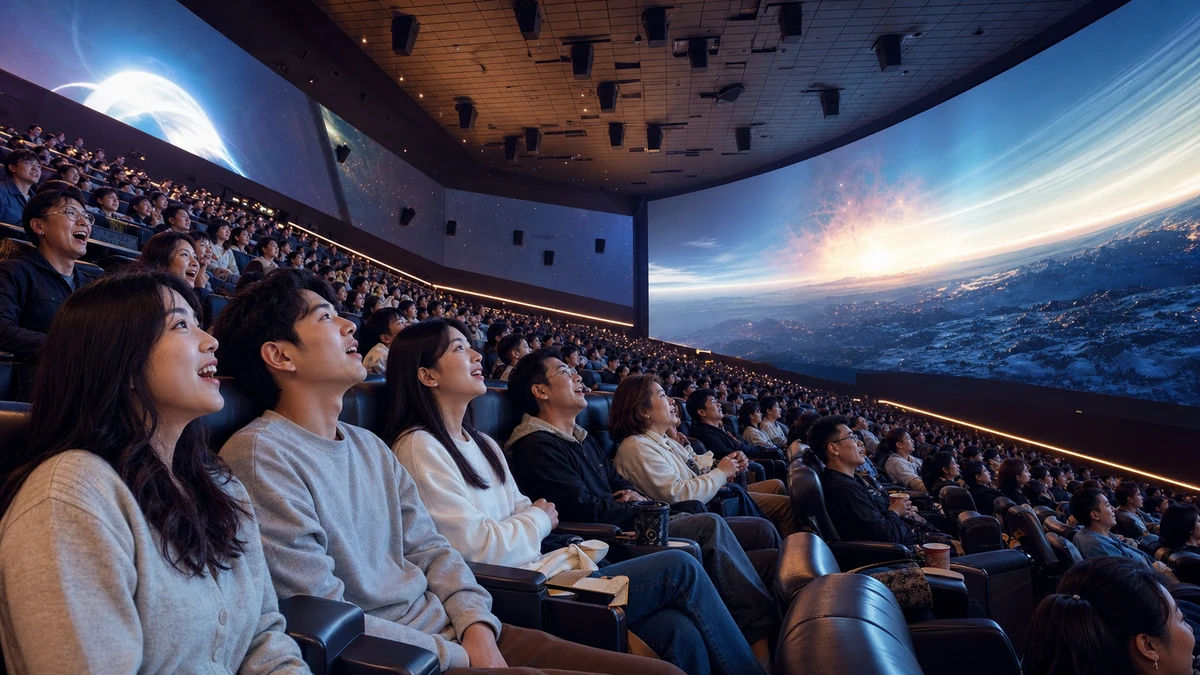
A booming niche in South Korea’s movie market is starting to look like the future
South Korean moviegoers are increasingly choosing to see films in premium formats such as IMAX, ScreenX, Dolby Cinema, 3D and 4DX, a trend that says as much about the global movie business as it does about Korea’s famously wired, trend-sensitive consumer culture.
According to new box-office figures cited by Yonhap News Agency from Korea’s integrated ticketing system, about 2.813 million people watched films in special-format screenings during the first half of 2026. That was up 47.3 percent from roughly 1.91 million during the same period a year earlier, an increase of more than 903,000 admissions.
On one level, those numbers reflect a straightforward consumer choice: More people are paying extra for a bigger screen, sharper sound or a more physically immersive presentation. But on another level, the surge offers a revealing snapshot of how moviegoing is changing in one of the world’s most closely watched entertainment markets.
For American readers, it may help to think of this as a Korean version of a broader trend visible in the United States, where theater chains have leaned heavily on premium large formats and luxury seating to persuade audiences to leave the couch behind. As streaming has become a default option for casual viewing, theaters have increasingly sold not just a movie, but an event. South Korea appears to be moving decisively in that direction.
That matters because South Korea is not just another overseas box-office territory. It is one of the most movie-literate and trend-responsive markets in the world, a place where audiences are highly engaged, digitally connected and often quick to embrace new forms of entertainment consumption. In recent years, Korea has also become a global cultural bellwether through the Korean Wave, or hallyu, the broad export of Korean pop culture that includes K-pop, television dramas, film, fashion and online trends. When Korean consumers shift their habits, industry executives elsewhere pay attention.
The takeaway from the latest figures is not simply that more Koreans went to the movies. It is that a growing share of them chose to see movies in a way designed to maximize scale, spectacle and sensory impact. In an era of streaming abundance, that is the theater industry’s central argument for its own survival.
What “special-format screenings” mean in Korea
For readers unfamiliar with the terminology, South Korea’s “special screenings” refer to premium exhibition formats that go beyond a standard two-dimensional auditorium. The category includes IMAX, known for its towering screens and enhanced image and sound; ScreenX, a Korean-developed format that extends images onto side walls for a 270-degree viewing effect; Dolby Cinema, which emphasizes high-contrast visuals and immersive sound; 3D screenings; and 4DX, the motion-seat format that adds physical effects such as vibration, wind and scent.
Some of these formats will be familiar to American audiences, especially IMAX and Dolby Cinema. Others, particularly ScreenX and 4DX, are more closely associated with South Korea because both were developed by CJ 4DPLEX, part of the Korean entertainment giant CJ Group. That is an important piece of context. Korea is not merely consuming premium formats created elsewhere; in some cases, it has helped pioneer the very language of immersive theatrical exhibition.
That gives the Korean market a distinctive role in global cinema. While Hollywood studios still dominate many of the world’s largest blockbuster releases, Korean companies and theater operators have been influential in reimagining what the in-person movie experience can feel like. In practical terms, that means Korean audiences are often presented with a wider range of viewing choices, and they are increasingly learning to match the format to the film.
That last point is especially important. The new figures suggest audiences are not treating all movies the same way. Instead, many are making more specific decisions: Is this the kind of film that deserves an IMAX ticket? Is it worth seeing in 4DX? Would a visual spectacle play better on ScreenX than in a regular auditorium? Those may sound like narrow consumer questions, but they reveal a broader change in movie culture. The format itself is becoming part of the appeal.
In other words, moviegoers are no longer choosing only what to watch. Increasingly, they are choosing how to watch it. That may sound obvious to frequent cinephiles in Los Angeles or New York, but the scale of the Korean increase suggests that this mindset is spreading beyond a niche crowd of format enthusiasts.
IMAX leads the rise, but the bigger story is audience behavior
Among the premium options, IMAX remained the biggest draw. More than 1.015 million people watched films in IMAX in South Korea during the first half of 2026, up 45.9 percent from the same period last year, an increase of about 319,000 admissions.
That means IMAX alone accounted for a substantial share of all special-format tickets sold. The format’s growth rate also closely tracked the overall premium-screening increase, suggesting that its momentum is not an isolated phenomenon but part of a wider shift in theatergoing habits.
There is a reason IMAX sits at the center of this conversation. In both the United States and South Korea, IMAX has become shorthand for the kind of film that justifies leaving home. It is where audiences go for the modern blockbuster equivalent of a theme-park ride: giant visuals, precision-tuned sound and a sense of scale that even a very good home setup cannot fully replicate.
But it would be too simple to conclude that Korean audiences are just chasing bigger screens. The more significant development is that they appear to be thinking strategically about value. Premium movie tickets cost more, and consumers everywhere have become more selective about entertainment spending. If people are paying the premium anyway, it suggests they believe the added experience is worth it.
That is a notable signal in South Korea, where consumers are highly accustomed to convenience, digital access and intense price comparison across industries. Korea is one of the world’s most connected societies, with fast internet, widespread mobile commerce and a consumer culture that adapts quickly to new platforms. In that environment, a rise in premium theatrical attendance is not a default behavior; it is a deliberate one.
The implication for theater operators is encouraging. It suggests that when cinemas can clearly distinguish the out-of-home experience from what audiences can get at home, they still have a compelling product. The implication for studios is equally clear: Films built around spectacle, scale and sensory precision may have more upside in theaters than titles whose appeal can survive just as well on a living-room television.
Why science fiction and spectacle-heavy films are driving demand
The top IMAX performer in South Korea during the first half of the year was the science-fiction film “Project Hail Mary,” with “Avatar: Fire and Ash” also cited as a key driver of premium-format growth.
Even without translating those box-office results directly into the American market, the pattern is easy to recognize. Science fiction and large-scale fantasy have long been among the most format-friendly genres in the business. Whether it is space travel, alien worlds, towering landscapes or highly engineered sound design, these films are built to deliver sensations that feel diminished when compressed onto a smaller screen.
That does not mean every science-fiction movie will automatically become a premium-screen success. Story still matters, word of mouth still matters and audiences still decide on a case-by-case basis whether a movie feels “worth it.” But the Korean data reinforces something theater owners and studio executives have increasingly understood: Certain films form a natural partnership with premium exhibition.
“Project Hail Mary” is a particularly useful example because its success in IMAX says something more specific than a general box-office ranking would. It suggests not just that people wanted to see the film, but that many wanted to see it in a format designed to amplify its visual and auditory world. That distinction matters. A film can be popular overall without becoming a premium-format event. When it does become one, it usually means the audience perceives the experience itself as part of the product.
That concept is central to the modern theatrical business. In the streaming era, the most successful moviegoing experiences often promise something extra: the feeling of witnessing an expansive world, hearing a precisely mixed soundtrack in a room built for it or physically sensing the movement and energy of a film in a communal environment. Korea’s first-half numbers suggest audiences are responding strongly to that promise.
For Americans, the closest parallel may be the way audiences turn certain releases into “must-see in theaters” titles while waiting to stream others. In the U.S., that category often includes Christopher Nolan films, “Avatar” installments, Marvel tentpoles and large-scale action movies with enough visual density to reward a premium screen. Korea’s current premium-format boom points to a similar calculus, though with its own local habits and industry structure.
Korea’s theater culture helps explain the trend
South Korea has long had one of the most robust moviegoing cultures in the world. Multiplexes are common, major theater chains are deeply integrated into urban shopping and leisure districts, and audiences are accustomed to seeing both Hollywood blockbusters and domestic films as part of mainstream cultural life.
That ecosystem matters because premium-format growth does not happen in a vacuum. It depends on theater infrastructure, consumer familiarity and a market where moviegoing remains a social habit rather than an occasional luxury. Korea checks all of those boxes.
There is also a broader cultural context worth understanding. Korean consumers, especially in entertainment, often place a high value on “direct experience” — the felt, immediate quality of being there in person. That instinct is visible across many parts of Korean popular culture, from live fan events and concert culture to curated pop-up experiences tied to celebrities, brands and streaming hits. In a society where digital media is ubiquitous, in-person experiences often become more valuable, not less, because they offer something that cannot be fully replicated online.
The rise in premium moviegoing fits squarely into that pattern. A special-format screening is not just about watching content; it is about occupying a space engineered for immersion. That emphasis on atmosphere, environment and embodied experience is familiar to anyone who has followed the Korean Wave beyond TV and music. Hallyu is not simply about exportable content. It is also about carefully designed experiences around that content.
Seen that way, the premium-screening surge is part of a larger Korean consumer logic: If you are going to spend time and money outside the home, you want something memorable, differentiated and socially legible. A standard screening may still work for many films, but a premium showing carries a sense of intentionality. It says this is a movie worth making plans around.
That does not mean all Korean moviegoers have suddenly abandoned regular screenings. The data does not support that conclusion. Standard formats remain a major part of the market, and premium admission is still a subset of overall attendance. But an increase of more than 900,000 premium admissions in a year is large enough to show that the audience segment seeking heightened immersion is no longer marginal.
What this says about theaters in the streaming age
If there is a larger industry lesson in the Korean numbers, it is this: Theaters remain strongest when they emphasize what homes cannot easily reproduce.
This may sound obvious, but it has become the defining strategic question for cinema operators worldwide. The old assumption that movies would naturally draw people into theaters has weakened. Consumers now have too many alternatives, too many subscription services and too much familiarity with convenience. To compete, theaters need to offer not merely access to a film, but a reason to experience that film in a public space.
Premium formats do exactly that. They transform a screening into a distinct event. The visual scale is different. The sound is different. In some cases, even the physical sensation is different. That makes the ticket easier to justify, particularly for films whose appeal depends on immersion.
South Korea’s first-half 2026 numbers suggest that argument is resonating. The 47.3 percent jump in special-format admissions shows that a meaningful number of consumers are not just returning to theaters, but choosing the most experience-driven version of the theatrical product. In business terms, that is one of the healthiest signs a multiplex can hope for.
It also points toward a future in which release strategy becomes even more format-conscious. Studios may increasingly market certain films around their premium-screen credentials, highlighting aspect ratios, sound design or world-building scale in the same way they once emphasized stars and trailers. Theater chains, meanwhile, are likely to keep investing in seat upgrades, projection technology and differentiated auditorium concepts to preserve that advantage over streaming.
For American readers who have watched the same debate play out domestically, none of this will sound entirely unfamiliar. What makes Korea noteworthy is the speed and clarity with which these habits appear in the data. Korea often functions as an early indicator of cultural and consumer shifts because its market is sophisticated, competitive and highly responsive. When audiences there begin rewarding a particular exhibition model at scale, the global industry tends to notice.
The second half of 2026 will test whether the momentum lasts
The next question is whether South Korea’s premium-screen surge can continue through the rest of the year. Several high-profile titles are already being discussed as potential second-half drivers, including the foreign releases “Odyssey” and “Spider-Man: Brand New Day,” as well as the Korean film “Hope.”
The mix is significant. If premium-format growth were driven only by imported Hollywood spectacle, that would tell one story. But the inclusion of a Korean title among the most anticipated special-format releases suggests something potentially more important: that immersive exhibition in Korea is not limited to overseas franchises. Domestic films may also benefit if they offer the right combination of scale, visual ambition and sensory design.
That would be an encouraging development for the local industry. South Korean cinema has long proven its artistic range, from intimate dramas to genre-defying thrillers and internationally acclaimed auteur work. If premium-format demand begins extending more consistently to Korean productions, it could create new incentives for local filmmakers and distributors to think more aggressively about theatrical design and presentation.
Still, industry analysts would be wise not to treat premium growth as automatic. The first half of the year appears to show that audiences respond when a film and a format make sense together. That relationship is crucial. A premium screen is not a magic wand. If viewers do not believe a movie offers enough added value in IMAX, ScreenX, Dolby Cinema or 4DX, they can and will opt for a standard ticket — or skip the theater altogether.
In that sense, the Korean data should not be read as a blanket endorsement of all premium formats for all films. It is better understood as evidence that consumers are becoming more selective and more sophisticated. They are weighing not only whether a movie looks good, but whether a particular format enhances what that movie is trying to do.
That may be the most consequential trend of all. It suggests an audience that sees exhibition format as part of storytelling rather than mere marketing. And in a global market still wrestling with what theatrical cinema should be in the age of streaming, that may turn out to be one of South Korea’s most influential signals yet.
A global signal from one of entertainment’s most closely watched markets
South Korea’s 2.813 million premium-format admissions in the first half of 2026 may sound, at first glance, like a specialized industry statistic. In reality, the figure points to a broader evolution in audience behavior — one that many American theater owners, distributors and filmmakers are likely to find familiar, and perhaps instructive.
The core message is simple. Audiences are still willing to show up for the big screen, but they increasingly want that screen to feel meaningfully bigger, louder, richer and more immersive than what they have at home. In South Korea, that preference is now visible in a sharp year-over-year rise, led by IMAX and reinforced by a wider ecosystem of premium formats.
For a country that has become one of the world’s most important cultural exporters, the development carries extra weight. Korea’s influence on entertainment no longer stops with what people watch. It increasingly extends to how they experience it. From K-pop concerts to prestige dramas to moviegoing technology, South Korea has become a place where content and experience are packaged together with unusual sophistication.
That is why this theater trend deserves attention beyond Korea’s borders. It is not only a local box-office story. It is part of a global conversation about what cinema looks like after streaming became the norm. And at least for now, Korean audiences appear to be offering a clear answer: If theaters want to thrive, they need to deliver something people cannot simply press play on at home.
Comments
Post a Comment