South Korea’s East Coast Draws Summer Crowds as Nearly 190,000 Flock to Gangwon Beaches in a Single Day
A midsummer rush to the sea
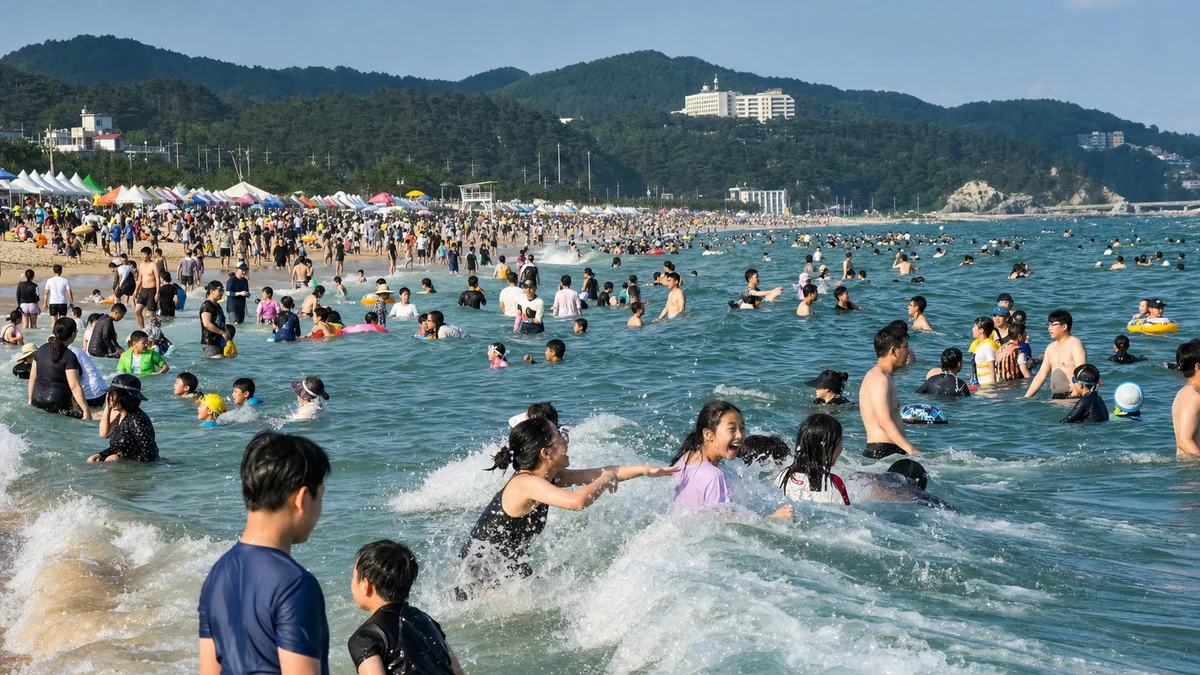
At the height of South Korea’s summer getaway season, nearly 190,000 people poured into the beaches of Gangwon Province’s east coast on Saturday, underscoring how central the shoreline has become to the country’s seasonal rhythms. Local officials said 85 beaches across six cities and counties along the Gangwon coast drew more than 190,000 visitors as of 6 p.m. on July 25, offering a snapshot of how South Koreans respond when punishing heat, limited vacation windows and a strong beach culture converge.
The one-day figure is striking on its own, but it is part of a larger pattern. Since the beaches opened for the season, cumulative visits along Gangwon’s east coast have reached about 1.434 million, according to local authorities. That does not necessarily mean 1.434 million distinct individuals, since some visitors may return multiple times, but it does show the intensity of use and the scale of the region’s draw during the hottest stretch of the year.
For American readers, it may help to think of Gangwon’s east coast as a summer corridor rather than a single destination. It is not just one iconic beach in the way many U.S. travelers might picture Santa Monica, Myrtle Beach or parts of the Jersey Shore. Instead, the region functions more like a long chain of beach towns and public waterfronts, each absorbing vacation traffic at the same time. On a busy summer weekend, the shoreline becomes a shared escape valve for people trying to outrun the heat of Seoul and other inland cities.
The surge also reflects a broader truth about summer in South Korea: beachgoing is not only leisure, but also a highly social and seasonal ritual. Families, student groups, couples and groups of friends head to the coast not simply to swim, but to mark summer itself. The crowds that packed Gangwon on Saturday were taking part in something larger than a day at the beach. They were participating in one of the country’s most recognizable forms of warm-weather life.
Why Gangwon’s shoreline matters in South Korea
Gangwon, a mountainous province bordering the East Sea, or what many international maps call the Sea of Japan, has long occupied a special place in the South Korean imagination. For residents of the Seoul metropolitan area, which is home to roughly half the country’s population, the Gangwon coast offers one of the fastest and most accessible ways to trade dense urban life for open water. Better roads and rail links over the years have made beach trips easier, turning the area into a default choice during school breaks, office holidays and high-heat weekends.
The east coast’s appeal lies partly in geography. Compared with the mudflats and tidal ranges that characterize much of South Korea’s western coastline, Gangwon’s beaches are known for relatively clear water, broad stretches of sand and the sunrise views that have helped make cities such as Sokcho and Gangneung household names inside the country. If Busan, in the southeast, is South Korea’s best-known big-city beach destination, Gangwon is often seen as the classic escape for people wanting a more dispersed coastal experience.
That distinction matters in this weekend’s numbers. The 190,000 visitors were not concentrated in just one famous spot. They were spread across 85 beaches in six local jurisdictions, a sign that summer demand is distributed across a wide coastal network. In practical terms, that means South Korea’s beach tourism system here is less about a single mega-resort and more about an entire region operating as seasonal public infrastructure.
For Americans familiar with beach economies, there is something recognizable in that model. Just as coastal counties in Florida, North Carolina or Delaware can see tourism spill across multiple towns, Gangwon’s coast functions as a string of interlinked summer destinations. But South Korea’s version is compressed by geography and population density. A relatively short drive or train ride can channel enormous numbers of people toward the same coastline in a narrow vacation window, magnifying both the popularity of the beaches and the pressure on local services.
The meaning of a 190,000-person beach day
One reason this weekend’s turnout stands out is that it captures a single summer Saturday rather than a slow accumulation over weeks. As of early evening, roughly 190,000 people had been counted at Gangwon’s east coast beaches, making it a vivid indicator of daily movement during peak vacation season. It is a reminder that in South Korea, where work culture can be intense and vacation time comparatively constrained, summer weekends often carry outsized importance.
That rhythm is familiar in a different form to Americans who have watched highways jam up before Memorial Day, July Fourth or Labor Day. But the Korean version tends to be even more concentrated. Summer travel often clusters around school holidays, company leave periods and a small number of culturally meaningful dates in the hottest part of the year. When conditions line up, beaches fill quickly and in large numbers.
The data released Saturday did not break down which beaches were most crowded or how visitor numbers shifted hour by hour. That leaves some unanswered questions. It is not possible, from the available figures alone, to say whether one flagship beach such as Sokcho dominated the day or whether foot traffic was relatively evenly spread among smaller coastal spots. Still, the broader pattern is clear: Gangwon’s shoreline was functioning at scale, with tens of thousands of people using it as a live, physical response to severe summer heat.
There is also a cultural dimension to the size of the crowd. In South Korea, the beach is often less isolated from public life than in some American settings. Many beaches are closely linked to surrounding commercial strips, seafood restaurants, pensions and small hotels, convenience stores and seasonal events. A beach day can include swimming, eating, strolling and simply being among other people. The crowd itself becomes part of the atmosphere. To outside observers, that can make a Korean beach seem more collective and less solitary than the image many Americans associate with wide-open coastal escapes.
Understanding “Jungbok,” one of Korea’s hottest seasonal markers
Saturday’s beach rush carried added symbolism because it fell on Jungbok, one of the three traditional “boknal” days associated with the hottest period of the Korean summer. The three dates, known as Chobok, Jungbok and Malbok, are rooted in the traditional lunar-calendar-based seasonal system and roughly mark the most oppressive stage of midsummer. Americans might loosely compare them to the dog days of summer, though the Korean concept is more culturally specific and more actively observed.
On these days, Koreans often talk explicitly about enduring or managing the heat. Seasonal foods come into focus, especially stamina dishes such as samgyetang, a ginseng chicken soup widely associated with replenishing energy during extreme weather. Even for people who do not formally observe the traditional calendar, the language of boknal remains part of public conversation, weather coverage and everyday life. In that sense, Jungbok is not merely a date on a calendar. It is a social cue that tells people the heat has reached a serious stage.
That helps explain why the beach story resonates beyond tourism statistics. A large crowd at the shore on Jungbok is more than a reflection of summer vacation scheduling. It is also a visible expression of how Koreans adapt to seasonal intensity. If Americans often respond to heat with backyard barbecues, air-conditioned malls, lake weekends or road trips, South Koreans frequently turn to the sea, especially when urban humidity becomes difficult to bear.
Reports from elsewhere in the country reinforced that picture. On the same day, beachgoers were also seen cooling off at Gimnyeong Beach on Jeju Island, the volcanic resort destination south of the Korean mainland that is often likened to Hawaii in Korean popular imagination. The fact that both Gangwon on the east coast and Jeju in the south were drawing swimmers speaks to a national pattern: when midsummer peaks, the beach becomes one of the country’s most important living spaces.
A distributed beach culture, not just one marquee destination
One of the most revealing parts of the Gangwon figures is not the headline crowd size, but the number of beaches involved. Eighty-five beaches were included in the count, a reminder that South Korea’s summer beach culture is spread across many local sites rather than dominated by one or two internationally known names.
That matters because foreign coverage of South Korean tourism often narrows quickly to a handful of places: Haeundae in Busan, Jeju Island, perhaps Gangneung if coffee culture or K-drama filming locations are part of the story. But the domestic travel map is much broader. Mid-size and smaller beaches, many with strong local followings, help absorb vacation traffic and shape how the season is experienced on the ground.
The result is a form of coastal recreation that feels highly networked. Families may choose a quieter beach, younger visitors may gravitate toward more active waterfronts, and repeat travelers often develop loyalties to specific towns. Even without detailed visitor-by-visitor data, the 85-beach count suggests breadth of choice and a decentralized model of summer tourism. In that sense, Gangwon’s coast functions less like a single postcard location and more like an ecosystem.
There are practical implications to that structure. Local governments must coordinate safety staffing, beach maintenance, traffic management, sanitation and weather-related alerts across a large number of sites at once. Unlike a one-off festival, the pressure is repeated day after day through the season. The crowd that arrived Saturday was there to cool off, but from a regional governance standpoint, it also represented a temporary surge in population distributed across multiple jurisdictions.
That is one reason officials and local businesses watch these numbers so closely. Visitor totals are not the same as tourism revenue, overnight stays or consumer spending, and the data released so far does not establish those economic outcomes. But large attendance figures do indicate how heavily the regional coastline is being used and how much operational significance the beach season carries. In a province where tourism is a major pillar, the summer beach economy is not a side note. It is a central seasonal engine.
Heat, weather and the shape of a Korean summer weekend
The beach crowds also fit into a wider weather story that has defined much of East Asia’s recent summers: prolonged heat, sticky nights and the looming possibility of sudden rain. Forecasts for Sunday called for continued hot weather across most of South Korea, with tropical nights expected in many places. In Korean weather reporting, a tropical night refers to an overnight low that stays above 25 degrees Celsius, or 77 degrees Fahrenheit, making sleep more difficult and deepening the sense that summer heat does not let up even after dark.
For U.S. readers, that may sound modest compared with daytime heat indexes in parts of the American South. But in South Korea’s dense cities, where humidity can be high and apartment blocks retain heat well into the night, tropical nights are treated as a serious seasonal burden. They shape everything from energy use to sleep quality to leisure decisions. The more oppressive the nights become, the more appealing a trip to the coast can look, even if only for a short break.
Forecasters also warned of possible showers in parts of the country, including the greater Seoul area, Gangwon, North Gyeongsang and Jeju. That reflects another familiar feature of Korean summer: weather that can be both brutally hot and suddenly unstable. Beachgoers often plan around a mix of heat alerts, rain chances and transport congestion. In practice, summer recreation here requires flexibility. A beach day can be planned for sun and still be interrupted by a passing shower.
Yet those uncertainties do not appear to have dampened demand. If anything, the draw of the sea becomes stronger when the broader weather pattern feels relentless. The Gangwon turnout suggests many people decided that even with unpredictable conditions, the coast remained the best available answer to a sweltering weekend.
What the numbers do and do not tell us
Large tourism figures can sometimes invite inflated conclusions, so it is worth being careful about what can be said with confidence. The reported cumulative total of about 1.434 million visits since the seasonal beach openings indicates heavy use, but it does not necessarily translate directly into unique visitors, hotel occupancy or local spending. The data, as presented, does not say how long people stayed, whether they visited more than one beach, how much money they spent or how evenly those visits were distributed across the coast.
Those distinctions matter for anyone trying to assess the economic impact of the beach season. A one-day tripper who brings food from home and returns to Seoul at night is counted in the beach totals but may contribute differently to the local economy than a family staying several nights in a hotel or pension. Likewise, a crowded shoreline does not by itself reveal whether traffic bottlenecks, staffing pressures or sanitation concerns were managed effectively.
Still, there is real value in the numbers. They document the scale of public movement and confirm that Gangwon’s east coast remains one of South Korea’s signature warm-weather destinations. In a country where seasonal leisure often unfolds in concentrated bursts, these figures offer a measurable way to understand what summer actually looks like in public life.
They also tell a social story. The crowd size shows how many people made essentially the same decision at roughly the same time: to seek relief and recreation at the sea. In a nation as urbanized and densely populated as South Korea, that shared movement becomes part of the summer landscape itself.
A portrait of everyday Korea in peak season
For international readers, stories like this can seem modest compared with the usual headlines about politics, security or K-pop exports. But there is something revealing in them. A report about 190,000 people at the beach opens a window into how South Koreans live, rest and endure climate extremes in ordinary time. It shows a society moving not around a one-time event, but around the recurring demands of the season.
That may be why the image is so vivid: a hot Saturday, one of the most heat-associated days on the traditional calendar, and a mass migration toward the water. It is an everyday scene, but on a national scale. At Sokcho Beach and dozens of other stretches of sand, visitors waded into the sea, stood under parasols and tried to reclaim the weekend from the heat.
The Gangwon coast, in that sense, becomes more than a leisure destination. For a few critical weeks every year, it acts as a public cooling ground, a transportation magnet, a small-business lifeline and a cultural stage where Korean summer is performed in full. Crowds, weather, ritual dates and geography all meet there.
And while this weekend’s statistics cannot predict what the rest of the season will bring, they do capture a moment with unusual clarity. On July 25, as temperatures climbed and midsummer settled in, South Korea’s east coast once again proved where a large share of the country goes when the heat becomes too much to ignore.
Comments
Post a Comment