A new kind of K-beauty scrutiny
South Korea’s government is preparing to take a closer look at one of the country’s most globally recognizable industries, not through the lens Americans usually associate with K-beauty — glass-skin serums, sheet masks and export growth — but through the less glamorous mechanics of how beauty stores are actually run.
The Korea Fair Trade Commission, the country’s antitrust and consumer competition regulator, plans to conduct a three-month written survey of the franchise sector beginning July 28, 2026, covering 200 franchisors and 12,000 franchise operators across 21 industries. What makes this year’s survey notable is that cosmetics has been included for the first time.
That may sound technical, but it marks a meaningful shift in how South Korea is evaluating an industry that has become one of its most successful cultural exports. For years, K-beauty has largely been discussed in terms familiar to American consumers: viral products, elaborate skin-care routines and the industry’s growing footprint at retailers such as Sephora, Ulta and Costco. This investigation, by contrast, focuses on the business relationships behind the shopping experience — specifically, whether franchise contracts and supply arrangements are working the way regulators say they should.
In the United States, consumers often think of a beauty brand as a combination of product identity, social media presence and store presentation. South Korea is now signaling that it also wants to examine the plumbing behind that brand image: who supplies what, at what price, under what contractual rules, and how much say store operators have when those terms change.
The survey is not being framed as a crackdown on any single company. Instead, it is designed as a broad fact-finding exercise. Still, its inclusion of cosmetics suggests the government believes the sector has grown important enough — and perhaps contentious enough — to justify official scrutiny of the franchise system that helps deliver K-beauty to shoppers.
Why franchise rules matter in a beauty powerhouse
To many Americans, the idea of a cosmetics franchise may require some explanation. In South Korea, franchise business models are deeply embedded in everyday consumer life. They are common in fried chicken chains, coffee shops, convenience retail, tutoring academies and beauty stores. A franchise headquarters, or franchisor, licenses a brand and operating model to independently run stores, or franchisees, which are often owned by small-business operators.
That arrangement is not unique to Korea, of course. Americans see versions of it everywhere from McDonald’s to Supercuts to The UPS Store. But in South Korea, the franchise system plays an especially visible role in shaping street-level commerce. Dense urban shopping districts, highly standardized retail concepts and strong brand-conscious consumer culture have made franchise networks a powerful part of the economy.
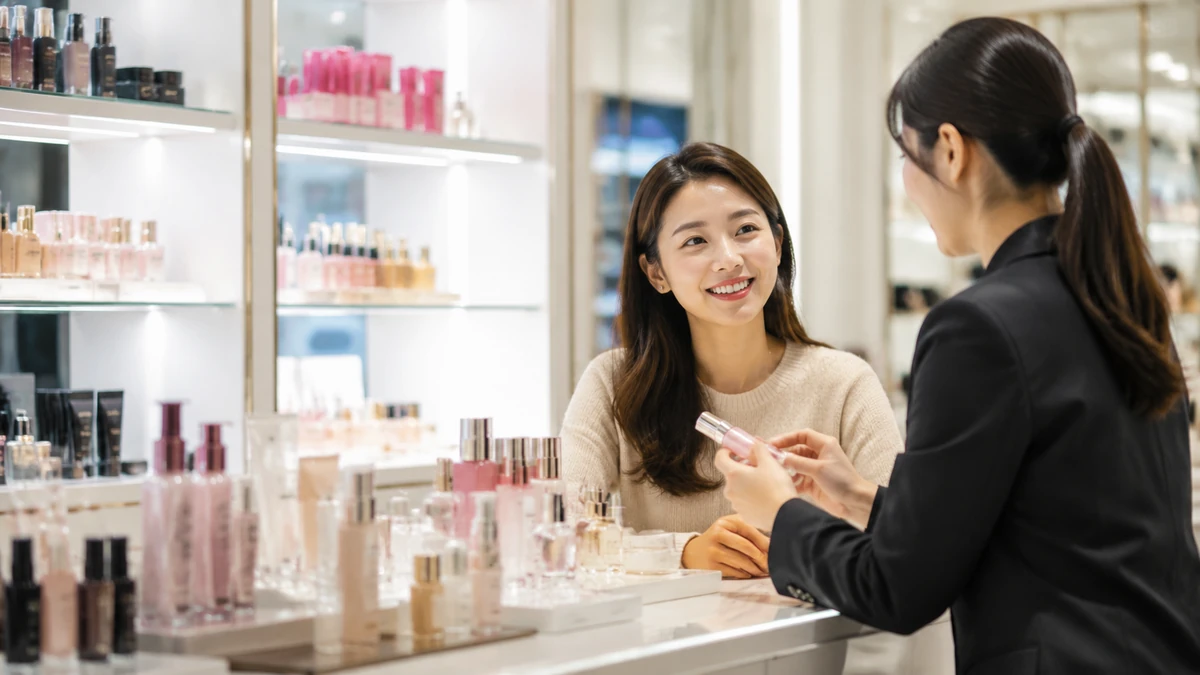
In K-beauty, the storefront matters almost as much as the product. For global fans, Korean beauty stores are known for curated product displays, fast-moving trends, seasonal promotions and a highly guided shopping experience. In tourist-heavy districts of Seoul, cosmetics shops can feel like a mash-up of a specialty beauty retailer, a social media showroom and a convenience-driven chain store.
That polished customer experience, however, depends on business arrangements that can become points of friction. Store operators need reliable access to inventory, predictable margins and transparent fees. Corporate headquarters want consistency in branding, product rollout and pricing. As in any franchise-heavy business, tensions can arise when one side believes the other holds too much power over purchasing, costs or contract changes.
That is where South Korea’s fair trade regulator comes in. The government’s new survey aims to determine whether recent legal reforms meant to protect franchisees are actually taking hold in practice. In other words, this is not just about what contracts say on paper. It is about whether the rules are meaningfully shaping day-to-day business.
The issue at the center: so-called mandatory items
The core issue regulators are expected to examine is something known in South Korea as the mandatory items system. In franchise terms, mandatory items are products, materials or supplies that a franchisee is required to buy from the franchisor or from designated suppliers in order to operate under the brand.
Americans would recognize the basic concept. A fast-food franchise may require stores to use approved packaging, sauces or equipment. A hotel chain may insist on specific linens, furniture or software systems. The rationale is usually brand consistency. If a store carries the brand name, the parent company wants to ensure customers receive a similar experience no matter which location they visit.
In cosmetics, mandatory items can be especially significant because the products themselves are central to the brand. Skin-care lines, makeup sets, testers, display materials and promotional bundles may all be tied to headquarters-controlled supply arrangements. That creates a legitimate business interest in standardization, but it can also create room for disputes over pricing and margins.
South Korea revised relevant franchise regulations in 2024 to require greater clarity in franchise contracts. Under the updated rules, contracts must spell out the types of mandatory items, the method used to calculate supply prices and the procedure for consulting franchisees before changing trade conditions. If those conditions are altered in a way that disadvantages the franchisee, advance consultation is required.
That kind of rule is aimed at a familiar imbalance in franchising: the risk that independent operators, often smaller and financially weaker than the parent brand, may be locked into purchase requirements without a clear understanding of how prices are set or how the terms can later shift.
The Korean regulator’s survey will try to determine whether those 2024 reforms are being followed in real-world agreements and business operations. It will ask franchisors about franchise fee collection and required contract terms. It will ask franchisees about practices surrounding mandatory items and fee payments. By surveying both sides of the same relationship, officials appear to be looking for gaps between written policy and on-the-ground reality.
The supply-margin disputes behind the survey
The decision to include cosmetics did not come out of nowhere. According to the Korean reporting summarized in the source material, one reason the sector was added is continuing tension over what is known as a difference margin in franchise supply deals. Put simply, this refers to the distribution margin created by the difference between the price at which the franchisor supplies goods and the underlying cost structure tied to those goods.
That may sound abstract, but the business stakes are concrete. If a franchisee is required to purchase products from headquarters at prices the operator considers inflated, the result can squeeze store profitability. If the pricing formula is opaque, distrust grows. If the franchisor argues those prices reflect legitimate brand, logistics and marketing costs, both sides may view the same arrangement very differently.
American readers can think of it as a cousin to the broader franchise conflicts that have long surfaced in sectors like restaurants, lodging and fitness. A parent company often says uniform sourcing protects quality and brand identity. Franchisees may counter that they are being forced to buy at rates that leave too little room for sustainable operation. Regulators then step in not necessarily to outlaw the practice, but to ensure disclosure, transparency and a fair process.
That seems to be the posture South Korea is taking here. The current survey is not, at least at this stage, described as an effort to publicly name and shame specific beauty companies. It is a system-level review meant to capture how supply prices are determined, how clearly those terms are disclosed in contracts and whether required consultation happens before changes are imposed.
That distinction matters. Governments often use these wide-angle surveys to build an evidence base before deciding whether more targeted investigations are needed. The Korea Fair Trade Commission has said the results, expected in December, could help it assess how well the current system is functioning and whether further ex officio investigations — official probes initiated by the agency itself — should follow.
For the cosmetics industry, that makes this more than a bureaucratic paperwork exercise. It is an early test of whether the legal reforms adopted in 2024 will stand up in a sector where branding is sophisticated, supply chains are tightly managed and store-level economics can be fragile.
What this means for K-beauty’s global image
There is also a bigger story here, one that goes beyond franchise law. K-beauty has become part of the broader Korean Wave, or Hallyu, the term used to describe the global rise of South Korean popular culture. Americans are more likely to encounter Hallyu through K-pop stars, hit Netflix dramas or Oscar-winning films such as “Parasite.” But beauty has become one of the movement’s most commercially successful branches, translating cultural influence into repeat consumer spending.
K-beauty’s appeal in the United States has rested on a few familiar pillars: innovation, price accessibility, highly segmented product categories and a perception that Korean brands are often ahead of the trend curve. Concepts like double cleansing, essence, ampoule and “glass skin” have crossed into mainstream American beauty vocabulary. Korean sunscreens and moisturizers are dissected on TikTok and Reddit with the same intensity once reserved for prestige Western brands.
Yet global success can expose pressure points at home. The more powerful a sector becomes, the more attention it draws not only from consumers and investors, but from regulators interested in whether the industry’s business foundations are as healthy as its public image.
That is part of why this survey matters. It widens the way K-beauty is understood. Instead of focusing only on product development or export figures, the Korean government is examining the retail relationships closest to ordinary consumers: the stores where products are sold, the contracts that shape what those stores can stock and the pricing systems that determine what operators must pay.
In practical terms, a shopper standing in a Korean cosmetics store sees product labels, promotional displays and a promised experience. The store operator sees another layer entirely: required inventory, franchise fees, supply terms and operating constraints. A healthy beauty industry depends on both perspectives functioning together. If franchisees feel trapped by unclear or one-sided terms, that can eventually affect store stability, customer service and brand trust.
For international observers, including American consumers who increasingly buy Korean beauty products without ever setting foot in Seoul, the survey offers a reminder that glamorous consumer industries are built on contract systems that are often invisible until conflict emerges. South Korea appears to be saying that if K-beauty is to remain credible and durable, the supply-and-franchise structure behind the mirror deserves as much attention as the products on the shelf.
December could offer an early read on reform
The Korea Fair Trade Commission says it plans to release the survey findings in December. That timeline gives regulators several months to gather responses across 21 sectors, compare patterns and determine whether the cosmetics category shows any distinctive characteristics.
Because the beauty industry is only now being included, the results could serve as a baseline. Officials may be able to compare cosmetics with more established franchise sectors and assess whether beauty storefronts present unique issues tied to mandatory inventory, product margins or contract disclosure. It may also reveal whether the 2024 reforms are settling in evenly across industries or whether some sectors remain more difficult to regulate in practice.
It is important not to overstate what this phase can accomplish. A written survey is not the same thing as a formal enforcement action. It will not, by itself, prove wrongdoing or establish liability. But it can do something almost as important in regulatory policy: identify patterns, surface recurring complaints and establish whether formal rules are being implemented consistently.
For Korean policymakers, the findings could help answer several questions. Are franchisors clearly explaining mandatory-item categories and pricing methods in contracts? Are franchisees being properly consulted before disadvantageous changes are made? Are supply-related margins becoming a systemic point of dispute in the cosmetics sector? And do store operators and headquarters describe the same transactions in sharply different ways?
The answers could shape not only future oversight, but broader policy debates about how South Korea manages the business infrastructure beneath one of its flagship export industries. If the survey finds that the rules are working reasonably well, regulators may point to that as evidence that the 2024 legal changes are improving transparency. If major gaps appear, it could pave the way for deeper probes or further adjustments to franchise regulations.
Either way, the inquiry reflects a mature stage in the evolution of K-beauty. When a once-trendy industry becomes a major economic and cultural force, the conversation eventually expands beyond buzz and branding. It starts to include labor, contracts, margins and market power — the same institutional questions that shape other consumer industries in the United States and around the world.
A closer look at the business behind the beauty counter
For American audiences, the broader takeaway is straightforward. South Korea is not investigating whether K-beauty products are popular or innovative; that is already well established. It is asking whether the business relationships that bring those products to consumers are transparent, fair and consistent with recently strengthened franchise rules.
That shift in focus is significant because it moves the story of K-beauty from trend coverage to structural accountability. It invites a more complete understanding of how a globally admired industry operates on the ground. Much like Americans have learned to ask tougher questions about gig work behind food delivery apps or labor conditions behind fast fashion, South Korea is now looking harder at the contract architecture behind one of its most polished consumer sectors.
There is a certain irony in that. K-beauty’s international rise has often been sold through aspiration: better skin, smarter routines, cleaner aesthetics, more thoughtful products. But sustainable trust in any consumer industry depends not just on what is promised in marketing, but on whether the businesses delivering that promise are governed in a way that participants consider transparent and workable.
That is why this franchise survey deserves attention beyond Korea’s business pages. It offers a glimpse of how one of the world’s most influential beauty markets is trying to regulate itself as it grows. The outcome will matter first to Korean franchisees and franchisors, but it may also matter to global consumers who increasingly see K-beauty not as a niche import, but as part of everyday retail culture.
When the December results arrive, they may not produce dramatic headlines on their own. Still, they are likely to reveal something important: whether the shimmering storefront image of K-beauty rests on a supply and contract system sturdy enough to support its next stage of growth. For an industry built on trust, routine and repeat purchases, that may be one of the most consequential beauty questions South Korea can ask.
Comments
Post a Comment