South Korea’s president courts Nvidia, OpenAI and Anthropic in a Silicon Valley push to make the country an AI powerhouse
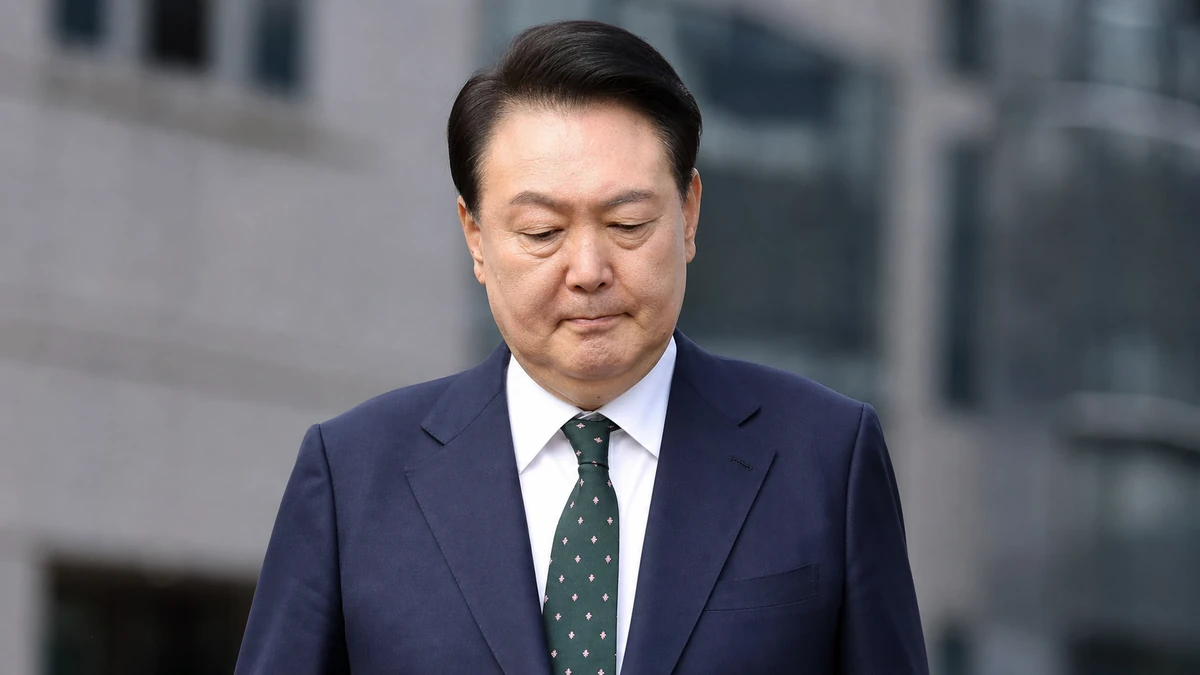
South Korea takes its AI pitch straight to Silicon Valley
South Korean President Lee Jae-myung used a visit to San Francisco to deliver a message that would resonate in Washington, Wall Street and the boardrooms of Big Tech: South Korea does not want to be merely a customer in the artificial intelligence boom. It wants to become one of the places where the next phase of the AI economy is built.
According to South Korea’s Yonhap News Agency, Lee met in succession with Nvidia CEO Jensen Huang, OpenAI CEO Sam Altman and Anthropic CEO Dario Amodei on Thursday local time, laying out his government’s AI vision and urging cooperation and investment. The symbolism was difficult to miss. In a single diplomatic sweep, Lee sat down with the leaders of the company that dominates the AI chip race and two of the most closely watched firms in generative AI, the technology behind systems such as ChatGPT and Claude.
For American readers, think of it as part trade mission, part industrial policy roadshow and part geopolitical signaling. Countries around the world are now chasing a role in AI that goes beyond buying software licenses or importing hardware. They want data centers, research labs, startup ecosystems, manufacturing contracts and strategic relevance. South Korea, already a global heavyweight in semiconductors and consumer technology, is trying to argue that it belongs near the center of that map.
Lee’s argument to the executives was that South Korea is prepared to organize its state capacity, industrial base and investment agenda around AI as a national transformation project. He described what his government called three “mega-projects,” though specific details and timelines were not disclosed in the summary of the meetings. Even without the full policy blueprint, the framing matters. It suggests Seoul is treating AI less as a narrow technology sector and more as an organizing principle for economic restructuring, much the way past generations treated electrification, highways or broadband.
That framing reflects a reality increasingly understood in both Seoul and Silicon Valley: winning in AI is not just about having the best chatbot. It is about securing the full stack, from chips and computing power to software tools, research talent, industrial adoption and capital. By meeting Huang, Altman and Amodei back to back, Lee was signaling that South Korea intends to compete across that stack.
Why this matters beyond Korea
For Americans who mostly encounter South Korea through Samsung phones, Hyundai cars, K-pop and Netflix hits, the country’s AI ambitions may sound like a natural extension of a broader story. South Korea has spent decades building export industries that punch above the country’s size. It is one of the world’s most wired societies, has a highly educated workforce and is home to companies that are deeply embedded in global supply chains. In many ways, it is one of the few countries outside the United States and China that can credibly claim it has the ingredients to matter in AI.
That does not mean South Korea can simply decide its way into the top tier. The AI race is brutally capital-intensive. Access to graphics processing units, or GPUs, has become a bottleneck for governments, startups and even large corporations. Nvidia’s chips are the pickaxes and shovels of the current gold rush, needed to train and run large AI models. Countries that lack reliable access to advanced computing can find themselves dependent on foreign infrastructure and foreign timelines.
That is one reason Lee’s meeting with Huang carried extra weight. South Korea’s president reportedly told the Nvidia chief that the smooth supply of GPUs had helped the country respond quickly to rapid changes in the field. That may sound technical, but it gets at one of the central facts of the AI era: ideas move fast, but computation determines who can turn those ideas into products, services and national capability.
There is also a strategic context that American audiences will recognize. Governments in the United States, Europe, the Gulf and Asia are increasingly using industrial policy to attract technology investment. The Biden administration’s CHIPS and Science Act pushed semiconductor manufacturing into mainstream political conversation in the U.S. The European Union has debated digital sovereignty. Saudi Arabia and the United Arab Emirates have invested heavily in AI infrastructure and partnerships. South Korea’s outreach fits that global pattern, but with one key difference: Korea already has a deep bench in chips, electronics, internet services and advanced manufacturing.
In other words, Seoul is not pitching itself as a blank slate. It is pitching itself as a country that already knows how to turn industrial policy into world-class companies.
Nvidia and the infrastructure question
Lee’s meeting with Huang appeared to center on the physical and industrial foundations of AI. He reportedly told the Nvidia chief that the world is on the verge of fundamental change and praised Huang as being at the forefront of it. More importantly, Lee asked Nvidia to continue playing a significant role in South Korea’s next phase of development.
Huang, for his part, described Nvidia’s partnerships with major South Korean companies, including SK Hynix, Samsung Electronics and Naver. To American readers, those names represent different parts of the AI supply chain and ecosystem. SK Hynix and Samsung are semiconductor giants, critical in memory and advanced chip-related technologies. Naver, often described as South Korea’s closest equivalent to Google in terms of search and platform reach, is also a major player in digital services and AI development.
That matters because it shows South Korea’s AI ambitions are not confined to one narrow lane. The country is trying to link hardware manufacturing, cloud and computing infrastructure, internet platforms, enterprise use cases and research institutions into one system. Huang reportedly said Nvidia’s partnerships in South Korea range from big corporations to startups and research-and-development organizations. That breadth is important. A healthy AI ecosystem cannot rely only on a handful of national champions; it also needs smaller firms, researchers and application-layer innovators.
Huang also said those partnerships would support expansion not only within South Korea but globally. That point is easy to overlook, but it may be one of the most consequential parts of the exchange. South Korea is not just trying to buy into the AI future; it wants its firms to help shape global markets. If Korean memory makers, platform companies and startups become more deeply integrated into Nvidia’s worldwide growth, then Seoul gains not only domestic capacity but export leverage.
Perhaps the most striking phrase from the meeting was Huang’s reported alignment with Lee’s vision of South Korea as an “AI-native country.” That is not a phrase most Americans hear every day, so it is worth unpacking. In startup jargon, “native” usually means something built from the ground up for a new environment, like a digital-native media company or a cloud-native business. By calling for an AI-native nation, Lee appears to be arguing for a society and economy designed around AI at the structural level, rather than simply adding AI features to existing institutions.
That is an ambitious goal, perhaps even an audacious one. But it also reflects the logic of countries that feel they cannot afford to be passive adopters. South Korea’s economic model has long depended on staying close to the technological frontier. If AI becomes as foundational as electricity or the internet, then Seoul sees a risk in remaining only a downstream user of systems built elsewhere.
OpenAI, Anthropic and the fight for the application layer
If the Nvidia meeting was about the infrastructure of AI, Lee’s meetings with Altman and Amodei highlighted a different battlefield: how AI tools are actually deployed across the economy.
Lee reportedly told Altman that he personally uses ChatGPT, a small but politically useful line that projects familiarity rather than distance. More significantly, he said there is broad public expectation in South Korea regarding OpenAI’s interest and investment decisions as the country restructures its industries around AI. That wording suggests Seoul is trying to attract not just technology licensing deals but deeper participation in Korea’s long-term transformation, whether through partnerships, research, enterprise rollouts or local investment.
Altman reportedly responded that, given the effort South Korea’s government is making in AI, the country is one of the most important in the world. He also praised Korea’s programs, including the three mega-projects, as demonstrating leadership. That is the kind of validation governments like to hear from global tech executives, but it also reflects a practical truth. South Korea is an appealing market for AI deployment because it combines industrial sophistication with digital adoption. A country with leading chipmakers, manufacturing groups, strong consumer tech habits and advanced internet infrastructure offers fertile ground for testing how AI can reshape real industries.
Lee’s request that Altman take part extensively in the mega-projects and play an important role underscores the government’s broader strategy. Seoul does not seem to be treating global AI companies as mere outside vendors. Instead, it is inviting them into a national economic project. In American terms, it is closer to how states court automakers for electric vehicle plants or chipmakers for fabrication facilities, except the target here includes software and model companies whose influence extends across sectors.
The meeting with Anthropic adds another layer to that strategy. Anthropic, best known for its Claude AI models and its emphasis on AI safety and reliability, occupies a slightly different position in the market from OpenAI, even though the two companies are often grouped together as leading generative AI firms. By meeting Amodei as well, Lee signaled that South Korea does not want to place a single bet on one foreign partner. It wants optionality.
That matters for both commercial and policy reasons. In fast-moving technology sectors, governments are wary of overdependence. Multiple partnerships allow room for competition, bargaining power and flexibility if one company’s products, governance or pricing model changes. The summary of the meeting did not provide details on investment size or concrete joint ventures with Anthropic, so the immediate significance lies less in any one announcement than in the pattern: South Korea is widening its circle of AI interlocutors.
Taken together, the three meetings sketch out a clear division of labor. Nvidia sits at the core of compute infrastructure. OpenAI represents one powerful pathway for generative AI services and industrial applications. Anthropic offers another major relationship in model development and enterprise-grade AI deployment. Seoul appears to be building a web rather than a one-to-one alliance.
From semiconductors to startups: South Korea’s broader technology case
South Korea’s sales pitch to the AI industry rests on something more tangible than political enthusiasm. It already occupies a crucial place in the global technology economy. Its semiconductor companies are central players in memory, a component that is vital for AI systems. Its manufacturing ecosystem is sophisticated and export-oriented. Its internet and platform companies have built services at national scale. And its startup scene, while smaller than Silicon Valley’s, has grown more connected to global capital and technical talent.
That helps explain why GPU supply came up so prominently in Lee’s conversation with Huang. AI breakthroughs are often discussed as if they emerge mostly from software wizardry. In reality, they depend on access to hardware, data centers, electricity, cooling systems and engineering talent. South Korea understands industrial systems. It became an economic success story not simply by inventing products, but by mastering supply chains, manufacturing execution and scale.
There is a cultural dimension here, too, that may be useful for American readers. South Korea’s modern economic identity has long been tied to compressed development — the idea that the country transformed itself within a few decades from postwar poverty into one of the world’s most advanced economies. That history shapes how Korean leaders talk about technological transitions. Major shifts are often framed not just as business opportunities but as national projects requiring urgency, coordination and discipline.
When Lee describes AI adoption as something that should be “realized” across society, he appears to be using that same developmental lens. The point is not simply to own advanced models or secure bragging rights in benchmarks. The point is to make AI visible in factories, logistics, education, research labs, digital services and public administration. In plain English, Seoul wants AI to touch the everyday machinery of the economy, not remain trapped in demos and headlines.
That ambition helps explain why Huang reportedly highlighted partnerships not only with conglomerates but also with startups and R&D organizations. South Korea’s challenge is not whether it has famous companies. It does. The challenge is whether it can convert those strengths into a more distributed innovation ecosystem, where smaller firms and researchers can also build on world-class infrastructure. In that sense, the AI push is also a test of whether Korea can evolve beyond a model dominated by a handful of industrial giants.
The political and geopolitical stakes
Lee’s meetings in San Francisco were business-focused, but they also carry geopolitical implications. Technology diplomacy is now a central part of statecraft. For American allies in Asia, especially those living under the long shadow of U.S.-China rivalry, AI and semiconductors are no longer just commercial matters. They are tied to national security, strategic autonomy and alliance management.
South Korea occupies a particularly complicated position. It is a treaty ally of the United States, deeply integrated into American technology and security networks, while also remaining economically exposed to China, a major trading partner and a country aggressively pursuing its own AI capabilities. In that environment, deeper ties with U.S.-based AI leaders can strengthen Korea’s alignment with the American technology sphere while giving Seoul greater leverage in an era of techno-national competition.
There is also a domestic political dimension. Leaders everywhere want to show they are preparing their countries for the next economic era. In the U.S., politicians regularly tour chip plants, battery factories and startup hubs as symbols of future-ready governance. Lee’s San Francisco schedule serves a similar purpose. Meeting the CEOs of Nvidia, OpenAI and Anthropic allows him to project urgency, access and strategic intent to audiences back home.
But the politics of AI are not just about growth. They are also about public trust. Generative AI brings familiar questions that Americans are already debating: whether it will replace workers, who controls the data, how misinformation spreads, what safety standards should apply and whether economic gains will be widely shared. South Korea will face its own version of those debates if it pushes hard to become AI-native. The phrase sounds forward-looking, but it also implies potentially disruptive changes to labor markets, education systems and government services.
That is one reason the absence of detailed public information about the three mega-projects is notable. Large national technology programs often sound impressive at launch, but their long-term impact depends on budget discipline, implementation capacity and public buy-in. Americans have seen versions of this story before, from broadband build-outs to green industrial policy: the real test starts after the press conference.
What success would actually look like
For South Korea, success in this AI campaign would probably not mean outcompeting the United States head-on in frontier models. Nor would it likely mean replacing Silicon Valley as the global center of AI entrepreneurship. A more realistic and still very significant goal would be to become one of the world’s indispensable AI hubs: a country that supplies key hardware, hosts meaningful computing infrastructure, attracts top-tier partnerships, deploys AI aggressively across major industries and produces enough homegrown innovation to shape standards and markets.
That is a high bar, but not an impossible one. South Korea has a track record of turning strategic focus into industrial results. It did so in shipbuilding, autos, consumer electronics, batteries and semiconductors. AI is more diffuse than any of those sectors, which makes it harder to govern and harder to capture. Yet it also rewards countries that can coordinate across domains. Korea’s strength has often been precisely that ability to align government priorities, large corporations and export strategy.
The most revealing part of Lee’s Silicon Valley outreach may be the way it connected three different layers of the AI economy into a single national narrative. With Nvidia, the emphasis was on computational infrastructure and hardware partnerships. With OpenAI, it was on industrial restructuring and practical applications of generative AI. With Anthropic, it was on expanding the range of strategic partners and inviting fresh investment into the ecosystem. Separate meetings, one coherent message: South Korea wants to wire together chips, models, services and capital.
Whether that vision delivers concrete projects remains to be seen. Much will depend on what the mega-projects actually contain, how quickly Seoul can move and whether foreign companies see commercial advantages in deeper commitments. Some partnerships may stay symbolic. Others could evolve into data-center investments, enterprise AI deployments, joint research efforts or infrastructure deals that materially reshape Korea’s tech landscape.
Still, the direction of travel is unmistakable. South Korea is trying to move from being known primarily as a manufacturing and culture powerhouse — the country of Samsung, semiconductors, K-pop and Oscar-winning films — to also being seen as an architect of the AI age. That does not happen in a single presidential trip. But it begins with scenes like this one in San Francisco: a head of state walking into meetings with the people who control some of the most important technologies on Earth and making the case that his country should not stand on the sidelines.
In the AI era, every government wants relevance. South Korea is making an early and public bid for something more than relevance. It is asking for a central role.
Comments
Post a Comment