South Korea’s Red Cross Blood Center Wins Renewed WHO Role, Expanding Its Influence on Global Blood Safety
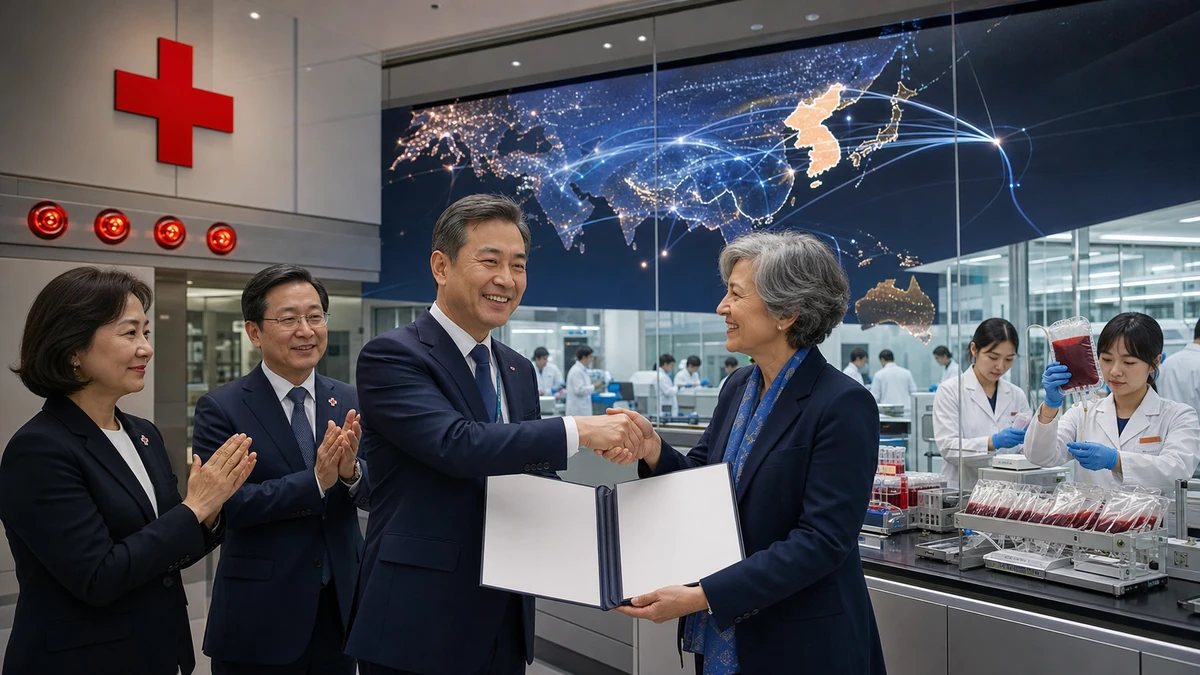
South Korea’s blood agency earns another global vote of confidence
South Korea’s national blood management agency has been redesignated as a World Health Organization collaborating center, extending a role that has quietly made the country an important player in public health across the Asia-Pacific region.
The Korean Red Cross Blood Services, the arm of the Korean Red Cross that oversees blood collection, testing, storage and distribution in South Korea, said it was redesignated by the WHO on July 30, 2026. The new term runs through 2030 and marks the fourth time the organization has received the designation, following earlier appointments in 2014, 2018 and 2022.
That may sound like a technical bureaucratic development, but in global health terms it is a significant endorsement. WHO collaborating centers are institutions selected to work with the United Nations health agency in specialized fields. They do not set WHO policy on their own, but they serve as trusted partners for training, research, technical support and emergency preparedness. In practical terms, the redesignation means the WHO is again betting that South Korea’s expertise in blood safety and supply management can help other countries strengthen their own systems.
For American readers, a rough comparison might be a respected U.S. public health institution being asked not just to run domestic programs, but also to help neighboring countries improve hospital readiness, donor participation and crisis response. Blood systems are easy to take for granted in advanced economies, yet they are among the most essential and fragile pieces of modern health care infrastructure. Trauma care, cancer treatment, surgery, childbirth and emergency medicine all depend on a steady and safe blood supply.
The Korean Red Cross said the renewed designation reflects international recognition of South Korea’s professionalism and safety standards in blood management. Kwon So-young, head of the organization’s blood management division, said the agency would continue contributing actively to efforts to strengthen international blood programs.
The announcement also highlights something broader about South Korea’s changing role in the world. The country is often associated internationally with K-pop, Korean film, Samsung smartphones and beauty products. But alongside that cultural visibility, South Korea has been building a reputation as a public health and medical systems partner, sharing expertise that extends well beyond its borders.
What the WHO designation actually means
A WHO collaborating center is not simply an honorary title. It is a working designation given to institutions with proven expertise in a particular field and the capacity to help advance the WHO’s mission. Those centers often support training, technical consultations, data collection, standards development and emergency response planning.
In this case, the Korean Red Cross Blood Services will continue to work with the WHO on three core tasks: training and technical support to strengthen blood programs in the Western Pacific region, advising on preparedness for maintaining safe blood supplies during emergencies, and promoting voluntary unpaid blood donation.
Each of those priorities addresses a different vulnerability in national health systems. Training and technical support matter because blood services are not just about collecting donations. They involve screening for infectious disease, matching blood types, maintaining cold chains, managing inventory and building trust in the system. A country can have willing donors and still struggle if laboratories, protocols or supply logistics are weak.
Emergency preparedness is equally critical. Disasters, epidemics and large-scale accidents can disrupt blood collection just as demand surges. That challenge is familiar in the United States, where hurricanes, wildfires, winter storms and public health crises can sharply affect blood drives and hospital supply levels. Health officials often warn that blood cannot be manufactured; it depends entirely on functioning systems and human donors. The same is true across Asia and the Pacific, where typhoons, earthquakes, disease outbreaks and transportation disruptions can put pressure on already stretched health networks.
The third priority, voluntary unpaid blood donation, reflects one of the WHO’s long-standing principles. The organization encourages countries to rely on donations given freely, without payment, because such systems are generally associated with safer and more stable supplies. Paid donation systems, historically used in some places, have raised ethical and safety concerns. Voluntary donation is also seen as a civic health practice, one that depends on public trust and repeated participation.
That focus may resonate with American audiences accustomed to community blood drives at churches, high schools, colleges and workplaces. South Korea has its own strong culture of organized blood donation, often involving students, military service members and civic groups. Like the United States, however, it faces the constant challenge of keeping younger donors engaged and maintaining adequate supply levels as demographics change.
Why South Korea matters in the Western Pacific
The WHO’s Western Pacific region is vast and diverse, covering East Asia, parts of Southeast Asia and Pacific island nations. It includes wealthy industrialized economies, middle-income countries and smaller states with very different health care capacities. That diversity makes regional cooperation especially important.
South Korea occupies a useful position in that landscape. It is technologically advanced, has a highly organized health system and has years of experience operating a centralized blood management structure. At the same time, it is geographically and institutionally close enough to regional partners to provide practical, adaptable support rather than one-size-fits-all advice imported from farther away.
The Korean Red Cross Blood Services is not being asked merely to showcase South Korea’s success. Its stated role is to help other countries build their own capacity. That distinction matters. In global health, the most effective partnerships are usually not about exporting a national model wholesale, but about sharing tools, protocols and lessons that can be adapted locally.
Training programs and technical support can help countries improve donor recruitment, laboratory procedures, screening systems and storage practices. Advisory work on emergency planning can help authorities prepare for scenarios in which transportation collapses, hospitals face sudden spikes in need or regular donation patterns are interrupted. In island nations or remote areas, where supply chains may already be vulnerable, those preparations can be the difference between resilience and dangerous shortages.
The redesignation also signals continuity. South Korea was first named a WHO collaborating center in 2014, then redesignated in 2018 and 2022 before receiving the new term through 2030. Four consecutive designations suggest this is not a one-time diplomatic gesture or a short-lived pilot program. Rather, it points to a long-term institutional relationship in which the WHO has repeatedly concluded that the Korean agency continues to meet its standards and remains useful to broader regional health goals.
That kind of continuity is especially important in blood management, where trust is built slowly. Systems must be dependable over years, not weeks. Training must be reinforced. Emergency planning must be updated. Donor participation must be maintained. The Korean case appears to show that the WHO sees value not just in South Korea’s current capabilities, but in its ability to sustain them and help others do the same.
Blood systems are public health infrastructure, not just hospital logistics
News about blood management rarely commands the same attention as vaccine breakthroughs, pandemic alerts or high-profile medical technology. Yet safe blood supply is one of the foundations on which modern medicine rests. Without it, hospitals cannot function normally. Surgeons postpone operations. Cancer patients face treatment disruptions. Mothers with severe bleeding during childbirth may not receive lifesaving care in time. Trauma medicine becomes far riskier.
That is one reason the WHO places such weight on blood programs. A functioning blood system links laboratories, hospitals, logistics networks, government regulation and public participation. If any part of that chain weakens, the whole system becomes more vulnerable.
In the United States, blood shortages periodically make headlines, especially after natural disasters, during holiday seasons or when public health emergencies reduce donor turnout. The American Red Cross and other organizations routinely urge people to donate because supply can tighten quickly. South Korea faces similar pressures, and like many developed countries it must plan for demographic shifts, aging populations and changing civic participation patterns.
Seen in that light, the WHO redesignation is not simply about prestige for a Korean institution. It is about extending practical know-how in an area that directly affects survival rates and health system resilience. The emphasis on emergencies is particularly telling. Public health planners increasingly understand that blood systems cannot be designed only for ordinary conditions. They must be able to withstand shocks.
That lesson has become clearer worldwide in recent years. The COVID-19 pandemic demonstrated how quickly ordinary medical infrastructure can be strained. At the same time, climate change has intensified extreme weather events, and geopolitical tensions have increased concern about regional disruptions. In that environment, emergency blood preparedness is no longer a niche planning issue. It is part of national readiness.
South Korea’s participation in that work may also reflect its own experience living with contingency planning as a routine feature of national life. The country has long maintained high levels of institutional preparedness due in part to natural disaster risks and the unresolved security situation on the Korean Peninsula. That broader culture of readiness may help explain why its blood services expertise is viewed as useful beyond its borders.
The civic value of voluntary unpaid blood donation
One of the more striking parts of the WHO partnership is the explicit inclusion of voluntary unpaid blood donation as a formal priority. That is more than a public relations slogan. It reflects a core principle in international health policy: blood systems work best when they rest on broad public participation and trust.
For readers outside Korea, the phrase may sound technical. But the concept is straightforward. It means encouraging people to donate blood freely, without financial compensation, as a contribution to the community. The idea is that when donation is voluntary and unpaid, screening systems and donor motivations tend to align better with long-term safety and sustainability.
In South Korea, blood donation has often been framed as a form of civic contribution, especially among young adults. School-based and campus campaigns have played a visible role, and blood donation can carry a social meaning tied to responsibility and solidarity. Those values are not unique to Korea; Americans will recognize similar themes in local blood drives that cast donation as a simple act that can save a neighbor’s life.
But South Korea’s case also illustrates how civic participation can connect to global health. A person donating blood in Seoul, Busan or Daegu is helping support the domestic system first and foremost. Yet the know-how built through that participation, including donor management, recruitment strategies and safety protocols, can become part of a larger body of expertise shared internationally. In that sense, ordinary citizens contribute indirectly to cross-border health cooperation.
The Korean Red Cross’s new four-year term suggests the WHO sees donor engagement not as an isolated domestic campaign, but as part of the underlying architecture of regional blood security. Countries cannot maintain safe, available blood simply by building laboratories and writing rules. They need people to show up, repeatedly, and believe the system is worth supporting.
That challenge is growing in many places. Younger generations often engage differently with civic institutions than their parents did. Urban lifestyles can make regular donation less habitual. Social media can help recruit donors, but it can also fragment attention. For health officials, promoting blood donation now requires a mix of public trust, modern communication and institutional transparency.
The fact that the WHO has again asked South Korea’s blood services organization to help advance this goal suggests the country has developed practices others find valuable, whether in donor outreach, system management or safety culture.
A broader sign of South Korea’s soft power in health
To many Americans, South Korea’s global influence is most visible through culture: BTS and Blackpink, the Oscar-winning film “Parasite,” the global success of “Squid Game,” or the spread of Korean food and skin care brands. Those are real and powerful forms of soft power. But international standing is also shaped by quieter kinds of credibility, including whether a country is seen as competent, trustworthy and capable of helping solve shared problems.
This redesignation fits into that broader story. It suggests South Korea is not only exporting entertainment and consumer trends, but also public systems expertise. In recent years, the country has drawn international attention for elements of its health administration, disease response capacity and medical technology base. The WHO blood center partnership adds another layer to that reputation.
There is also a diplomatic dimension. Global health cooperation often operates below the level of summit politics, but it can still shape how countries are perceived. When an institution is repeatedly asked to train peers, provide technical support and advise on crisis preparedness, it becomes part of the international infrastructure of trust. That can strengthen a country’s influence in subtle but durable ways.
For South Korea, that matters in a region where leadership takes many forms and where competition for influence is constant. Providing practical support in health is different from projecting military or economic power. It can build goodwill, professional networks and long-term relationships among experts and officials. Those relationships, in turn, can carry over into other forms of cooperation.
None of that means the task ahead is simple. Maintaining blood safety and supply is labor-intensive and never finished. The next four years will likely involve continued training, technical coordination and adaptation to emerging threats. The real measure of success will not be the designation itself, but whether countries in the region end up better prepared, more self-sufficient and more resilient in emergencies.
Still, the symbolism matters. Four consecutive WHO designations over more than a decade show that South Korea has become a dependable node in a critical area of global health. At a moment when public trust in institutions is under strain in many democracies, there is something notable about a civic health function earning that kind of repeated international validation.
Why this matters beyond Korea
For readers in the United States and elsewhere, the takeaway is not simply that South Korea received another international honor. It is that the systems behind everyday medical care depend on sustained public investment, institutional competence and citizen participation. Blood supply is one of those areas where the ordinary and the global meet: a local donor, a national screening system, a regional emergency plan and an international health agency can all be part of the same chain.
South Korea’s redesignation as a WHO collaborating center underscores that connection. It shows how expertise built at home can be repurposed for regional benefit, and how something as personal as rolling up a sleeve to donate blood can fit into a much larger public health ecosystem.
For countries across the Western Pacific, the practical value may come in the form of better training, stronger technical systems and improved crisis planning. For South Korea, the development reinforces its standing as a country whose influence extends beyond pop culture and manufacturing into the less glamorous but deeply consequential work of health security.
And for American readers, it offers a useful reminder. In an age of spectacular headlines, some of the most important international stories are about the institutions that keep people alive when the worst happens. Safe blood supply is one of them. South Korea’s renewed WHO role suggests that in this corner of global health, the country is becoming not just a participant, but a trusted guide.
Comments
Post a Comment