South Korea’s Resident Doctors Elect a New Leader, Putting Training Quality at the Center of a High-Stakes Debate
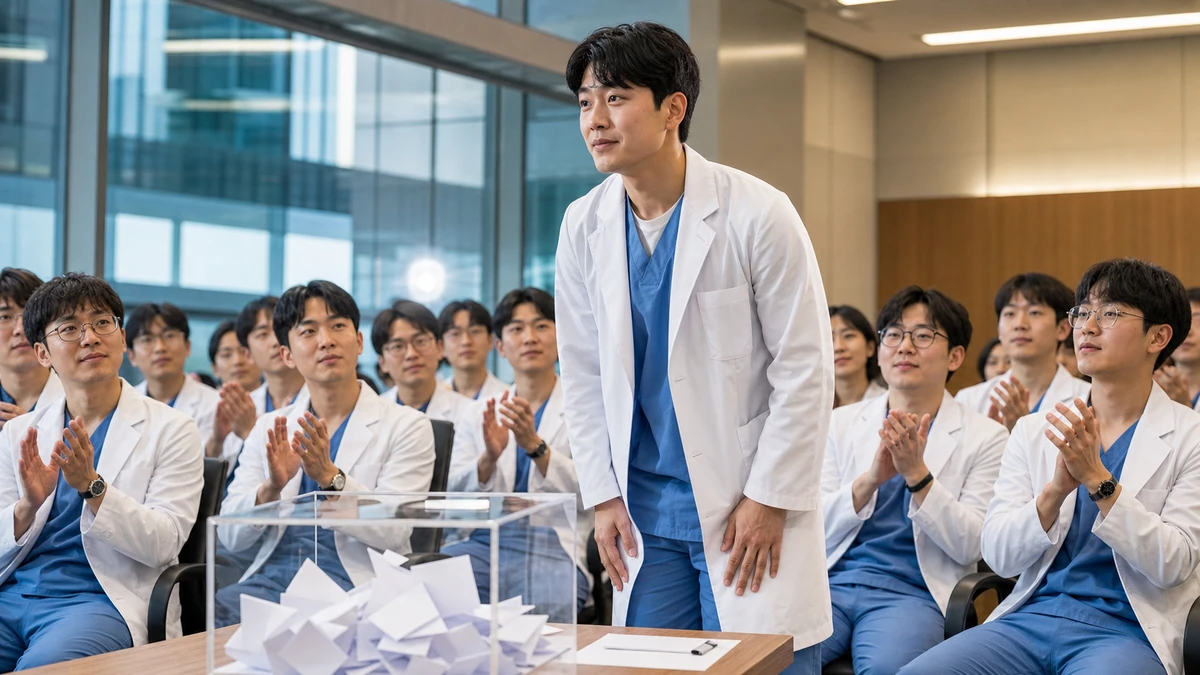
A New Face for South Korea’s Young Doctors
South Korea’s resident doctors, the young physicians who keep hospitals running while training to become specialists, have chosen a new national representative at a moment when the country’s medical system remains under intense strain. Lee Eui-joo, a surgery resident at Seoul Asan Medical Center, was elected the next president of the Korean Intern Resident Association, an organization that represents doctors in postgraduate medical training across the country.
His election might sound, at first glance, like the sort of internal professional vote that rarely attracts broad public attention. In South Korea right now, it is much more than that. Lee’s victory comes after months of turmoil in the country’s health care sector, including a bitter clash between the government and doctors over medical policy, physician staffing and the future shape of the profession. Against that backdrop, the choice of who speaks for residents carries implications not only for hospital labor conditions, but also for how South Korea trains the next generation of specialists.
According to the election results, Lee ran unopposed and won overwhelming support. Of 8,360 eligible voters, 4,536 took part, for a turnout of 54.26 percent. Among those who voted, 4,160 — or 91.71 percent — backed him. In a country where professional associations can play an outsized role in public policy fights, that level of support gives Lee a strong mandate, even if the turnout also suggests some degree of fatigue or disillusionment after a bruising period for the profession.
Lee is not an outsider stepping into the role cold. He previously served as vice president of the association, meaning his leadership represents both continuity and a chance to reset priorities. That matters because South Korea’s residents have spent the past year not simply asking for better pay, but questioning whether the structure of their working lives still makes sense for doctors, hospitals and patients.
For American readers, the closest comparison might be a newly elected leader of a national residents’ advocacy body in the United States taking office just after a major political fight over physician staffing, residency working conditions and hospital reform. But the Korean context is distinct: residents occupy a particularly visible place in the country’s health care hierarchy, and disputes over their labor conditions quickly become disputes about the public’s access to care.
That helps explain why this election is being watched closely. It is not just about representation. It is about whether South Korea’s young doctors can turn workplace grievances into lasting structural reforms in one of the world’s most demanding medical training systems.
Who Resident Doctors Are in South Korea — and Why Their Voice Matters
To understand the significance of Lee’s election, it helps to understand what “resident doctors” means in South Korea. These are physicians who have completed medical school and are now undergoing specialty training in hospitals, much like residents in the United States. They are licensed doctors, but they are also trainees, balancing patient care responsibilities with education that is supposed to prepare them for independent practice as specialists.
That dual identity is at the heart of the current debate. Residents are workers, often logging long hours and performing essential hospital functions. At the same time, they are learners whose schedules, supervision and workloads should be organized around education. In practice, those two roles can conflict. If hospitals rely too heavily on residents for labor, training can suffer. If documentation requirements pile up, time meant for learning can disappear into paperwork. If wages lag, residents may feel they are carrying immense responsibility without fair compensation.
In South Korea, those tensions are especially sharp. The country is known for world-class hospitals and highly competitive professional pipelines, but also for intense work cultures that can blur the line between dedication and overwork. Americans may recognize part of that dynamic from longstanding debates over medical residency in the United States, where limits on resident work hours and concerns about burnout have been contentious for decades. South Korea’s version of that debate is unfolding in a health care system shaped by different regulatory structures, cultural expectations and political pressures, but the underlying question is familiar: how much strain can a training doctor be asked to absorb before patient care and medical education begin to erode?
The Korean Intern Resident Association exists to give residents a collective voice in that discussion. It is not merely a social or academic group. It is a representative body for young doctors who often occupy a vulnerable position inside large hospital systems. Their schedules are demanding, their career paths depend on senior physicians and institutions, and their ability to push back individually can be limited. Collective representation gives them a way to turn shared frustrations into formal demands.
That is one reason Lee’s platform has drawn attention. Rather than focusing on one symbolic issue, he has framed the residents’ agenda around four connected goals: higher wages, protected training time, simplified training records and expanded policy research by young doctors themselves. Taken together, those priorities suggest a broader effort to redefine what a “good workplace” should look like for physicians still in training.
From Crisis Management to Structural Reform
Lee has said the association spent the past year trying to stabilize the training environment after what Korean media have described as a government-doctor crisis. That phrase refers to an ongoing conflict between policymakers and parts of the medical profession over how to address physician shortages, regional disparities in care and the structure of medical training. The confrontation has stirred public frustration, political pressure and deep anxiety within hospitals.
For residents, those national disputes are not abstract. They shape daily life on the wards. When staffing is unstable, workloads rise. When policy changes are announced with little trust between government and physicians, younger doctors can find themselves caught in the middle. They may agree that reform is needed while also fearing that they will bear the immediate burden of any rushed or poorly designed changes.
Lee’s message appears to recognize that the previous phase was about damage control — keeping the training system functioning amid conflict. The next phase, in his framing, should be about asserting rights more proactively and demanding better conditions. That shift is important. It signals that residents no longer want to be treated mainly as a flexible labor force that fills institutional gaps while larger actors, including hospitals, senior doctors and the government, negotiate around them.
In American terms, it is a move from emergency triage to long-term system redesign. Instead of asking only how to keep residency programs afloat during a crisis, the new leadership is asking what sort of training system South Korea should have once the immediate turmoil subsides.
The strong approval rate in the election suggests that many residents share that diagnosis. A 91.71 percent yes vote does not mean every young doctor agrees on tactics, but it does indicate broad support for a more assertive agenda centered on concrete improvements. And because Lee already served in the association’s leadership, he will be judged not just on fresh promises but on whether he can convert institutional knowledge into measurable progress.
That challenge should not be underestimated. Professional associations often find it easier to identify problems than to fix them, especially when reforms require cooperation from hospitals, regulators and established medical societies. Residents can articulate what is broken, but they do not control hospital budgets or national health policy. Lee’s success will depend in part on whether he can build leverage outside the association’s membership and persuade the public that better training conditions also serve patients.
Pay, Time and Paperwork: The Three-Way Strain on Residency
The clearest part of Lee’s platform focuses on three practical issues that shape a resident doctor’s daily experience: wages, protected training time and administrative burden. On paper, they may sound like separate complaints. In reality, they are deeply intertwined.
Start with wages. In any profession, pay is about more than money; it signals how an institution values work. For resident doctors, compensation matters in a particularly charged way because they occupy a gray area between student and employee. They are still in training, but they are also responsible for patient care that can be physically exhausting, emotionally draining and legally consequential. Calls for higher wages, then, are not simply demands for better income. They are also arguments that residents should be treated as essential medical workers, not cheap labor wrapped in the language of education.
Then there is protected training time. This is a concept that may require some explanation for readers unfamiliar with hospital culture in South Korea. Protected time refers to hours that are genuinely reserved for education, learning, conferences, case review or supervised development, rather than being swallowed up by service demands. In many residency systems, including in the U.S., there is a constant tension between what a program says it values educationally and what residents are actually able to do during a hectic shift. If a resident is technically assigned time to learn but is repeatedly pulled back into routine labor, that time is not really protected at all.
Lee’s emphasis on this issue suggests that Korean residents are pushing for something more than work-hour reform in the narrow sense. They are asking whether the hours they spend in hospitals are actually building expertise. That distinction matters. A residency can comply with formal schedules and still fail educationally if time is fragmented, supervision is weak or service demands overwhelm teaching.
The third issue, simplifying training records, may seem bureaucratic, but it is central to the larger argument. Training documentation is meant to track clinical experience, ensure accountability and verify progress. Yet in many systems, paperwork can become an end in itself. Residents may spend valuable time entering data, formatting logs or navigating redundant reporting requirements that do little to improve their actual learning.
Americans in many fields would recognize the complaint immediately: the feeling that professional work has become choked by documentation mandates, compliance rituals and administrative box-checking. In medicine, that burden can be especially corrosive because it eats into both patient-facing time and educational time. If residents are exhausted, underpaid and buried in records, the system risks creating doctors who are always busy but not always well trained.
That is why Lee’s agenda resonates beyond labor politics. It asks a basic institutional question: Is the residency day organized around producing better specialists, or around squeezing maximum service and paperwork out of trainees while calling it education?
Young Doctors Want a Seat at the Policy Table
One of the more revealing parts of Lee’s platform is his call to expand policy research by young doctors. That may sound less urgent than pay or hours, but in some ways it could prove the most consequential. It reflects a push to redefine residents not only as subjects of policy, but as participants in making it.
In South Korea, as in many countries, health care debates are often driven by ministries, hospital executives, senior physician groups and lawmakers. Residents are directly affected by those decisions, but they do not always have the same institutional standing. By emphasizing policy research, Lee appears to be arguing that young doctors should gather data, frame problems in policy language and present evidence-based proposals of their own.
That matters because personal frustration, however justified, does not always translate into political change. A resident can say a schedule is unsafe or a record-keeping system is wasteful. To influence regulation or hospital standards, those claims typically need to be documented, compared across institutions and developed into proposals that administrators and lawmakers can evaluate. Research can turn scattered grievances into an agenda.
For American readers, there is a useful parallel in how younger workers in medicine, education and law increasingly seek not just better treatment, but a voice in shaping the systems they work inside. The idea is not simply to protest from below, but to produce knowledge from the ground up. In the medical field, that can be powerful because residents are often the people with the closest day-to-day view of how policy decisions play out in real clinical settings.
If that approach takes hold, it could alter the balance of debate in South Korea’s medical sector. Instead of relying on broad claims from government officials or senior associations, public discussion could increasingly include research and recommendations produced by the very doctors living through the system’s most stressful points. That would not guarantee reform, but it could make the residents’ position harder to dismiss as anecdotal or self-interested.
At the same time, this is where Lee’s leadership will face a practical test. Building a serious research capacity inside a professional association takes money, organization and continuity. It requires more than campaign language. If the group can create durable channels for surveys, data analysis and policy development, it may strengthen residents’ bargaining power. If not, the idea may remain aspirational.
Why This Matters Beyond South Korea’s Hospitals
This election is not only a story about one professional organization. It is also a window into a broader social question: how modern societies treat young professionals who are expected to learn and produce at the same time. South Korea’s resident doctors occupy an especially stark version of that dilemma, but they are hardly alone. Across advanced economies, younger workers in elite professions are questioning systems that promise prestige while normalizing punishing schedules, stagnant compensation and expanding administrative demands.
In that sense, the debate in South Korea will feel familiar to many American readers. U.S. medical residents have long raised concerns about burnout, educational quality and the structure of hospital labor. Younger attorneys question billable-hour culture. Teachers complain that testing and paperwork crowd out teaching. Even in white-collar corporate jobs, workers increasingly ask whether the systems around them are designed for meaningful development or just relentless output.
What makes the South Korean case distinctive is how directly these tensions intersect with public health. When resident doctors are overextended, it is not only a workplace issue. It can affect continuity of care, training quality and the long-term resilience of the physician workforce. Hospitals may depend on residents in the short term, but if the training environment deteriorates, the cost is paid later by the health system as a whole.
That is part of why Lee’s election has drawn notice. His platform ties compensation, education, administrative efficiency and policy participation into a single argument about institutional design. It suggests that a good medical workplace cannot be reduced to salary alone, nor to idealistic talk about sacrifice and vocation. It requires a structure in which doctors in training can learn effectively, work sustainably and help shape the rules that govern their profession.
There is also a cultural dimension worth noting for readers outside Korea. South Korean society often places high value on educational achievement, professional status and institutional discipline. Medicine sits near the top of that hierarchy. At the same time, younger Koreans have become more willing to question systems that earlier generations were often expected to endure. In recent years, disputes over work-life balance, fairness, hierarchical culture and generational inequality have surfaced in industries ranging from tech to entertainment to public service. Residents’ demands fit into that larger social shift.
Seen that way, this is not simply a narrow medical election. It is one example of younger professionals in South Korea asserting that excellence and endurance are not the same thing — and that elite institutions should not be exempt from demands for transparency, efficiency and humane working conditions.
The Road Ahead for Lee and the Resident Doctors’ Association
For now, Lee takes office with a strong mandate and a clear list of priorities. But the real measure of his tenure will be whether those priorities can be translated into sequencing, negotiation and results. Which issue comes first? Is wage advocacy the most immediate demand, or does protecting training time offer a more achievable opening? Can hospitals be persuaded that simplifying records will improve both education and efficiency? And can residents build policy credibility quickly enough to influence national discussions already crowded with competing interests?
Those questions matter because reform rarely arrives as a single breakthrough. More often, it comes through incremental changes in rules, monitoring, budgeting and expectations. If Lee’s leadership produces even modest gains — more enforceable training time, less redundant documentation, stronger data on resident conditions — it could establish a foundation for larger changes later. If it stalls, frustration among young doctors may deepen.
The public dimension will also be critical. In health care disputes, doctors’ labor claims can be politically tricky. Patients understandably worry first about access and continuity of care. Residents and their representatives therefore need to make the case that better training conditions are not a private benefit at the public’s expense, but part of building safer, more sustainable care. That argument may be persuasive, but it requires careful communication, especially after any period of tension between the medical profession and the government.
Lee’s background as the association’s former vice president may help on that front. He is stepping into office with familiarity, relationships and a recent track record inside the organization. That may make it easier to maintain continuity while also signaling a new emphasis. But it also means expectations will be higher. He cannot present himself as a total outsider. Members will expect him to know where the obstacles are and how to navigate them.
For Americans watching from afar, the election offers a revealing snapshot of how the Korean Wave is not only about pop culture, film and fashion, but also about the institutions behind one of Asia’s most dynamic societies. South Korea’s global profile often highlights innovation, ambition and speed. This story highlights the human infrastructure beneath those traits: the young professionals who are asked to carry demanding systems forward, and who are now increasingly asking how those systems should change.
Lee’s election does not resolve South Korea’s medical tensions. But it does sharpen the terms of the next debate. The question is no longer just whether residents are dissatisfied. It is whether their demands for better pay, real training time, less bureaucratic drag and a voice in policymaking can reshape the country’s medical training system in lasting ways. In a society where hospitals are central public institutions and medicine remains a high-status but high-pressure path, that is a debate with consequences well beyond one association election.
Comments
Post a Comment