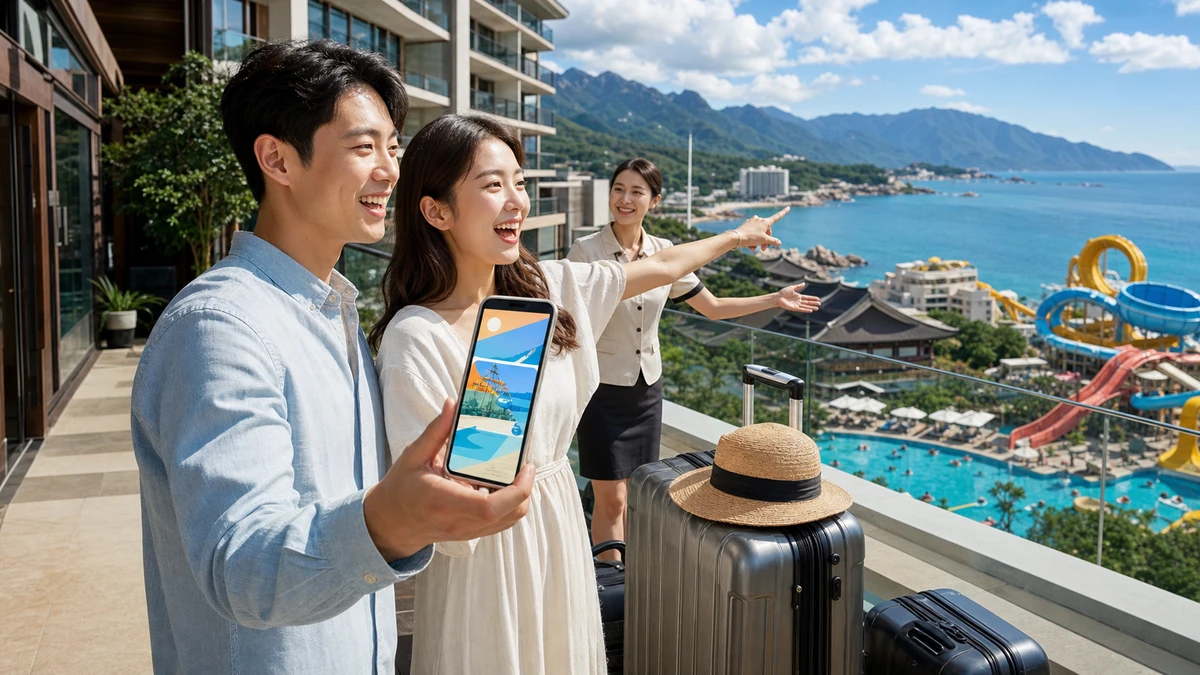
A summer sale built for the all-in-one traveler
South Korea’s peak summer vacation season is arriving with a familiar mix of heat, crowds and aggressive discounts, but one of the country’s travel platforms is making a larger bet than a simple hotel promotion. NOL, a travel and leisure service operated by NOL Universe, has launched what it calls its annual “NOL Day” campaign, offering steep discounts on everything from domestic hotel stays to overseas tours. The campaign runs through Aug. 2 and, on paper, the headline number is hard to miss: as much as 81% off some domestic accommodations.
But the bigger story is not the percentage on a marketing banner. It is the way South Korean travel companies are increasingly trying to pull every stage of a vacation into one digital storefront. In the United States, consumers often piece together a trip across multiple platforms: flights on one site, hotels on another, and museum tickets or local activities through a separate app. NOL’s summer push suggests South Korea’s travel industry wants to reduce that friction by turning the vacation itself into a single bundled purchase, with lodging, transportation, leisure activities and even cultural events presented as parts of one connected consumer journey.
According to a summary of the campaign reported by Yonhap News Agency, the company is promoting discounted stays in popular Korean destinations including Ganghwa in Incheon, Sokcho in Gangwon Province, Busan and Gyeongju in North Gyeongsang Province. Those places are not random pins on a map. Together, they represent a broad cross-section of the South Korean summer travel market: beach trips, family outings, short-haul getaways from Seoul, and historically themed escapes built around culture as much as relaxation.
For American readers unfamiliar with the Korean market, the timing matters. South Korea’s summer holiday period tends to create a concentrated burst of domestic demand, especially in late July and early August, when schools are on break and families try to fit in short vacations before routines resume. In a country where major destinations are often reachable by car or train within hours, travel booking patterns can look different from the weeklong, fly-across-the-country vacation model more familiar to many Americans. That makes app-based discount campaigns especially powerful: consumers can make fast decisions, compare options across regions and build itineraries quickly.
NOL’s campaign appears designed to capitalize on exactly that behavior. Rather than promoting a single resort area or one class of traveler, it spreads discounts across several regions and product categories, aiming to widen the range of choices while keeping the consumer inside the platform.
Why those Korean destinations matter
The domestic destinations highlighted in the campaign offer a useful snapshot of how South Koreans travel in summer. Ganghwa, an island county that is administratively part of Incheon, sits within relatively easy reach of the Seoul metropolitan area. For Americans, it may be easiest to think of it as a getaway with some of the function of a Hudson Valley or Jersey Shore weekend escape: close enough for a short trip, but distinct enough to feel like a break from city life. It is known for seaside scenery, historical sites and pensions, a lodging type common in Korea that usually refers to independently operated vacation properties somewhat akin to a hybrid of a guesthouse, cabin rental and family-friendly inn.
Sokcho, on the country’s northeast coast, is one of South Korea’s best-known beach and nature destinations. It is a major gateway to Seoraksan National Park, one of the country’s most famous mountain landscapes, and it draws travelers who want both a seaside vacation and outdoor recreation. Busan, South Korea’s second-largest city, offers a different summer template. It is a dense, urban port city with beaches, seafood, nightlife and major attractions, closer in spirit to a metropolitan beach destination like Miami or San Diego than to a quiet resort town.
Then there is Gyeongju, a city often called “the museum without walls” because of its concentration of historical sites from the ancient Silla Kingdom. For Americans, it may help to imagine a destination where the role of colonial Williamsburg, Santa Fe and a regional resort area overlaps: a place visited not just for rest but also for a sense of civilizational depth and national identity. Including Gyeongju in a summer sale underscores something important about Korean domestic tourism. Vacations here are not always divided neatly between leisure and culture. Historical tourism, family travel, regional food and recreation often blend together.
That helps explain why the NOL campaign is spanning so many types of lodging. Hotels and resorts are familiar categories globally, but pensions occupy a particularly important space in the Korean travel ecosystem, especially for families, couples and groups of friends taking short trips outside major cities. By promoting a mix of accommodation styles, the platform appears to be trying to capture a wider slice of actual travel behavior rather than forcing users into a narrower, upscale-hotel template.
Beyond hotels: the Korean vacation as a package of experiences
Where the campaign becomes more revealing is in its inclusion of leisure products beyond lodging. Yonhap reported that summer-friendly attractions such as E-World, Wave Park and Ocean World are included at discounts of up to 58%. Those names may not mean much to many English-speaking readers, but their function will sound familiar. E-World is a major amusement park in Daegu. Wave Park is a water and surf-themed leisure facility. Ocean World is one of the country’s best-known water parks, popular among families and young adults during the hottest months of the year.
In American terms, this is less like a hotel chain running a room sale and more like a travel platform combining discounted lodging with offers for something like Six Flags, Great Wolf Lodge or a regional water park — all inside the same booking ecosystem. The point is convenience, but also habit formation. If consumers book the room, the tickets and the add-on activities in one place, that platform becomes not just a search engine but the planner of the vacation itself.
That matters in a market like South Korea, where mobile-first consumer behavior is deeply entrenched and where digital platforms often compete on how seamlessly they can connect services that were once purchased separately. It is also a sign of how leisure is being redefined commercially. Instead of treating travel as transportation plus a bed for the night, companies increasingly frame the trip as a broader experience bundle that includes what people do once they arrive.
There is also a practical logic behind the strategy. One of the most tedious parts of vacation planning is the gap between booking the stay and figuring out how to fill the days. By surfacing local activities alongside accommodations, a platform can reduce that friction and potentially increase the amount each user spends. From a business standpoint, the vacation becomes a chain of monetizable decisions rather than a one-time booking.
The model is not unique to Korea, of course. American platforms and online travel agencies have spent years trying to cross-sell rental cars, tours and attraction tickets. What stands out here is the breadth of categories being pushed together in a single seasonal campaign and the way the marketing message emphasizes a unified summer leisure experience rather than isolated bargains.
From Busan to New York: a Korean platform with global travel ambitions
The campaign does not stop at domestic tourism. NOL Universe is also offering a 50% discount coupon for overseas flights and a 10% discount coupon for accommodations abroad, according to the Yonhap summary. In addition, tours and activities in cities including Osaka, Shanghai and New York are being promoted at discounts of up to 71%.
That list of destinations is revealing. Osaka is one of the most popular outbound destinations for South Korean travelers, thanks to its proximity, food culture and relatively easy flight access. Shanghai serves a different profile, combining business, shopping and urban tourism in one of China’s best-known global cities. New York, meanwhile, is both a long-haul aspirational destination and a marker of global reach. By including New York in the same campaign as Busan beach trips and Korean water parks, the company is effectively telling users that the platform can handle both a quick domestic getaway and a more ambitious overseas itinerary.
For an American audience, that may sound ordinary. U.S. consumers are used to giant platforms that list hotels in Florida and theater tickets in London within the same app. But in the Korean context, the bundling still says something important about the evolution of the country’s travel-tech sector. Korean companies are not just selling domestic rooms anymore. They are positioning themselves as gateways to a global leisure economy while keeping Korean consumers inside their own branded ecosystems.
The New York reference is especially noteworthy because it signals the kind of international experience Korean platforms increasingly treat as part of everyday aspirational consumption. To users in Seoul or Busan, booking a local staycation and purchasing a city activity in Manhattan can now appear in the same commercial frame. That compression of scale — from regional Korea to global cities — is part of what makes these platforms powerful. It encourages users to think of travel choices not as separate markets but as interchangeable options inside one system of consumption.
It also reflects a broader Korean consumer pattern shaped by years of fast digital adoption. Super apps and highly integrated marketplaces have trained users to expect convenience, discount stacking and category overlap. In that environment, a travel campaign that combines domestic lodging, overseas flights, local tours, amusement tickets and cultural products does not feel excessive. It feels competitive.
More than a discount war: selling the whole leisure calendar
NOL Universe says the campaign also includes performance and exhibition products, extending the promotion beyond travel in the narrow sense. That may seem like a side note, but it may be one of the clearest indicators of where the market is headed. The company is not merely trying to be a place where consumers arrange transportation and sleep. It is trying to become a marketplace for time off itself.
That distinction matters. In the United States, the industries around travel, live entertainment and leisure spending often overlap but still operate through distinct channels. A family planning a summer trip might book flights through an airline site, reserve a hotel through a travel app, buy Broadway tickets elsewhere and separately look for a museum pass or baseball game. In South Korea’s increasingly platform-driven consumer landscape, there is a stronger push to collapse those steps into one interface.
This kind of bundling can shape behavior in subtle ways. If a user opens an app intending to buy a discounted room in Sokcho but is then shown a nearby water park ticket, a museum exhibit or even a performance offer for another weekend, the platform is doing more than serving demand. It is generating new demand by curating how leisure is imagined and purchased. The vacation becomes part of a larger cycle of lifestyle spending.
That helps explain why the campaign uses different discount mechanisms across categories. Domestic accommodations, leisure facilities and overseas activities are advertised with maximum discount rates, while overseas flights and hotels rely more on coupons. The structure lets the company tailor promotions to the economics of each product type while encouraging users to combine benefits based on their own plans. In other words, the sale is not simply about getting consumers through checkout once. It is about keeping them browsing across multiple stages of a trip and multiple kinds of leisure spending.
For business analysts, that may be the most important takeaway. The eye-catching 81% figure on domestic stays is likely the hook, but the commercial logic sits in the ecosystem design. The company wants the user who came for a room deal to stay for the entire vacation workflow.
What this says about South Korea’s travel economy
South Korea’s travel and leisure industry has been moving toward integration for years, and the latest campaign offers a useful case study in how that process is accelerating. Domestic tourism remains important, especially during concentrated holiday periods when families and office workers seek short breaks. At the same time, outbound travel has rebounded strongly as international routes have normalized and consumers once again look abroad for shopping, food, events and city experiences.
Instead of forcing a choice between those markets, platforms like NOL are trying to sit atop both. A user deciding between a beach weekend in Busan and a few days in Osaka can compare both kinds of trips inside the same service environment. That creates a new kind of competition, not just among destinations but among types of leisure itself. Domestic lodging is competing with overseas activities. A water park pass is competing with an urban experience abroad. The platform profits by staying relevant no matter which direction the consumer chooses.
For American readers, there is a useful parallel in how companies like Expedia, Booking.com, Airbnb and Ticketmaster each, in different ways, have sought to own more of the consumer journey. The Korean difference lies in the density of digital behavior and the speed with which consumers often move across platforms, discounts and bundled services. Seasonal campaigns can therefore become major strategic events, not just limited-time sales.
There is also a cultural dimension worth noting. South Korea’s intense work culture and relatively compressed vacation patterns have historically encouraged shorter, highly optimized trips. That creates strong demand for services that help users plan efficiently and maximize value. A platform that can show accommodation, transit-adjacent options, local attractions and event tickets in one place is not only saving time. It is addressing a very specific social reality: many travelers want leisure that feels complete, but they need it to be convenient.
Seen that way, the NOL Day promotion is less a flashy one-off than a window into how Korean companies now think about consumer time, mobility and entertainment. Their goal is not just to fill hotel rooms. It is to orchestrate the full rhythm of seasonal leisure.
Why global audiences should pay attention
At first glance, a Korean summer promotion offering discounts on hotels, water parks and overseas activities may seem like a local retail story. But it also points to a wider trend that global companies, investors and tourism boards are likely watching closely. South Korean platforms are increasingly comfortable marketing local tourism and global urban experiences side by side, using the same interface and the same discount logic. That broadens the meaning of what a travel company is.
For destinations themselves, that matters. If Korean consumers encounter New York, Osaka and Shanghai as interchangeable options inside one sales campaign, tourism competition becomes more immediate and more digitally mediated. Cities and attractions are not only competing through brand recognition or airline access. They are competing through placement inside platform ecosystems that shape how choices are presented, bundled and discounted.
For media audiences in the United States, the story is also a reminder that the Korean Wave is not only about K-pop, dramas and beauty products. South Korea is also exporting sophisticated consumer-platform models and influencing how leisure is organized and sold. The same digital fluency that helped Korean entertainment companies build global fandoms is visible in adjacent sectors, including travel, ticketing and lifestyle commerce.
The practical details of the NOL campaign may change by next season. The larger pattern probably will not. Consumers are being encouraged to think less in terms of separate purchases and more in terms of one continuous vacation experience: where to stay, what to do, what to see, what to book next. Whether the destination is Gyeongju or Manhattan, the platform’s pitch is essentially the same. Open the app, plan the trip, fill the calendar and let one ecosystem capture the rest.
That is why the most important number in the campaign may not be 81% or 71% or 58%. It may be one: one platform trying to own the full arc of leisure spending, from a Korean summer weekend to a global city excursion. In an increasingly crowded travel market, that kind of integration could prove more durable than any temporary discount.
Comments
Post a Comment