A 20-Year-Old Doosan Pitcher Just Reached 10 Wins. Why Choi Min-seok’s Breakthrough Resonates Beyond Korean Baseball
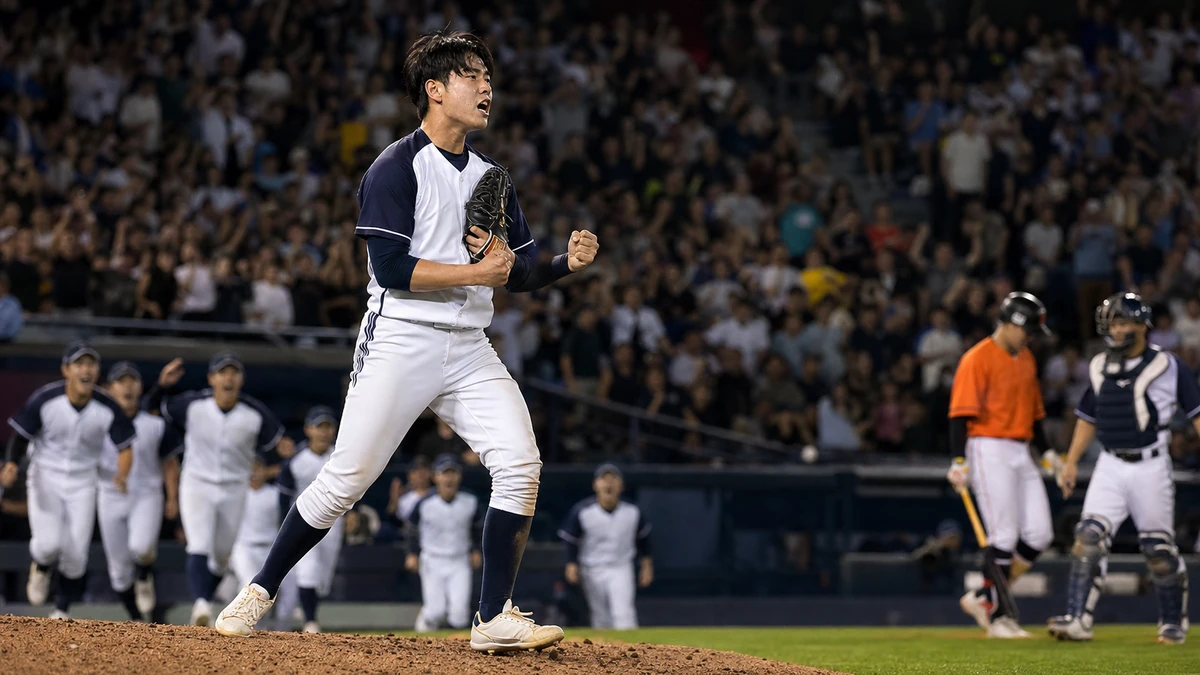
Image to help understand the article
A milestone night in Seoul carried meaning beyond the box score
On a humid summer night at Jamsil Baseball Stadium in Seoul, a 20-year-old pitcher delivered the kind of performance that does not always look elegant in a stat line but can still mark a turning point in a season and, potentially, a career. Doosan Bears starter Choi Min-seok worked five innings against the Hanwha Eagles, allowed two runs, and left with the lead in a 9-6 victory that gave him his 10th win of the season.
That number matters in any baseball culture, but it carries particular symbolic weight in South Korea’s Korea Baseball Organization, or KBO, where starting pitchers are still judged heavily by durability, poise and the ability to guide a team through the daily grind of a pennant race. Choi, only in his second professional season, had failed in his previous three attempts to secure his 10th victory. This time, he did not overpower hitters. He gave up six hits, issued two walks or hit batters, and struck out only three. Yet he limited the damage, handed the game to his bullpen with the lead intact, and became a 10-game winner for the first time.
That is the kind of story American fans understand immediately, even if they do not follow Korean baseball closely. It is not only about raw stuff or highlight-reel dominance. It is about a young pitcher learning how to survive on a less-than-perfect night, navigating pressure that had become impossible to ignore, and doing it while his team fights for position in a tightly packed standings race. In that sense, Choi’s outing looked less like a viral breakout and more like something scouts, front offices and veteran managers tend to value even more: evidence of growth.
Doosan’s win improved the club to 54-46-4, good for fourth place at day’s end, just 1.5 games behind the third-place LG Twins and only a half-game ahead of the fifth-place KIA Tigers. In other words, this was not a late-season formality. It was a meaningful game in a crowded playoff picture. And for Choi, whose record now stands at 10-3 and ties him for the league lead in wins, it was also a moment that pushed his season from promising to nationally significant.
To American readers, the KBO may be most familiar as the league that briefly became an early-pandemic TV staple in the United States in 2020, when ESPN broadcasts introduced many U.S. fans to bat flips, organized cheering sections and a style of play that felt both familiar and distinctly Korean. Since then, interest has remained more niche than mainstream. But nights like this are a reminder that the KBO is not just an overseas curiosity. It is a mature baseball ecosystem that develops talent, creates stars under intense scrutiny, and offers a revealing window into how the game is evolving outside Major League Baseball.
What made this achievement stand out was not dominance, but composure
The most revealing part of Choi’s night may have come after the game, when he openly discussed the pressure he felt while trying to reach 10 wins. He said he tried not to think about the number, but every time he saw his season total displayed on the stadium scoreboard, the milestone crept back into his mind. He acknowledged that he had become impatient, even if only unconsciously.
That kind of candor is important. Athletes often speak in cliches after milestone games, especially young ones. But Choi’s comments pointed to something more interesting than a celebration of achievement. He did not pretend the pressure was meaningless. He admitted that it altered his emotional state and may have affected how he approached previous outings. Then, in the same breath, he made a point that sounded almost deliberately grounding: going from nine wins to 10, he said, is mathematically no different than going from one to two.
That tension between logic and symbolism exists in every baseball culture. In the United States, players insist they do not chase round numbers, but everybody knows that 20 wins, 30 home runs, 100 RBIs or a sub-3.00 ERA still carry psychological force, even in an era that increasingly distrusts traditional counting stats. Korea is no different. A two-digit win total remains a shorthand for reliability and status, especially for a young starter trying to establish himself within a rotation and before a national audience.
Choi’s outing against Hanwha was valuable precisely because it was messy. He was not untouchable. Both teams combined for 22 hits, and the game featured three home runs. Hanwha mounted a push in the seventh inning with a solo homer by Estevan Florial? No — according to the game summary, it was a solo shot by Peraza and a two-run homer by Noh Si-hwan, one of the KBO’s most recognizable power bats. Doosan still held on, with Lee Young-ha recording his 18th save. The structure of the win was classic baseball: the starter bends but does not break, the offense supplies margin, and the bullpen closes the door.
That may sound ordinary, but for a 20-year-old pitcher who had come up short three straight times at the same milestone, it represented an important professional step. Young pitchers often believe their only path out of trouble is to dominate their way through it — to throw harder, chase strikeouts, or force a perfect inning into existence. Veteran starters know better. Some nights are about managing damage, controlling tempo, and refusing to let one mistake become three. Choi’s line suggests he is beginning to understand that distinction.
Why 10 wins still matters in Korean baseball
In modern baseball analysis, wins by pitchers have lost much of their authority. American front offices have spent years explaining why a starter’s win total often says as much about run support, bullpen preservation and managerial usage as it does about individual performance. That critique is fair, and it applies in Korea too. Choi did not win this game by himself. Doosan’s lineup produced 11 hits and nine runs. Its bullpen protected the margin. The official win is a team-shaped statistic.
And yet, dismissing 10 wins entirely would miss the cultural meaning of the benchmark inside the KBO. In South Korea, where baseball remains one of the country’s most established spectator sports, numbers often function as a bridge between performance and reputation. A double-digit winner is not automatically an ace, but he has usually done several difficult things: stayed in the rotation, taken the ball repeatedly, worked deep enough into games to qualify for decisions, and performed steadily enough that his team converts those starts into victories. For a 20-year-old in his second season, reaching that threshold says something real about trust.
It also says something about role. The KBO’s best young stars do not emerge in a vacuum; they emerge through repetition in highly visible situations. Unlike in the United States, where top pitching prospects may be shuttled between the majors and Triple-A or managed with strict inning limits, Korean clubs often live with growing pains more publicly when they believe a young player can help now. That creates a different developmental theater. Fans see the failures, the resets and the emotional strain in real time.
Choi’s 10th victory also made him the youngest pitcher in Doosan club history to reach that mark in a season, according to the report. For a franchise with a long footprint in Korean baseball, that matters. The Bears are not a novelty operation. They are one of the KBO’s signature brands, part of the Seoul baseball landscape and historically one of the league’s most visible clubs. A young pitcher setting an age-related team record there means more than it would on a transient roster with little institutional memory.
And then there is the standings context. The Bears are not cruising. They are in a crowded middle of the table where one win or one loss can reorder the race. In that environment, a young starter’s ability to turn a stressful outing into a team victory has consequences that reach beyond personal accolades. It helps define whether he is merely an intriguing talent or already a meaningful piece of a contender’s structure.
The pressure Choi described is universal, but the Korean setting gives it a distinct texture
If there is one detail from Choi’s postgame remarks that deserves wider attention, it is his admission that the scoreboard itself made the pressure harder to ignore. That image — a young pitcher looking up and seeing the number nine next to his name, game after game, attempt after attempt — captures the way professional sports can make private anxiety public.
In South Korea, that dynamic is intensified by a sports culture that is both deeply statistical and highly communal. Fans do not simply follow outcomes; they track streaks, milestones and rank. Ballparks are loud, choreographed and emotionally participatory. Media coverage can be relentless, especially in Seoul, where multiple major outlets and an active online fan culture process every slump and surge in near real time. A player is rarely alone with his numbers.
For American readers, the closest comparison may be the pressure that builds around a young Yankees pitcher trying to win his 20th game, or an NBA lottery pick in New York being asked nightly whether he can justify the hype. But Korea’s version has its own rhythm. The KBO’s fan culture is more synchronized and openly expressive than most U.S. stadium environments, and Korean athletes often operate within a public language of responsibility, patience and emotional restraint that can make a blunt confession of impatience stand out.
That is why Choi’s honesty matters. He did not frame the pressure as media invention or fan overreaction. He described it as something he felt inside himself. That distinction is meaningful because it signals maturation. Young athletes grow not just by executing better, but by naming their stress accurately. A pitcher who understands that his urgency is distorting his approach has taken the first step toward managing it.
His performance against Hanwha suggested that he may already be applying that lesson. He did not insist on a clean aesthetic. He accepted traffic on the bases. He gave up contact. He still completed five innings and limited the damage to two runs. That is often what growth looks like before it looks glamorous.
There is also a broader baseball truth here. Some of the most important threshold moments in a player’s development do not come during masterpiece outings. They come in games where the athlete is forced to win without ideal command, ideal confidence or ideal conditions. Anyone can look composed while cruising with a two-hit shutout through seven innings. The revealing nights are the ones when the arm is only decent, the nerves are active, the opponent keeps threatening, and the player still finds a way to keep the game from unraveling.
What this means for the United States and for American baseball audiences
For U.S. readers, Choi’s breakthrough is more than an interesting foreign-league item. It fits into a larger trend: American sports audiences and baseball institutions are paying closer attention to Korea, not just as a source of novelty, but as a serious partner in talent development, entertainment strategy and trans-Pacific sports culture.
The KBO’s profile in the United States rose sharply when American viewers, starved for live sports during the pandemic, discovered Korean baseball on morning television. What began as a temporary fascination introduced U.S. audiences to a different but highly watchable version of the game. Since then, Korean players, Korean teams and Korean baseball styles have remained part of the conversation for scouts, front offices, streaming executives and a niche but durable fan base that now sees the KBO as a meaningful league rather than a curiosity.
Choi’s season matters in that context because American teams increasingly evaluate more than radar-gun readings when looking abroad. They look for command under pressure, repeatability, adaptability and how a pitcher handles expectations in a demanding media market. A 20-year-old who reaches 10 wins while pitching for a major Seoul franchise in a tight standings race has demonstrated at least some of those traits, even if one game does not make him a future major leaguer. It does not mean an MLB move is imminent or even likely in the short term. It does mean that this is the sort of season that gets noticed.
The U.S.-Korea baseball relationship also runs deeper than player movement. Korean companies have long invested in baseball visibility, both at home and internationally. Korean fans are avid consumers of Major League Baseball, especially when Korean-born stars succeed in the United States. American clubs, in turn, have learned that Korean audiences are sophisticated, loyal and globally connected. Every breakthrough season in the KBO sits inside that larger commercial and cultural exchange.
There is also an audience lesson here for the American sports industry. U.S. sports media often treats overseas leagues as feeder systems or side stories unless a player is on the verge of crossing into an American league. But global fan behavior is changing. Younger audiences are more comfortable following multiple leagues across borders, especially when streaming, social media clips and translated highlights make access easy. A pitcher like Choi can become interesting to an American fan now, before any hypothetical posting, simply because the story is compelling on its own terms: a 20-year-old starter, a symbolic barrier, public pressure, and a meaningful win in a major baseball city.
That should sound familiar in the United States because the emotional architecture is familiar. Americans have watched young pitchers in Boston, Los Angeles, Atlanta and New York learn that talent alone does not neutralize pressure. What changes in Korea is the setting, not the underlying human drama. For U.S. audiences willing to look beyond MLB, that recognition is often the gateway to deeper interest.
Doosan’s season and Choi’s role in a crowded KBO race
Choi’s 10th win arrived at a time when Doosan can least afford wasted starts. The Bears are stuck in the most uncomfortable zone of a competitive season: close enough to climb, vulnerable enough to slide. Being 1.5 games behind third place and only a half-game above fifth means nearly every series carries postseason implications. In that environment, the value of a young starter changes. He is no longer just a developmental project. He becomes part of the infrastructure of winning.
That does not mean Choi has become a finished product. The details of this game argue against any exaggerated conclusion. He allowed six hits and two free passes, struck out only three, and depended on run support in a game that turned into a slugfest. But that is exactly why the outing matters. It showed he can contribute on a night when the game does not bend neatly to his preferred script.
Doosan’s offense did its share, collecting 11 hits and scoring nine runs. Hanwha did not disappear quietly, especially after the seventh-inning home runs that narrowed the gap and tested Doosan’s late-game control. The Bears still held the line, with Lee Young-ha finishing for his 18th save. In practical terms, the game illustrated the full chain of a contending team: starter, lineup, bullpen. In symbolic terms, it gave Choi the kind of team-assisted victory that still reveals individual value. He gave his club a chance to cash in its strengths instead of asking it to survive his collapse.
For Doosan fans, that distinction matters. Korean fan bases, like American ones, know that not all wins are equal in emotional meaning. Some are thrilling because they are overwhelming; others because they confirm that a player can survive discomfort. Choi’s 10th win belongs to the second category. It was not the sort of outing that becomes legend for its brilliance. It was the kind that becomes important later if it marks the moment a young pitcher learned how to pitch like a grown-up professional.
That possibility is especially important for a team trying to stabilize itself in the middle of a crowded standings table. If Choi can convert pressure-heavy starts into reliable middle-game work, he changes the texture of the rotation. He reduces strain on the bullpen over time, gives the offense a credible chance to play from ahead, and offers the club a controllable source of upside in games that shape the race.
What to watch next: not the number, but the response after the number
The temptation after a milestone win is to treat the number itself as the end of the story. In reality, 10 wins is more useful as a beginning. The more important question now is what Choi looks like after finally stepping past the barrier that had followed him for three previous starts.
Often, the best evidence of a young player’s growth comes one or two outings after the emotional release. Does he pitch looser? Does his tempo improve? Does he stop trying to make every inning look clean and instead focus on execution pitch by pitch? Or does the next benchmark immediately take the old one’s place, creating a fresh source of pressure? Those are not side questions. They are the real developmental questions.
For Choi, the answer may determine whether this season becomes a headline or a foundation. He is already tied for the league lead in wins at 10-3. That will attract attention, but wins alone are rarely the best predictor of what comes next. More revealing will be whether he continues to navigate traffic, how often he works deep enough into games to preserve the bullpen, and whether his poise in high-leverage moments becomes a repeatable trait rather than a one-night narrative.
For American readers and baseball observers, that makes him worth watching, even from afar. Korean baseball is full of players whose careers illuminate universal truths about the sport while unfolding in a setting many U.S. fans have not yet taken seriously enough. Choi’s story is one of those. A young pitcher reached a symbolic threshold. He admitted the number had gotten into his head. He did not conquer it with perfection. He got through it by accepting imperfection and keeping the game intact long enough for his team to win.
That is a baseball lesson as old as the sport, whether the game is played in Seoul, St. Louis or the Bronx. And it is why this was more than a nice night for a talented 20-year-old. It was a glimpse of how a pitcher grows up in public — and why that process still matters, even in an age obsessed with velocity, spin rate and projection models.
For now, the headline number is 10. But the more interesting development may be that Choi Min-seok, after three failed attempts and mounting internal pressure, showed he can carry the emotional weight that comes with becoming important. In a pennant race, for a high-profile Korean club, at his age, that may be the statistic worth remembering most.
Comments
Post a Comment