Anthony Hopkins’ New Classical Album Is More Than a Celebrity Side Project — It’s a Late-Career Artistic Statement With Global Resonance
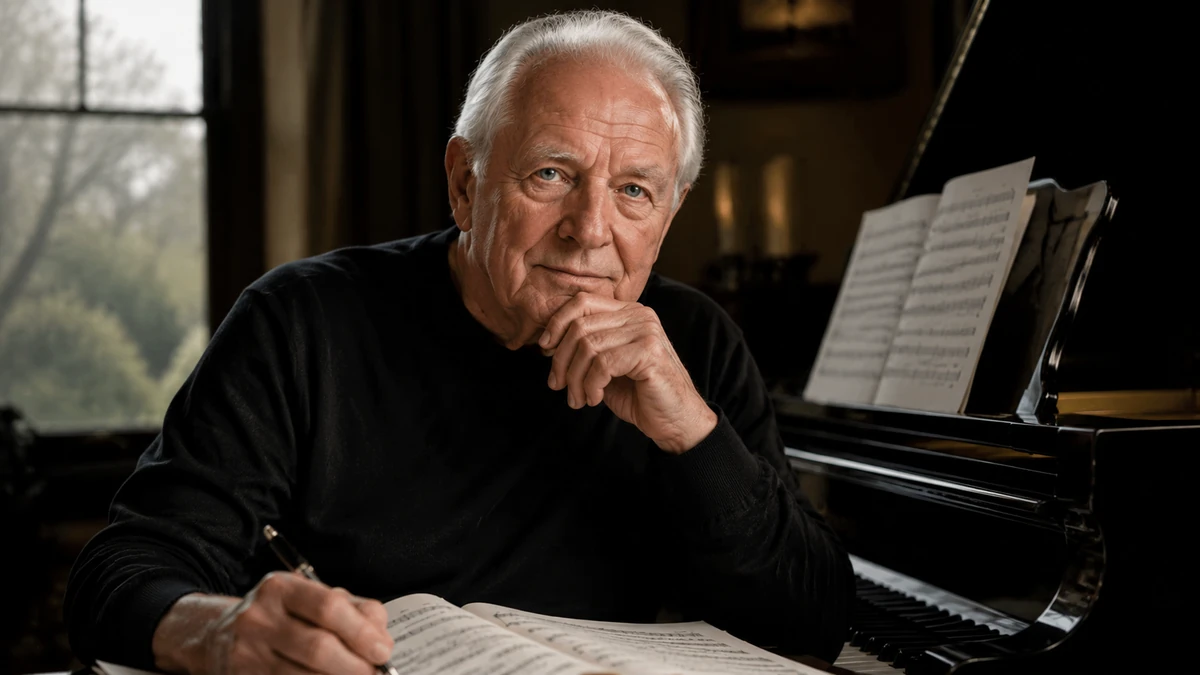
Image to help understand the article
A screen legend steps into a different spotlight
Anthony Hopkins has spent decades as one of the most recognizable actors in the English-speaking world, the kind of performer whose voice alone can summon memories of prestige dramas, Shakespeare, and, for many Americans, the unnerving stillness of Hannibal Lecter. But this week, the Oscar-winning actor is being introduced in a different role: composer. On June 21, Hopkins released “Life Is a Dream,” his first recorded album of orchestral works, a collection of 12 pieces written over some 60 years and now presented as a formal classical release.
That matters because this is not being framed, at least by the details available so far, as a novelty album or a vanity project attached to a famous name. The story out of Korea, drawing on reporting by Yonhap News Agency, emphasizes something more substantial: Hopkins did not suddenly decide in his late 80s to dabble in music. He has been composing for most of his adult life, in parallel with a film career that grew so large it largely defined him in public. The album brings together works from across that long span, suggesting that while the world knew him as an actor, he had been building a second artistic language in private all along.
For American audiences, there is a familiar temptation to treat this sort of release as an amusing headline — another celebrity trying something new. Hollywood has trained the public to be suspicious of crossovers, especially when stars step outside the field that made them famous. But “Life Is a Dream” appears to resist that easy category. The significance here lies less in the surprise that Hopkins wrote music and more in the fact that he stayed with it for decades, returning to these compositions over time and finally choosing, at 89, to release them in fully realized recorded form.
In an entertainment culture obsessed with reinvention, Hopkins’ move is striking for a different reason: it is not reinvention at all. It is revelation. Rather than pivoting to a new identity, he is making public a private one that has existed alongside the public persona for most of his life.
Why this album stands out in a celebrity culture full of side quests
Celebrity albums are nothing new. In the United States, audiences have seen actors release jazz standards, memoir-like spoken word projects, holiday records and one-off collaborations that trade more on name recognition than artistic depth. Some are sincere; some are marketing exercises; many are forgotten quickly. What distinguishes Hopkins’ release, based on the reporting available, is the scale of its gestation and the seriousness of its execution.
The album includes 12 orchestral compositions written over six decades, not a brief burst of output assembled to capitalize on publicity. That timeline alone changes how the work should be understood. It suggests continuity, discipline and private commitment rather than opportunism. If the pieces had existed only as manuscripts or personal experiments, the recording gives them a new status. Music that lived on paper or in memory is now fixed in performance, interpreted by conductors and musicians, and offered to a public audience that can engage with it on its own terms.
That shift is important in classical music, where the difference between composing and releasing can be profound. A score is a blueprint. A recording is a public act. It requires resources, collaborators and, perhaps most important, a willingness to let a work leave the internal world of the artist and enter the judgment of listeners. For someone as established as Hopkins, that vulnerability may be greater, not smaller. He has nothing to prove as an actor. As a composer, he is still entering a conversation where reputation does not automatically carry over.
Hopkins’ own remarks, as cited in the Korean summary, underscore that point. He described music as his “first love” and “first desire,” language that places composition not behind acting in his artistic life but before it. That is a powerful statement from someone whose acting career has already secured him a place in cultural history. It suggests that the new album is not an afterthought to a completed career. It is the fulfillment of an old ambition that simply took a very long time to reach the public.
There is a broader cultural appeal in that narrative, especially at a moment when careers are less linear than they once seemed. American audiences are accustomed to stories about second acts, whether in business, sports or entertainment. But Hopkins’ case offers a more nuanced version. This is not a retirement hobby. It is a delayed unveiling of work that was developing in the background while the world was paying attention to something else.
The collaborators tell you this is meant to be taken seriously
If there were any doubt about whether “Life Is a Dream” is intended as a serious classical project, the collaborators help answer it. The album was recorded in April at London’s Alexandra Palace and involves conductor Gustavo Dudamel, the Philharmonia Orchestra, pianist Sergio Tiempo and cellist Gregorio Nieto, according to the Korean report. Those are not decorative names. They signal professional weight, institutional legitimacy and a level of musical commitment that moves the album beyond curiosity value.
Dudamel in particular is a significant presence for U.S. readers. He is one of the best-known conductors in the world and a recognizable figure in American cultural life, especially because of his long leadership of the Los Angeles Philharmonic and his coming role as music director of the New York Philharmonic. His involvement gives the album a transatlantic dimension that matters for American audiences: this is a project tied not just to British or European classical circles but to a conductor with deep visibility in the United States and a proven ability to connect elite musical institutions with broader audiences.
That connection matters because crossover projects often succeed or fail on whether established gatekeepers in a field are willing to engage them seriously. In this case, the album was released through Decca Classics, one of the most recognizable names in classical recording. In practical terms, that means Hopkins’ music is entering the market through a label with both prestige and infrastructure. In symbolic terms, it means the release has been vetted and framed within an established classical tradition.
Dudamel’s comments, as described in the Korean summary, also point toward an important distinction. He did not simply praise Hopkins as a beloved actor trying his hand at music. He reportedly described him as a rare artist whose creative voice extends beyond a single medium and highlighted the beauty, craftsmanship and sense of wonder in the work itself. Whether listeners ultimately embrace the album is a separate question, but the language matters. It indicates that those closest to the project want the public to listen to the compositions, not just admire the biography behind them.
That may end up being one of the album’s biggest tests. Can audiences, especially non-classical audiences, temporarily set aside the image of Hopkins on screen and encounter the music without the baggage of fame? In some ways, celebrity can open the door. In other ways, it can make genuine assessment harder. The music is likely to be heard first through the filter of the man who wrote it. The challenge — and perhaps the opportunity — is whether repeated listening allows the pieces to stand apart from the famous face attached to them.
What this says about aging, authorship and artistic identity
For all the attention the album will draw because of Hopkins’ fame, its deeper resonance may lie in what it says about age and artistic timing. American entertainment culture often treats late career in blunt terms. Artists are either legends coasting on legacy, or they are comeback stories attempting to recapture relevance. Hopkins’ album does not fit neatly into either category. It presents old age not as decline or nostalgia, but as a period in which long-nurtured work can finally take definitive shape.
That matters culturally because the United States, like much of the world, is in the middle of a broader rethinking about longevity and creative life. In business, politics and the arts, there is increasing interest in careers that do not peak once and fade, but evolve across decades. Hopkins’ release is compelling not because it denies age, but because it uses age as evidence of accumulation. The 12 works on “Life Is a Dream” represent time as substance: years spent writing, revisiting, refining and preserving a practice that remained meaningful even when it was not public.
There is also something quietly radical in the album’s title. “Life Is a Dream” carries philosophical weight, and in the summary provided, Hopkins linked it to the feeling that his entire life has been a dream. For an artist nearing 90, that phrase can be heard in several ways: gratitude, disbelief, retrospection, even a sense of fragility about time. The title compresses a life in performance, private composition and public acclaim into a single poetic idea. It turns the album into more than a debut. It becomes, at least in part, a self-portrait.
In an era when artistic identity is often flattened into marketable labels, Hopkins’ album is a reminder that people who create for a living may have parallel inner lives the public never fully sees. Actors write. Musicians paint. Directors compose. The modern entertainment business tends to separate disciplines into brands and categories because that makes careers easier to market. But artists themselves do not always live that way. Hopkins appears to have spent decades resisting that simplification in private, even if the public only discovers it now.
That is one reason the story has traveled beyond straight entertainment news. It speaks to a broader hunger for narratives in which accomplishment does not close doors. If anything, Hopkins’ example suggests that one form of mastery can create the conditions for another dream to finally emerge. Fame did not erase the composer. It may have delayed the world’s recognition of him, but it also eventually gave him the platform to be heard.
What it means in the United States
For the United States, the Hopkins release lands at the intersection of several cultural currents: Hollywood celebrity, the prestige classical market, and a growing American appetite for cross-disciplinary storytelling. That does not mean the album will suddenly transform the U.S. classical business, a sector that remains relatively niche compared with pop, hip-hop or streaming television. But it does mean the project is unusually well positioned to reach audiences who do not ordinarily follow orchestral releases.
American listeners know Hopkins first through film and television. That recognition alone gives “Life Is a Dream” a level of visibility that most new classical recordings can only dream of. In a crowded U.S. media environment, attention is currency, and Hopkins has it. If even a fraction of his film audience samples the album out of curiosity, the release could function as a gateway into orchestral listening for people who might otherwise never click on a new classical title. That is one of the few real growth paths left for the genre in the streaming era: not replacing mass-market pop, but attracting adjacent audiences through narrative and cultural relevance.
There is also a business angle for American cultural institutions. U.S. orchestras and performing arts organizations have spent years searching for ways to widen audiences without abandoning artistic standards. Projects that connect recognizable public figures to serious music can be risky, because institutions do not want to appear to be lowering the bar in exchange for publicity. But when a release is anchored by respected collaborators like Dudamel and established labels like Decca, it offers a model for crossover that is still prestige-oriented. American presenters, festivals and arts marketers will likely pay attention to how audiences respond.
The Dudamel connection is especially notable from a U.S. perspective. He has been central to conversations about what major orchestras can be in American life: less remote, more public-facing, more connected to education and civic identity. His involvement in Hopkins’ project gives the album a bridge to U.S. classical audiences who may trust his musical judgment even if they come to the release skeptical of a celebrity composer narrative. That does not guarantee critical acclaim, but it does help place the project within an ecosystem Americans already recognize.
There is another American reference point here: the long history of entertainment figures crossing between media in ways that challenge industry assumptions. In the United States, some crossovers are dismissed because they feel strategic rather than necessary. What may distinguish Hopkins in American eyes is the sense, based on the reporting available, that this was not calculated for the market. He wrote these pieces over 60 years. That chronology makes the release feel less like a branding exercise and more like a belated act of authorship. In a country often suspicious of celebrity expansion, sincerity can be its own form of news value.
Finally, the story says something subtle about U.S.-U.K.-global cultural exchange. Though the album is rooted in Hopkins’ personal history and recorded in London, it is being discussed in Korea, released through a global classical label and framed through artists with international reach, including one of the most visible conductors in America. That is how culture now travels. A classical album by a Welsh-born British actor can become a topic in Seoul, Los Angeles and New York at the same time, with different audiences finding different meanings in it. For U.S. readers, that global circulation is itself part of the story.
Why Korean media paid attention — and why that matters
At first glance, it may seem surprising that a Korean news report would spotlight an orchestral album by a British acting icon. But the story makes more sense when seen through the broader media environment in South Korea, where global entertainment news, classical music coverage and celebrity culture often overlap in distinctive ways. Korea is one of the world’s most internationally connected cultural markets, with audiences used to moving fluidly between Hollywood, K-pop, streaming dramas, classical performances and global social media conversation.
There is also an affinity in the story’s underlying theme. Korean popular culture places strong emphasis on discipline, training and long-term artistic development. Whether in classical music, film or idol pop, audiences are accustomed to narratives built around years of invisible work before public recognition arrives. Hopkins’ album — a 60-year body of composition emerging formally at age 89 — fits naturally into that framework. It is a story about persistence, about a hidden practice becoming visible, and about an artist whose public identity never fully contained his inner one.
For English-speaking readers, that context helps explain why the piece resonates beyond a simple entertainment item. In Korea, as in many parts of Asia, there can be a strong public appetite for stories that honor endurance, craft and late-blooming achievement. American coverage often focuses more heavily on novelty or personal brand. The Korean angle subtly pushes the story in another direction, encouraging readers to see the album as the culmination of long labor rather than a curiosity attached to stardom.
That reframing is useful. It reminds American audiences that stories can gain meaning when viewed from outside the assumptions of Hollywood and the U.S. entertainment cycle. What looks from Los Angeles like an unexpected side project may look from Seoul like a deeply human account of vocation deferred but never abandoned.
What to watch next
The immediate question is how the album will be received once listeners and critics engage with the music itself. So far, the strongest available facts concern its long gestation, its collaborators and Hopkins’ own description of music as his earliest artistic desire. The next phase will depend on whether the works generate sustained conversation beyond the initial headline. Will classical critics treat the album as a meaningful addition to the repertoire of celebrity-made serious music? Will general audiences stream it once out of curiosity and move on, or will certain pieces gain a life of their own?
There is also the possibility that “Life Is a Dream” becomes part of a wider trend in how late-career artists manage legacy. Increasingly, stars with established reputations are looking for ways to present fuller versions of themselves, whether through archival releases, visual art, writing or music that had remained private. In that sense, Hopkins may be ahead of a curve that is less about celebrity experimentation than about legacy deepening — the idea that a famous life can still reveal unexplored layers rather than simply repeat its greatest hits.
For American audiences, the most interesting outcome may not be commercial. It may be perceptual. If the album succeeds, even modestly, it could expand how people think about Hopkins himself. Not replace the actor, certainly, but complicate him in a satisfying way. The same artist who built unforgettable performances for the camera was also, quietly, building an orchestral world no audience had fully heard. That kind of delayed discovery is rare in modern celebrity culture, where so much is documented, marketed and disclosed in real time.
In the end, that may be why this release feels larger than the typical arts item. It speaks to the mystery that still survives inside public life. Even now, even after decades of interviews, awards and global fame, an artist as visible as Anthony Hopkins can still surprise the world not with a reinvention, but with a truth he has carried for years. “Life Is a Dream” may introduce him as a composer to many listeners for the first time. More significantly, it suggests that the most enduring creative lives are not always the ones that stay in one lane. Sometimes they are the ones that keep faith with an early desire until the world is finally ready — or perhaps lucky enough — to hear it.
Comments
Post a Comment