At Busan, a Film Festival Program Turns Influence Into the Main Event — and Offers Clues About Korea’s Global Screen Power
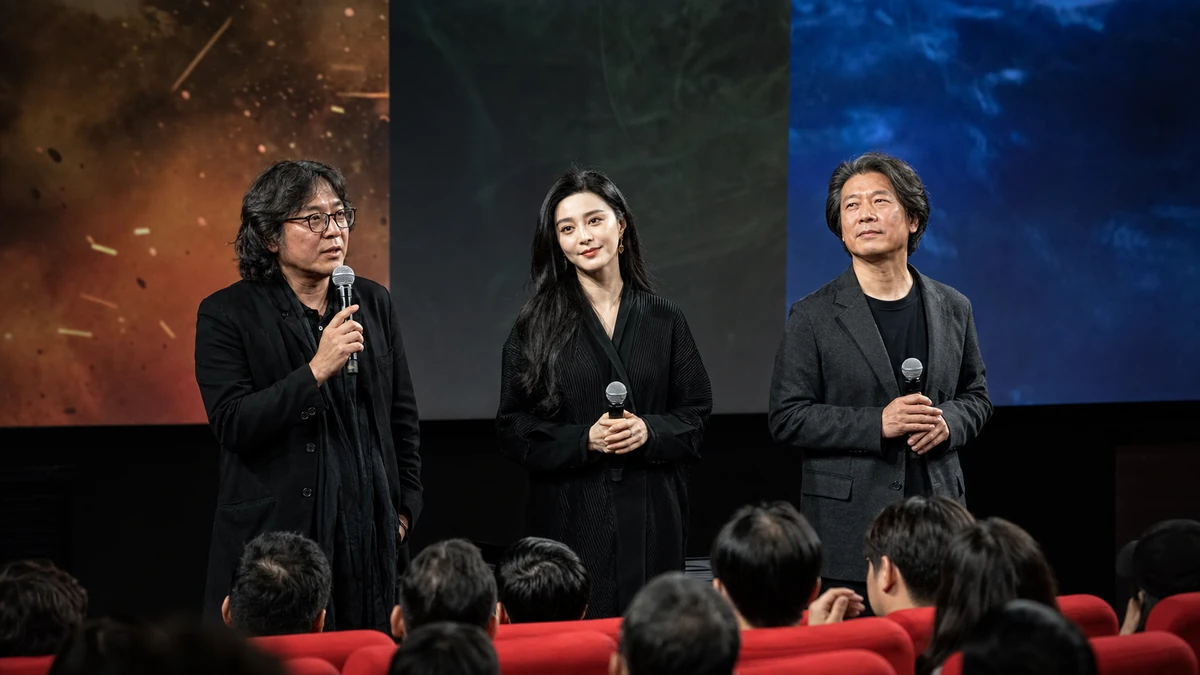
Image to help understand the article
Busan puts artistic influence, not just celebrity, at the center
The Busan International Film Festival, one of Asia’s most influential movie gatherings, is using a relatively new program to ask a question that movie fans in the United States would instantly recognize: What made these artists who they are? For its upcoming 31st edition, opening Oct. 6, the festival says its “Carte Blanche” section will feature South Korean director Kim Jee-woon, Chinese actor Fan Bingbing and acclaimed South Korean cinematographer Hong Kyung-pyo, each introducing a film that deeply shaped his or her creative life.
The selected titles are George Miller’s “Mad Max,” Park Chan-wook’s “The Handmaiden” and Krzysztof Kieslowski’s “Three Colors: Blue” — three films that could hardly look more different on paper. One is a raw survival-action movie that helped define modern dystopian cinema. Another is a sensual, women-centered period thriller from one of Korea’s best-known auteurs. The third is a European art-house landmark that turns color, silence and visual design into a language of grief. Put together, the lineup functions less like a conventional tribute and more like a map of how artists absorb shock, beauty and emotion over time.
That is the key idea behind “Carte Blanche,” a program Busan launched last year. The French phrase literally means “blank check,” but in arts programming it usually means giving someone free rein to make a selection. In practical terms, Busan is inviting major cultural figures to choose the works that moved them most, then discuss those choices directly with audiences. Unlike a retrospective, which typically presents a filmmaker’s own completed body of work, this format shifts attention to the source material — the movies, images and sensations that helped form a creative sensibility in the first place.
For American readers, the concept may feel similar to hearing Martin Scorsese talk about Powell and Pressburger, or seeing a streaming service build a “films that influenced” collection around a living director. But Busan’s version is more communal and more revealing. The audience is not simply told what matters; it watches the film with the invited artist and hears how that work lodged in memory. That makes the conversation less about prestige and more about transmission: how one generation of cinema sparks another, across borders, languages and industries.
At a moment when Korean film and television hold an unusually prominent place in global entertainment, that matters. This is not just a festival anecdote. It is a snapshot of how Korean cinema sees itself in relation to the world — not as an isolated national culture, but as part of a dense international conversation that runs from Australia to Poland to China to South Korea and, increasingly, to the United States.
Why these three choices matter
Kim, the director of films including “A Tale of Two Sisters,” chose the original 1979 “Mad Max,” calling attention not to its mythology or franchise value, but to its roughness, instinct and physical force. According to the festival summary, Kim has described the first film in George Miller’s series as the most provocative, wild and primal of the franchise, and said the shock and fear he felt when he first saw it remain vivid.
That choice is revealing. Kim is a filmmaker widely associated with genre craftsmanship, whether horror, noir, action or dark comedy. Yet what he highlights here is not polish. It is impact. In other words, the lesson he drew from “Mad Max” was not that a film has to be large or narratively complex to be lasting. It was that cinema can strike the body before it explains itself to the mind. American audiences know that feeling well: the first time a movie’s momentum, noise, speed or visual aggression seems to rearrange what the medium can do. That is part of what made “Mad Max” foundational for later action filmmaking, including in Hollywood.
Fan Bingbing, one of the best-known Chinese actors of her generation, chose Park’s “The Handmaiden,” explaining that she was captivated by the women in the film as dangerous yet free, clear-eyed, bold and full of life. Her emphasis is especially notable because it comes from an actor’s perspective. Rather than focus on the film as a technical achievement or as an international success, she points to the way the camera regards women and the way female characters project agency.
That interpretation matters because “The Handmaiden” has often been discussed in the West in terms of its eroticism, suspense and formal elegance. Fan’s framing shifts attention to vitality and freedom. It suggests that what resonates across borders is not only Park’s stylistic control, but the emotional and psychological force of the women at the story’s center. In an era when global conversations about representation, gaze and female authorship continue to reshape criticism and audience expectations, that reading gives the film renewed relevance.
Hong, the cinematographer known for his visually striking work, selected “Three Colors: Blue,” the 1993 Kieslowski film that uses shades of blue to evoke loss and solitude. His explanation, according to the festival, is that each viewing brings those emotions back in a new way and reminds him how deeply images can carry feeling. That may sound obvious to anyone who loves movies, but it is the kind of obvious truth that industries routinely forget when they reduce visual storytelling to content volume and platform strategy.
For a cinematographer, the choice is almost a manifesto. It is a statement that color is not decoration, and image is not secondary to plot. “Three Colors: Blue” endures because it shows how cinema can articulate inner life without overexplaining it. In a global market saturated with dialogue-heavy prestige television and franchise storytelling, Hong’s selection is a quiet defense of the medium’s unique power: light, color and composition can say what words cannot.
What this says about Korean cinema now
Taken together, the three selections point to something larger than individual taste. They illustrate the confidence of contemporary Korean cinema in placing itself within a global lineage. That confidence did not emerge overnight. For decades, South Korea built a film culture that is unusually open to foreign influences while still intensely self-aware about national identity, history and form. The result is an industry whose top talent often moves fluidly between local specificity and international dialogue.
That dual identity helps explain why Korean filmmakers and craftspeople now travel so well with global audiences. A director such as Kim can openly cite an Australian action classic as an artistic touchstone without seeming derivative. A Chinese actor can publicly single out a Korean film as a work that shaped her understanding of female characters on screen. A Korean cinematographer can elevate a Polish-French art-house film as central to his craft. None of that weakens national cinema. If anything, it underscores how strong it has become.
Busan’s programming also highlights an important shift in how festivals position themselves. Traditionally, many festivals exist to premiere new titles, broker sales and launch awards campaigns. Busan still does those things, but “Carte Blanche” suggests another role: curator of influence. That is especially important in Korea, where the entertainment industry has become a major export and a source of soft power. The festival is not only showcasing what Korea makes now; it is showing how Korean artists think, what they love and how they place themselves in a worldwide film tradition.
That helps explain why this seemingly modest announcement carries broader significance. It arrives in a period when Korean culture is often discussed abroad through the lens of commercial triumph — blockbuster series, Oscar wins, global fandom and streaming dominance. Those metrics matter, but they can flatten the conversation. A program like this restores texture. It reminds audiences that cinema is also inheritance, memory and taste. It is built from the shocks artists experienced long before they became brands, jurors or festival headliners.
It also offers a corrective to a common misconception in the United States: that Korean screen culture’s global rise is sudden. In reality, what the world is seeing now is the payoff from a long ecosystem of cinephilia, criticism, technical excellence and festival culture. Busan has been central to that ecosystem. By asking notable figures to reveal their own artistic “playlist,” the festival is effectively making the case that Korean cinema’s strength lies not only in production scale or export success, but in the seriousness with which it treats film history itself.
What it means for the United States
For American audiences and companies, the Busan announcement is more than a festival programming note from overseas. It is another sign that Korea remains one of the most important creative partners — and competitors — in the global screen business. In the United States, Korean films and series are no longer niche imports circulating mainly among art-house audiences. They are part of the mainstream entertainment conversation, discussed by college students, cinephiles, streamers, studio executives and awards voters alike.
That shift has changed how American companies look at Korea. Hollywood studios, streamers and talent agencies increasingly monitor Korean trends not just for remakes, but for creative collaboration, co-production opportunities and insight into audience behavior. When Busan spotlights artists discussing “Mad Max,” “The Handmaiden” and “Three Colors: Blue,” it reinforces the idea that Korean cinema is deeply legible to American industry professionals because it is already in conversation with many of the same reference points: genre reinvention, visual authorship and sophisticated audience tastes.
There is also a clear fan dimension in the United States. American viewers who came to Korean entertainment through K-pop, “Parasite,” “Squid Game” or prestige streaming dramas are increasingly curious about the broader cultural ecosystem behind those hits. A program like “Carte Blanche” serves that curiosity. It offers a gateway for fans to move from consuming Korean content to understanding the artistic traditions and global influences behind it. In American terms, it is the difference between liking a band’s latest album and then exploring the records that shaped the band’s sound.
For U.S. exhibitors and programmers — from museum film series to independent theaters and campus cinemas — this kind of festival curation is also a useful model. American cultural institutions have long built retrospectives around directors, but there is growing appetite for context-rich programming that connects creators to their influences. Busan’s approach suggests a way to deepen audience engagement without reducing cinema to celebrity Q&A culture. Watch the film, then hear the artist explain where the emotional spark began. That is a format American audiences understand and often respond to enthusiastically.
In diplomatic terms, the U.S.-South Korea relationship is usually framed through defense, technology and trade. Culture is sometimes treated as a softer add-on. But in practice, film and television now function as a meaningful part of the bilateral relationship. They shape perceptions, create business ties and generate shared reference points. When a Korean festival presents a program that links an Australian action classic, a Korean period thriller, a European art film and internationally known Asian talent, American observers should see more than cosmopolitan branding. They should see the mechanics of cultural influence at work — exactly the kind of influence that increasingly affects U.S. viewing habits and media strategy.
What to watch next in the American market is not just whether Korean content continues to travel, but how American companies respond to its deeper creative logic. Do they pursue quick remakes? Do they invite more Korean directors, cinematographers and actors into U.S. productions? Do they invest in subtitled distribution and theatrical curation rather than assuming everything must be remade domestically? Those questions matter because Korea’s success has already challenged old assumptions in Hollywood about what American audiences will accept, read and embrace.
A festival section that works like a cultural translator
One reason this Busan program is so effective is that it translates film culture without simplifying it. International festivals often struggle with a familiar problem: how to make cinephile ideas accessible to general audiences while still respecting complexity. “Carte Blanche” solves that by organizing itself around recognizable human experience. Everyone understands influence. Everyone understands being changed by a first encounter with a work of art. The festival then uses that emotional entry point to introduce deeper ideas about authorship, aesthetics and cross-border exchange.
That is particularly important when the invited figures come from different corners of the industry. A director, an actor and a cinematographer do not experience movies in exactly the same way. Kim speaks to energy and fear. Fan emphasizes character, freedom and the camera’s relationship to women. Hong focuses on how color and image carry loss. Even if those categories are not rigid, the contrast is useful. It shows audiences that films can be entered through movement, performance, composition, emotion or memory. In a media environment that often flattens movies into plot summaries and recommendation algorithms, that is a valuable lesson.
The program also mirrors how younger global audiences already consume culture. K-pop fans routinely trace artists’ inspirations through playlists, mood boards and behind-the-scenes commentary. Film festivals, by comparison, can sometimes appear formal or opaque. Busan seems to understand that today’s audience wants not just the finished work, but the line of influence behind it. The result is a kind of cinematic playlist culture, except with more rigor and historical depth.
For American readers who may not follow Korean festivals closely, Busan is a key institution in Asia’s film calendar, one with real influence on industry conversations and regional visibility. So when Busan builds a section like this and continues it beyond its debut year, it is not a quirky side event. It is part of a broader statement about what kind of film culture the festival wants to foster: internationally connected, artist-driven and open about the fact that creativity is built through dialogue with the past.
That matters well beyond Korea. At a time when the global entertainment business is under pressure to prioritize scale, franchises and constant release churn, there is something quietly defiant about a major festival making room for contemplation. Not nostalgia, exactly, but reflection. Not just what is new, but what made the new possible.
Why this story matters beyond one October event
In the narrowest sense, the news is straightforward: Busan has invited three prominent film figures to present three films they love. But the wider significance lies in what that choice reveals about where Asian cinema — and especially Korean cinema — sits in the global imagination now. It is no longer being introduced to the world as a regional curiosity or a breakout phenomenon in need of validation. It is acting from a position of maturity, selecting, interpreting and reframing world cinema on its own terms.
That posture is likely to resonate with American audiences who have become more comfortable reading subtitles, following international stars and recognizing that film culture does not flow in only one direction. For decades, Hollywood largely exported influence outward. Today, the exchange is far more reciprocal. Korean directors influence American filmmakers. Korean series shape streaming strategy. Korean actors build global fan bases. And Korean festivals help define how that conversation is curated and understood.
The choices of Kim, Fan and Hong also suggest a useful way of thinking about the current moment in film culture: as a network of sensibilities rather than a hierarchy of national industries. “Mad Max,” “The Handmaiden” and “Three Colors: Blue” are separated by country, decade and style, yet Busan places them in the same room through the memories of working artists. That act alone says something powerful about cinema’s endurance. A film made in one context can trigger fear, freedom or grief in another, then reappear years later inside a new work, a new career or a new national cinema.
For the United States, where debates about the future of movies often collapse into box-office anxiety or streaming economics, that is a useful reminder. The health of film culture is not measured only by quarterly earnings or awards-season campaigns. It is also measured by whether artists still talk seriously about the works that changed them, and whether institutions can create spaces for audiences to hear that conversation. Busan appears to be doing exactly that.
By the time the festival opens in October, the biggest headlines may still go to premieres, stars and acquisition deals. But this smaller section may prove to be one of the most revealing parts of the event. It offers a glimpse into the private canon of three major screen artists, and in doing so, it shows how influence travels across borders, professions and generations. For American viewers trying to understand why Korean cinema continues to matter — not just as a source of hits, but as a force in global film culture — that may be the most interesting story of all.
Comments
Post a Comment