
Image to help understand the article
A Korean screen legend is being remembered through the films he chose himself
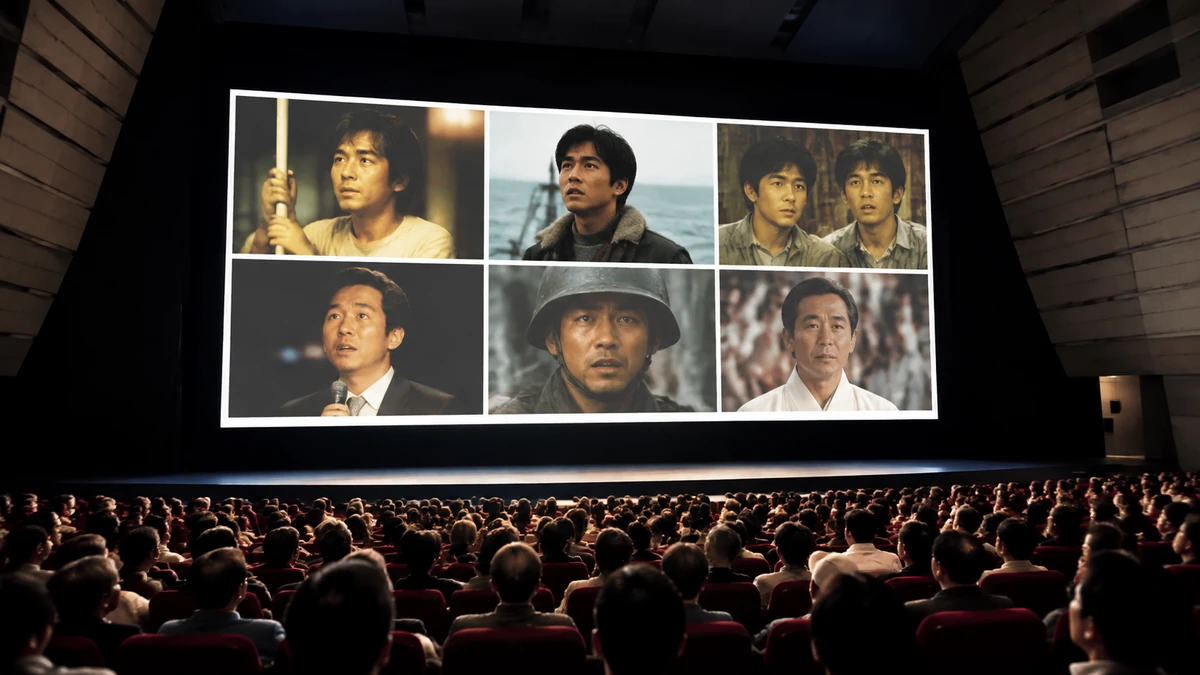
When the Busan International Film Festival opens Oct. 6, one of its most meaningful programs will not be a splashy premiere or a celebrity-packed gala. Instead, it will be a quiet act of cinematic memory: a special six-film retrospective honoring actor Ahn Sung-ki, built around titles he personally recommended before his death in January.
That curatorial detail matters. Film festivals around the world regularly mount tributes to major artists after they die, often assembling what critics or programmers consider the obvious classics. Busan’s upcoming program, titled “Beautiful Days, Ahn Sung-ki,” takes a more intimate route. According to festival organizers, the six films were not chosen after the fact by an institution trying to summarize his career. They were selected by Ahn himself when the idea of a special program was first proposed to him.
That makes the retrospective something more than a memorial. It is, in effect, Ahn’s final conversation with an audience. The lineup does not simply tell viewers which roles made him famous. It suggests which works he wanted to place back into public view, and perhaps which collaborations he believed still had something urgent to say.
For American readers who may know Korean entertainment primarily through recent global successes like “Parasite,” “Minari,” “Squid Game” or K-pop stadium tours, Ahn’s name may not be instantly recognizable in the same way. But in South Korea, he occupied a place closer to a cross between a universally respected leading man, a public cultural figure and a long-running symbol of the industry’s maturity. To understand why this Busan program is significant, it helps to think of him not just as a star, but as one of the faces through which modern Korean cinema learned to see itself.
The six films chosen for the retrospective are Lee Jang-ho’s “Good Windy Day” (1980), Bae Chang-ho’s “Whale Hunting” (1984), Park Kwang-su’s “Chilsu and Mansu” (1988), Lee Myung-se’s “The Clown” or “Gagman” (1989), Chung Ji-young’s “White Badge” (1992) and Im Kwon-taek’s “Festival” (1996). Spread across 16 years and six directors, the series is not arranged like a greatest-hits package. It reads instead like a map of artistic range, industrial change and the evolving ambitions of Korean film in the years before the Korean Wave became a global brand.
Why the selection itself tells a story
The most revealing question in any retrospective is often not which movies are included, but who had the authority to decide. In this case, that answer transforms the program. Ahn’s selections avoid reducing his career to a single persona, genre or era. There is no attempt to freeze him in one commercially successful image, no narrowing of his legacy into one “definitive” phase for easy consumption.
Instead, the six titles stretch from 1980 to 1996 and connect him with a different director each time: Lee Jang-ho, Bae Chang-ho, Park Kwang-su, Lee Myung-se, Chung Ji-young and Im Kwon-taek. For audiences, that means the retrospective becomes as much about artistic relationships as about one performer. Viewers can watch how Ahn was shaped by different directorial styles and, just as importantly, how he helped shape the tone and moral center of films made during a crucial period in South Korean cultural history.
That period matters. The 1980s and early 1990s were transformative years for South Korea, a time marked by political upheaval, rapid modernization, censorship battles, democratization and a changing media landscape. Korean cinema from those decades did not yet circulate globally the way it does now, but it was already wrestling with the kinds of social, generational and institutional tensions that later made Korean storytelling so resonant abroad.
By choosing films from that span, Ahn appears to have resisted being remembered simply as a beloved personality. He positioned himself within a broader story: the development of Korean film language, the rise of auteur directors and the role actors play in bridging commercial appeal and artistic seriousness. In the United States, a comparable retrospective might be one in which a performer declines to be represented only by box-office landmarks and instead selects films that reveal collaboration, evolution and risk — the sort of choices that critics revisit to understand how an industry changed.
The title “Beautiful Days, Ahn Sung-ki” also carries more than sentimental weight. In English, it might sound like a straightforward tribute, but the structure of the program suggests something more layered. These are not merely “beautiful days” in the nostalgic sense. They are a sequence of moments in Korean film history, preserved through one actor’s face and presence. The beauty lies partly in continuity: an audience moving from film to film sees not a monument, but a working artist traveling through changing times.
Busan is turning remembrance into an act of public film culture
The Busan International Film Festival has long been one of Asia’s most important film events, a place where new cinema is launched but also where film culture is explained, debated and archived. This Ahn retrospective shows how festivals can do more than celebrate celebrity. They can teach audiences how to look backward with care.
Busan is not stopping with screenings. Directors who worked with Ahn — including Lee Jang-ho, Bae Chang-ho, Park Kwang-su, Lee Myung-se and Chung Ji-young — are expected to participate in conversations with audiences. That structure is crucial. A retrospective can sometimes become a static experience, especially when the artist being honored can no longer speak for himself. By bringing in collaborators, Busan turns the program into a living record of process: how scenes were built, how performances were shaped and how colleagues remember the actor not as icon alone, but as a working presence on set.
For American festivalgoers, there is a familiar logic here. The most valuable festival tributes are often the ones that combine the film itself with testimony from the people who made it, allowing audiences to move from finished text to creative memory. Busan’s approach recognizes that a movie star’s legacy is not only contained in the final cut. It survives in the recollections of directors, cinematographers, writers and crews who can describe what the camera did not record.
The festival also plans to publish a booklet titled “Between Adventure and Example, the Actor of an Era, Ahn Sung-ki.” Even in translation, that title suggests a careful balancing act. “Adventure” points to artistic risk, experimentation and perhaps the unpredictability required to keep a long career alive. “Example” implies professionalism, discipline and moral stature. Put together, the phrase resists flattening Ahn into either rebel or institution. It argues that his significance came from inhabiting both roles.
The Korean Film Archive is partnering with Busan on the program, another detail with broader cultural meaning. In Hollywood, the preservation and re-circulation of older films often depend on the combined efforts of archives, festivals, repertory theaters and streaming restorations. South Korea has been building a similarly robust ecosystem for preserving and reintroducing its film history. That matters because the Korean Wave is often discussed in the present tense — as if Korean culture arrived fully formed on Netflix, at Cannes or on the Billboard charts. Programs like this remind audiences that global recognition rests on decades of artistic labor, institutional stewardship and historical memory.
In that sense, this retrospective is not just about mourning a star. It is about demonstrating a national film culture’s capacity to care for its own past and make that past legible to new generations.
What Ahn Sung-ki’s career says about the evolution of Korean cinema
There is a tendency in international coverage of Korean entertainment to compress the story into a sharp before-and-after: before “Parasite,” Korean film was underappreciated abroad; after “Parasite,” the world finally noticed. That narrative is tidy, but incomplete. The films in Busan’s Ahn program help fill in what came before the breakthrough years, and why those earlier decades still matter.
The six selected titles span a period when South Korean filmmakers were exploring urban anxiety, masculinity, political disillusionment, memory and the costs of modernization. Even without turning each film into a history lecture, the retrospective’s date range alone indicates that Ahn’s importance was bound up with Korean cinema’s struggle to widen its emotional and thematic vocabulary.
That is one reason the lineup avoids the feel of a fan-service package. Ahn’s selections invite viewers to trace the contours of a national cinema through recurring presence rather than through repetition of one signature role. One film places him inside one director’s worldview, another tests him against a different one. That is how screen legacies become useful to history. The actor becomes a thread connecting different aesthetics, different political moods and different production cultures.
For American readers, a helpful comparison is the way certain actors become unofficial guides to a country’s cinematic development. Think of performers whose filmographies are not important only because they were stars, but because their collaborations reveal whole artistic movements. Their faces become portals into changing ideas about class, nation, memory or violence. Ahn appears to occupy that kind of place in Korean cinema.
There is another reason this retrospective lands at an important moment. Around the world, film culture is fighting against amnesia. Algorithms favor novelty. Streaming libraries rotate in and out. Younger viewers often encounter international cinema in fragments: clips, memes, recommendation lists, prestige titles stripped of historical context. A curated theatrical program cuts against that trend. It insists that legacy is something to be experienced sequentially, communally and with explanation.
That is especially important for Korean cinema, which now has global visibility but also runs the risk of being known abroad only through its newest exportable hits. Busan’s Ahn program argues for a longer timeline. It says, in effect, that today’s Korean cultural influence did not emerge from nowhere. It was built by artists whose work connected one era to another, long before the rest of the world started paying close attention.
What this means in the United States
For the United States, the significance of this retrospective goes beyond cinephile appreciation. It speaks directly to how American audiences, distributors, streamers and cultural institutions engage with Korean content at a moment when the Korean Wave is no longer niche, but a durable part of the entertainment economy.
In recent years, U.S. consumers have become accustomed to encountering Korean storytelling through contemporary blockbusters, prestige television, romance dramas and music-driven fandom. But markets mature when audiences are invited to move from current hits to historical depth. That is the stage Korean cinema appears to be entering in America. The question is no longer whether Korean content can travel. It is whether American institutions will invest in presenting the back catalog, the canon and the cultural history that make current success intelligible.
That has implications for art-house theaters, film schools, museums, streamers and specialty distributors. A Busan retrospective like this can serve as a template for how Korean film history might be introduced to U.S. viewers: not as homework, and not as a generic “best of Korean cinema” package, but as a carefully framed entry point centered on one artist and the network of directors around him. That model is easier for American audiences to follow and easier for exhibitors to program.
There is also a business angle. Korean content has become valuable to American companies not just because it is critically acclaimed, but because it carries global fandom, cross-platform potential and a recognizable quality signal. Yet the U.S. market still tends to privilege the new over the archival. If interest in Korean culture is to deepen rather than simply cycle through trends, there will need to be more restoration campaigns, repertory bookings, contextual essays, streaming collections and educational partnerships that bring older Korean films into circulation.
Busan’s handling of Ahn’s legacy shows one path forward. It combines festival prestige, archival partnership, filmmaker testimony and printed scholarship. That is exactly the sort of ecosystem that American cultural institutions often celebrate when dealing with Hollywood’s own classics. Applying the same seriousness to Korean film would be a sign that the United States is moving from consuming Korean culture to truly engaging with it.
The timing also intersects with the broader U.S.-South Korea relationship. Cultural exchange is not a side story to the alliance; it is one of the clearest ways Americans encounter contemporary Korea outside geopolitics or technology headlines. Much of the U.S. conversation about South Korea still swings between security issues, semiconductor supply chains and pop-culture sensation. A program like this widens that lens. It presents South Korea not just as an exporter of hits, but as a country actively curating its artistic memory and inviting the world to take that memory seriously.
For Korean American communities in particular, retrospectives of this kind can also serve as bridges across generations. Younger audiences who came to Korean culture through K-pop, streaming dramas or Oscar-winning films may discover an older cinematic lineage that parents or grandparents recognized in a different way. That intergenerational function is easy to overlook in market analysis, but it can be one of the most durable forms of cultural influence.
Why festivals increasingly matter in the age of global streaming
It is tempting to assume that if a film matters, streaming will eventually take care of access. But streaming platforms are not archives, and recommendation engines are not curators. They are commercial systems optimized for retention, not historical understanding. That is one reason festivals like Busan remain essential even as international content becomes easier to consume digitally.
A retrospective does something a platform rarely can. It imposes sequence, context and occasion. It gives audiences a reason to sit with older works as part of a conversation rather than as isolated items in a content library. In the case of Ahn Sung-ki, that matters because the retrospective is asking viewers to see relation: this director beside that one, this decade beside the next, this performance beside another that complicates it.
Festival settings also create collective interpretation. An audience hears a director discuss a collaboration, then watches another film with that comment in mind. That dynamic turns memory into shared public culture rather than private nostalgia. In an era when much viewing happens alone and asynchronously, such communal framing becomes more valuable, not less.
There is a lesson here for American festivals as well. As U.S. programmers think about Asian cinema, Korean content and transnational audiences, retrospectives tied to one artist’s self-selected body of work may prove more illuminating than broad, catchall showcases. They provide a narrative spine. They also respect the intelligence of audiences, who often respond well when institutions trust them with context rather than only marketable familiarity.
Busan’s approach suggests that festivals can still function as civic spaces for cultural education, especially when they collaborate with archives and surviving artists. In a fragmented media landscape, that may be one of their most important roles.
What to watch next
The immediate event is straightforward: six films, a cluster of director talks and a commemorative publication at one of Asia’s top festivals. But the larger question is whether the retrospective becomes part of a broader movement to reintroduce foundational Korean cinema to international audiences in a more sustained way.
If it does, American viewers may begin seeing more programs that connect the contemporary Korean boom to earlier filmmakers, actors and institutions. Universities may expand Korean film curricula beyond a handful of modern titles. Museums and cinematheques may find stronger audiences for repertory screenings. Streamers and distributors may test whether there is commercial appetite for curated classic Korean collections rather than only new releases.
None of that is guaranteed, and Busan’s tribute alone will not change the market overnight. But it does offer a persuasive framework. Start with a beloved figure. Let the artist’s own choices shape the entry point. Pair the films with live testimony and archival support. Present memory not as static reverence, but as discovery.
That may be the deepest significance of “Beautiful Days, Ahn Sung-ki.” It honors a major actor, certainly. But it also demonstrates a mature cultural confidence: the belief that a nation’s film history deserves to be revisited carefully, discussed publicly and shared across generations and borders. For South Korea, that is an act of remembrance. For the United States and other English-speaking audiences, it is an invitation — to look beyond the latest hit, and to understand the longer story that made those hits possible.
In a media environment that rewards speed, Busan is making a case for duration. In a global entertainment economy obsessed with what is new, it is arguing that the past still has market value, educational value and emotional force. And in choosing to honor Ahn Sung-ki through films he selected himself, the festival has found a way to let a screen legend shape his own afterlife — one audience, one conversation and one rediscovered film at a time.


0 Comments