Image to help understand the article
A regulatory clash in South Korea with implications beyond one company
South Korea’s competition watchdog has run into an unusual obstacle in its attempt to investigate Coupang, the country’s dominant e-commerce platform: the company did not cooperate with an on-site inspection, and officials ultimately withdrew without securing the materials they sought. At issue is not whether consumers received discounts, but who may have absorbed the cost behind them.
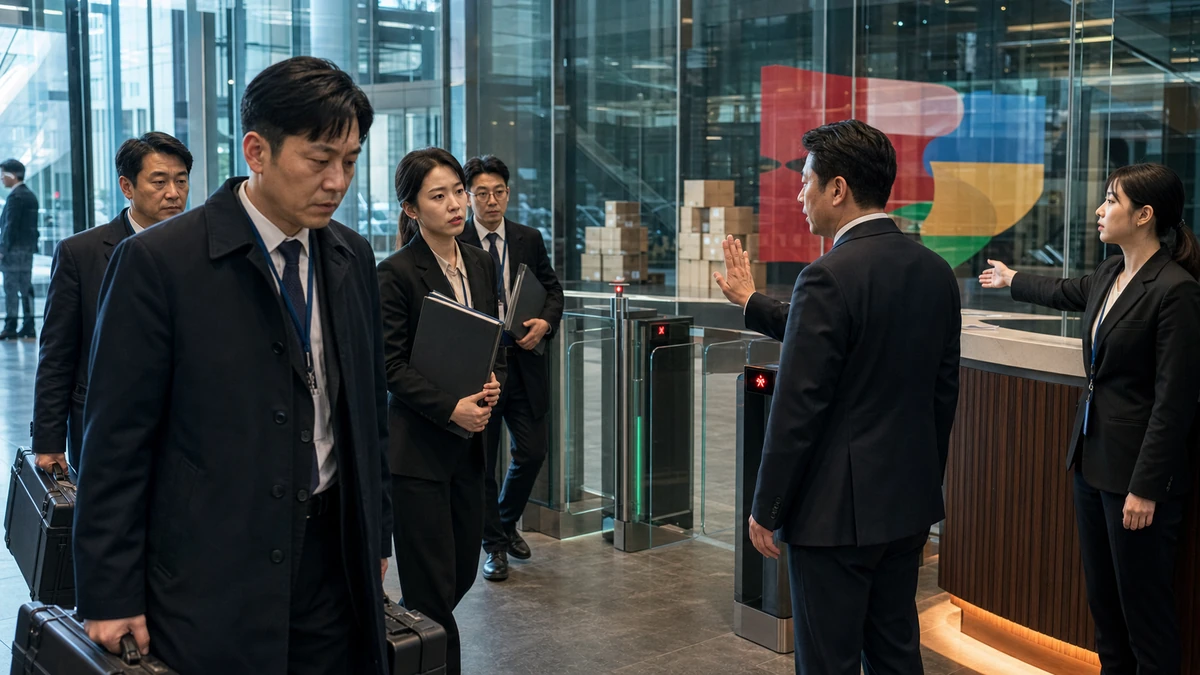
According to the facts publicly reported so far, South Korea’s Fair Trade Commission, or KFTC, sought to examine whether Coupang shifted the cost of certain customized discount coupons onto suppliers. The planned inspection was reportedly scheduled for several days in late June, but the effort stalled when Coupang said it had not been given prior notice of the investigation and therefore did not comply. Authorities left the site, and the dispute now appears headed deeper into the courts and administrative process.
That may sound like a technical procedural fight, but it lands at the center of a much bigger question in modern retail, one familiar to American readers who shop on Amazon, Walmart or Instacart: when a platform trains consumers to expect constant deals, flash discounts and personalized offers, who actually pays for that convenience? Is the platform funding those promotions as a cost of doing business, or are third-party sellers and suppliers quietly subsidizing them behind the scenes?
In South Korea, that question carries particular weight because Coupang is not just another retailer. It has become one of the defining companies of the country’s digital economy, often described as the closest thing Korea has to an Amazon-style logistics-and-marketplace giant. Its rapid delivery network, broad consumer reach and prominence in everyday shopping have made it a symbol of both technological efficiency and the concentrated power that can come with scale.
The current dispute does not establish wrongdoing by Coupang. What is public at this stage is an allegation, an attempted investigation and a procedural refusal tied to the question of prior notice. That distinction matters. But even without a final legal finding, the confrontation has already become a test of how South Korea can regulate powerful online platforms, how far regulators can go in demanding access to business records, and how companies can challenge the process without appearing to evade scrutiny.
The real issue is not the coupon, but the cost-sharing behind it
For everyday shoppers, a coupon is simple: a lower price at checkout. For regulators, suppliers and platforms, a coupon can be a complicated financial instrument. The key issue in this case is whether promotional discounts designed by the platform were funded fairly, or whether suppliers were made to bear costs they did not freely agree to take on.
That distinction is essential in retail law. A discount campaign can be perfectly lawful if its terms are transparent and mutually agreed upon. It becomes much more problematic if a dominant retailer or platform uses its bargaining leverage to push costs down the supply chain. In practical terms, that could mean a brand or vendor receives less revenue on a sale because the platform structured a promotion and then charged the supplier for it, fully or in part.
South Korean authorities reportedly were trying to determine whether that kind of cost transfer happened with personalized coupons. Those sorts of targeted promotions are increasingly common in digital commerce. Rather than offering a blanket sale to everyone, platforms can use customer data to offer discounts to specific users most likely to make a purchase. That can be an effective sales tool. It can also make the underlying cost structure less visible to the public, since shoppers only see the final discount, not the settlement terms between the platform and the supplier.
That opacity is why regulators typically want access to contracts, accounting records and reimbursement arrangements. A low price on a phone app can reflect many different business models: a platform investing in customer acquisition, a supplier agreeing to fund part of a promotion in exchange for visibility, or a more questionable arrangement in which a powerful intermediary effectively dictates the terms. Without documents, it is difficult to know which of those models is in play.
For suppliers, the stakes are high. Discounts can increase sales volume, but they can also squeeze already thin margins. A small or midsize vendor may welcome access to a giant platform’s customer base while having limited ability to push back on promotion terms. That is one reason why retail regulation, in South Korea and elsewhere, often focuses less on headline prices than on the fairness of the business relationship underneath them.
The South Korean law reportedly at issue here, the statute governing large retail businesses and their dealings with suppliers, is designed to address that imbalance. The law is meant to limit the ability of large distributors to shift burdens unfairly onto counterparties with less bargaining power. In that sense, this case is not really about whether discounts are good or bad for consumers. It is about whether the architecture of discounting is transparent, negotiated and lawful.
Why the failed inspection matters in Korea’s platform economy
The unusual twist in this case is that the fight escalated before regulators could fully examine the underlying records. That makes the procedural dispute nearly as important as the commercial one. The KFTC’s inspection reportedly ended when Coupang refused to cooperate, citing lack of prior notice. The result is that the public debate has shifted, at least for now, from whether supplier costs were improperly transferred to whether the government’s investigative methods were proper and enforceable.
That matters because on-site inspections are one of the core tools regulators use to verify suspected misconduct. In many competition and trade practice cases, the relevant evidence is not visible in public-facing pricing pages or broad corporate statements. It is buried in internal spreadsheets, vendor agreements, reimbursement formulas and communications between category managers and sellers. If a regulator cannot secure those materials, the path to establishing facts becomes much slower and more uncertain.
According to the reporting summarized here, this is the first controversy of its kind under South Korea’s large-retail law involving a major company refusing an on-site investigation. That alone makes it significant. First cases often shape the rules of engagement for everyone that follows. If the courts end up placing meaningful limits on the regulator’s ability to conduct surprise or insufficiently noticed inspections, large platforms may feel emboldened to challenge future probes on procedural grounds. If the courts instead back the regulator’s position, companies may face clearer expectations about compliance even when they object to the process.
There is also a broader governance issue. Regulators need effective powers, especially when dealing with companies whose scale gives them leverage over suppliers and consumers alike. But companies also have due-process interests, including the right to know the basis and scope of government action. The current dispute appears to sit at that crossroads. One side is emphasizing the need to investigate suspected unfair cost allocation. The other is emphasizing whether the inspection itself met required procedural standards.
That balance is not unique to South Korea. In every advanced digital economy, governments are struggling to modernize enforcement for platform businesses that move faster than traditional regulatory models. E-commerce platforms do not merely sell products; they set search rankings, design promotions, manage logistics, process payments and, in some cases, compete directly with the very merchants that depend on them. That layered role gives them extraordinary influence over market outcomes. It also makes oversight more legally and technically complex.
For South Korea, the outcome will be especially important because the country has one of the world’s most digitally integrated consumer markets. Korean shoppers are accustomed to fast delivery, app-based purchasing and aggressive couponing. That makes platform rules more than an abstract policy issue. They shape the commercial infrastructure of daily life.
What this says about a larger trend in online retail
Stepping back, the Coupang dispute fits into a broader global trend: regulators are paying more attention not just to market share, but to the mechanics of platform power. In the early years of e-commerce, policy debates often centered on consumer convenience. Fast shipping, lower prices and more selection were seen as straightforward gains. Increasingly, however, governments are asking a more complicated question: convenience for whom, and at whose expense?
That shift reflects how digital retail matured. Platforms are no longer scrappy challengers. In many categories, they are gatekeepers. They can decide which products surface first, which sellers qualify for badges or boosted visibility, what kinds of promotions are favored by the algorithm, and how fees accumulate across logistics, advertising and payment services. A supplier might technically have a choice about whether to participate, but in practice the commercial pressure to remain visible on a dominant platform can make that choice narrow.
The central concern in cases like this is not simply low prices; it is whether the system producing those prices preserves fair bargaining conditions. A retailer offering a discount out of its own margin is one thing. A platform designing a campaign and then requiring suppliers to absorb costs they did not meaningfully negotiate is another. In antitrust and fair-trade policy, those are different stories, even if consumers see the same coupon code on-screen.
Another reason this matters now is that personalized pricing and promotion tools are becoming more sophisticated. Platforms can tailor offers by shopping history, geography, device usage, time of day and predicted buying behavior. That precision can boost efficiency. It can also make commercial relationships harder to audit, because different users may receive different prices and the funding formula behind those offers may be spread across multiple contractual layers.
That is why transparency is becoming a regulatory theme across markets. Officials want to know not just the final price to consumers, but the structure that produced it. Who initiated the promotion? Who approved it? Who reimbursed whom? Were those terms in writing? Could suppliers refuse? Were some vendors pressured more than others? Those are the kinds of questions that turn a discount from a marketing device into a legal issue.
The Korean case also underscores a second trend: procedural battles are becoming part of substantive platform regulation. Large technology and commerce companies increasingly contest investigations not only on the merits, but on how authorities gathered information, what notice was required, and whether enforcement exceeded statutory bounds. That can slow outcomes, but it also reflects how high the stakes have become. When regulators investigate a platform at the center of a national consumer market, every procedural step can have industrywide consequences.
What this means for the United States
For Americans, the immediate temptation may be to view this as a distant Korean corporate dispute. That would be a mistake. The issues at the heart of the Coupang case are deeply familiar in the United States, where lawmakers, regulators, brands and third-party sellers have spent years debating the power of major digital marketplaces.
American readers do not need to know the details of Korean retail law to recognize the underlying tensions. In the United States, scrutiny of Amazon’s relationship with marketplace sellers, fulfillment partners and competing brands has helped define the modern policy conversation around platform power. Walmart, Target and grocery-delivery apps have also reshaped expectations around pricing, delivery speed and promotional intensity. The same basic question keeps resurfacing: when a retailer or platform has extraordinary scale and access to consumer data, how does that power affect the businesses that rely on it?
Coupang itself is not irrelevant to the U.S. market. The company is publicly listed in New York, and American investors have long followed it as one of the most prominent Korean consumer-tech firms. That means regulatory developments in Seoul can resonate on Wall Street, especially when they raise questions about governance, compliance risk or the sustainability of aggressive discount-driven growth models. For U.S. investors, this is not just a Korea story. It is a story about how one of the world’s major e-commerce companies is navigating the expanding legal scrutiny that comes with market dominance.
There is also a bilateral dimension. Washington and Seoul are close allies, and the U.S.-South Korea relationship increasingly extends well beyond security into technology, supply chains, data governance and digital trade. As both countries grapple with how to regulate powerful platforms, differences in legal standards or enforcement style could become more consequential for companies operating across borders or seeking international capital. If South Korea develops stricter expectations around supplier treatment or more formal rules for platform discounting, those norms could influence policy discussions elsewhere, including in the United States.
For American brands selling into Korea, the outcome could matter in practical terms. South Korea is one of the world’s most sophisticated consumer markets, and U.S. companies across beauty, food, apparel and electronics often rely on large platforms to reach Korean shoppers. If the rules governing discount cost-sharing become more explicit, suppliers may gain leverage or, at minimum, more clarity about how promotions are funded. That could affect pricing strategy, marketing budgets and negotiations with local distribution partners.
American consumers, too, have a stake in the broader trend. U.S. shoppers have benefited enormously from the convenience culture that Korea helped pioneer: same-day delivery, mobile-first commerce, algorithmic recommendations and constant promotional nudges. But the American debate is increasingly catching up with the Korean one. As lawmakers and regulators look more closely at hidden fees, seller dependence and platform self-preferencing, the question of who subsidizes convenience is likely to become a bigger part of public discussion.
The Korean standoff may therefore serve as a kind of preview. It shows how disputes that begin with something as ordinary as a coupon can evolve into much larger tests of regulatory authority, corporate process and platform accountability. For the United States, where similar questions remain unresolved, that is worth watching closely.
What to watch next in the legal and business fallout
The most immediate question is procedural: how South Korean courts handle the dispute over notice, investigatory authority and any temporary restrictions on further inspections. Reporting indicates that until court decisions on related matters are resolved, additional on-site investigation may be difficult. If that holds, the timeline for uncovering the facts behind the discount allegations could stretch out considerably.
That delay creates uncertainty for multiple parties at once. Regulators may find it harder to establish whether the suspected cost transfer occurred. Coupang may continue to face reputational questions without a clear adjudication on the merits. Suppliers may remain unsure whether the commercial practices under scrutiny will be validated, condemned or simply left unresolved for an extended period.
Another question is whether the case prompts broader legislative or administrative reform. High-profile disputes often expose gaps in older legal frameworks. If South Korean authorities conclude that current inspection rules are too ambiguous for platform-era commerce, they may seek clearer standards on notice, record access or supplier-cost allocation in digital promotions. Companies, for their part, may push for more precise procedural safeguards so that compliance expectations are predictable.
There is also an industry signaling effect. Even absent a final ruling, other large platforms in Korea are likely paying attention. So are vendors, trade groups and foreign firms with Korean operations. A case like this can influence behavior before any court reaches a final decision, simply by making all parties more sensitive to how discount campaigns are documented and justified.
For observers outside Korea, the bigger story is not whether one investigation was delayed. It is that platform regulation has entered a new phase, one in which business-model details once treated as internal commercial matters are now central public-policy questions. The more digital marketplaces shape prices, demand and supplier access, the less governments are willing to accept “black box” explanations for how promotions work.
That means the eventual significance of this case may lie less in any single coupon program than in the standards it helps establish. Can a dominant platform be compelled to open its books quickly when regulators suspect unfair cost shifting? What level of notice is required? How should the law balance administrative effectiveness against corporate procedural rights? And when digital commerce relies on increasingly personalized discounts, how can suppliers and regulators verify who is paying the bill?
Those are not just Korean questions. They are the defining governance questions of platform retail everywhere. South Korea, with its advanced e-commerce ecosystem and globally watched technology sector, is once again serving as an early test case for tensions that many other countries, including the United States, are still trying to sort out.
A test of trust in the age of frictionless shopping
At a consumer level, one reason this story matters is that modern online retail runs on trust. Shoppers trust that the price they see reflects legitimate competition. Suppliers trust that participation on a powerful platform will not expose them to opaque or one-sided demands. Investors trust that growth rests on durable business practices rather than hidden pressure points in the supply chain. Regulators trust that they can get timely access to the information needed to evaluate complaints.
When any of those forms of trust break down, the effects ripple outward. A coupon may look like a small thing. But in the digital economy, small things often reveal large structures. Discounts are not merely perks for consumers; they are windows into who has leverage, who bears risk and how value is divided among platforms, sellers and shoppers.
That is why the current clash between Coupang and South Korean regulators deserves attention beyond the daily headline. It is not simply about one company resisting one inspection. It is about the frictions embedded in supposedly frictionless commerce. The speed, personalization and convenience that define online shopping are made possible by dense contractual systems that the public rarely sees. When those systems become the subject of legal scrutiny, the market gets a rare look at the machinery underneath the app.
For South Korea, the case could help determine how assertively the state can police that machinery. For the United States, it offers a useful comparison point at a moment when concerns over platform dominance, seller dependence and digital-market fairness remain unresolved. And for consumers everywhere, it is a reminder that the cheapest visible price is not always the whole story.
No final judgment has been reached on whether Coupang violated the law. That bears repeating. But even in its incomplete state, the episode captures a defining challenge of 21st-century commerce: how to preserve the benefits of digital retail innovation while ensuring that the costs behind those benefits are allocated openly, legally and fairly.
Comments
Post a Comment