Image to help understand the article
FC Seoul Turns a National Holiday Match Into a Statement Win
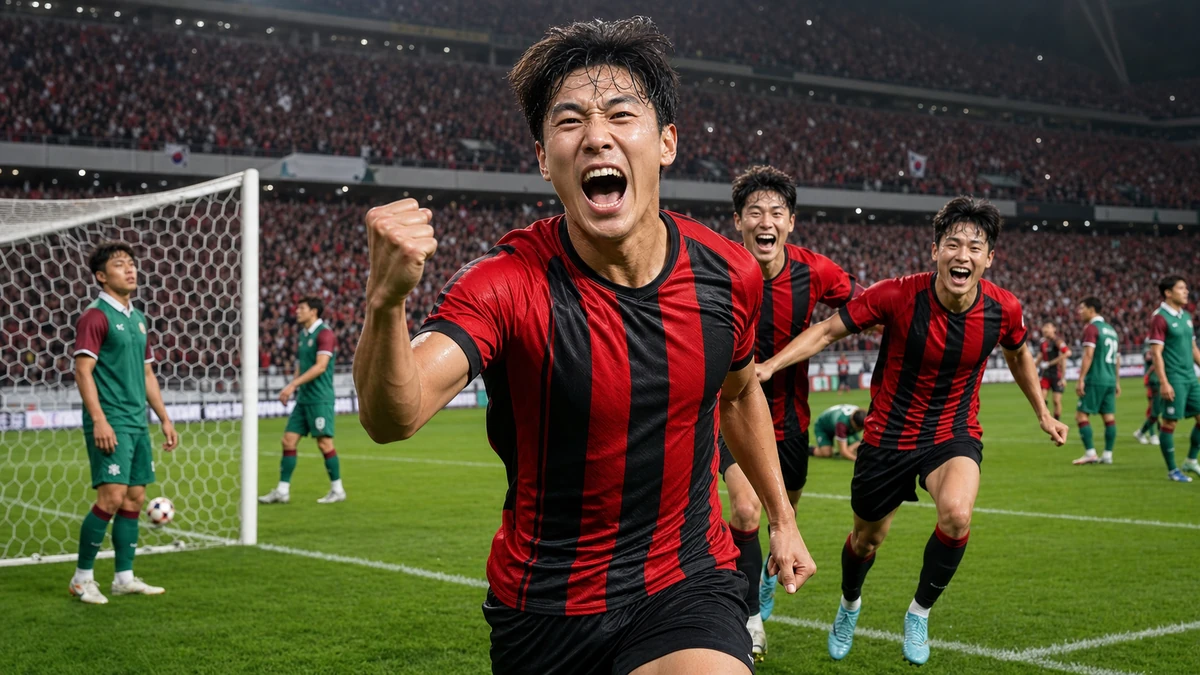
FC Seoul delivered one of the most dramatic performances of the 2026 K League 1 season on Aug. 15, rallying from a first-half deficit to defeat Daejeon Hana Citizen 4-2 at Seoul World Cup Stadium. The victory was powered by substitute Song Min-gyu, who scored twice and assisted another goal after entering the match in the second half.
For international audiences unfamiliar with Korean soccer, the K League 1 is South Korea’s top professional football division and a key part of the country’s modern sports culture. While European leagues and Major League Soccer often dominate global attention, Korean clubs have built passionate local fan bases and increasingly compete for international recognition through improved broadcasting, youth development and connections with global football markets.
The match carried additional symbolic weight because it was played on Aug. 15, South Korea’s Liberation Day, known locally as Gwangbokjeol. The national holiday commemorates the end of Japan’s colonial rule over Korea in 1945. Before kickoff, FC Seoul honored that historical significance with a ceremonial first kick involving descendants connected to Korean independence history and the school founded by independence activist Lee Seung-hoon, a member of the Korean independence movement’s 33 national representatives.
The combination of history, rivalry and a dramatic comeback created a memorable atmosphere for Seoul supporters. What began as a difficult night for the league leader became a showcase of resilience and attacking quality.
A Second-Half Explosion Changes the Course of the Game
Daejeon Hana Citizen appeared ready to produce an upset when striker Joo Min-kyu opened the scoring in the 38th minute. The goal put additional pressure on FC Seoul, which had recently struggled to maintain momentum. The club had gone three consecutive K League matches without a win and had also suffered a 2-0 defeat against Busan IPark in the Korea Cup.
Despite sitting at the top of the standings, Seoul entered the match needing a response. In a long league season, even leading teams face moments when confidence and performance do not always match their position on the table.
The turning point came immediately after halftime. FC Seoul equalized in the 48th minute when Klimalá scored his eighth league goal of the season. Seoul then moved ahead after Daejeon defender Kim Jin-su scored an own goal in the 62nd minute.
The momentum shift was dramatic. Seoul had failed to score in the first half but found four goals after the break, showing the attacking intensity that has made the club one of the strongest teams in Korea this season.
However, the match remained uncertain at 2-1. A one-goal advantage can disappear instantly in soccer, especially against a team capable of counterattacking. Seoul needed a decisive moment, and that moment came from Song Min-gyu.
Song Min-gyu Returns as Seoul’s Super Substitute
Song Min-gyu entered the match in the 69th minute and quickly transformed the game. Just 17 minutes later, he scored his fourth league goal of the season to extend Seoul’s lead. Two minutes afterward, he struck again, completing a remarkable two-goal burst that pushed the score to 4-1.
Song finished the night with two goals and one assist, directly contributing to three of Seoul’s four goals. His performance represented the kind of impact coaches hope for from a substitute: immediate energy, improved attacking movement and decisive finishing.
The performance was also personally significant. Song had not scored a league goal since April, when he recorded another two-goal, one-assist performance in a 4-1 victory over Ulsan HD. After a 16-match league scoring drought, he returned at the perfect moment for a team chasing a championship.
Daejeon scored a late consolation goal through Jung Seung-won in stoppage time, but Seoul had already secured the result. The final score reflected not only individual brilliance from Song but also a complete team response after falling behind.
Why This Matters for American Soccer Fans and the U.S.-Korea Sports Relationship
For American audiences, FC Seoul’s comeback offers a window into how Korean soccer is developing beyond its traditional domestic audience. South Korea has long been recognized internationally for producing talented players, including stars who have succeeded in European leagues and global competitions. The K League represents the foundation of that player development system.
The United States has a growing connection with Korean football through both sporting and cultural exchanges. American fans became increasingly familiar with Korean athletes through global competitions, international club tournaments and the broader popularity of Korean culture, from entertainment to food and technology.
FC Seoul’s situation also reflects challenges familiar to American sports organizations: maintaining fan engagement, developing local talent and balancing tradition with global expansion. Major League Soccer has invested heavily in youth academies, international partnerships and stadium experiences designed to create deeper connections between clubs and communities. Korean clubs are pursuing similar goals while operating within a different cultural environment where club identity, regional pride and national history often intersect.
For U.S. companies and sports organizations watching Asian markets, Korean football represents a valuable case study. South Korea has demonstrated an ability to export cultural products globally, from K-pop and television dramas to technology brands. Sports clubs are increasingly part of that broader Korean cultural ecosystem, with opportunities in media, sponsorship, digital platforms and international fan communities.
While this single match does not indicate a major shift in the global soccer economy, it highlights why Korean football remains a market worth following. The combination of passionate supporters, competitive clubs and a strong national football identity gives the K League potential for greater visibility among American fans.
A Championship Race With New Pressure for FC Seoul
The victory strengthened FC Seoul’s position at the top of the K League 1 standings. Seoul improved to 14 wins, five draws and four losses, collecting 47 points from 23 matches. The club had scored 39 goals while allowing 19, creating a goal difference of plus 20.
Second-place Ulsan HD remained behind with 37 points, giving Seoul a significant advantage in the title race. But the players understand that maintaining a lead is often more difficult than creating one.
FC Seoul is seeking its first K League 1 championship in 10 years. The club’s supporters view the current season as an opportunity to return to the top of Korean soccer, but recent inconsistent results showed that the team cannot rely only on its position in the standings.
Song acknowledged that the team had felt pressure during its difficult stretch and expressed hope that the victory would become the beginning of another winning run. His comments reflected a common theme in elite sports: a championship contender must respond not only when everything is going well, but also when confidence is tested.
The Larger Story: Korean Football Blends Tradition, Identity and Global Ambition
FC Seoul’s victory over Daejeon was more than a routine league result. It combined several elements that define modern Korean sports culture: historical remembrance, passionate supporters, competitive intensity and the search for global recognition.
The match also demonstrated the unpredictability that makes soccer attractive worldwide. A team that appeared vulnerable after falling behind produced a four-goal second half. A substitute who had been waiting for his opportunity became the central figure. A national holiday celebration became the backdrop for a dramatic sporting moment.
For international fans, including those in the United States, the K League offers a different perspective on the global growth of soccer. While European leagues remain dominant in worldwide attention, leagues such as South Korea’s continue to develop their own identities and produce compelling stories.
FC Seoul’s next challenge will be turning this emotional victory into consistent championship form. But on a night when history and sport shared the same stage, the club showed why Korean football continues to attract attention beyond its borders.
Comments
Post a Comment