LG Chem Sends an Independent Director to Meet Global Investors, Marking a New Phase in Korean Corporate Governance
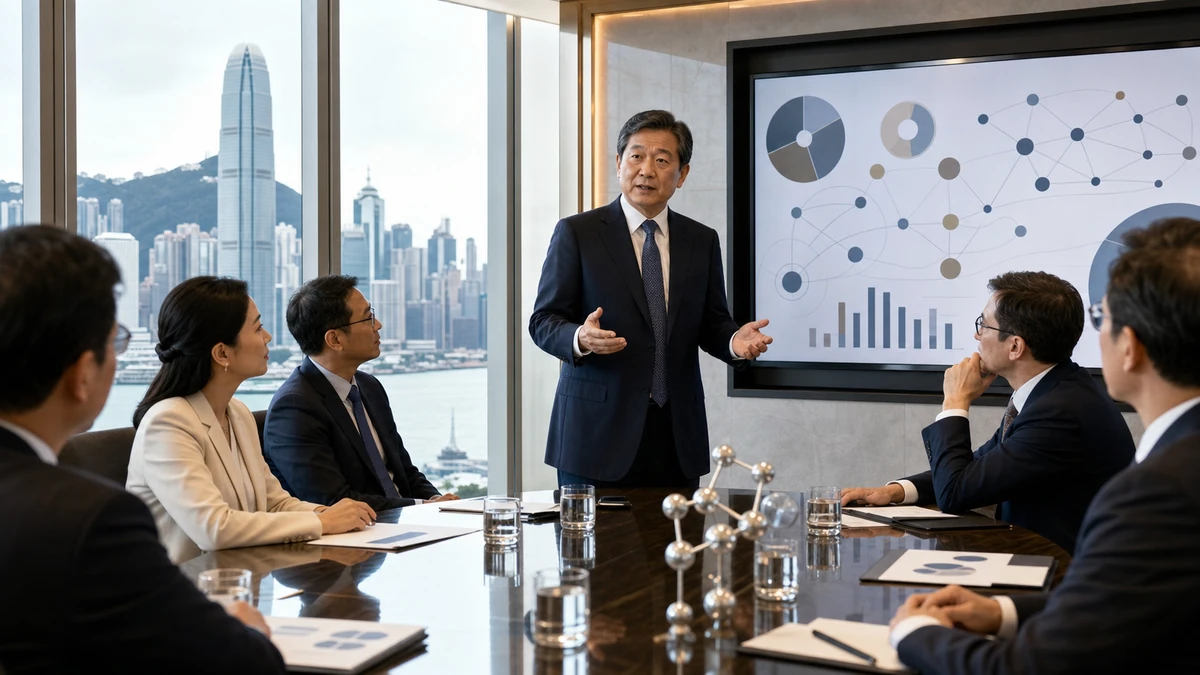
Image to help understand the article
A Korean industrial giant takes an unusual step
LG Chem, one of South Korea’s best-known chemical manufacturers and a major supplier in everything from petrochemicals to advanced battery materials, is taking a step that may sound technical but carries real significance in global capital markets: It is sending an independent director to meet overseas investors in Hong Kong and Singapore for a governance-focused roadshow.
The company said the event, set for June 13, will be the first time an independent director from LG Chem has directly participated in an overseas investor relations session centered not on quarterly earnings or business strategy, but on how the company is governed. That includes how its board operates, how executive pay is decided, and how recent legal changes in South Korea are affecting corporate oversight.
For many American readers, the distinction may seem subtle. Public companies in the United States routinely talk about governance in proxy statements, shareholder meetings and conversations with institutional investors. But in South Korea, where family-controlled conglomerates known as chaebol have long dominated the corporate landscape, the shift is more notable. It suggests that a major Korean company is broadening the way it explains itself to the market — moving beyond products, profits and expansion plans to the less glamorous but increasingly important question of who is watching management, and how.
That matters because today’s large investors, especially pension funds, asset managers and stewardship teams, are not only asking whether a company is growing. They also want to know whether the board can act independently, whether executive compensation is aligned with shareholder interests, and whether the internal rules of the company support long-term value rather than short-term performance. In other words, investors want to understand not just the scoreboard, but the rulebook.
By putting an independent director in front of overseas institutional investors, LG Chem appears to be signaling that it wants those conversations to be taken seriously. The move also reflects a broader evolution taking place in South Korea, where corporate governance reforms have gained momentum as domestic companies seek deeper trust from international investors.
Why this is different from a typical investor roadshow
Most investor relations events follow a familiar script. Senior executives — often the CEO, CFO or head of investor relations — walk investors through financial results, business segments, demand trends and future strategy. The goal is usually to explain performance and persuade investors that the company is well positioned.
LG Chem’s upcoming meetings in Hong Kong and Singapore are different in both content and messenger. According to the company, the agenda is expected to focus on the board’s operations, changes tied to South Korea’s revised commercial law, and the work of the compensation committee. The investors attending are also expected to include stewardship specialists, the people inside large institutions who engage companies on governance, accountability and shareholder value rather than simply analyzing earnings.
That distinction is important. Stewardship is a term that can sound abstract, but it has a practical meaning in modern investing. When big institutions hold shares in hundreds or even thousands of companies, they increasingly see themselves not merely as passive owners but as stewards of client capital. That means engaging with management and boards on issues such as transparency, oversight, executive incentives and long-term strategy. In the United States, the world of stewardship has grown alongside environmental, social and governance investing, proxy voting battles and a broader push for board accountability. Similar conversations are now reshaping investor expectations in Asia.
In this case, LG Chem is not simply hosting investors to tout demand for battery materials or discuss margins in petrochemicals. It is opening a channel for investors to ask how the board supervises management, how directors think about accountability, and how compensation decisions are made. By design, those are questions that can sound more credible when answered by a director whose role is to oversee management rather than by management itself.
That is why the participation of an independent director is the headline. In governance terms, independence is supposed to mean distance from day-to-day management and freedom from conflicts that could compromise oversight. When that director fields questions directly from investors, it creates a more direct test of whether the board is functioning as a meaningful check on executives or merely serving as a formal rubber stamp.
What an independent director means in the Korean context
To understand why this matters in South Korea, it helps to understand the country’s corporate history. South Korea’s economy was built in large part by family-led industrial groups that expanded rapidly in the decades after the Korean War. Companies such as Samsung, Hyundai, SK and LG became global names, and their scale helped transform the country into one of the world’s most export-driven economies. But that success also came with governance concerns familiar to many Korea watchers: concentrated control, complex affiliate structures, and boards that critics have at times viewed as too deferential to management or controlling families.
Over the years, South Korea has introduced reforms meant to strengthen minority shareholder protections and improve board independence. Those efforts accelerated as Korean companies sought inclusion in global portfolios and as foreign investors demanded governance standards closer to what they expect in the United States or Europe. The result has been a gradual but meaningful shift. Companies are under greater pressure to explain not only what they produce, but how they make decisions.
In that setting, the term “independent director” carries added weight. In the American corporate context, outside directors are expected to provide oversight, ask hard questions and represent shareholder interests. In Korea, the role has existed for years, but the practical strength of outside directors has often been judged case by case. Investors want evidence that these directors are not independent only on paper.
LG Chem’s decision to feature an independent director abroad appears aimed at addressing exactly that concern. It invites investors to hear from someone positioned outside the executive chain of command. It also gives institutional shareholders a chance to judge tone, substance and credibility for themselves. Does the director speak concretely about board deliberations? Can that person explain the standards used to assess management? Is the board’s role described as active and supervisory, or ceremonial and reactive? Those are the kinds of cues sophisticated investors listen for.
There is also a symbolic element. In many Asian corporate cultures, investor communication has historically been handled in a more top-down, management-led way. Board members, especially independent ones, were less visible in public-facing dialogue. By changing that format, LG Chem is embracing a style of engagement more common in markets where governance scrutiny is a routine part of investor relations.
Board independence, executive pay and the architecture of trust
The company’s recent governance moves help explain why this roadshow is drawing attention. Last November, LG Chem established a compensation committee, which the company says is designed to improve objectivity and transparency in decisions involving director pay and to discuss a more shareholder-friendly executive compensation system. Then, in February, it appointed an independent director, Cho Hwa-soon, as chair of the board, separating the role of board chair from the role of chief executive.
Those may sound like inside-baseball changes, but in corporate governance they are foundational. A compensation committee matters because executive pay is one of the clearest signals of what a company rewards. If bonuses are tied only to short-term financial goals, investors may worry that executives are incentivized to chase near-term gains at the expense of resilience, compliance or capital discipline. If pay decisions are made through a process viewed as opaque or too management-friendly, investors may question whether the board is truly exercising oversight.
Separating the CEO and board chair roles addresses a different concern. In a company where the chief executive also leads the board, the line between management and oversight can blur. That structure is common in many markets, including the U.S., but it often raises questions about whether the board can independently set agendas, evaluate leadership and challenge management when necessary. Appointing an independent chair sends the opposite message: that oversight should be structurally distinct from execution.
Taken together, the compensation committee and an independent board chair form two pillars of governance credibility. One deals with how incentives are set. The other deals with who controls the boardroom and how supervision is organized. LG Chem now appears to be presenting those two reforms as part of a more coherent governance framework rather than as isolated policy changes.
That is where this investor meeting becomes more than a procedural update. Institutional investors are likely to test whether those reforms are substantive. They may want to know how often the compensation committee meets, what principles guide its recommendations, how the board chair coordinates with management, and how directors respond to legal or regulatory changes. The answers could help determine whether investors see the company’s governance overhaul as meaningful architecture or merely good optics.
Why Hong Kong and Singapore matter
The choice of Hong Kong and Singapore is also telling. Both cities are major financial hubs in Asia and key meeting points for global asset managers, sovereign investors and multinational financial institutions. A company seeking to speak seriously to the international investment community often goes where those investors are concentrated, and in Asia that frequently means Hong Kong and Singapore.
Holding a governance-focused event there suggests that LG Chem is looking beyond domestic compliance and toward international credibility. It is one thing to satisfy Korean legal requirements or explain reforms to local shareholders. It is another to put those changes before global investors who compare Korean companies not only with domestic peers but with firms across the United States, Europe and the rest of Asia.
These investors typically evaluate governance in relative terms. They ask how board independence at one company stacks up against similar companies elsewhere, whether executive compensation reflects globally recognizable best practices, and whether management communication appears open or scripted. In that sense, the venue is part of the message. LG Chem is presenting its governance reforms not as a local matter but as part of the company’s international investment case.
That is especially relevant for a company operating in sectors that are strategically important and globally competitive. Chemicals, advanced materials and battery supply chains are central to industries ranging from electric vehicles to semiconductors. Investors following those sectors are often taking a long view, assessing capital allocation, risk management and governance discipline over years rather than quarters. For them, trust in the board can matter almost as much as confidence in product demand.
Hong Kong and Singapore also serve as places where stewardship engagement is increasingly professionalized. Large investment firms station teams there to cover Asian holdings and engage companies on governance issues. By meeting those investors on their own turf, LG Chem is entering a more exacting conversation, one less about marketing and more about accountability.
How legal reform in South Korea is shaping the conversation
Another point on the roadshow agenda is South Korea’s revised commercial law, which may sound obscure but is crucial to understanding the company’s pitch. Corporate law changes often matter less for their legal text than for the signals they send about market expectations. When a country updates the rules governing boards, shareholder rights or director responsibilities, companies must decide whether to treat those changes as a box-checking exercise or as an opportunity to rethink how they engage investors.
LG Chem appears to be choosing the latter. By including legal changes in a governance presentation, the company is effectively saying that compliance is not just a matter for in-house counsel or back-office administration. It is part of the board’s operating environment and part of the story investors should hear.
For American audiences, a rough comparison would be how U.S. companies discuss the implications of Sarbanes-Oxley, Dodd-Frank, SEC disclosure rules, Nasdaq governance standards or shareholder proposals. The law sets the framework, but investors are often more interested in how a company interprets that framework in practice. Does the board treat new standards as a floor or as a chance to strengthen internal discipline? Does it explain how the changes alter board decision-making, or merely acknowledge them in fine print?
That is likely the lens global investors will apply to LG Chem. They will want to see whether the company can connect legal changes to actual governance behavior: better separation between management and oversight, clearer compensation processes, stronger board accountability and more direct engagement with shareholders.
The fact that an independent director is helping deliver that explanation may strengthen the company’s case. Investors often discount governance promises when they come solely from executives whose incentives are under discussion. A board representative can add a different level of assurance — assuming the answers are detailed enough to be persuasive.
A wider shift in how Korean companies court global capital
What makes this episode worth watching beyond LG Chem itself is that it reflects a broader shift in Korean corporate strategy. For years, South Korean companies built global reputations on engineering excellence, manufacturing scale and export competitiveness. Those strengths remain intact. But in today’s investment climate, access to global capital increasingly depends on more than product quality or market share.
International investors are rewarding companies that can show durable governance systems, transparent decision-making and credible oversight of management. That does not mean governance is replacing financial performance. It means governance is becoming part of how investors judge whether performance is sustainable.
In that sense, Korea’s large companies are engaged in a kind of trust competition. They are competing not only on technology, cost and execution, but also on whether global investors believe their boards can handle conflicts, discipline management and protect shareholder interests. That competition is particularly important for companies operating in capital-intensive sectors, where long-term investments, geopolitical risk and strategic supply chains make board quality more than a theoretical concern.
LG Chem’s move can therefore be read as a sign of maturation in Korean investor relations. The company is not abandoning the traditional earnings roadshow. It is adding a more specialized form of dialogue, one that assumes investors want a separate conversation about governance and that boards themselves should participate in it.
If this approach continues, it could influence peers. Other major Korean companies may decide they also need governance roadshows, more visible independent directors, or a clearer public explanation of board structures and compensation philosophy. Over time, that could help shift investor relations across Korea from a model focused primarily on financial disclosure to one that integrates governance as a central component of corporate value.
The real test comes after the presentation
Of course, the significance of the event will depend on what happens after the meetings in Hong Kong and Singapore. Governance roadshows can create goodwill, but investors will ultimately judge the company on consistency. If the board continues to engage directly, if reforms are followed by clear disclosures and if compensation and oversight decisions appear aligned with the company’s stated principles, the effort could strengthen LG Chem’s standing with global institutions.
If, however, the event proves to be a one-off showcase with little follow-through, the impact may be limited. Investors have become adept at distinguishing between governance as branding and governance as practice. A newly formed committee matters only if it has real authority. An independent board chair matters only if the role is visibly empowered. Direct engagement matters only if it leads to an ongoing conversation rather than a ceremonial appearance.
Still, the company’s latest steps suggest an awareness that the standards are changing. Investors no longer want to hear only about demand forecasts, capacity expansion and strategic partnerships. They also want to know who is asking hard questions in the boardroom, who sets executive incentives and how seriously a company takes shareholder concerns.
For American readers accustomed to public battles over activist investors, proxy fights and executive compensation votes, none of this may sound revolutionary. But in the context of South Korea’s corporate evolution, it is noteworthy. A major industrial company is inviting overseas investors to assess not just what management says, but how the board works.
That may seem like a small procedural moment. In reality, it captures a bigger story about where Korean business is headed. As the country’s companies deepen their global reach, they are discovering that global trust is built not only in factories, labs and export data, but also in boardrooms. LG Chem’s decision to send an independent director abroad is, at its core, an acknowledgment that in modern markets, transparency itself has become a competitive asset.
Comments
Post a Comment