Samsung’s Massive Shareholder Payout Plan Signals a New Phase for Corporate Korea — and Matters Far Beyond Seoul
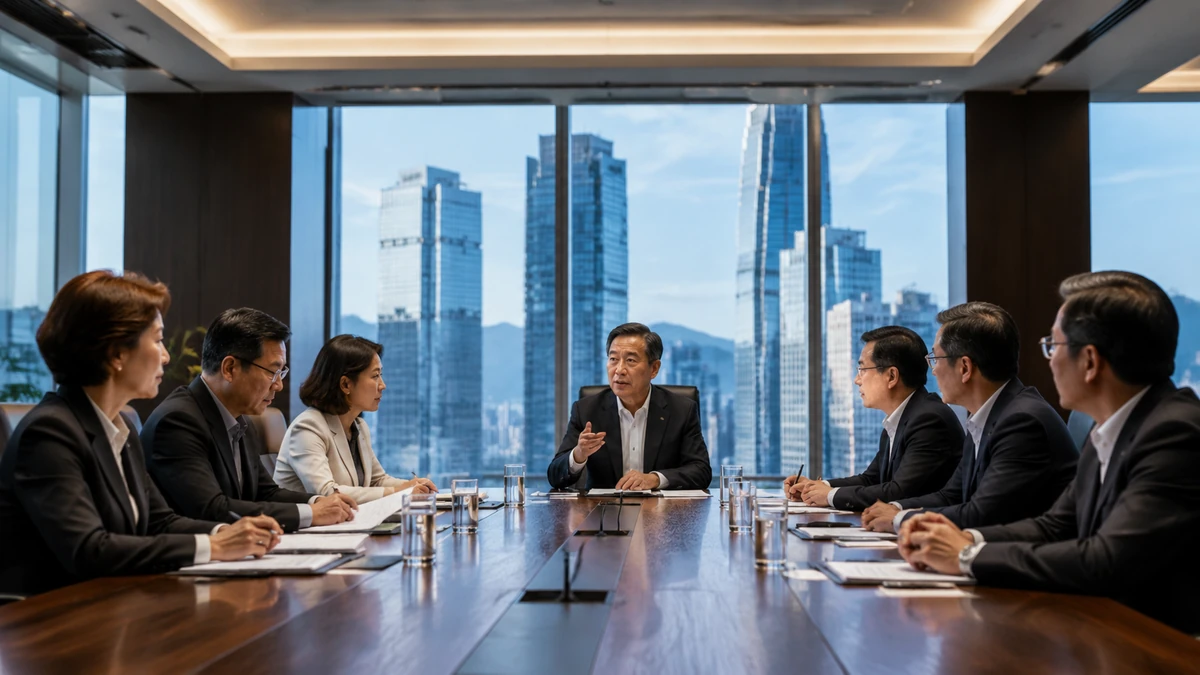
Image to help understand the article
Samsung’s move is about more than a big number
Samsung Electronics, South Korea’s best-known technology company and one of the most important manufacturers in the global consumer electronics and semiconductor supply chain, has approved a shareholder return plan for 2026 worth about 90 trillion won to as much as 110 trillion won. At the high end, that would mark the first time a Korean company has crossed the 100 trillion won threshold in shareholder returns, according to the summary of the board decision reported by Yonhap News.
For American readers, the headline figure may sound abstract until it is placed in context. Samsung is not simply another publicly traded company announcing a dividend increase. It is a national corporate champion in South Korea, with business lines spanning memory chips, smartphones, televisions, home appliances and other core technologies that touch consumers and industries around the world. In the United States, Samsung is familiar as a phone and TV brand. In global markets, though, it is also a foundational supplier whose decisions are watched by investors, competitors, suppliers and governments alike.
The board’s decision lays out a two-step process rather than a single one-time payout. Samsung said it will begin with a regular dividend of 30 trillion won in the third quarter of this year. The remaining amount will be determined later, when the board meets in January after the company’s 2026 management results are finalized. That later phase could include additional cash dividends as well as share buybacks and share cancellations, a structure that matters because those tools affect shareholders in different ways.
So while the maximum number has drawn the most attention, the deeper story is about corporate priorities. Samsung is signaling that capital allocation — the question of what a company does with accumulated profits and cash — is becoming as important to its public identity as the devices it sells or the chips it produces. That is a notable shift in South Korea, where large family-influenced conglomerates, often referred to as chaebol, have historically been criticized by some investors for opaque governance, conservative payout practices and a tendency to prioritize long-term control over shareholder returns.
What makes this development especially significant is not just the size of the proposed return. It is that a company synonymous with Korean industrial power is publicly elevating shareholder value to a level that invites comparison with the expectations long common in U.S. markets. In that sense, Samsung’s announcement is not merely a domestic financial event. It is a sign that the rules of prestige in Asian corporate life may be changing.
How the plan works — and why the structure matters
Samsung’s approved framework is easy to misread if attention stays fixed on the upper-end figure alone. The 90 trillion won to 110 trillion won range does not represent a single, fully defined dividend that will immediately be paid out in cash. Instead, it is a broader shareholder return program whose final mix will be decided in stages.
The company has clearly identified one starting point: a regular dividend worth 30 trillion won in the third quarter. After that, the board plans to decide in January how much of the remaining shareholder return will be delivered through additional cash dividends and how much could come through repurchasing and canceling its own shares. For investors, that distinction is not technical trivia. Cash dividends deliver direct payments. Share buybacks reduce the number of shares outstanding, which can boost earnings per share and potentially support the stock price. Share cancellations go a step further by permanently retiring those shares.
In American markets, buybacks have long been a familiar, and sometimes controversial, tool of corporate finance. Supporters argue they are an efficient way to return excess capital when companies believe their shares are undervalued or when they have limited need for immediate reinvestment. Critics argue buybacks can artificially prop up stock performance, reward executives whose compensation is linked to equity metrics, and divert money from workers, research or long-term investment. That debate has played out for years in the United States, from Silicon Valley to Wall Street to Washington. Samsung’s plan now places a Korean corporate giant squarely inside a similar conversation.
The staggered design also gives Samsung flexibility. By waiting until the company’s 2026 results are finalized, the board can align the final form and size of the payout with actual business performance rather than a purely symbolic target. That matters because Samsung operates in industries known for sharp cycles, especially semiconductors. Memory chips are notoriously volatile, with prices and profits swinging based on supply, demand and global tech spending. A board that commits to a large range but delays the final mix is effectively saying: We are serious about returning capital, but we still want room to adjust the mechanism based on conditions.
That is why the current announcement should be read less as a completed transaction and more as a capital allocation roadmap. The high-end figure is important because it establishes ambition and sets a new benchmark in South Korea. But the real test will come in execution: whether the third-quarter dividend is carried out as expected, where the final number lands within the range, and how the company balances cash dividends with buybacks and cancellations. Those decisions will reveal whether Samsung is adopting a more shareholder-friendly posture in a lasting way or making a dramatic but carefully bounded gesture.
A separate 15 trillion won stock buyback shows Samsung is balancing more than one audience
Samsung’s board approved another major measure on the same day: a roughly 15 trillion won share buyback intended for employee compensation. That figure should not be lumped together with the 90 trillion won to 110 trillion won shareholder return program, because the company has identified a different purpose and a different audience. One plan is meant for shareholders. The other is tied to rewarding employees.
Still, the timing is revealing. In one board meeting, Samsung effectively addressed two of the biggest questions facing any modern technology company: How do you reward investors, and how do you retain and motivate the talent that makes future growth possible? That is a particularly pressing issue in high-tech industries, where competition depends not only on factories and patents but also on engineers, designers, managers and researchers.
For American readers, this dual-track approach may sound familiar. Many leading U.S. technology companies have spent years trying to manage the tension between returning cash to shareholders and offering attractive stock-based compensation to employees. Apple, Microsoft, Alphabet and others have all operated in a world where investors expect disciplined capital returns while workers expect equity participation in the company’s upside. Samsung’s latest board decisions suggest that South Korea’s flagship technology company is navigating a similar balancing act, though in its own corporate and cultural setting.
That context matters. South Korea’s largest conglomerates have traditionally been seen not just as companies but as institutions with broad social and economic obligations. They employ large workforces, influence national exports and carry symbolic weight in the country’s development story. A board decision at Samsung therefore tends to resonate beyond finance pages. It can shape perceptions about fairness, corporate stewardship and who benefits from industrial success.
The employee compensation buyback also underscores a point that can get lost in discussions of dividend policy: capital allocation is never just about accounting. It is about corporate trust. Shareholders want evidence that profits will not sit idle or be used inefficiently. Employees want evidence that their work will be rewarded in meaningful ways. Governments and the broader public want evidence that corporate power is being exercised responsibly. Samsung’s move does not resolve all of those competing expectations, but it shows the company is trying to answer them in parallel.
What remains unknown, and what careful reporting should not overstate, is the precise distribution method for the employee-related shares. The summary provided does not spell out exactly how those shares will be allocated among employees or under what compensation structure. That lack of detail is important. The size of the action is clear; the exact design is not. As a result, the larger analytical takeaway is about direction: Samsung is using its balance sheet not only to reward owners, but also to reinforce internal incentives.
What this says about South Korea’s corporate culture
To understand why this announcement is drawing outsized attention, Americans need some cultural and economic context. Samsung Electronics sits at the center of South Korea’s modern economic story. The country’s rapid postwar development was driven in large part by giant conglomerates — the chaebol — that grew with close ties to national industrial policy and became global exporters. Samsung, Hyundai, LG and SK are among the most recognizable names in that system.
That model helped turn South Korea into one of the world’s most advanced economies. But it also generated long-running debates over governance, ownership concentration, minority shareholder rights and succession politics. Foreign investors have often argued that Korean companies trade at a discount compared with global peers because of concerns about governance and capital efficiency. In market shorthand, this is sometimes called the “Korea discount” — the idea that even successful Korean firms may be valued lower than comparable companies elsewhere because investors worry profits will not be deployed in shareholder-friendly ways.
Seen through that lens, Samsung’s plan carries symbolic weight far beyond its immediate cash value. It suggests that one of the country’s most important corporations is willing to make a much stronger public case that capital should be returned, not merely accumulated. That does not erase longstanding concerns about Korean corporate governance. But it does signal a shift in what major companies believe they must demonstrate to the market.
It also reflects a broader evolution in the role of Asian technology champions. For decades, many of the region’s leading firms were primarily judged on manufacturing scale, export growth and product competitiveness. Increasingly, that is no longer enough. Investors now want these companies to explain how they will balance reinvestment, strategic flexibility, shareholder distributions and employee incentives. In other words, excellence in production must now be matched by credibility in capital management.
Samsung is an especially important test case because it straddles multiple industries. Its semiconductor business is deeply cyclical and strategically sensitive. Its smartphone and consumer electronics divisions operate in brutally competitive global markets. Its decisions therefore reveal how a giant diversified technology company thinks about maturity, risk and growth. A record-breaking shareholder return program can be read as evidence of financial strength. But it can also be read as evidence that the company sees disciplined distribution of capital as part of its competitive positioning.
For South Korea, that may be the beginning of a bigger trend. If Samsung normalizes larger, more explicit return programs, pressure may grow on other Korean blue-chip companies to articulate their own capital strategies more clearly. What was once a niche investor issue could become a mainstream corporate benchmark. That would represent a meaningful cultural shift in a business environment where deference to corporate empire-building has often outweighed the more shareholder-centric norms familiar in the United States.
Why this matters in the United States
The American angle here is not hard to find. Samsung is deeply embedded in the U.S. economy as both a consumer brand and an industrial player. Americans buy Samsung phones, TVs and appliances. U.S. tech companies rely on semiconductor supply chains in which Samsung is a critical participant. And Washington increasingly sees advanced chips not just as business assets but as strategic infrastructure tied to national security, trade competitiveness and industrial policy.
That means a major Samsung capital allocation decision will be read in the United States through several lenses at once. Investors may compare it with payout strategies at U.S. technology giants. Policymakers may watch whether large returns to shareholders affect perceptions about how global semiconductor companies balance reinvestment and financial distribution. Consumers may barely notice the financial details but will continue to feel the effects of Samsung’s market position every time they shop for electronics.
There is also a broader U.S.-Korea relationship at stake. Over the past several years, economic ties between Washington and Seoul have become more intertwined in sectors such as semiconductors, batteries and advanced manufacturing. South Korea is not simply an ally in diplomatic or military terms; it is increasingly central to the U.S. conversation about supply chain resilience and technological competition, especially as the United States tries to reduce vulnerabilities exposed by pandemic-era disruptions and intensifying tensions with China.
Against that backdrop, Samsung’s shareholder return plan invites a familiar American question: If a major chipmaker can contemplate returning such large sums to shareholders, how will investors and policymakers assess its appetite for future manufacturing investment? The story summary does not suggest Samsung is pulling back from research, development or production, and it would be irresponsible to infer that from this announcement alone. But in the United States, where the politics of industrial subsidies and corporate payouts are often intertwined, this is exactly the kind of debate that tends to follow.
There is a useful U.S. comparison in the way American companies are often judged on whether they are acting like growth businesses or mature cash machines. A company that pours every spare dollar into expansion sends one message. A company that returns enormous sums to investors sends another, even if it continues to invest heavily. Samsung’s scale allows it to inhabit both identities at once: global builder and cash generator. For American markets, that dual identity is important, because it makes Samsung a more direct peer to the largest U.S. technology firms and not merely a foreign competitor.
American shareholders and asset managers will also watch what happens next because many global funds hold Korean equities and benchmark them against U.S. and international alternatives. If Samsung’s execution proves credible, it could strengthen the case that leading Korean companies are becoming more legible and attractive to global investors accustomed to U.S.-style capital return discipline. If execution disappoints, skepticism about Korean corporate commitments could harden just as quickly.
What to watch next
The most important thing now is not the headline number alone but the sequence of decisions ahead. The first checkpoint is the planned 30 trillion won regular dividend in the third quarter. That is the concrete action already identified, and it will show whether Samsung’s board follows through cleanly on the opening stage of its plan.
After that, attention will turn to the January board meeting, when the company says it will decide the size and method of the remaining shareholder return once 2026 management results are confirmed. That later decision will likely shape how markets interpret the entire program. A final number closer to the top of the range would reinforce the historic scale of the commitment. A lower number, while still large, could shift the conversation toward prudence and conditionality. The mix of cash dividends versus buybacks and cancellations will matter just as much as the total.
Investors will also be watching for the narrative Samsung builds around the decision. Does the company frame the move primarily as a response to strong results, as a longer-term shift in capital policy, or as part of a broader effort to enhance shareholder trust? Those distinctions may sound subtle, but they can influence how the market values credibility. In the United States and elsewhere, investors are not only measuring corporate generosity. They are measuring predictability.
There is another longer-term question as well: whether Samsung’s move pushes peers to act. If the country’s flagship technology company establishes a new standard for shareholder return, boards across South Korea may face rising pressure to explain why they are not doing something comparable, adjusted for scale and circumstances. That could have implications for the Korean market as a whole, especially if policymakers and investors continue pressing for reforms that narrow the Korea discount.
For U.S. readers, the bigger lesson is that Korean business news increasingly cannot be treated as distant or niche. Samsung’s decisions ripple through American households, global capital markets and the strategic industries now at the center of U.S. economic policy. This announcement is not just about rewarding shareholders. It is about how one of the world’s most influential technology manufacturers defines maturity, accountability and power in a new era.
In that sense, the real significance of Samsung’s plan lies in what it suggests about the future of corporate Korea. The company is showing that success in the global technology economy is no longer judged solely by how many devices you sell or how advanced your chips are. It is also judged by how clearly you explain who shares in the value you create — investors, employees and, indirectly, the economies that depend on you. That is a debate Americans know well. It is now becoming central to South Korea’s most consequential boardroom decisions, too.
Comments
Post a Comment