Samsung’s Record Spending Spree Is a Bet That the AI Boom Will Last — and That America Will Help Decide the Winner
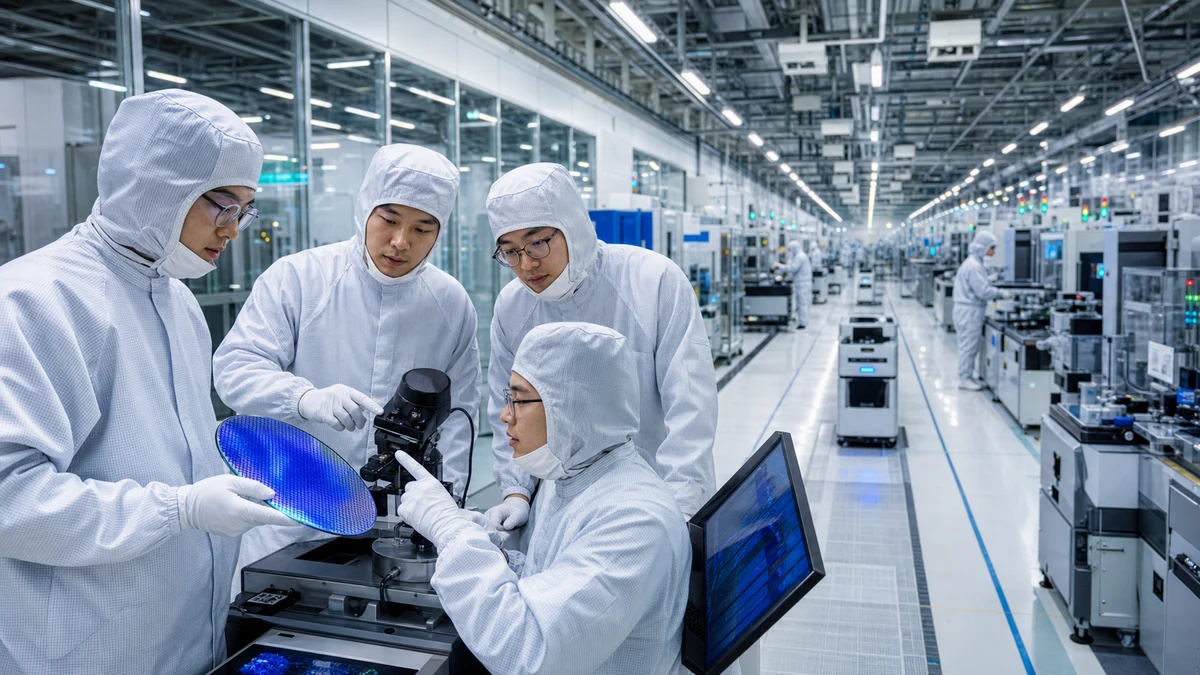
Image to help understand the article
Samsung is spending like the AI race will define the next decade
Samsung Electronics has posted a pair of numbers that say more about the future of the tech industry than a single quarter’s earnings ever could. In the first half of the year, the South Korean giant spent a record 27.36 trillion won on research and development and another 28 trillion won on facilities investment, both the largest first-half totals in the company’s history. Put simply: Samsung is not just protecting its current business. It is trying to widen the gap between invention and mass production at a moment when artificial intelligence is rewriting the economics of chips, servers and consumer electronics.
That matters far beyond South Korea. Samsung is not simply another electronics brand to American consumers, even if many know it mainly through smartphones, televisions and appliances. It is one of the world’s central industrial companies, a manufacturer whose decisions ripple through the semiconductor supply chain, display technology, consumer devices and the factories that make modern computing possible. When Samsung sharply increases both the money it spends to develop new technology and the money it spends to build or upgrade the equipment needed to produce that technology at scale, it signals confidence that demand for advanced chips and components is not a passing spike.
The scale of the increase is especially striking. Samsung’s first-half R&D spending rose 51.5% from a year earlier, according to the figures cited in the Korean report. Facilities investment also climbed, rising by roughly 5 trillion won from the same period last year. Those two spending categories are often discussed separately, but together they tell the more important story. In tech manufacturing, laboratories do not win markets by themselves, and factories without technological edge can quickly become expensive monuments to yesterday’s demand. Samsung appears to be investing in both ends of the system at the same time: the science that produces better chips and displays, and the industrial base that turns those advances into products companies can actually ship.
For American readers, the closest analogy may be the difference between designing a breakthrough graphics processor and having the manufacturing muscle to supply data centers, cloud providers and device makers fast enough to matter. In an era when AI has turned semiconductors into strategic assets, that combination of technical ambition and production capacity is increasingly what separates leaders from followers.
Why the combination of R&D and factory spending matters so much
The Korean report emphasizes a point that is easy to miss in headline numbers: Samsung did not merely increase spending in one area. It broke records in both R&D and capital expenditure in the same period. That is significant because advanced manufacturing only works when those two pipelines move together.
R&D is the search for new chip architectures, improved memory performance, better manufacturing processes and next-generation display technologies. It is where companies absorb risk, often for years, without any guarantee of a commercial payoff. Facilities investment, by contrast, is what translates engineering progress into stable, repeatable, high-volume production. It includes expensive fabrication lines, process conversions, clean-room infrastructure and the industrial systems required to operate at the bleeding edge.
If a company boosts R&D but does not invest enough in production, it may prove concepts without being able to deliver them in commercial volumes. If it pours money into plants without enough technological differentiation, it may end up producing goods that competitors can match or beat. The strategic logic behind Samsung’s spending is that the winners in semiconductors and displays will increasingly be those that can integrate discovery and scale, not those that excel at only one.
Samsung said its facility spending in the first half was concentrated on advanced semiconductor processes, the expansion and conversion of cutting-edge lines at Samsung Display, and essential infrastructure for longer-term growth. That language suggests something more consequential than adding floor space. It points to the hard, expensive work of upgrading a manufacturing base so that it can support future generations of products. In other words, Samsung is not merely chasing current orders. It is trying to prepare its industrial system for what comes after the current wave.
That is a familiar pattern in technology cycles. The most valuable moment in a boom is often not the first surge in demand but the period when companies decide whether to treat it as temporary or structural. Samsung’s spending suggests it views AI-driven demand as durable enough to justify not just tactical adjustments but a deeper remodeling of its technology and manufacturing platform.
The AI chip boom is turning today’s profits into tomorrow’s capacity
The immediate backdrop to Samsung’s spending surge is the AI frenzy that has transformed the semiconductor business. Training and running advanced AI systems requires enormous volumes of specialized hardware, especially memory and other high-performance components used in data centers. That has created a new hierarchy in the chip world, one in which companies able to supply the infrastructure behind AI stand to benefit disproportionately.
According to the Korean report, Samsung’s semiconductor division accounted for 68.5% of the company’s total revenue in the first half and 97.4% of operating profit. That is a remarkable concentration of earnings power, and it helps explain why Samsung is directing so much attention toward advanced semiconductor processes. The report also says Samsung supplies high-bandwidth memory, including HBM3E and HBM4, to major technology companies including Nvidia. For readers in the United States, Nvidia is the obvious reference point: the company has become one of the defining corporate winners of the AI era, and its rise has effectively turned memory and foundry capacity into strategic bottlenecks.
High-bandwidth memory, often shortened to HBM, is not a household phrase outside the chip industry, but it has become one of the most important components in AI hardware. Unlike standard memory used in ordinary computing tasks, HBM is designed to move huge amounts of data quickly and efficiently, making it essential for AI accelerators and advanced processors. The companies that can reliably make it at scale are therefore positioned at a chokepoint in the modern computing stack.
Seen through that lens, Samsung’s record spending is less about raw expansion than about conversion: turning a favorable market moment into a more durable competitive position. Companies often face a temptation during a boom to harvest profits, reward investors and assume the market will remain strong. Samsung appears to be choosing a different path, using today’s semiconductor gains to finance the next round of technology and factory investment.
That choice carries risk. Large R&D budgets do not automatically produce winners, and semiconductor plants are among the most expensive industrial assets in the world. A demand slowdown, technological misstep or pricing shift can quickly make even rational investments look ill-timed. But the alternative can be more dangerous. In advanced manufacturing, underinvesting during an inflection point can leave a company permanently behind.
For that reason, Samsung’s spending may be read as a vote of confidence not just in its own product roadmap but in the continuing build-out of global AI infrastructure. The company is effectively signaling that customers will keep needing more advanced chips, that performance requirements will keep rising and that reliable supply will remain a competitive advantage.
What this says about South Korea’s industrial model
Samsung’s announcement also says something larger about how South Korea competes. The country has long pursued a model of industrial development that depends not only on breakthrough engineering but on the ability to convert that engineering into exportable products at world scale. The Korean article makes that point directly: the country’s manufacturing strength lies in connecting multiple high-value industries, including semiconductors and displays, into a single production ecosystem.
That distinction matters. Not every country that produces strong research can sustain advanced manufacturing. Not every company that assembles devices controls the core components. South Korea’s advantage has often come from building dense industrial clusters in which design, materials, process engineering, fabrication and logistics reinforce one another. Samsung is one of the clearest expressions of that model. Its businesses span memory chips, logic chips, displays and finished electronics, allowing it to build expertise across several layers of the technology stack.
The inclusion of Samsung Display in the first-half investment focus is a reminder that the company’s competitive strength is broader than semiconductors alone. Display technology may attract less public attention than AI chips, but it remains a critical part of the consumer electronics and device ecosystem. Strength in displays, memory and advanced manufacturing processes gives Samsung more strategic options in product development and supply response. In an industry where customer needs can shift quickly and component shortages can rearrange market share, that flexibility is valuable.
For years, South Korea’s biggest manufacturers have operated under intense pressure to keep spending even when the global economy looks uncertain. That pressure comes from the nature of the sectors they dominate. Semiconductors and displays are not businesses where a company can pause for a year and expect to resume leadership later. They are businesses of relentless iteration, high fixed costs and brutal global competition. Samsung’s spending surge fits that pattern, but the record size of the outlay suggests that the stakes have risen. AI is not just another product cycle. It is reshaping the strategic value of industrial capacity itself.
What this means for the United States
For the United States, Samsung’s spending wave matters in at least three ways: as a supply-chain story, a market story and a strategic partnership story.
Start with the supply chain. American technology companies are among the biggest beneficiaries of the AI build-out, but many of the most critical components are made overseas, especially in East Asia. When Samsung expands spending on advanced semiconductor processes and related infrastructure, it strengthens a part of the production network that U.S. companies rely on, directly or indirectly, to build AI servers, cloud platforms, consumer devices and data-center systems. That does not make the United States less interested in domestic chip manufacturing; if anything, it underscores why Washington has made semiconductors a national priority. But it does show that the American AI boom is deeply intertwined with the health and capacity of Korean manufacturing.
Then there is the customer angle. The Korean report notes that Samsung’s exports to the United States more than doubled as of the end of June compared with the same period a year earlier. It does not break out exactly how much came from finished devices versus semiconductors, but it says the semiconductor business likely played a major role in the expansion of production, sales and operations. For American readers, that means one of the clearest growth channels for Samsung right now runs through the United States. Whether the end user is a cloud provider, a large technology company, a data-center operator or a consumer buying an AI-enabled device, America remains one of the most important markets in the system.
The strategic relationship is just as important. In recent years, the U.S.-South Korea alliance has expanded well beyond military cooperation and traditional diplomacy into technology, industrial policy and supply-chain resilience. Semiconductors sit at the center of that shift. The United States wants secure access to advanced chips and manufacturing partners it can trust. South Korea wants to preserve and deepen its role in the global technology economy while maintaining access to major export markets. Samsung’s decision to keep investing aggressively speaks to the way these interests are increasingly aligned, even if they are not always identical.
There is also a lesson here for American industry. In the United States, the public conversation about tech competition often draws a line between “innovation” and “manufacturing,” as if they were separate national missions. Samsung’s spending surge is a reminder that in cutting-edge hardware, they are part of the same contest. The company is betting that the next era of advantage will go not only to whoever designs the best chips, but to whoever can reliably manufacture and supply them when customers need them most. That is a message U.S. policymakers and technology executives are already absorbing, but Samsung’s numbers give it fresh urgency.
From smartphones to strategic infrastructure: why Americans should pay attention
For many Americans, Samsung still occupies a familiar consumer role: the company behind Galaxy phones, flat-screen TVs and kitchen appliances sold at Best Buy, Costco or on Amazon. But the Korean report points to a more consequential identity. Samsung is increasingly part of the hidden infrastructure behind the AI economy, and that makes its investment decisions relevant to far more than gadget enthusiasts.
In practical terms, record spending on advanced semiconductor processes and display lines can affect the pace at which new AI-capable products reach market, the availability of critical memory used in high-performance systems and the resilience of supply for companies that depend on sophisticated Korean components. It can also shape pricing and competition throughout the hardware ecosystem. If Samsung succeeds in translating these investments into more advanced, more reliable or more abundant supply, that could influence everyone from giant American chip designers to cloud providers and device manufacturers.
There is also a broader consumer implication. The line between enterprise infrastructure and household technology is getting thinner. AI features that begin in data centers often migrate into phones, PCs, televisions and home devices. Improvements in chips and displays can eventually show up in the products Americans use every day, even if the industrial decisions behind them seem distant. A record investment in Korean fabs may sound abstract; months or years later, it can shape the capabilities and availability of devices on American shelves.
This is one reason the story fits a broader trend rather than a one-day business update. Around the world, major technology companies are repositioning themselves for an era in which computing demand is being reorganized by AI. Some are investing in model development, some in cloud capacity, some in power and data centers. Samsung is making its move in the industrial layers beneath those headlines: process technology, memory, advanced production and display infrastructure. Those layers may be less visible than splashy AI product launches, but they are where durable advantage is often built.
What to watch next
The significance of Samsung’s spending will ultimately depend on execution. Record outlays are not, by themselves, a guarantee of market leadership. The questions now are whether the company can convert its elevated R&D budget into products that outperform rivals, whether its facility investments can deliver stable high-volume production and whether AI-related demand remains strong enough to justify the pace of expansion.
Investors and industry observers will be watching several things. First is the trajectory of advanced memory, especially HBM, where supply constraints and customer qualification standards can determine who captures the most value from the AI boom. Second is how effectively Samsung integrates its semiconductor and display investments into broader product strategy. Third is whether export growth to the United States and other key markets continues, reinforcing the idea that current demand is part of a durable structural shift rather than a temporary spike.
There is a larger geopolitical watchpoint as well. As the United States and its allies place greater emphasis on trusted technology supply chains, companies like Samsung could find themselves even more central to how advanced computing infrastructure is built and distributed. That creates opportunity, but it also raises the stakes. Industrial policy, trade rules, customer concentration and technology rivalry all become more important when chips are treated as strategic infrastructure rather than ordinary components.
Still, the core message of Samsung’s first-half numbers is clear. The company is not behaving as if this is a moment to conserve cash and wait for clarity. It is behaving as if clarity has already arrived: AI is pushing semiconductors and related manufacturing into a new strategic category, and the companies that want to lead must invest across the full chain from invention to production. For the United States, which is both a major market for Korean technology and a central player in the AI race, that is not a distant corporate story. It is part of the architecture of the next tech economy.
Comments
Post a Comment