Seoul’s Fight Over Yongsan Park Shows How Housing Shortages Collide With Public Space — and Why the U.S. Should Pay Attention
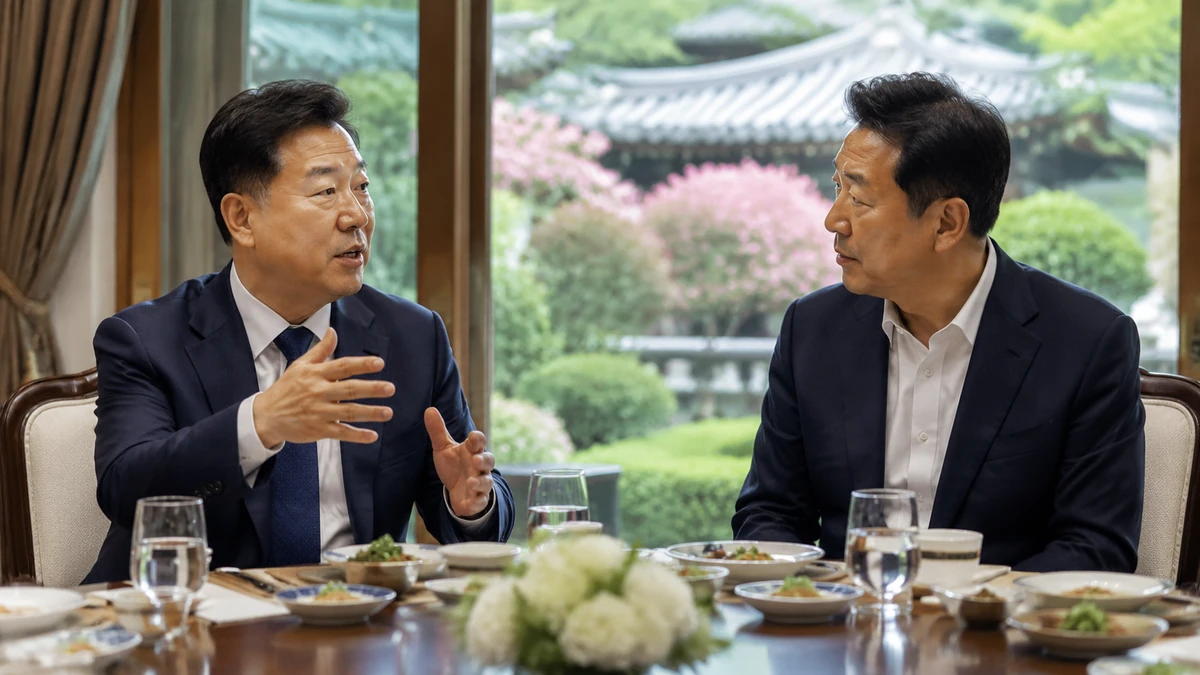
Image to help understand the article
Why a Dispute Over One Seoul Park Matters
A political meeting in Seoul this week did not produce a breakthrough, but it did spotlight a dilemma that many big cities — including several in the United States — know well: When housing is scarce and expensive, how much public land should be protected as open space, and how much should be considered for development?
That question is now at the center of a growing policy fight in South Korea’s capital. Kim Young-bae, a lawmaker who leads the Seoul chapter of the ruling Democratic Party, met with Seoul Mayor Oh Se-hoon over lunch to discuss whether part of the Yongsan Park site could help ease the city’s housing shortage. According to South Korean media reports, the two sides left the meeting without narrowing their differences. Kim later told reporters that a broad agreement on housing supply was difficult and that the gap in positions remained sharp.
On paper, this might sound like a local planning dispute. In practice, it is much bigger than that. Yongsan is not just another redevelopment parcel. It is one of the most symbolically loaded sites in modern Korean urban history, a large tract in central Seoul long associated with military use and national transformation. The debate over whether even part of that space should be redirected toward housing touches on competing ideas of what a global capital city owes its residents: affordability, green space, historical memory, or some uneasy combination of all three.
The meeting also matters because it shows how hard it has become for Seoul’s political institutions to align on housing, even when all sides acknowledge the underlying pressure. South Korea’s housing affordability crisis, especially in Seoul, has been one of the defining domestic issues of the past decade. Politicians across parties routinely promise more supply, support for younger households and relief for renters and first-time buyers. But agreeing in principle that housing is a problem is not the same as agreeing on which land should be used, which rules should be loosened and which public commitments should be revised.
That is what this week’s talks made clear. The disagreement was not merely over how many homes to build. It was over whether Yongsan Park should be treated as available land for housing at all, and whether the urgency of expanding supply should outweigh the city’s commitment to preserving and completing the park as planned. In other words, the dispute sits at the level of governing principles, not just technical design.
For readers outside Korea, that distinction is important. Once a debate reaches the question of what a place is for — housing, recreation, environmental protection, national symbolism — compromise becomes harder. This is no longer a spreadsheet exercise. It becomes a referendum on the identity of the city itself.
What Yongsan Means in Seoul
To understand why this is so sensitive, it helps to understand Yongsan’s place in the geography and politics of Seoul. Yongsan is a centrally located district that has long carried outsize strategic and symbolic importance. The broader Yongsan area is known to many Koreans as a crossroads of state power, military history and redevelopment pressure. It is also geographically valuable in a way that immediately attracts housing policy attention: It sits in the middle of one of the world’s densest and most expensive metropolitan regions.
Yongsan Park, in particular, has been tied to longstanding public hopes for a major urban green space. In a city where land values are enormous and developable land is always contested, the idea of dedicating prime land to a park carries real political meaning. It signals that not every centrally located site must be monetized or converted into apartments. It also reflects a broader urban aspiration familiar to Americans who have watched debates over places like New York’s Central Park, the Presidio in San Francisco or redevelopment around former military and industrial sites: public space is not merely decorative. It shapes livability, climate resilience, neighborhood identity and the social contract of city life.
That is why Seoul officials who oppose using the park site for housing are not necessarily dismissing the housing crisis. Their apparent argument, based on the reporting around the meeting, is that the nature of the site matters. Once the purpose of a signature public space is changed, even partially, the precedent can be politically and culturally difficult to reverse. A city that gives up park land under pressure to solve one crisis may find itself weaker when confronting the next one.
The other side, however, has a case that resonates strongly in present-day urban politics. If a capital city cannot consider major publicly controlled land for housing during an affordability crunch, critics ask, when will it ever do so? Seoul’s housing market has been under stress for years, and younger residents in particular have faced steep barriers to stable housing. For them, protecting every inch of planned open space can sound less like visionary planning than like a luxury argument made by people already insulated from the market.
This is the balance Kim and Oh failed to strike. Both sides can plausibly claim to be defending the public interest. One side emphasizes supply expansion and practical relief. The other emphasizes the public character of the land and the integrity of long-term planning. Both invoke fairness, but they define it differently.
That tension is not unique to Seoul. It is increasingly the signature conflict of high-cost global cities, where almost any meaningful housing expansion proposal eventually collides with environmental goals, neighborhood preservation, infrastructure constraints or the politics of elite land use. In that sense, the Yongsan dispute is distinctly Korean in its setting, but universal in its underlying logic.
Housing Supply vs. Civic Space: A Global Urban Dilemma
The Yongsan debate is best understood not as a single failed lunch meeting, but as part of a larger policy argument over what kind of solutions governments reach for when housing prices stay stubbornly high. Seoul, like many major metropolitan areas, faces pressure to increase supply. Yet “more supply” is one of those phrases that sounds simpler than it is. Supply must happen somewhere, and the “somewhere” is where politics begins.
In recent years, cities around the world have wrestled with whether to upzone low-density neighborhoods, convert commercial land, redevelop transport corridors, loosen greenbelt protections or use publicly held sites. Each option creates winners and losers. Each mobilizes a different coalition. Each reveals what local governments value most when trade-offs become unavoidable.
What makes Yongsan especially revealing is that it appears to force Korean policymakers to choose between two public goods rather than between a public good and a private one. Housing is a public need. So is park space. Housing for younger households has social and economic urgency. So does preserving major urban green space in a city vulnerable to density pressures and climate-related concerns. The conflict is not between greed and idealism. It is between competing definitions of the common good.
That is one reason the reported statement from Kim matters. By saying that broad agreement was hard to reach and that differences remained strong, he effectively acknowledged that the sides are not yet haggling over details like unit counts or architectural form. They are still debating the policy framework itself. Is the park site conceptually available for housing, or is that a line the city will not cross?
The answer has consequences beyond Yongsan. If Seoul concedes that a flagship public site can be partially repurposed for housing, other contested sites may soon enter the conversation. If it holds firm, the city and national government will have to prove they can find alternatives capable of delivering real supply without relying on symbolically charged land. Either way, the outcome will shape how seriously the public takes future housing promises.
The episode also illustrates a familiar problem in democratic governance: more meetings do not automatically create more agreement. South Korea’s land and housing policy often requires coordination among the central government, local government and party actors with their own constituencies and incentives. Earlier this week, Land Minister Kim Yoon-duk also met with Mayor Oh and reportedly failed to narrow the same differences over Yongsan Park. The fact that another high-level meeting led to the same impasse suggests the disagreement is structural, not accidental.
That matters because housing policy is cumulative. Delays, uncertainty and institutional friction can be as important as ideology. In overheated markets, the inability of government actors to settle even the rules of engagement can feed public frustration, market speculation and cynicism about whether supply pledges are politically real. For younger people already doubtful that the system is built for them, symbolic stalemate can be almost as damaging as explicit rejection.
What This Means for the United States
For American readers, the Seoul dispute should feel strikingly familiar. The political language is different, and the institutions are not the same, but the underlying argument could easily be heard in Los Angeles, New York, Boston, San Francisco, Seattle or Washington. In each of those places, officials talk constantly about housing affordability, but specific proposals routinely run into competing priorities: neighborhood preservation, environmental review, parkland protection, transit burdens, historical concerns and disagreements between state and local authorities.
The closest American parallel may be the recurring clash over publicly owned land. In U.S. cities, advocates for more housing often ask why governments hold underused or low-intensity sites while rents soar. Opponents counter that once public land is opened to development, especially prime land, communities may lose irreplaceable civic assets. That same debate has played out around former industrial land, transit-adjacent parcels, university property and even parking lots. Seoul’s Yongsan dispute is operating inside that same political universe, just at a site with even greater symbolic weight.
There is also a broader U.S.-Korea dimension. South Korea has become one of America’s closest allies not just strategically, but culturally and economically. American companies invest in Korean technology, batteries, entertainment and consumer brands; Korean firms have expanded their presence in the United States, especially in manufacturing and media; and American audiences increasingly follow Korean news beyond K-pop and K-dramas because Korea now occupies a more central place in global conversations about democracy, urban life, technology and soft power. When Seoul struggles with affordability, youth frustration and land-use politics, American policymakers and analysts should pay attention. These are not distant issues. They are parallel problems unfolding in another advanced democracy under intense metropolitan pressure.
There is a practical business angle as well. U.S. investors, developers, architects, infrastructure firms and urban policy researchers increasingly look to Seoul as a case study in transit-oriented density, apartment-led urban growth and digitally managed city services. A dispute over Yongsan signals that even a city widely admired for high-density housing capacity is running into the same legitimacy problem facing U.S. cities: people may support more housing in the abstract, but the politics become combustible when development threatens a site seen as part of the public inheritance.
American audiences may also recognize the generational stakes. In both South Korea and the United States, younger adults have faced a tougher path to homeownership, greater rent burdens and a growing sense that established asset holders benefit from a system tilted against newcomers. In Korea, housing has carried especially intense significance because real estate is deeply tied to class mobility, family formation and long-term security. In the United States, the same anxieties show up differently but powerfully, especially in high-cost metros where workers delay buying homes, marriage or children because housing costs consume so much income. When Korean politicians talk about youth housing, Americans should hear an echo of debates over starter homes, workforce housing and intergenerational inequality here at home.
In that sense, Yongsan is not just Korea’s story. It is a warning to the United States that housing politics become hardest precisely where the land is most valuable, the symbolism is strongest and the public expectations are highest. If Seoul cannot easily reconcile those priorities, neither can American cities — and that should make U.S. observers more realistic about what solving a housing crisis actually requires.
The One Area Where Seoul’s Leaders Found Some Common Ground
While the Yongsan park issue remained deadlocked, the meeting did reveal something equally important: not every housing-related discussion in Seoul is trapped by the same ideological divide. According to Kim’s account after the talks, there was room for discussion on using part of a future-response fund and surplus tax revenue to support youth housing.
That may sound technical, but it is politically significant. It suggests that the line of conflict in Seoul is not simply between people who want more housing and people who do not. Rather, it is between competing methods of support. Changing the use of a landmark site is one kind of policy move; directing financial resources toward youth housing is another. The first triggers identity battles over land. The second can be framed as a more flexible fiscal response, potentially allowing leaders to show progress without reopening the most emotionally charged territorial disputes.
This distinction matters because it points to how housing policy often advances in real life: not through one grand bargain, but through partial agreements on less controversial tools. Subsidies, financing vehicles, tax measures, land swaps, targeted rezoning and support for specific groups like young adults or first-time households can all move more quickly than sweeping redevelopment battles. That does not make them sufficient, but it does make them politically usable.
Importantly, the Korean reporting does not suggest that a formal funding agreement has been reached. What it shows is an opening for further talks. That is a meaningful difference. In housing politics, leaders often overstate exploratory conversations as settled plans. Here, the more cautious interpretation is the correct one: Seoul’s party and city leadership may have identified a lane where compromise is easier, but the size, structure and conditions of any youth housing funding remain unresolved.
Still, even this limited common ground says something about where Korean urban policy may be headed. If the symbolic and planning costs of touching Yongsan Park are too high for now, pressure may shift toward financial mechanisms and other supply-support tools that avoid redefining the park itself. That would not end the housing debate. It would simply move it to another arena — one centered on budgets, priorities and the long-term sustainability of public support.
That development, too, has echoes in the United States. American cities often discover that the most visible land fights attract the most attention, while quieter financing decisions determine whether housing gets built or stays stuck on paper. For observers in both countries, the lesson is the same: follow the money as closely as the land map.
What to Watch Next
The most important takeaway from this week’s developments is that Seoul’s leaders are not at a final yes or no. The result was neither full agreement nor a breakdown in dialogue. Instead, it was a split-screen outcome: continued disagreement over using Yongsan Park for housing, paired with tentative openness to discussing financial support for youth housing.
That leaves several questions ahead. First, will the central government, Seoul city government and ruling party continue pressing the Yongsan issue, or will they quietly pivot toward areas where compromise looks more plausible? Repeated meetings that merely confirm the same disagreement can eventually harden public positions rather than soften them. At some point, each side may decide that the political costs of further stalemate outweigh the gains from keeping the issue active.
Second, if Yongsan remains off-limits or partially off-limits, what substitute supply strategy will fill the gap? Politicians can argue over one site only for so long before voters ask what the backup plan is. In a housing-constrained city, rejecting one approach creates pressure to identify another, and quickly. That may mean renewed attention to other redevelopment opportunities, alternative fiscal tools or more targeted youth housing initiatives.
Third, will the debate reshape how Koreans talk about public land more broadly? Flagship disputes often become proxy battles for larger governing philosophies. If Yongsan becomes a national symbol of “housing urgency versus civic preservation,” future projects may be evaluated through that same lens. That would raise the stakes far beyond a single park.
Finally, there is the question of trust. Housing policy in many democracies suffers from a credibility problem: residents hear promises, but delivery takes years, and the benefits often feel remote. Seoul’s leaders now face the same test confronting officials in the United States and elsewhere. Can they move from headline-level disagreement to an explanation the public finds coherent? Can they tell citizens not only what they oppose, but what they will actually do instead?
For international readers, this is why the story matters. The significance of the Kim-Oh meeting lies less in the lunch itself than in what it reveals about urban governance in a mature, globally connected democracy. Seoul is trying to reconcile affordability, environmental and civic priorities, generational frustration and overlapping political authority — all at once. That is not a Korean anomaly. It is the defining municipal challenge of the 21st century.
And for Americans, there is a final point worth underscoring: The same South Korea that exports some of the world’s most admired culture and technology is also wrestling with the deeply unglamorous mechanics of how a major city should house its people. That, too, is part of the Korean story now. Not just cultural influence, but policy stress. Not just global image, but domestic trade-offs. The outcome at Yongsan will not solve Seoul’s housing crisis on its own. But it may reveal whether the city’s leaders can build a model of compromise that other crowded, ambitious democracies — including the United States — are still searching for.
Comments
Post a Comment