Seoul’s Tick Surveillance Offers a Lesson for U.S. Cities: Public Health Now Extends to the Park Path
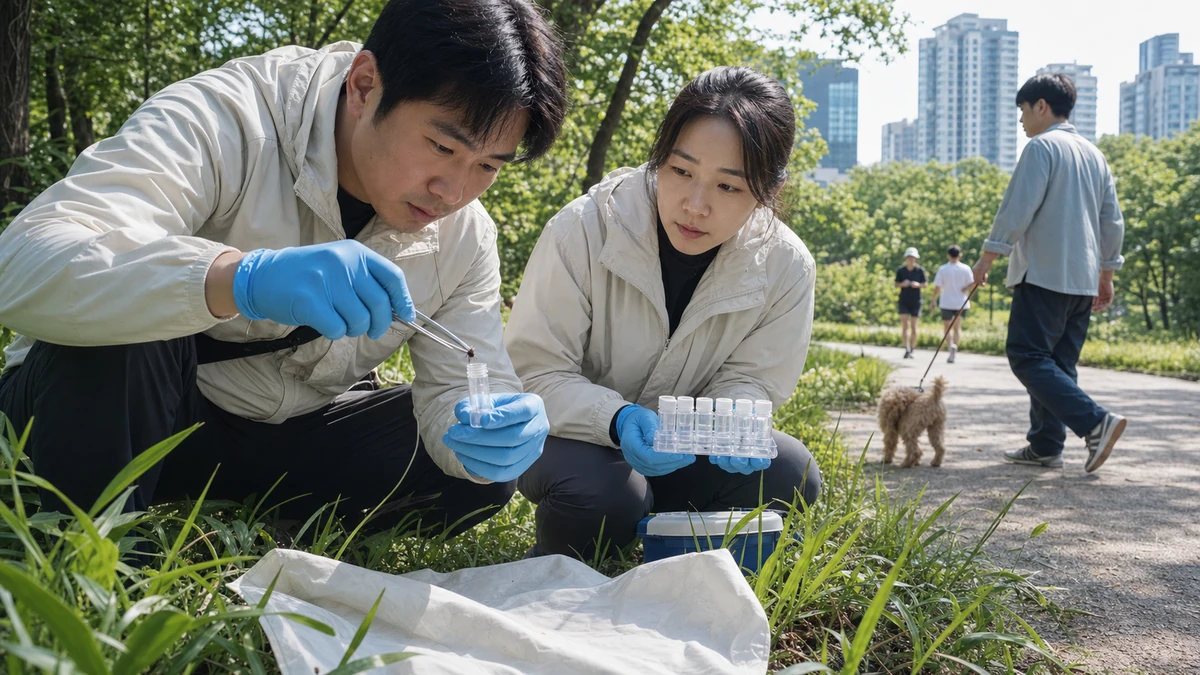
Image to help understand the article
Seoul’s latest tick findings are reassuring, but the bigger story is how cities monitor everyday risk
Seoul officials say a focused round of testing for ticks in parks and walking trails has found no cases of the virus that causes severe fever with thrombocytopenia syndrome, or SFTS, a potentially deadly tick-borne disease that has drawn growing attention in South Korea. From April through July, the Seoul Metropolitan Government’s Research Institute of Public Health and Environment conducted 108 tests, including checks connected to companion animals, and reported no positive cases for SFTS.
On its face, that is good news. It suggests that, in the areas and time period covered by the testing, health authorities did not detect a warning sign of the disease in the city’s heavily used outdoor spaces. But the more revealing development is not the string of negative results alone. It is the fact that a city as dense, modern and hyper-urban as Seoul is treating neighborhood parks, walking paths and pet routines as front-line public health terrain.
For American readers, that may sound familiar. In the United States, tick awareness has long been associated with wooded suburbs, summer camps, hiking trails in New England and concerns over Lyme disease. But Seoul’s approach underscores a broader idea that U.S. cities have also had to confront in different ways since the pandemic: public health is no longer confined to hospitals, clinics and emergency rooms. It lives in the spaces where people jog before work, walk the dog after dinner and push strollers on weekends.
That is what makes this Seoul story more than a local health bulletin. It is part of a larger shift in how governments think about disease surveillance in the routines of ordinary urban life. Officials are not simply reacting to confirmed cases. They are watching for environmental risk before an outbreak reaches the point of crisis.
The result also needs to be read carefully. Zero positives out of 108 tests does not mean zero risk across all of Seoul, all season or all future conditions. It means that in this specific testing window, authorities did not find the virus in the samples they checked. The distinction matters. Good public health reporting reduces fear without encouraging complacency, and that appears to be the balance Seoul is trying to strike.
What SFTS is, and why Koreans take it seriously
SFTS is a viral infectious disease linked to tick bites. In South Korea, it is well known enough to trigger periodic public health warnings, especially during warmer months when outdoor activity increases. The symptoms can include high fever, muscle pain, nausea, vomiting and diarrhea. For people unfamiliar with the disease, the combination can be deceptive. It does not present only as a visible bite or rash. Instead, it can resemble a serious flu-like illness or gastrointestinal problem after time outdoors.
The disease is not just a theoretical threat. Earlier this month, South Korea reported this year’s first death from SFTS on Jeju Island, a popular tourist destination often compared, in broad terms, to Hawaii for its resort appeal and natural scenery. That fatal case is one reason Seoul’s negative findings should be viewed as a snapshot rather than a declaration that concern is over. A city can post reassuring surveillance results while the disease remains real elsewhere in the country.
For U.S. audiences, the closest parallel is the way Americans talk about mosquito-borne or tick-borne illnesses by region. A county may report no local West Nile cases at a given moment, yet the virus still exists elsewhere in the state. A suburban park may have low apparent risk for Lyme disease in one season, even as neighboring areas remain under watch. Public health works through these local distinctions, and so does public understanding when it is at its best.
In South Korea, the cultural context is also important. Parks and walking paths in Seoul are not just occasional leisure destinations. They are deeply woven into daily life in a city where apartment living is common, green space is prized and outdoor exercise is a routine part of urban culture. Riverfront paths, mountain-adjacent trails and neighborhood parks are used repeatedly by office workers, retirees, families with children and pet owners. That means any health surveillance focused on those spaces is not aimed at a niche outdoor population. It is aimed at the mainstream city resident.
That detail helps explain why Seoul’s testing matters. This is not a warning directed only at backcountry hikers or rural farmers. It is a reminder that modern urban life still intersects with environmental health in ways that many global cities, including those in the United States, are learning to track more closely.
Why the negative result should calm nerves, not shut down caution
The most useful way to understand Seoul’s 108 negative tests is as a piece of risk communication. Officials are offering evidence that, based on current monitoring, they have not found an SFTS signal in the samples they examined. That can reduce vague public anxiety. In a media environment where health scares can spread faster than medical facts, publishing surveillance results is one way to replace rumor with data.
At the same time, the Seoul case shows why public health messaging often struggles with a basic contradiction: people want either a clean bill of health or a clear warning, but reality often lands somewhere in between. Negative tests are reassuring. They are not permanent guarantees. A city can responsibly say, in effect, that things look fine right now while still urging residents to remain alert to symptoms after outdoor exposure.
That middle ground matters because overreaction and underreaction both carry costs. If residents interpret the mere existence of tick surveillance as proof that urban parks have become dangerous, they may avoid beneficial outdoor activity and come away with a distorted view of everyday risk. On the other hand, if they hear “all negative” and conclude there is nothing left to think about, they may overlook symptoms after a tick bite or dismiss illness too quickly.
The summary from Seoul points toward a more practical response: keep using public spaces, but read the information accurately. That means recognizing symptoms such as fever, muscle pain, nausea, vomiting and diarrhea after outdoor activity and not focusing exclusively on whether a bite mark is visible. It also means understanding the role of ongoing monitoring. The testing effort itself may be as important as the latest result because it creates a system for catching changes over time.
That is a lesson many Americans learned, often imperfectly, through other health threats. Whether the issue was air quality during wildfire season, mosquito testing after heavy rains or wastewater monitoring during COVID-19, the most effective public health systems are the ones that track risk continuously rather than waiting for hospitals to fill up first. Seoul’s tick checks fit that same preventive logic.
What this means for the United States
For the United States, the Seoul story lands at the intersection of several ongoing conversations: climate-sensitive disease risk, urban park use, pet ownership and trust in local public health agencies. American readers may instinctively view tick-borne illness as a problem of forests, deer country or vacation cabins. But Seoul’s example suggests a broader model of surveillance that U.S. cities and counties may increasingly need to consider, especially as people rely more heavily on public green space and as warming temperatures alter the habitats of insects and ticks.
There is no direct one-to-one comparison between SFTS in Korea and the best-known tick threats in the United States, such as Lyme disease, Rocky Mountain spotted fever or ehrlichiosis. The diseases differ, and so do the vectors and epidemiological patterns. Still, the public health challenge is strikingly similar: how do officials communicate an environmental risk that is serious enough to monitor but not so universal that it justifies panic?
American local governments, park systems and health departments have faced versions of this problem for years. In the Northeast and Upper Midwest, Lyme disease awareness campaigns have become a near-annual ritual. Public agencies post signs, recommend long sleeves and tick checks, and urge residents to call a doctor if symptoms appear. In the South and parts of the Plains, other vector-borne illnesses bring similar reminders. But the level of environmental surveillance often varies widely by jurisdiction, budget and public attention.
Seoul’s strategy offers a useful point of comparison because it treats everyday walking routes as spaces worthy of systematic monitoring, not just warning signs. That matters in the United States, where urban park usage surged during the pandemic and remained elevated in many communities afterward. The rise of dog ownership, the normalization of outdoor fitness and the renewed civic emphasis on green space have all made parks more central to city life. In that sense, what Seoul is doing is not foreign at all. It reflects a challenge that many U.S. cities are already living through, even if they describe it in different terms.
There is also a market and industry angle. The United States has a vast ecosystem of outdoor gear companies, pet-care brands, insect repellent makers, lawn and landscape services, veterinary providers and digital health platforms that all respond to public awareness of environmental health risks. Korean public health campaigns can influence consumer behavior and product demand at home, while U.S. companies often watch trends in major Asian markets for signals about urban wellness, preventive care and pet-related spending. If Korean authorities continue to highlight tick surveillance in city environments, it could reinforce broader trans-Pacific interest in products and services tied to safe outdoor living.
For U.S.-Korea ties, the significance is subtler but real. South Korea is often discussed in Washington through the lenses of semiconductors, defense and culture, especially K-pop, film and streaming television. Yet one of the quieter areas of connection between the two countries is public health governance: how advanced societies collect data, communicate risk and manage the health effects of dense urban living. Americans paying attention to Korea only through entertainment exports may miss that the country is also a testing ground for highly organized city-level public administration. That includes the unglamorous but essential work of environmental disease surveillance.
Pets, shared spaces and the rise of a broader “one health” mindset
One of the more notable details in Seoul’s announcement is that the testing includes cases related to companion animals. That is significant not because the available information proves a specific pet-related danger in these samples, but because it reflects a way of thinking that has become increasingly influential worldwide: human health, animal health and environmental health are connected.
In the United States, this is often described through the “One Health” framework, a term used by public health and veterinary experts to explain why diseases cannot always be managed in separate silos. A family dog on a park trail, a child playing in the grass and an adult jogging nearby all share the same environmental conditions. Monitoring those shared spaces more closely recognizes the reality of how people actually live.
That approach is particularly relevant in both South Korea and the United States because pet ownership has become a major social and economic force. In Seoul, as in many large global cities, companion animals are increasingly treated as family members, and pet-related commerce has grown alongside that shift. In the U.S., the pet economy is even larger and more entrenched, with spending on veterinary care, food, grooming, insurance and wellness products climbing year after year. As public space becomes more pet-friendly, so too does the logic of monitoring risks that affect both people and animals using the same routes.
The cultural detail here is easy for American readers to grasp. A Seoul park trail crowded with dog walkers, runners and families on a weekend is not fundamentally different from a greenway in Atlanta, a waterfront path in Seattle or a large neighborhood park in Chicago. The language, infrastructure and disease landscape may differ, but the social pattern is recognizable. That is why Seoul’s testing program resonates beyond Korea. It captures a modern urban reality in which everyday recreation and health surveillance are increasingly intertwined.
The caution, again, is not to read more into the data than it can support. The Seoul summary makes clear that the 108 tests cover the total cases checked during the April-to-July period and do not break down in detail how many involved human-related environments versus companion-animal-related samples. That means the pet angle should be understood as part of the surveillance framework, not as proof of a particular trend within the numbers released so far. Good reporting requires keeping that boundary intact.
What to watch next in Korea and beyond
The most important question now is not whether Seoul found zero positives in one testing window. It is whether the city continues to monitor consistently, publish results clearly and adapt if conditions change. Surveillance is valuable because it is repeated. One clean report matters less than a pattern of transparent reporting over time.
In Korea, that means watching whether city authorities expand seasonal testing, provide more granular location data or coordinate more visibly with public messaging aimed at pet owners and park users. It also means tracking how local governments balance reassurance with reminders about symptoms. The public generally responds best when officials avoid both alarmism and false certainty.
For American observers, the Seoul case is a useful benchmark in a larger global trend. As cities become denser, populations age, pet ownership rises and climate conditions reshape ecological boundaries, the line between “urban life” and “nature exposure” keeps getting blurrier. The image of infectious disease as something that belongs only to rural zones or remote wilderness has become harder to sustain. Urban residents live in managed landscapes, but managed does not mean biologically simple.
There is also a media lesson here. Stories like this can easily be reduced to a quick headline: no SFTS found in Seoul park tick tests. But the richer interpretation is about systems, not snapshots. Seoul is showing what a preventive public health posture looks like in a global city that understands its residents do not encounter environmental risk only on special excursions. They encounter it on the way to exercise, during family outings and while walking the dog.
That is a message American readers can recognize without stretching the facts. Seoul’s latest results do not suggest a crisis. They suggest competence, vigilance and a growing awareness that health security now includes the ordinary spaces people trust most. In an era shaped by both pandemic memory and climate uncertainty, that may be the most exportable lesson of all.
For now, the practical takeaway is simple and measured. Seoul’s data should reassure residents that no SFTS-positive samples were identified in this round of testing. It should also remind them, and readers elsewhere, that the right response to environmental health risk is usually neither fear nor dismissal. It is informed attention. In public health, as in journalism, the point is not to dramatize every possibility. It is to keep watching closely enough that the public understands what matters before a problem grows harder to contain.
Comments
Post a Comment