Image to help understand the article
South Korea and China Hold High-Level Talks on Regional Security
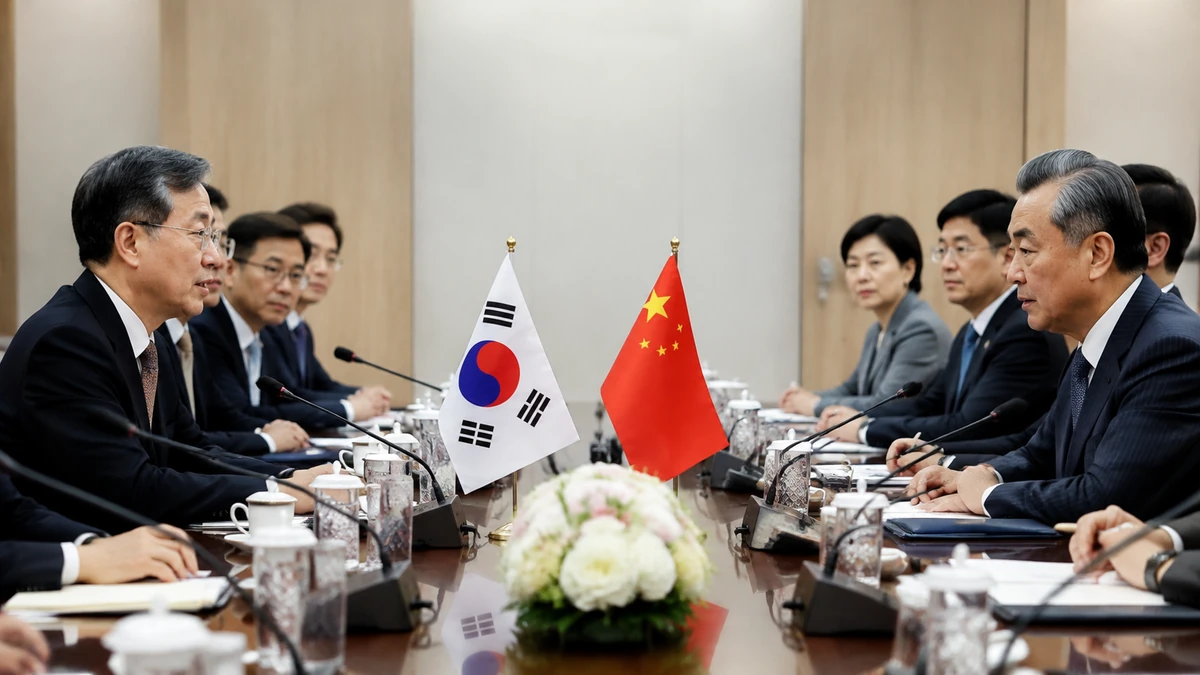
South Korea and China used a high-level diplomatic meeting in Seoul to discuss one of Asia’s most sensitive security issues: the future stability of the Korean Peninsula. South Korean Foreign Minister Cho Hyun and Chinese Foreign Minister Wang Yi met on Aug. 19 at the South Korean government complex in Jongno, Seoul, exchanging views on bilateral relations, regional affairs and issues involving North Korea.
The meeting lasted for several hours, including a formal discussion and dinner, reflecting the importance both governments place on maintaining communication. For international observers, the talks represent an effort to keep diplomatic channels open at a time when security issues surrounding North Korea continue to draw attention from Washington, Beijing and other regional powers.
Unlike a summit between national leaders, a foreign minister-level meeting typically focuses on setting diplomatic direction, clarifying positions and preparing the groundwork for future cooperation. The discussions did not produce a new agreement on North Korea policy, but they provided an opportunity for Seoul and Beijing to confirm their approaches to regional stability.
Why China’s Role Matters in Korean Peninsula Diplomacy
For many Americans, understanding China’s role in Korean Peninsula affairs requires historical context. China has maintained close political and economic ties with North Korea for decades and remains one of Pyongyang’s most important international partners. Because of that relationship, South Korea and other countries have long viewed Beijing as a key player in efforts to manage tensions involving North Korea.
During the meeting, South Korea emphasized the importance of cooperation with China in pursuing peace and stability on the peninsula. Cho highlighted Seoul’s commitment to denuclearization efforts and peaceful coexistence, referencing the South Korean government’s broader vision for reducing tensions.
Wang said China would continue to play a constructive role in maintaining peace and stability on the Korean Peninsula. However, following the talks, he also took a cautious position on the possibility of China mediating future dialogue between the United States and North Korea, saying that such discussions would ultimately be decisions made by Washington and Pyongyang themselves.
Wang also argued that the United States should change what Beijing describes as a hostile policy toward North Korea. The statement reflects a longstanding disagreement between Washington and Beijing over how to approach Pyongyang, with the U.S. generally emphasizing pressure over nuclear weapons development while China has often called for dialogue and reduced tensions.
What This Means for the United States and American Interests
The South Korea-China talks carry significance beyond Northeast Asia because the Korean Peninsula remains closely connected to U.S. security interests. The United States maintains a major security alliance with South Korea, including a long-standing military presence on the peninsula designed to deter potential conflict with North Korea.
For American policymakers, the challenge has always been balancing two realities: Washington relies on South Korea as a close ally while also recognizing that China’s influence over North Korean affairs cannot be ignored. Any meaningful diplomatic progress involving North Korea would likely require some level of coordination among Seoul, Washington and Beijing.
The meeting also highlights a broader trend in South Korean foreign policy. Seoul has sought to maintain strong ties with the United States while managing its economic and diplomatic relationship with China, South Korea’s largest trading partner. This balancing act resembles challenges faced by other U.S. allies in the Indo-Pacific, where economic connections with China exist alongside security concerns.
For American businesses and investors, regional stability remains a key factor. South Korea is a major technology and manufacturing partner for the United States, with companies in areas such as semiconductors, electric vehicles and advanced manufacturing operating across both markets. Diplomatic tensions in East Asia can affect supply chains, investment decisions and broader economic confidence.
A Relationship Moving Between Competition and Cooperation
The meeting also reflected efforts by Seoul and Beijing to manage their broader relationship. South Korea and China have experienced periods of cooperation as well as diplomatic friction, particularly over security issues and disagreements involving regional politics.
Both sides discussed the development of bilateral relations and the importance of continued communication. Wang described the relationship as improving and developing steadily, while also suggesting that the two countries should work together toward possible future high-level exchanges.
Reports indicated that Wang expressed support for efforts to consider a possible meeting between South Korean and Chinese leaders during the Asia-Pacific Economic Cooperation summit planned in Shenzhen in November. However, no presidential meeting was confirmed, and diplomatic arrangements of this scale typically require extensive negotiations before becoming official.
For global observers, the message from Seoul and Beijing was less about an immediate breakthrough and more about maintaining a channel for dialogue. In international diplomacy, regular communication can help prevent misunderstandings even when countries disagree on major issues.
The Bigger Picture: South Korea’s Diplomatic Balancing Act
South Korea’s position in Asia requires navigating relationships with several powerful neighbors. The country faces security concerns from North Korea, relies on its alliance with the United States and maintains significant economic ties with China. The latest foreign minister meeting demonstrates Seoul’s effort to engage directly with Beijing while continuing to pursue its own security objectives.
For American audiences, the situation illustrates why Korean diplomacy often involves multiple layers. Issues on the peninsula are not only about relations between North and South Korea. They are also connected to U.S.-China competition, regional trade networks and the broader security architecture of the Indo-Pacific.
The importance of diplomacy is especially visible in periods of uncertainty. While the Seoul-Beijing meeting did not resolve disputes or create a new framework for negotiations, it preserved a line of communication between two countries whose cooperation could influence the future of regional stability.
As South Korea continues to engage both Washington and Beijing, the country’s diplomatic choices will remain closely watched by American policymakers, businesses and analysts. The future of the Korean Peninsula will depend not only on decisions made in Seoul and Pyongyang, but also on how major powers manage competition and cooperation across Asia.
Comments
Post a Comment