Image to help understand the article
South Korea’s Game Industry Is Looking Beyond Its Home Stage
South Korea has long been recognized as one of the world’s most influential gaming markets, a country where online games, esports and digital entertainment became mainstream industries years before many Western markets fully embraced them. From PC-based online role-playing games to mobile titles that dominate app stores across Asia, Korean developers have built a global reputation for technical expertise, live-service operations and highly engaged gaming communities.
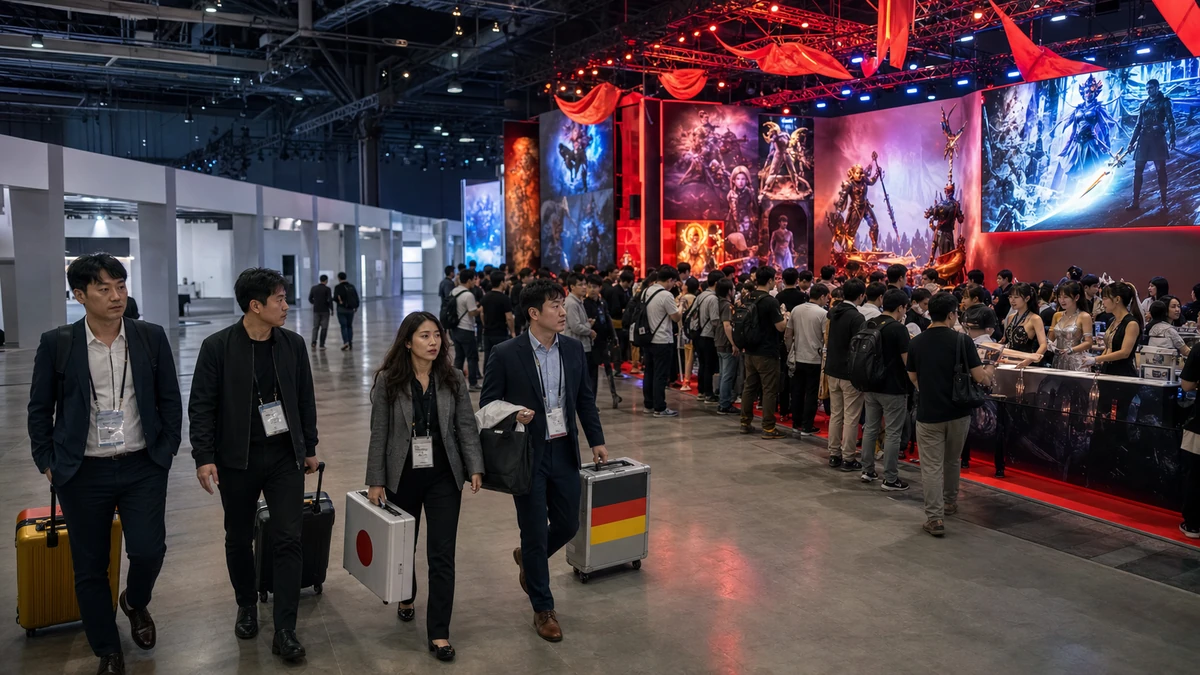
But the center of attention in Korea’s gaming industry is shifting. Major Korean game companies are showing more caution toward participating in G-STAR, the country’s largest gaming exhibition, while increasing their presence at international events such as Germany’s Gamescom and Japan’s Tokyo Game Show. The change does not necessarily signal that Korean companies are losing interest in their domestic audience. Instead, it reflects a broader transformation in how game publishers decide where to invest their marketing, announcements and player engagement efforts.
For years, G-STAR, held annually in Busan, served as a showcase for South Korea’s gaming ambitions. It was a place where major publishers unveiled upcoming titles, met fans and demonstrated the strength of Korea’s gaming ecosystem. However, the event is now facing pressure as companies increasingly evaluate exhibitions through a global business lens: Which audience matters most for a new release? Which event creates the greatest international impact? Which stage helps a game compete in an increasingly crowded global marketplace?
The answer for some Korean companies appears to be overseas. Gamescom and Tokyo Game Show offer access to different audiences, investors and industry partners. As Korean publishers seek growth outside their traditional markets, international exhibitions have become strategic platforms rather than simply promotional events.
Why Korean Developers Are Prioritizing Global Gaming Events
The expansion of Korean participation at overseas gaming events reflects a major shift in the business model of the industry. Modern games are rarely designed only for one country. A successful title often requires simultaneous global launches, multilingual support, international marketing campaigns and long-term community management across regions.
Gamescom, held in Cologne, Germany, is one of the world’s largest gaming events and attracts players, developers, media organizations and industry professionals from around the globe. Tokyo Game Show provides Korean companies with access to Japan’s influential gaming market, one of the world’s oldest and most sophisticated gaming cultures.
For Korean publishers, attending these events allows them to meet players in markets they consider strategically important. A game company developing a role-playing game, action title or online service may gain more value by directly engaging with European, Japanese or North American audiences than by relying only on domestic exposure.
This trend reflects a broader reality in entertainment industries. Companies increasingly choose global platforms based on audience reach and commercial opportunities rather than national identity. Hollywood studios, for example, regularly use international film festivals and overseas premieres to build global momentum. Korean entertainment companies have followed a similar approach in music, television and gaming.
The decision to prioritize foreign exhibitions does not mean Korean developers are abandoning Korea. Rather, it shows that the industry itself has become more international. A Korean game company today competes not only with domestic rivals but also with publishers from China, Japan, the United States and Europe.
China’s Growing Presence Changes the Meaning of G-STAR
One of the most noticeable changes at this year’s G-STAR is the increased presence of Chinese game companies as some major Korean publishers reduce their participation. The development highlights the changing competitive landscape of Asian gaming.
China has become one of the world’s largest gaming markets and has produced companies capable of competing globally. Chinese publishers have invested heavily in high-quality production, international marketing and overseas expansion. Their growing presence at a major Korean gaming exhibition demonstrates that Korea remains an important market for global game companies.
The shift also changes the role of G-STAR itself. In the past, the exhibition was often viewed primarily as a celebration of Korean game development. With more foreign companies participating, it increasingly resembles a broader Asian gaming marketplace where companies compete directly for players’ attention.
This change is not necessarily negative. International participation can strengthen an exhibition by bringing more diversity, new technologies and wider industry connections. A global event should naturally attract companies from multiple countries. The challenge is ensuring that international expansion happens alongside strong representation from Korea’s own leading developers.
If Korean companies reduce their presence while overseas companies increase theirs, visitors may begin to experience G-STAR differently. The event could move from being a showcase of Korea’s domestic gaming achievements toward becoming a regional competition platform. Whether that becomes an advantage or a disadvantage depends on how organizers and companies respond.
What This Means for the United States and the Global Gaming Market
The changes surrounding G-STAR matter beyond South Korea because the United States remains one of the most important markets in the global gaming industry. American players, publishers and technology companies are closely connected to the same international ecosystem that Korean developers are navigating.
For U.S. audiences, Korean gaming companies may be best known through mobile games, online multiplayer titles and esports communities. However, the industry’s global ambitions increasingly bring Korean developers into direct competition with American publishers, including major console, PC and mobile game companies.
The movement toward overseas events mirrors a strategy already familiar in the U.S. entertainment business. American film studios often use international events such as major festivals and conventions to reach global audiences rather than relying only on domestic promotion. In gaming, events like the Electronic Entertainment Expo, Gamescom and other industry showcases have historically served as meeting points between developers and players worldwide.
For American consumers, the expansion of Korean companies into global exhibitions could mean more opportunities to discover Korean-developed games earlier and more directly. Korean publishers increasingly view North America as a critical market, especially for genres that have strong international communities, including role-playing games, competitive multiplayer games and story-driven titles.
The shift also reflects changing U.S.-Korea economic ties in technology and entertainment. South Korea is not only a manufacturing and electronics powerhouse but also a major exporter of digital culture. K-pop and Korean television dramas have already demonstrated how Korean creative industries can build global audiences. Gaming represents another part of that cultural export strategy.
At the same time, the growing role of Chinese companies at Korean exhibitions highlights a wider Asian competition for global gaming influence. American companies are watching an increasingly crowded market where innovation, user experience and international community-building matter as much as technical production.
The Challenge Facing G-STAR: Becoming a Global Platform Again
The situation facing G-STAR is less about the decline of Korean gaming and more about whether the exhibition can adapt to a changing industry. A successful gaming event must provide value to both companies and players. Publishers want meaningful exposure, while audiences want memorable experiences with new and exciting games.
In earlier years, the reputation of G-STAR itself was enough to attract major Korean publishers. Today, companies have more choices. They can announce games through digital showcases, global livestreams, overseas exhibitions and direct online communities. Physical events must offer something unique to justify participation.
This challenge is not unique to Korea. Around the world, traditional industry events have faced pressure from digital communication and changing consumer habits. Game announcements that once depended heavily on large exhibitions can now reach millions of viewers online within minutes.
For G-STAR to maintain its importance, it may need to position itself not only as Korea’s gaming exhibition but as an essential international meeting point for the Asian and global gaming industries. That could include stronger connections between Korean developers, overseas publishers, international players and emerging technologies.
The reduction of major Korean participation should therefore be viewed as a warning sign but also as an opportunity. The industry itself is expanding globally, and the exhibition must evolve alongside it.
Korean Gaming’s Global Future Will Depend on Adaptation
The current movement of Korean game companies toward Gamescom, Tokyo Game Show and other international stages represents a new phase in the country’s gaming industry. It is not a retreat from global competition but a sign that Korean developers are pursuing audiences wherever they are located.
For Korea, the challenge is balancing international expansion with maintaining strong domestic platforms that represent its creative industries. For G-STAR, the task is proving that a Korean exhibition can remain valuable in an era when companies can reach global players through many different channels.
For international observers, including American gamers and companies, the shift offers insight into how quickly the global gaming map is changing. South Korean developers are becoming increasingly comfortable competing on international stages, while Asian gaming companies from multiple countries are fighting for influence in markets once dominated by Western publishers.
The next chapter of Korean gaming will not be defined simply by which companies attend one exhibition. It will be determined by who can create the strongest games, build lasting communities and connect with players around the world. G-STAR’s challenge is to become part of that global conversation again, rather than simply reflecting the industry’s past success.
Comments
Post a Comment