South Korean Researchers Identify a Promising Animal Model for Future Drug Development Against Drug-Resistant Epilepsy
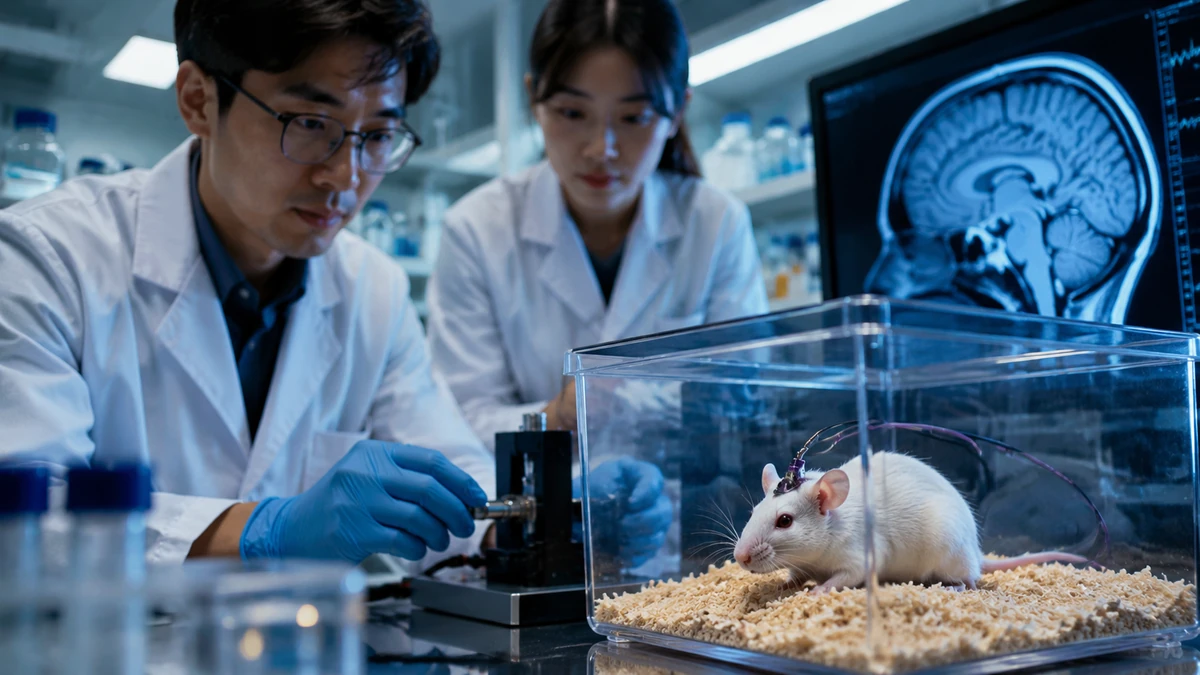
South Korean Research Team Advances the Search for Better Epilepsy Drug Testing Models
Researchers at Severance Hospital in Seoul, South Korea, have identified an animal model that could improve the development of new treatments for drug-resistant epilepsy, a condition that remains difficult to control for many patients despite available medications. The study, led by scientists from Yonsei University College of Medicine, focuses on creating a more accurate bridge between laboratory research and the realities of human disease.
According to Severance Hospital, the research team found that a white mouse model created through repeated electrical stimulation of the hippocampus most closely reflected the biological characteristics of a specific group of epilepsy patients, particularly those without hippocampal sclerosis, a type of structural damage often associated with seizures.
The discovery does not represent a new epilepsy medication itself. Instead, it addresses one of the biggest challenges in modern drug development: finding laboratory models that accurately represent what happens inside the human body. For American readers, the challenge is similar to the difficulty pharmaceutical researchers face when trying to ensure that results from laboratory animals can successfully translate into effective therapies for patients.
The research was conducted by Professor Sang Woo Kim of the Department of Biomedical Systems Informatics and Professor Won Joo Kim of the Department of Neurology at Yonsei University College of Medicine. Their team used transcriptome analysis, a method that examines patterns of gene activity, to compare different epilepsy animal models and determine which one best represented human disease characteristics.
Why Animal Models Matter in Modern Medicine
Before a potential drug reaches human clinical trials, scientists typically conduct extensive preclinical research using laboratory models. These studies help researchers understand whether a treatment candidate is likely to be safe and effective. Animal models are a crucial part of this process because they allow scientists to examine disease mechanisms and test possible therapies before involving human volunteers.
However, one longstanding problem in neurological research is that not all animal models accurately reflect human conditions. Two laboratory animals may both show seizure-like activity, but the underlying biological processes may be very different from those occurring in patients. This gap can contribute to failures when promising treatments move from laboratory studies into clinical testing.
Epilepsy research faces this challenge particularly strongly because the disease is complex. Epilepsy is not a single disorder but a group of neurological conditions characterized by repeated seizures caused by abnormal electrical activity in the brain. Patients can experience different seizure patterns, causes, and responses to medication.
For people with drug-resistant epilepsy, commonly available anti-seizure medications may not provide sufficient control. These patients may require alternative approaches, including surgery, implanted devices, dietary therapies, or participation in research trials investigating new treatments. Developing better experimental models is therefore considered a major priority in neuroscience.
A New Approach Using Gene Activity Analysis
The key feature of the Korean research was the use of transcriptome analysis rather than relying only on visible symptoms. Transcriptomics is a scientific technique that examines which genes are active in cells and how strongly those genes are expressed. Because diseases often alter biological processes at the genetic level, transcriptome analysis can provide a deeper understanding of whether a model truly resembles human illness.
In the study, researchers compared molecular characteristics among different epilepsy animal models. They determined that the hippocampal stimulation-based mouse model showed biological similarities to patients with epilepsy who do not have hippocampal sclerosis. The hippocampus is a brain region involved in memory and learning, but it is also frequently associated with seizure activity in certain forms of epilepsy.
This approach represents a shift from traditional model selection methods. Historically, researchers often evaluated animal models by looking at whether seizures occurred and how frequently they appeared. While important, those observations do not always reveal whether the disease process itself is comparable to what occurs in humans.
By analyzing gene expression patterns, the research team created a more detailed method for evaluating whether an animal model captures the biology of human epilepsy. Professor Won Joo Kim said that validating how well an animal model represents human disease at the transcriptome level had not previously been achieved on a global scale and expressed hope that the findings could become a new reference point for epilepsy preclinical research worldwide.
Implications for Future Epilepsy Treatments
The importance of this study lies in improving the foundation for future therapies. When pharmaceutical companies and academic researchers test new treatment candidates, selecting the right experimental model can influence whether promising compounds are accurately evaluated.
If a model does not properly reflect human disease, researchers may incorrectly judge whether a potential drug works. A treatment that appears effective in an unsuitable model may later fail during human trials because the biological conditions are different. Conversely, a promising therapy could potentially be overlooked if it is tested in a model that does not represent the patients who might benefit from it.
The mouse model identified by the Korean researchers could provide a more reliable environment for testing future epilepsy treatment candidates. Scientists may use such models to investigate how new compounds affect seizure activity, explore possible mechanisms of action, and better understand which patient groups could respond to specific therapies.
Experts caution that additional research is still necessary before the model can directly lead to a new treatment. Drug development remains a lengthy process involving laboratory studies, safety evaluations, clinical trials, and regulatory reviews. A stronger research model improves the process but does not guarantee that a treatment will become available.
South Korea’s Growing Role in Biomedical Research
The study also highlights South Korea’s expanding role in advanced biomedical research. Over the past several years, Korean universities and medical institutions have invested heavily in fields such as biotechnology, artificial intelligence-assisted medicine, precision healthcare, and neuroscience.
Severance Hospital, part of Yonsei University Health System, is one of South Korea’s major academic medical centers. Like leading research hospitals in the United States, institutions such as Severance combine patient care with laboratory research in an effort to translate scientific discoveries into practical medical advances.
The use of advanced technologies such as transcriptome analysis reflects a broader trend in medicine toward precision approaches. Rather than treating diseases only based on symptoms, researchers increasingly examine molecular differences that may explain why patients respond differently to therapies.
For neurological disorders such as epilepsy, this approach is particularly valuable. Brain diseases often involve complex interactions among genetics, cellular activity, and environmental factors. Understanding those differences may help researchers develop more targeted treatments instead of relying on broad approaches that work only for some patients.
A Step Toward More Reliable Research for Difficult Diseases
The Korean team’s findings demonstrate that improving the quality of research tools can be just as important as discovering new drugs. For difficult-to-treat conditions, the path toward better therapies often begins with understanding the disease more accurately.
Drug-resistant epilepsy affects patients and families around the world, including thousands of people in the United States who continue to experience seizures despite available treatments. For these individuals, advances in research methods can represent an important step toward future medical options.
The significance of the Severance Hospital study extends beyond epilepsy. Many complex diseases face similar challenges in translating laboratory discoveries into patient care. Researchers studying cancer, neurological disorders, autoimmune diseases, and rare conditions all depend on models that accurately reflect human biology.
By developing a more precise method for identifying useful animal models, South Korean scientists have contributed to a broader effort to make preclinical research more reliable. While more studies are needed, the work offers a foundation for scientists seeking to develop better treatments for patients whose conditions remain difficult to manage.
As global healthcare research becomes increasingly focused on precision medicine, studies like this show how improvements in basic research infrastructure can influence the future of drug discovery. A more accurate model of disease may ultimately help researchers move closer to therapies that provide meaningful benefits for people living with challenging neurological conditions.
Comments
Post a Comment