South Korea’s Housing Debate Is Shifting From How Many Homes Get Built to Who Can Actually Afford Them
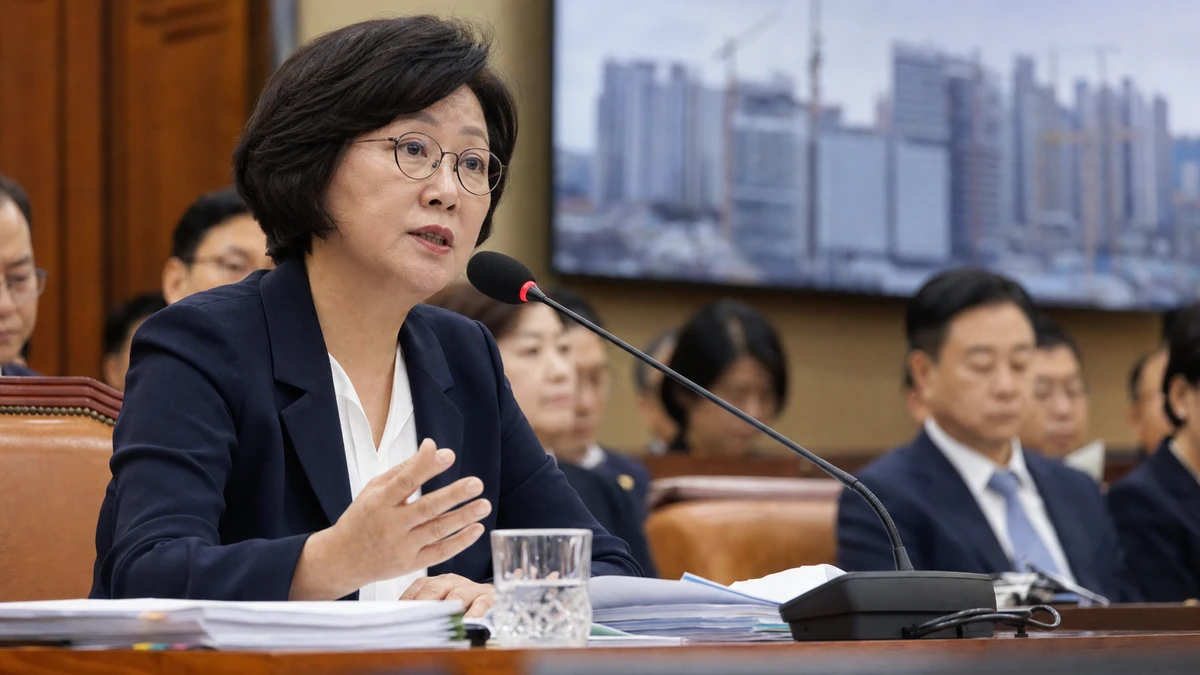
Image to help understand the article
A familiar big-city promise meets a harder question
In South Korea, few policy debates are as politically loaded as housing in Seoul. The capital is home to roughly a fifth of the country’s population, the center of its job market and the place where many young adults feel they must go to build careers. It is also one of the most expensive and competitive housing markets in Asia. For years, politicians and city officials have argued over the same basic solution: build more homes, especially by redeveloping older neighborhoods and rebuilding aging apartment complexes.
But a remark this week from Prime Minister Han Seong-sook sharpened a question that is increasingly hard to avoid, not just in Korea but in major cities around the world. When lawmakers asked whether Seoul’s redevelopment and reconstruction drive could realistically provide housing for young people, Han answered with caution. Newly supplied homes created through those projects, she said, appear to come at price levels that are burdensome for people just entering adult life and the housing market.
That distinction matters. In English, the argument might sound technical: the difference between housing supply and housing affordability. In practice, it gets at one of the central frustrations facing younger Koreans. A city can add units on paper, boast about cranes on the skyline and still fail to create homes that a recent college graduate, an entry-level office worker or a newly married couple can realistically pay for.
Han’s comment landed because it cut across a politically popular assumption. Seoul Mayor Oh Se-hoon has emphasized redevelopment and reconstruction as major ways to ease the housing crunch. In a city with limited vacant land, that approach is intuitive. Rather than building outward, officials try to replace older, lower-density housing with newer and often taller apartment blocks. Yet Han’s response suggested that the debate can no longer stop at whether these projects increase the number of units. The more difficult question is whether the finished apartments are priced for actual first-time buyers or renters, especially younger adults with limited savings.
For American readers, the issue is recognizable. Think of the debate over luxury towers in New York, condo redevelopment in San Francisco or transit-oriented apartments in Los Angeles. Local leaders often argue that any increase in supply helps the broader market over time. Critics respond that if most new units are out of reach for ordinary workers, the political promise of relief can feel abstract or hollow. South Korea is now confronting its own version of that same tension, in a denser and even more high-pressure urban setting.
What makes the Korean discussion especially significant is that it is no longer just about whether redevelopment is good or bad. It is about how to judge success. If officials measure only the number of homes approved or completed, redevelopment may look like progress. If they measure whether people in their 20s and 30s can actually move into those homes, the picture becomes much murkier.
Understanding redevelopment in Seoul
To understand why Han’s words resonated, it helps to understand what redevelopment and reconstruction mean in the Korean context. Though the two terms are sometimes grouped together in English coverage, they refer to slightly different processes. Redevelopment generally involves overhauling older, often lower-rise neighborhoods, while reconstruction usually means tearing down aging apartment complexes and building new ones in their place. Both are central tools in a city like Seoul, where space is scarce and much of the urban fabric was built decades ago.
These projects are about more than aesthetics. They can modernize infrastructure, improve building safety, increase density and, at least theoretically, expand housing supply in neighborhoods with strong demand. That is why they are so politically attractive. Officials can argue that they are refreshing the city while also addressing shortages.
But redevelopment in South Korea also carries social baggage. It has long been associated with displacement, speculation and windfalls for some existing property owners. Apartment ownership in Korea is not simply a housing issue; it is deeply tied to household wealth, class mobility and family security. In Seoul, where real estate values often dominate public conversation the way stock prices or mortgage rates might in the United States, redevelopment can become a proxy battle over who benefits from growth.
The problem for young adults is straightforward. The homes produced through these projects are often newer, larger, better located or more desirable than what they replace. That tends to push prices up, not down. Even if a project increases the total number of units, those units may still be far outside the reach of people early in their working lives. In other words, more housing does not automatically mean more accessible housing.
Han’s intervention therefore did not reject redevelopment outright. Instead, it challenged a common political shortcut: treating any added supply as if it were naturally aligned with youth housing. Her point was narrower and more consequential. Officials, she suggested, need to ask not only whether a development produces homes, but whether those homes are available at prices and conditions that match the financial reality of younger households.
That may sound obvious, yet it marks a meaningful shift in emphasis. Policymakers often prefer metrics that are easy to count: units approved, projects launched, floor-area ratios adjusted, deadlines shortened. Accessibility is harder. It requires asking who gets in, at what price, under what financing conditions and with how much family support. In Seoul, where family wealth can shape housing opportunities in ways that are familiar to Americans in high-cost metro areas, those questions are politically sensitive.
Why young Koreans are at the center of the story
Youth housing in South Korea is not just another social policy category. It sits at the intersection of employment anxiety, delayed marriage, low birth rates and generational frustration. Young Koreans often face a labor market defined by intense competition, high educational pressure and sharp divides between stable and precarious work. Housing costs magnify all of it.
For many in their 20s and 30s, entering the housing market in Seoul can feel less like a normal step in adulthood than a nearly impossible financial hurdle. A person may have a good degree and a white-collar job and still find that homeownership in the capital is far beyond reach. Even renting can require substantial upfront deposits under Korea’s distinctive rental system, which includes arrangements known as jeonse, a lump-sum deposit model unfamiliar to many Americans, and monthly rent structures that still often demand significant cash at move-in.
That is why Han’s description of the new homes as burdensome in price is politically potent. She was not simply saying the apartments are expensive. She was saying they may not fit the lived reality of those whom youth housing policy is supposed to help: people making the transition from school to work, from living with parents to living independently, or from renting to trying to establish long-term stability.
In South Korea, the phrase “youth housing” can carry expectations that are broader than the American term “starter home.” It implies not just small or entry-level housing, but housing that allows younger residents to begin adult life with some predictability. That includes affordability, access to jobs and transit, and realistic financing. If redevelopment produces gleaming new towers that remain functionally inaccessible to those groups, the label starts to ring hollow.
Han also appeared to be making a broader argument about policy communication. According to the summary of her remarks, she suggested the government’s housing policy should evolve in ways that allow young people and other consumers to better predict what actual changes a policy will bring. That is an important point in its own right. In many countries, housing policy is announced in technical or abstract language — density incentives, zoning changes, project acceleration, public-private cooperation — while households want to know something much simpler: Will this make my life more affordable in two years? Will I have a realistic option I do not have today?
That gap between policy language and household reality helps explain why housing can remain politically explosive even when governments insist they are acting aggressively. South Korea’s leaders are discovering, as their counterparts in the United States have, that people do not experience housing policy through spreadsheets. They experience it through rent bills, loan approvals, commute times and whether moving out feels possible at all.
Local governments are moving fast, but on different terms
The pressure to increase housing is already playing out on the ground. On the same day as Han’s remarks, Seoul city officials said they had held the first customized on-site advisory meeting under a fast-track integrated planning system for two apartment complexes in the city’s Nowon district. The complexes, built in 1990 and 1991, are pursuing reconstruction. The move reflects Seoul’s effort to speed planning and cut through procedural bottlenecks by bringing consultations directly to project sites, rather than relying only on paper reviews.
That may sound bureaucratic, but in Korean urban policy it is consequential. Delays in approvals, planning coordination and local negotiations can slow projects for years. A faster process is attractive to officials who want visible results and to property owners who expect redevelopment to raise asset values. It is also consistent with the broader view that the capital needs to increase supply wherever feasible.
Meanwhile, Seongnam, a city in Gyeonggi Province just south of Seoul and part of the wider metropolitan region, is taking a different approach. Officials there said they are pursuing a reduction in the mandatory share of rental housing in redevelopment projects, from 12% to 10%, in older urban districts. The city said earlier efforts to loosen floor-area ratios had not fully solved concerns about project viability, especially given military flight safety restrictions on building heights and rising construction costs. Under the adjustment, the estimated number of rental units supplied in redevelopment zones would fall by about 980 homes across 14 districts.
Together, the Seoul and Seongnam cases illustrate the three-way tension now shaping Korean housing policy: speed, profitability and affordability. Seoul is trying to accelerate the process. Seongnam is adjusting rules to make projects more financially workable. Han is pressing the question of whether the final product will be affordable to young adults. Those are not identical goals, and they do not always point in the same direction.
For developers and existing owners, better project economics can mean a project finally moves ahead. For local governments, faster approvals can mean more visible supply. But for renters, would-be first-time buyers and lower-income young adults, fewer required rental units or high-priced new apartments may weaken the claim that these policies serve broad housing accessibility.
This is not unique to South Korea. Across major cities, governments often discover that the most politically and financially feasible housing to build is not necessarily the housing most urgently needed by those under the greatest pressure. The Korean case is simply making that contradiction more explicit.
What this means for the United States
For Americans, South Korea’s debate is worth watching not as a niche foreign policy story, but as a case study in a problem the United States also has not solved. In city after city, American officials promise that more construction will ease affordability pressures. Sometimes that is true over the long term. But the politics become complicated when the most visible new projects appear targeted to higher-income households, while younger workers, teachers, service employees and first-time families still struggle to find attainable options.
The comparison is not perfect. Korea’s housing system is shaped by denser urban living, a stronger role for apartment complexes, different financing structures and a national political culture in which housing prices are often treated as a top-tier social concern. Even so, the core dilemma is strikingly familiar. How do governments modernize aging housing stock and encourage private development without simply producing more expensive homes in already expensive places?
That question matters to the United States for several reasons. First, American developers, investors and urban policy experts increasingly look abroad for ideas on density, transit-linked housing and redevelopment. Seoul is often admired in planning circles for its high-capacity transit, vertical living and ability to rebuild at scale. But this episode is a reminder that building densely is not the same as building accessibly.
Second, the issue speaks to a broader U.S.-Korea relationship that goes well beyond security ties and semiconductors. South Korea is one of America’s closest allies, and its domestic economic strains have ripple effects across labor mobility, consumer behavior, family formation and social stability. Housing pressure influences how younger Koreans spend, save and delay major life decisions. Those patterns shape everything from fertility trends to demand in consumer markets, and U.S. companies with a stake in Korea — in finance, tech, retail, construction materials and home-related services — pay attention to them.
Third, the story resonates culturally because Korean urban life is increasingly visible to Americans through the Korean Wave, or Hallyu. American audiences who watch Korean dramas, follow K-pop stars or consume Korean lifestyle content often see sleek apartments and hyper-dense cityscapes as part of modern Korean life. What they may not always see is the intense social competition beneath that imagery. Housing in Seoul is not just a backdrop; it is a source of stress, status and inequality. That reality helps explain why the subject commands such political energy.
There is also an American business angle. U.S. firms involved in architecture, smart-city technology, property analytics, infrastructure design and investment research track how Korea handles urban renewal because it can offer clues about the next phase of high-density redevelopment in advanced economies. If Korean policymakers conclude that supply-heavy strategies need stronger affordability safeguards, that could reinforce arguments already active in the United States for inclusionary zoning, public housing support, renter protections or more direct subsidies tied to younger households.
In that sense, Han’s remark may sound local, but the underlying warning is global. If policymakers celebrate supply gains without showing who can afford them, public trust erodes. That lesson applies as much in Boston and Seattle as it does in Seoul and Seongnam.
A turning point in how success is measured
The larger significance of this debate is that it suggests South Korea may be entering a new phase in housing politics. For years, much of the public conversation revolved around whether the government was doing enough to add supply or restrain speculation. Now the focus appears to be broadening toward a more granular standard: not just how many homes are built, but what kind, at what price and for whom.
That shift is important because it reframes accountability. A mayor can champion redevelopment. A ministry can streamline procedures. A city can revise ratios and incentives. But if young adults still conclude that the resulting homes remain out of reach, the political promise of those policies weakens. The numbers may improve while everyday credibility declines.
Han’s intervention does not, by itself, create a new housing policy. Nor does it settle the long-running argument over whether redevelopment and reconstruction are the right tools for Seoul. What it does is establish a clearer test for future claims. When officials say a project supports young residents, they may increasingly be asked to show not just the unit count but the expected price range, financing accessibility and realistic path to occupancy for people without substantial family wealth.
That would be a meaningful evolution in the Korean policy conversation. It would also align with a broader trend in advanced economies, where voters are demanding that housing policy be explained in the language of lived outcomes rather than technical process. Speed matters. Project viability matters. But for people trying to build a life in an expensive city, the ultimate metric is whether a door actually opens.
The next thing to watch is whether Han’s framing changes the terms of debate among national and local officials. Will Seoul, as it speeds redevelopment planning, also offer a clearer public explanation of what portion of new housing can realistically serve younger households? Will cities such as Seongnam, while easing rules to make projects viable, face pushback over reductions in rental obligations? And will the central government begin evaluating supply policies with more explicit attention to age-specific affordability and predictability?
Those questions go beyond one parliamentary exchange. They get at the future of urban policy in South Korea. In one of the world’s most densely developed democracies, policymakers are being forced to confront a truth familiar to many Americans: a housing strategy that looks successful from 30,000 feet may feel like failure on the ground if the people most in need of stability still cannot afford a place in the city.
For U.S. readers, that makes this more than a Korean domestic story. It is part of a wider global reckoning over what housing policy is supposed to deliver. Is the goal simply to build? Or is it to make urban life genuinely reachable for the next generation? South Korea’s answer is still taking shape, but the debate now unfolding in Seoul suggests the country is beginning to ask the harder, and more honest, question.
Comments
Post a Comment