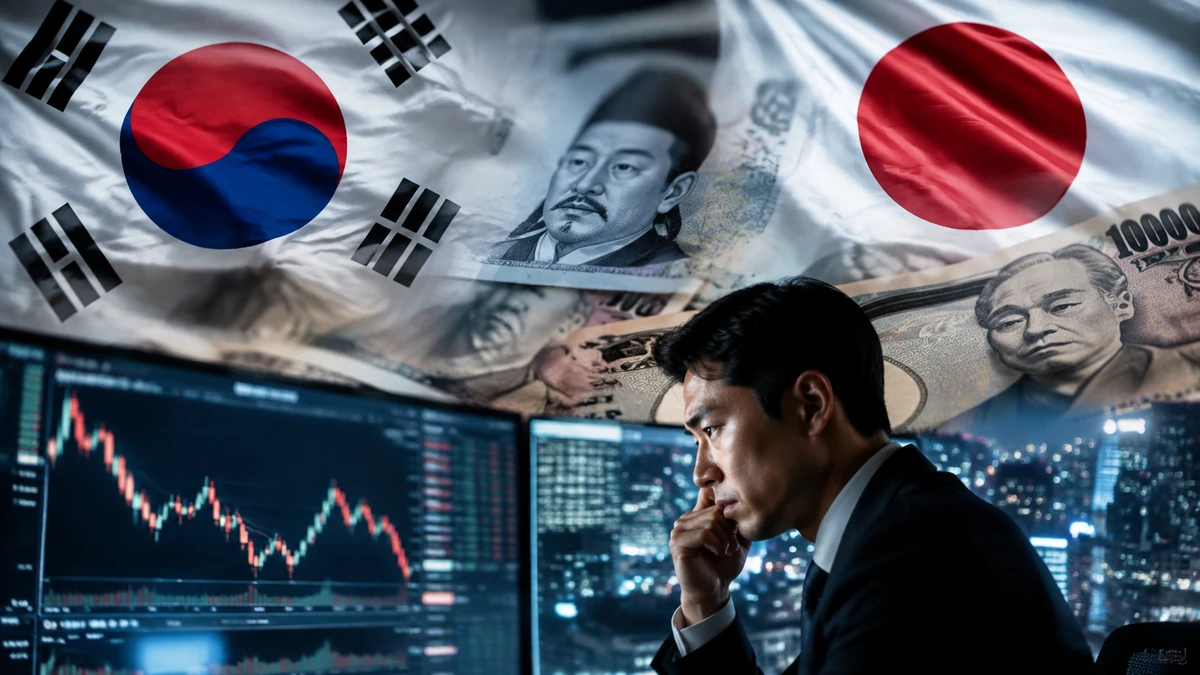
U.S. Treasury Chief Points to South Korea’s Currency Swings in Broader Asian Market Debate
U.S. Treasury Secretary Scott Bessent has highlighted recent volatility in South Korea’s currency, saying the Korean won has experienced what he described as excessive fluctuations while discussing broader movements across Asian foreign exchange markets. His comments have renewed attention on how closely linked Asian currencies have become as investors track changes in the Japanese yen, Chinese yuan and other major regional currencies.
Bessent made the remarks during an appearance on CNBC, where he discussed the possibility that a significantly weaker Japanese yen could influence other currencies in the region. He cited the Korean won as an example of a currency that has recently shown notable movement. According to Yonhap News Agency, the comments reflected concerns about currency dynamics rather than announcing any specific U.S. policy action.
For American audiences, the discussion highlights a reality that often receives less attention outside financial circles: South Korea’s economy is deeply connected to global currency markets. The won is not just a financial indicator watched by traders. It affects companies that sell products overseas, businesses that import materials, and consumers who face changing prices when global costs move.
Why the Japanese Yen Matters to Korea’s Currency Outlook
The relationship between the Japanese yen and the Korean won is closely watched because Japan and South Korea are major export economies with overlapping industries, including automobiles, electronics, technology components and advanced manufacturing. Although the two currencies are managed independently, investors often compare their movements when evaluating competitiveness across Asia.
A weaker yen can create challenges for Japanese exporters by making their products cheaper in global markets. South Korean companies competing in similar industries may pay close attention because exchange rates can influence pricing strategies and profit margins. However, currency movements are only one factor among many, alongside technology, productivity, supply chains and consumer demand.
Bessent’s comments focused on the possibility that a sharp decline in the yen could affect broader Asian currency sentiment. Global investors often view regional markets as interconnected, meaning that concerns about one major currency can influence expectations about others. This does not mean that all Asian currencies move in the same direction, but it shows how financial markets assess regional risks.
The U.S. Treasury secretary also mentioned that many market participants believe the Chinese yuan has been undervalued. His remarks placed the Korean won within a larger discussion about currency values across Asia, where exchange rates are shaped by trade balances, monetary policy decisions, investor confidence and global economic conditions.
South Korea’s Export Economy Makes Exchange Rates a Key Business Issue
South Korea is one of the world’s largest trading economies, with globally recognized companies operating in industries ranging from semiconductors and automobiles to batteries and consumer electronics. For these businesses, currency movements can directly influence international operations.
When the won weakens against the U.S. dollar, Korean exporters may gain some advantage because products priced in foreign markets can become more competitive. At the same time, companies that rely on imported energy, raw materials or equipment may face higher costs. When the won strengthens, imported goods may become cheaper, but exporters can face pressure from less favorable exchange rates.
This balance is especially important for a country like South Korea, where major corporations operate extensive international supply chains. Companies must manage currency risks through financial strategies, including hedging and diversified global operations. For executives planning overseas investments or international sales strategies, exchange rate stability can be as important as demand growth.
The latest comments from the U.S. Treasury secretary do not indicate that Korean companies have already suffered direct damage or that a specific economic policy response is underway. Instead, they demonstrate that currency volatility has become a topic of international attention among policymakers and investors.
Currency Markets Reflect a More Connected Global Economy
Foreign exchange markets are among the most actively traded financial markets in the world, operating around the clock as investors respond to economic data, central bank decisions and geopolitical developments. Currency values can shift quickly when expectations change about interest rates, inflation or economic growth.
For South Korea, global financial conditions are particularly important because the country depends heavily on international trade. A change in the U.S. dollar, Japanese yen or Chinese yuan can influence investor expectations about Korea’s economy, even when domestic economic conditions remain stable.
This interconnected environment has become increasingly visible in recent years as businesses have faced disruptions from global supply chain changes, energy price fluctuations and shifting monetary policies. Companies and governments now pay closer attention not only to their own economic conditions but also to developments in major partner economies.
American consumers may recognize similar effects through changes in the prices of imported goods. Just as the value of the U.S. dollar can influence the cost of foreign products in the United States, the value of the Korean won affects how South Korean companies compete and operate internationally.
What the Comments Mean for Investors Watching Asia
Statements from senior U.S. officials often receive attention from financial markets because investors closely monitor signals about global economic conditions. However, Bessent’s remarks were an assessment of market trends, not an announcement of intervention or a new currency policy.
Currency markets are influenced by many factors, including decisions by central banks, economic growth expectations, inflation trends and investor demand. A single statement does not determine future exchange rates, but it can contribute to market discussions about potential risks.
For investors focused on Asia, the key question is how major economies respond to changing currency conditions. Japan’s monetary policy, China’s economic outlook and the United States’ interest rate environment are among the factors that can shape currency expectations throughout the region.
South Korea’s economic position makes the won particularly important. The country is not only a regional economy but also a major participant in global technology and manufacturing networks. Movements in the won can therefore become a signal watched by companies, investors and policymakers around the world.
South Korea Faces the Challenge of Managing External Financial Pressures
The latest discussion surrounding the Korean won reflects a broader challenge facing many open economies: maintaining stability while participating in global markets. South Korea has benefited from international trade and investment, but that openness also means the country is exposed to external financial changes.
Businesses in South Korea will continue to monitor currency trends as they make decisions about exports, investment and global operations. For companies competing internationally, predictable financial conditions can help with long-term planning and risk management.
For global observers, the focus on the Korean won is another reminder that South Korea’s economy has become a significant part of the international financial system. The country’s technology companies, manufacturing networks and trade relationships connect its currency movements to broader global business conditions.
Bessent’s remarks brought renewed attention to the relationship between Asian currencies and the importance of exchange rate stability. While the future direction of the won will depend on many economic factors, the discussion shows that South Korea’s currency is being closely watched beyond its borders as investors assess the next phase of global market conditions.
Comments
Post a Comment