Why Japan’s Prime Minister’s Sparse Public Travel Is Drawing Scrutiny — and Why Americans Should Pay Attention
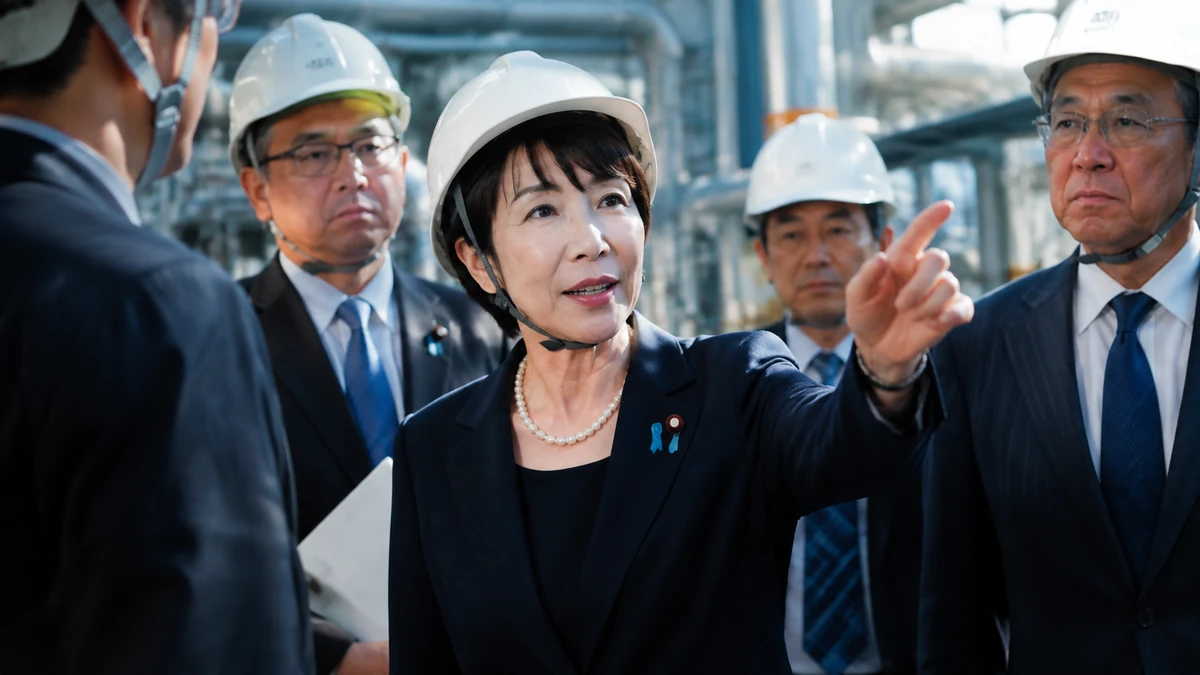
Image to help understand the article
A leadership style measured not just by decisions, but by visibility
In Japan, a debate is building around a deceptively simple question: How often should a prime minister be seen outside the capital, meeting citizens, inspecting disaster zones, visiting factories and listening directly to local officials?
That question has taken on new urgency after Japanese media analyses found that Prime Minister Sanae Takaichi made just eight on-site inspection trips during her first 10 months in office. By comparison, according to an analysis of official schedules cited by Kyodo News, former Prime Minister Fumio Kishida made 31 such visits over the same stretch of his tenure, while former Prime Minister Shigeru Ishiba made 22. A separate analysis reported by Nikkei found that on 51 of 94 weekends and public holidays since taking office, Takaichi spent the entire day either at the prime minister’s official residence or at her lawmakers’ residence in Tokyo.
Those numbers do not, by themselves, prove weak governance. A prime minister does not need to be constantly photographed in the field to run a government. Like presidents and governors in the United States, Japanese leaders can receive detailed briefings, convene ministries, review policy papers, talk with local leaders by phone and direct responses to crises without stepping onto a tarmac or into a factory floor. Public schedules are an incomplete measure of the work of governing.
Still, public appearances are not politically neutral. In every democracy, they help shape whether voters believe their leaders are present, engaged and responsive. A field visit can be ceremonial, even empty. But it can also signal priorities in a way no internal memo can. When a leader shows up after flooding, tours a semiconductor plant or listens to residents in a rural town, the image carries a message: This matters, and the government wants to be seen paying attention.
That is why the Japanese discussion is bigger than a tally sheet. It is really an argument about how modern executives govern in an era when visibility, accountability and symbolism are increasingly intertwined. Takaichi’s relatively limited public travel has become a test case for how much a leader can rely on centralized decision-making before voters and the press begin to ask what is being missed outside the walls of the capital.
Why “on-site inspections” matter in Japanese politics
For American readers, the phrase “on-site inspection” may sound bureaucratic. In Japan, however, these visits carry political weight. They can include travel to disaster-hit communities, meetings with business operators, inspections of infrastructure, visits to medical or industrial facilities and listening sessions with local residents. In a system often criticized for top-down bureaucracy and the concentration of political power in Tokyo, such visits serve as one of the most visible ways a prime minister demonstrates connection to life beyond the national government.
Japan’s political culture places special value on what might be called the choreography of responsiveness. It is not enough for leaders to say they are informed; they are often expected to show, physically and publicly, that they have encountered a problem firsthand. This does not mean every visit produces better policy. It does mean the act itself becomes part of governance, particularly in a country where natural disasters, regional economic decline and population aging are central political concerns.
The Korean summary of the Japanese reporting makes an important distinction: Fewer visits do not automatically mean poor administrative performance. A prime minister can work intensely from the official residence, reviewing documents, coordinating ministries and managing foreign affairs. That is true in Tokyo just as it is in Washington. But the summary also points to the risk of overreliance on filtered information. When leaders mostly receive polished reports through official channels, critics worry that the rough edges of reality — local frustration, implementation gaps, the human texture of a crisis — may be softened or omitted before they reach the top.
That tension between efficiency and direct exposure is hardly unique to Japan. In the United States, presidents are often judged not only by what they do, but where they go. A visit to East Palestine, Ohio, after a train derailment, or to Maui after wildfires, or to a shuttered factory in the industrial Midwest can quickly become shorthand for empathy, urgency and political awareness. The optics can be unfair; a well-run response does not always require a camera-ready visit. But politics rarely separates governing from symbolism as neatly as policy specialists might prefer.
In Japan, that symbolic burden can be even heavier because of the country’s longstanding center-periphery tensions. Rural communities often feel overshadowed by Tokyo. Regions struggling with depopulation and shrinking industry want signs that they remain visible to national power. In that context, an on-site visit is not simply travel. It is a form of acknowledgment.
The central question: efficiency vs. democratic visibility
The most persuasive reading of the current controversy is not that Takaichi has worked too little, but that her style appears to place greater emphasis on internal coordination than on public-facing engagement. The issue is not whether she was literally resting on days without public events. It is whether a leader can sustain legitimacy while asking citizens and the media to trust that essential listening and fact-finding are happening out of view.
That is the heart of the matter. Democracies require both competence and visibility. Too much emphasis on stage-managed travel can produce empty political theater. Too much emphasis on behind-the-scenes management can create a credibility gap, especially when voters are anxious about disasters, inflation, local industry or regional inequality.
The gap between Takaichi and her predecessors is what gives the numbers their force. If one prime minister logged 31 field visits in the same early period, another 22, and the current one eight, it becomes difficult to treat the difference as mere scheduling noise. Even if the content and duration of those visits varied, the scale of the contrast suggests a distinct governing philosophy — or at minimum a distinct allocation of time and political energy.
That does not mean the criticism is fully resolved. Quantity is not quality. A dozen visits that generate television footage but no policy change are less meaningful than a handful of highly targeted trips that alter budget priorities or speed up administrative action. The Korean summary rightly cautions against equating a low number of inspections with low administrative performance. The stronger standard is whether visits, when they happen, are clearly connected to decisions, and whether nonpublic governing is explained in a way citizens can evaluate.
In other words, the burden shifts to transparency. If a prime minister governs from the residence more than from the road, the government needs to show how information reaches the top, how regional voices are incorporated and how policy choices respond to conditions outside Tokyo. Without that explanation, the public may conclude that efficiency has become opacity.
That lesson extends beyond Japan. Around the world, executive leaders have increasingly centralized power in offices designed to manage complex crises quickly. But the more decisions are concentrated in inner circles, the more important it becomes to demonstrate that the decision-making process has not drifted too far from citizens’ lived reality.
What this means for the United States
For Americans, this story matters for at least three reasons: the health of the U.S.-Japan alliance, the way global investors read political leadership in Tokyo and the broader question of how allied democracies balance substance and symbolism in executive power.
First, Japan is not just another U.S. ally. It is one of Washington’s most important strategic partners, central to American policy in the Indo-Pacific. U.S. military planning, technology supply chains, trade, semiconductor investment and coordination on China and North Korea all depend in part on confidence in stable and credible leadership in Tokyo. When Japanese political coverage starts focusing on whether the prime minister appears detached from the public or overly insulated in the capital, American policymakers and businesses notice — not necessarily because they expect immediate instability, but because style can affect political capital.
A prime minister with strong public legitimacy generally has more room to make difficult decisions, whether on defense spending, industrial policy, energy strategy or diplomatic outreach. A leader dogged by questions about visibility and responsiveness may still govern effectively, but must spend more energy explaining priorities and defending choices. For the United States, that matters because alliance management often depends on how much political bandwidth a Japanese leader has at home.
Second, American companies and investors have a practical interest in how Japan’s leadership engages with regional economies and industries. On-site visits to manufacturing hubs, ports, energy facilities and disaster-affected areas can offer clues about where political attention is headed. In a country where government policy plays a major role in industrial direction, symbolic appearances sometimes precede real shifts in resource allocation. If a prime minister is less visible in those spaces, outside observers may have fewer public signals to interpret.
Third, the debate mirrors a familiar American one. U.S. voters often argue over whether presidents are “out there enough,” whether they spend too much time in Washington, too much time at official residences or too much time on carefully controlled trips that critics dismiss as photo opportunities. The argument in Japan is different in detail but familiar in spirit. Americans understand instinctively that a factory visit, a disaster walk-through or a meeting with local officials is partly governance and partly performance. The challenge is that both parts matter.
There is also a broader democratic lesson here for the U.S. public. As governments become more data-driven and centralized, leaders can plausibly claim they do not need to travel as often because information now arrives instantly through digital briefings and bureaucratic reporting channels. That may be true. But citizens in the United States, like citizens in Japan, still tend to believe that leaders should occasionally leave the headquarters, hear unfiltered voices and be seen doing it. In that sense, the Japanese debate is not foreign at all. It is an allied version of a problem Americans argue about constantly.
Beyond one prime minister: a wider trend in modern politics
If there is a larger trend here, it is this: Political visibility has become both more necessary and less trusted at the same time. Leaders are expected to show up constantly, yet every appearance risks being dismissed as theater. That creates a paradox. Travel can help maintain democratic legitimacy, but it can also drain time, demand security resources and generate images with little policy substance. Staying in the capital may improve efficiency, but it invites questions about isolation and detachment.
Japan is an especially useful place to watch this tension because the country faces overlapping pressures that make both visibility and efficiency important. It must respond to natural disasters, support aging and shrinking regional communities, manage industrial competitiveness and navigate a difficult security environment. Those challenges do not lend themselves to purely symbolic leadership. But they also make it risky for any prime minister to look remote.
The current scrutiny of Takaichi’s schedule reflects that double bind. Critics can point to the raw disparity with predecessors and say the prime minister is not visible enough in the field. Defenders can respond that government is not a travel contest and that serious policy work happens in offices, briefings and ministry coordination sessions that cameras never see. Both arguments contain truth. The real issue is whether the government can connect the invisible work to visible public accountability.
That is why the next phase of this story matters more than the initial headline. If Takaichi increases public visits but they appear shallow or disconnected from policy, the criticism will not disappear. If she keeps a residence-centered style but offers clearer explanations of how decisions are informed by local conditions, some skepticism may ease. The number eight matters because it reveals a pattern. What matters more now is whether that pattern comes with an intelligible governing logic.
In American terms, this is similar to how a White House tries to prove that decisions made in Situation Room briefings or cabinet meetings are grounded in realities beyond the Beltway. Presidents often travel not only to gather information, but to demonstrate that the information they already have has been tested against real communities. Japanese voters, judging from the attention this issue is receiving, appear to be asking for a similar reassurance.
What to watch next in Tokyo — and why it could resonate abroad
The most important thing to watch is not simply whether Takaichi’s office schedules more trips. It is which places she chooses, how those visits are framed and whether concrete policy follow-through is visible afterward. A visit to a disaster-prone area, a regional manufacturing center or a community struggling with demographic decline would each send a different signal about priorities. So would an explanation from the prime minister’s office that makes clear how field input is incorporated into national decision-making.
Another key question is whether the government tries to redefine what counts as public engagement. In an age of digital communication, some leaders argue that online briefings, video consultations and fast-moving administrative coordination can substitute for a greater number of in-person inspections. That argument may gain some traction, especially among those who see traditional travel as costly and sometimes performative. But it is unlikely to eliminate the political value of physical presence, particularly in times of anxiety or crisis.
For the United States and other allies, the significance is subtle but real. Japan’s internal political rhythms influence how confidently its leaders can act abroad. Public trust at home affects a prime minister’s flexibility on everything from security cooperation to economic strategy. Even when a controversy seems domestic and symbolic, it can shape the context in which Tokyo engages Washington.
There is also a media lesson. Democratic societies increasingly evaluate leaders through “visible schedules” — the public record of where they went, whom they met and what they chose to be seen doing. That record is incomplete by nature, but it has become a proxy for broader judgments about empathy, seriousness and transparency. Takaichi’s eight field inspections and her many holidays spent at official residences or in Tokyo do not settle whether she is governing well. They do, however, raise a legitimate question about how her government wants to be seen and how much it thinks it needs to explain what happens out of public view.
In the end, that may be why this story is attracting attention beyond Japan. It is not really about whether one leader prefers the road to the residence. It is about how power presents itself in a democracy. Citizens can accept many different governing styles if they believe leaders are informed, accountable and responsive. But when the public sees less, it usually asks for more explanation. That is as true in Tokyo as it is in Washington.
For now, the reporting establishes one clear fact: Takaichi’s public pattern of field inspections is lighter than that of her recent predecessors over the same early period in office. Whether that turns out to be a smart, disciplined management model or a politically costly distance from the public will depend less on the number itself than on what citizens see next — and what the government can convincingly show about how it governs when the cameras are not there.
Comments
Post a Comment