Before the U.S.-South Korea Alliance, a Korean Reformer Sought Washington’s Help — and Found Its Limits
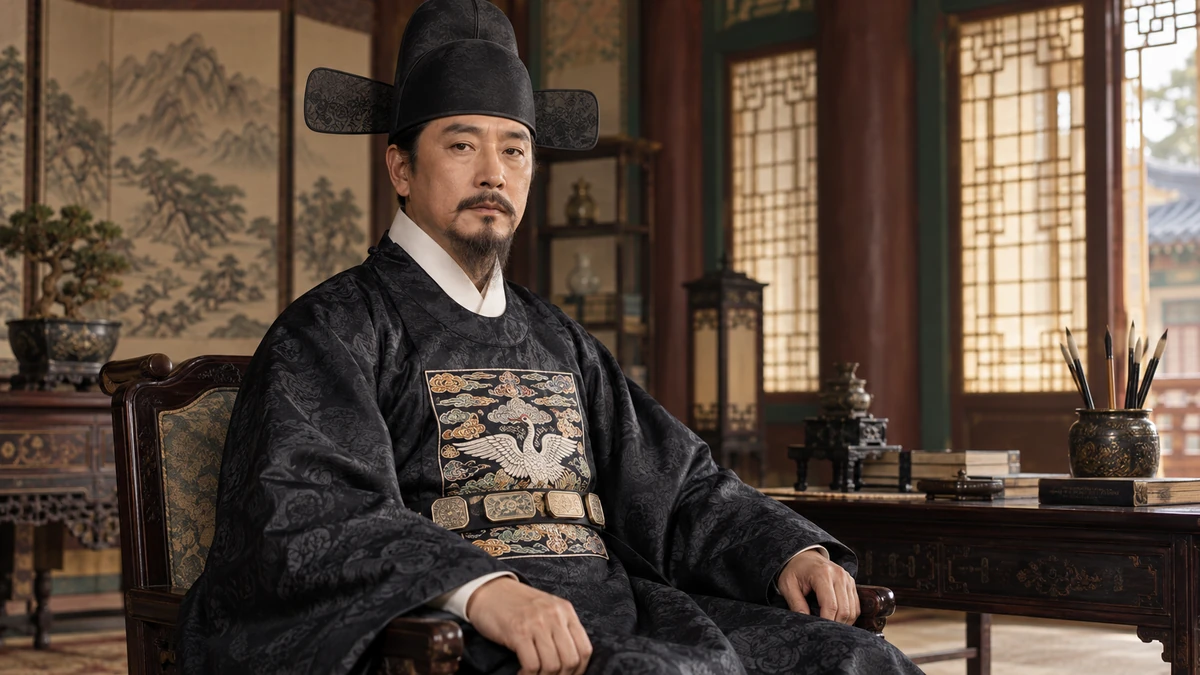
Image to help understand the article
A Korean independence story with an American chapter
For Americans who know South Korea through K-pop, Samsung or the U.S. troops stationed on the peninsula, Min Young-hwan’s story opens a window onto a very different relationship. At the beginning of the 20th century, Korea was not an American treaty ally. It was a vulnerable state trying to preserve its sovereignty, and Min, a senior official with close royal connections, was searching for help in Washington as Japan tightened its grip.
His efforts involved a future Korean president, an introduction to a former American diplomat and an appeal that reached the U.S. secretary of state. They did not prevent Japan from imposing a protectorate on Korea in 1905. Min subsequently died by suicide after protesting the agreement, leaving a final message urging his compatriots to pursue education, solidarity and the recovery of their independence.
Remembered in South Korea as a patriotic figure, Min deserves attention for more than the circumstances of his death. His career captures a difficult transition: from government built around royal authority and elite family networks toward arguments for institutional reform and greater rights for the population. For American readers, it also reveals the distance between diplomatic access and actual protection — a distinction that shaped Korea’s encounter with the United States long before today’s alliance.
A palace insider in an unsettled country
Min was born in Seoul on Aug. 7, 1861, into a family closely connected to the royal household. His father was Min Gyeom-ho, but he was formally adopted into the household of a paternal uncle who had no son. Such arrangements within elite Korean families helped maintain a family line and its ancestral obligations; they should not be understood solely through the modern American framework of adoption.
His aunt was the mother of King Gojong, making Min the monarch’s first cousin. He was also related, much more distantly, to Queen Min, later known as Empress Myeongseong. The distinction matters because describing every prominent member of the Min clan as an immediate relative of the queen obscures how these extended networks operated. A shared clan identity could connect people across many generations without making them close family.
In 1878, Min passed the civil service examination, the principal route into the scholarly bureaucracy of the Joseon dynasty. These examinations tested mastery of the Confucian learning that underpinned government. They were not a modern merit system open on equal terms to everyone, but success carried considerable prestige. Combined with his family connections, it helped propel Min into senior posts while still young.
That privilege did not shield him from political violence. During the 1882 military uprising, his biological father was killed. Min left office to observe mourning and returned to government in 1886. He subsequently held senior responsibilities involving personnel, justice, ceremonial affairs and administration of the capital. His early career thus combined the advantages of establishment membership with personal exposure to the instability threatening that establishment.
What travel changed — and what it could not
Min’s first formal assignment involving the United States never brought him to his post. Appointed minister to Washington in 1895, he resigned after the assassination of Empress Myeongseong that October. The killing, carried out by Japanese agents and their collaborators, deepened the struggle over foreign influence at the Korean court. Min again withdrew from political life amid changes in the government.
He did travel abroad the following year, representing Korea at the coronation of Russia’s Czar Nicholas II. His journey took him through Japan, the United States and Britain, exposing him to societies and institutions outside Korea. In 1897, he received another diplomatic assignment covering six European powers: Britain, Germany, France, Russia, Italy and Austria-Hungary.
These travels mattered because Korea’s predicament was not simply whether to accept or reject foreign influence. Its officials were debating which outside practices might strengthen the country enough to resist domination. Railways, modern armed forces and new administrative arrangements were instruments of power as well as symbols of change. Learning from foreign states did not necessarily mean welcoming their political control.
Min urged Gojong to reform political institutions and expand people’s rights, drawing on European examples. That put him at odds with the ruler’s preference for concentrated royal authority. According to the supplied historical account, only the military component of his proposals was adopted. Min also actively supported the Independence Club, established in 1896, which advocated reform and national independence. His position alienated conservative members of his own extended family network and contributed to his removal from important posts.
It would be misleading to turn Min into a fully formed advocate of contemporary American democracy. He remained a royal official, and loyalty to the sovereign remained central to his outlook. But it would be equally misleading to portray him as merely defending aristocratic privilege. His reform proposals show an insider recognizing that the existing political order needed to change if the country was to survive.
The Washington connection
By 1904, Min was pursuing another avenue: unofficial diplomacy through Syngman Rhee, then a younger political activist who had been imprisoned in Seoul. In connection with Rhee’s release, Min entrusted him with a mission to convey Gojong’s wishes to President Theodore Roosevelt. Rhee would become South Korea’s first president decades later, but at this stage he was seeking access to American decision-makers on behalf of a threatened Korean state.
After arriving in Washington on Dec. 31, 1904, Rhee approached Hugh A. Dinsmore with a letter of introduction from Min. Dinsmore was an Arkansas congressman and former U.S. diplomatic representative in Seoul, not a senator. His previous service in Korea offered a plausible connection to Min, although the supplied account does not establish precisely how the two men’s relationship began.
Dinsmore arranged a meeting with Secretary of State John Hay. Rhee spoke with Hay for about half an hour and reported a favorable response. But a cordial reception was not a security guarantee, and Hay died in July 1905. Nothing in the account establishes that the meeting produced an American commitment to defend Korean sovereignty.
The correspondence is revealing in other ways. Rhee prepared a detailed report for Min and fellow senior official Han Gyu-seol. To evade Japanese censorship, it was routed through Dinsmore and diplomatic mail to the American representative in Korea. Min was therefore doing more than issuing appeals at court: He was cultivating contacts, supporting an overseas intermediary and receiving intelligence about the possibilities of American assistance.
In August 1905, Min sent $300 to commend the patriotic efforts of Rhee and Yun Byeong-gu, another Korean working on the diplomatic appeal, regardless of the outcome. The payment documents practical support for their work. It does not, by itself, establish the scale or effectiveness of the mission. The larger point is that Koreans were actively seeking options abroad, even as the international balance of power narrowed their room to act.
What this history means for the United States
For an American audience, Min’s outreach complicates a familiar story in which U.S.-Korean relations begin with the Korean War. Diplomatic relations stretched back to the 1882 treaty between the United States and Korea. Yet those earlier connections did not amount to the mutual defense relationship Washington and Seoul established in 1953. Min’s experience belongs to a period when Korean expectations of American help exceeded Washington’s willingness to provide it.
The broader American policy context is important. Roosevelt’s administration was managing competition among imperial powers in East Asia, not building the alliance system Americans recognize today. The United States had acquired the Philippines after the Spanish-American War, while Japan was emerging from its war with Russia as the dominant regional military power. Roosevelt helped broker the Treaty of Portsmouth ending that war in 1905.
Also that year, conversations between U.S. Secretary of War William Howard Taft and Japanese Prime Minister Taro Katsura reflected American acceptance of Japanese predominance in Korea. The resulting memorandum was not a formal treaty exchanging Korea for the Philippines, despite the shorthand sometimes used to describe it. Still, the episode helps explain why Korean appeals encountered a U.S. government whose strategic calculations differed sharply from their own.
For Americans today, the lesson is not that the current alliance is equivalent to those early diplomatic contacts. It plainly is not. The lesson is that the alliance was a later construction, not an inevitable expression of uninterrupted friendship. Understanding the earlier history makes it easier to grasp why sovereignty and the reliability of powerful partners carry such weight in Korean political memory.
The connection also matters for American audiences and companies engaging with Korean culture. Streaming services, entertainment businesses and global brands operate in a market where historical memory can shape how stories are received. Min’s biography is not evidence of a particular commercial trend, and the supplied account identifies no film, television project or corporate initiative about him. But it supplies context that cultural familiarity alone cannot: Enjoying Korean entertainment does not automatically mean understanding the historical experiences behind Korean views of independence and foreign power.
The agreement Korea remembers as coerced
On Nov. 17, 1905, Japan imposed the protectorate agreement commonly called the Eulsa Treaty in English. Korean usage often calls it the Eulsa Neukyak, emphasizing that it was coerced rather than freely negotiated. Eulsa identifies the year in the traditional East Asian calendrical cycle; it is not the name of a person or place.
The agreement stripped Korea of independent control over its foreign relations and established Japanese oversight through a resident-general. It was a decisive step toward Japan’s formal annexation of Korea in 1910, but the two events should not be collapsed into one. Min died during the destruction of Korea’s diplomatic sovereignty, five years before annexation.
By then, the state was formally the Korean Empire, proclaimed by Gojong in 1897. For Americans, the word empire can suggest a government ruling extensive overseas possessions. In this case, the imperial title also asserted Korea’s sovereign standing in an international order dominated by empires. The new name did not remove the country’s military and diplomatic vulnerability.
Min and fellow senior official Jo Byeong-se repeatedly petitioned against the protectorate agreement. In a monarchy, such written appeals were an established way for officials to challenge policy and press the ruler to act. Their protests were suppressed by Japanese military police. This sequence is essential to understanding Min’s final days: His opposition first took the form of political action, not a decision to die.
A final appeal centered on those who would live
After those efforts failed, Min died by suicide on Nov. 30, 1905, at age 44. His final written appeal addressed Korea’s roughly 20 million compatriots, expressing anguish over the humiliation of the country and the danger confronting its people. It also linked his personal responsibility as a royal servant with a broader obligation to the national community.
South Korean remembrance has often understood his death as an act of patriotic sacrifice. A responsible account can explain that historical interpretation without presenting suicide as necessary, exemplary or an effective solution to political crisis. The documented substance of his career — reform proposals, diplomatic initiatives and petitions — should not disappear behind the manner of his death.
His final message is notable for what it asked of survivors. He urged them to strengthen their resolve, devote themselves to learning and work together to regain freedom and independence. Those appeals moved beyond the immediate struggle inside the palace. They imagined a national future dependent on the efforts of ordinary compatriots as well as officials.
The tension is striking: A man formed by hereditary status and royal service placed hope in education and collective action. That does not make his politics identical to later independence movements or to the democratic institutions of present-day South Korea. It does show why his words could speak beyond the courtly world in which he had risen.
How a royal official became part of national memory
Min received posthumous honors from the monarchy, including elevation in official rank. Such recognition was not simply a promotion entered after retirement. In the political culture of the period, posthumous titles and ceremonial honors established how the state expected a person’s service and moral standing to be remembered.
His commemorative name, Chungjeong, conveys loyalty and uprightness. It survives in the name of Seoul’s Chungjeongno, a reminder that an ordinary address or transit destination can carry historical meaning. For American readers, the general mechanism is familiar: Streets and public spaces named for national figures turn commemoration into part of daily geography, even when passersby know little about the person behind the name.
In 1962, South Korea awarded Min the Republic of Korea Medal of the Order of Merit for National Foundation. His grave in Yongin, south of Seoul, became a designated provincial monument in 1973. The tombstone bears calligraphy by Rhee, linking the official who supported the Washington mission to the man who later led the Republic of Korea.
That connection does not erase the differences between their lives or resolve the controversies surrounding Rhee’s later authoritarian presidency. It demonstrates how the history of the late monarchy, the independence struggle and the founding of South Korea overlap. National memory often joins these periods more neatly than the people living through them could have anticipated.
For readers encountering Korea primarily through its contemporary global success, Min’s life offers a necessary change of perspective. The country that now exports popular culture and advanced technology once struggled to make its diplomatic appeals count. His story is not only about a final protest in 1905. It is about attempted reform, the limits of American assistance and the unfinished work he assigned to those who survived him: learning, cooperation and the restoration of self-government.
Comments
Post a Comment