Bibimbap Nutrition Breakdown: What America’s Growing Korean Food Audience Should Know About Korea’s Iconic Mixed Rice Dish
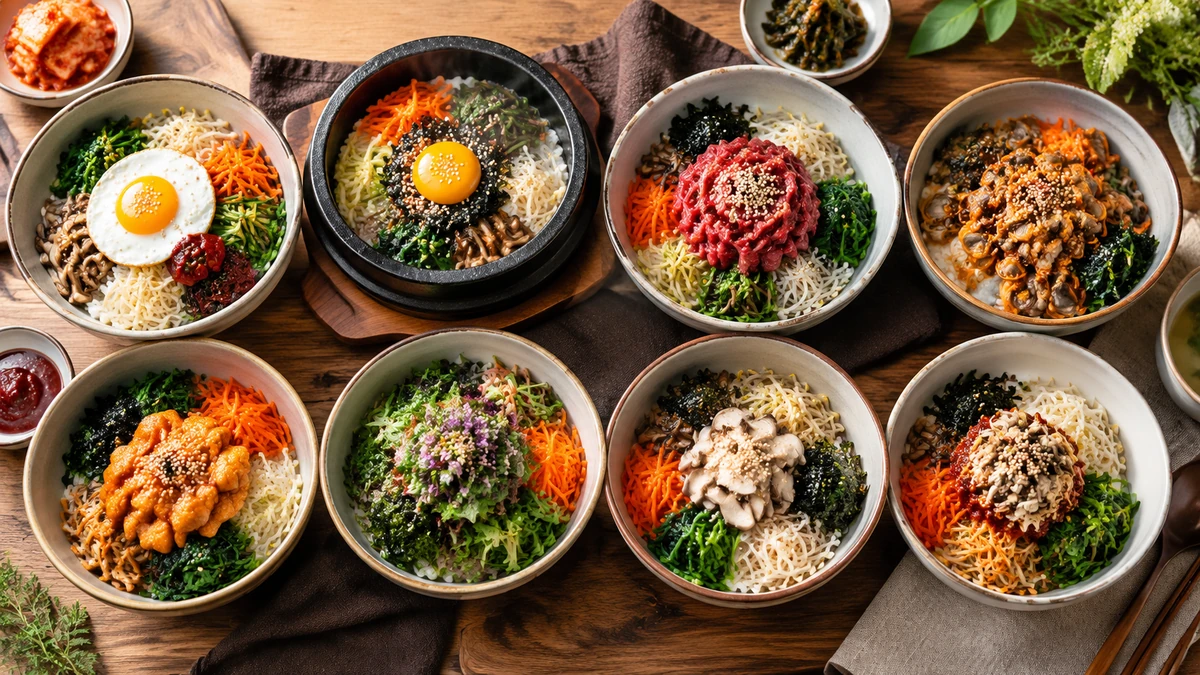
Image to help understand the article
Beyond the Bowl: Why Bibimbap’s Nutrition Depends on What Goes Into It
Bibimbap, one of South Korea’s most recognizable dishes, is often introduced to international diners as a colorful bowl of rice topped with vegetables, protein, and a spicy sauce. For many Americans, it represents the accessible side of Korean cuisine: a balanced-looking meal that combines multiple ingredients in a single dish, similar in spirit to a grain bowl or a composed salad. But new nutrition comparisons from South Korea show that the word “bibimbap” describes a broad category of meals rather than one fixed recipe.
According to nutrition data from South Korea’s Ministry of Food and Drug Safety, different types of bibimbap can vary significantly in calories, carbohydrates, protein, fat, sugar, and sodium depending on their ingredients. The comparison used a standard 100-gram serving size and examined several varieties, including traditional bibimbap, stone pot bibimbap, beef tartare bibimbap, cockle bibimbap, sea squirt bibimbap, herbal bibimbap, and ready-to-cook versions.
The findings highlight an important point for consumers: a dish’s reputation does not always reveal its complete nutritional profile. Just as American diners distinguish between a vegetable-heavy grain bowl and a meat-loaded burrito bowl, Korean food choices can change substantially depending on preparation methods and toppings.
Traditional bibimbap recorded 142 calories per 100 grams, with 18.84 grams of carbohydrates, 6.86 grams of protein, 4.32 grams of fat, 0.05 grams of sugar, and 232 milligrams of sodium. Meanwhile, beef tartare bibimbap, known in Korea as yukhoe bibimbap, had a similar calorie level at 147 calories but showed differences in nutrients, including higher carbohydrates at 22.92 grams and sodium at 446 milligrams.
For international audiences discovering Korean cuisine, these differences provide a closer look at how Korean cooking balances flavor, texture, and nutrition through ingredient choices.
Calories and Carbohydrates: Small Differences Between Popular Varieties
The nutrition comparison found that calorie levels among bibimbap varieties were not dramatically different, but some options stood out. The lowest calorie item in the comparison was stone pot bibimbap sauce, recorded at 86 calories per 100 grams. It was followed by stone pot bibimbap at 101 calories and ready-to-cook cockle bibimbap at 103 calories.
On the higher end, stone pot bibimbap and beef tartare bibimbap each recorded 147 calories per 100 grams. Traditional bibimbap followed closely at 142 calories, while sea squirt bibimbap recorded 137 calories and herbal bibimbap recorded 128 calories.
Carbohydrate levels showed wider differences. Stone pot bibimbap had the highest carbohydrate content among the listed varieties at 24.68 grams per 100 grams. Beef tartare bibimbap followed at 22.92 grams, and sea squirt bibimbap reached 22.68 grams. By comparison, the ready-to-cook cockle bibimbap contained 11.01 grams of carbohydrates, while stone pot bibimbap sauce contained 13.99 grams.
These differences demonstrate how the structure of the dish matters. Rice remains a central part of bibimbap, but the ratio between rice, vegetables, meat, seafood, sauce, and other toppings can influence the final nutritional composition.
In Korean dining culture, bibimbap is also highly adaptable. Restaurants may offer regional versions featuring local ingredients, seasonal vegetables, seafood, or specialty sauces. This flexibility is one reason the dish has traveled successfully overseas, where chefs often adapt it using locally available ingredients while keeping the basic concept of mixing components together before eating.
Sodium and Protein Offer Different Ways to Evaluate a Bibimbap Choice
While calories often receive the most attention from consumers, sodium and protein levels can be equally important depending on personal dietary goals. The Korean nutrition comparison showed particularly noticeable differences in sodium levels among bibimbap varieties.
The highest sodium content was found in ready-to-cook cockle bibimbap at 469 milligrams per 100 grams, followed by beef tartare bibimbap at 446 milligrams and stone pot bibimbap at 337 milligrams. Traditional bibimbap contained 232 milligrams of sodium, while herbal bibimbap recorded 243 milligrams and sea squirt bibimbap recorded 286 milligrams.
On the lower end, stone pot bibimbap recorded 93 milligrams of sodium, while stone pot bibimbap sauce recorded 116 milligrams. These differences show that sauces and seasoning methods can significantly affect the nutritional profile of Korean dishes.
Protein levels also varied. Ready-to-cook cockle bibimbap recorded the highest protein content among the varieties listed, with 7.33 grams per 100 grams. Traditional bibimbap followed with 6.86 grams, while beef tartare bibimbap contained 6.39 grams.
Other varieties had lower protein levels. Herbal bibimbap contained 2.98 grams of protein, while stone pot bibimbap sauce contained 2.81 grams. The comparison reinforces that the name of a dish alone does not determine its nutritional value; the specific ingredients play the central role.
For American consumers, this is similar to the difference between ordering a sushi roll with lean fish and vegetables versus one featuring fried ingredients and heavy sauces. The category may be the same, but the nutritional outcome can vary widely.
What Bibimbap’s Nutrition Story Means for American Consumers and the U.S. Food Market
Korean food has become increasingly familiar to American consumers over the past decade. The popularity of Korean restaurants, Korean entertainment, and global interest in Korean culture has helped introduce dishes such as bibimbap, kimchi, Korean barbecue, and tteokbokki to broader audiences.
For the United States, the growing interest in Korean cuisine creates new opportunities for restaurants, food companies, and consumers seeking diverse meal options. Bibimbap fits several trends already visible in the American market, including interest in customizable meals, plant-forward eating, and globally inspired food choices.
However, the nutrition comparison also shows why greater transparency may become increasingly important as Korean dishes expand internationally. American consumers often look for clear information about calories, protein, sodium, and ingredients when choosing meals. Korean food businesses entering the U.S. market may benefit from explaining how different versions of traditional dishes differ rather than presenting them as identical products.
The United States and South Korea have developed close cultural and economic ties, and food has become one of the most visible forms of cultural exchange. Similar to how Japanese sushi moved from a niche cuisine to a mainstream American dining category, Korean dishes are increasingly being interpreted through American expectations around convenience, nutrition, and personalization.
Bibimbap’s flexibility may be one reason it has strong potential in the U.S. market. A restaurant can highlight vegetable-focused versions for health-conscious customers, protein-rich options for fitness-oriented consumers, or regional specialties for diners interested in Korean culinary traditions. The nutrition data suggests that educating customers about these differences could become part of the dish’s continued global growth.
A Korean Classic That Reflects Modern Choices About Food
Bibimbap has cultural meaning beyond its nutritional numbers. The dish represents a Korean approach to combining multiple flavors, colors, and textures in one meal. Traditionally, diners mix the ingredients together with sauce before eating, creating a unified dish from separate components.
This idea of harmony is closely connected to Korean culinary traditions, where meals often include several side dishes and emphasize balance between different ingredients. Bibimbap’s visual appeal, with vegetables arranged by color before mixing, has also helped make it popular on social media and among international diners.
At the same time, modern consumers increasingly want meals that match individual goals. Some people focus on reducing calories, others prioritize protein intake, and some monitor sodium consumption. The nutrition comparison of eight bibimbap varieties reflects a broader global shift toward more informed food choices.
Rather than identifying one “best” bibimbap, the data suggests that the right choice depends on personal priorities. Someone seeking lower calories may consider options such as stone pot bibimbap sauce or stone pot bibimbap. Someone looking for higher protein may consider ready-to-cook cockle bibimbap or traditional bibimbap. Those watching sodium intake may want to compare seasoning and sauce levels carefully.
How International Diners Can Approach Korean Food With More Information
As Korean cuisine continues to gain recognition worldwide, nutrition information can help international diners better understand the variety within Korean cooking. Foods that appear similar on a menu may contain different ingredients and offer different nutritional profiles.
The bibimbap comparison from South Korea provides a useful example of how traditional foods can adapt to modern expectations. It does not suggest that one version is universally better than another. Instead, it shows that consumers can make choices based on their own needs and preferences.
For American diners, bibimbap can be viewed much like other customizable meals popular in the United States. The final nutritional profile depends on the combination of ingredients, portion sizes, and preparation methods. Understanding those details allows consumers to enjoy Korean cuisine while making choices that fit their lifestyles.
As Korean food continues its international expansion, dishes like bibimbap may become not only symbols of Korean culture but also examples of how traditional cuisine can meet modern demands for variety, transparency, and personalization.
Comments
Post a Comment