Image to help understand the article
A Life Obscured by Conflicting Records
Chae Eung-eon, remembered as one of the last commanders of Korea’s anti-Japanese “righteous armies,” was born in 1883 and executed on Nov. 4, 1915. He also used the names Chae Eung-won, Chae Eung-gyeong and Chae Do-seok.
Little reliable information survives about his family or childhood. Historical records identify several possible birthplaces across what are now North and South Korea. A court judgment issued after his arrest listed his address in Seongcheon County, in present-day South Pyongan province, leading historians to believe he may have come from that area. Accounts also differ over whether he had been a junior military officer or a poor farmer.
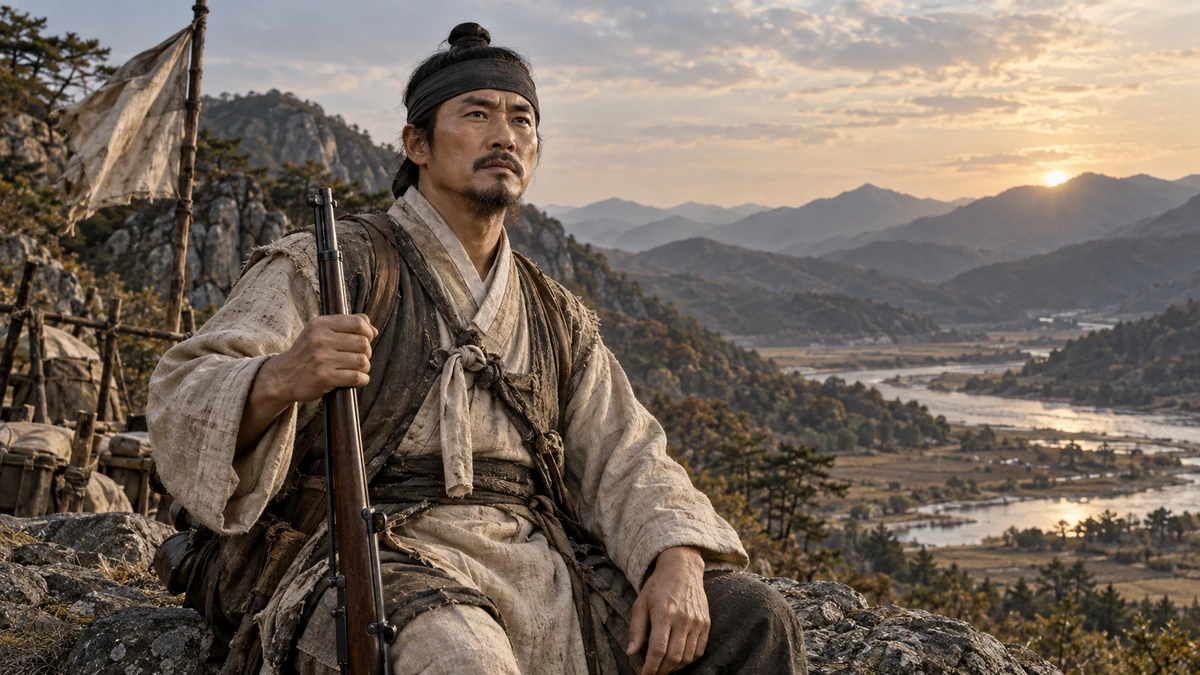
Chae joined an armed resistance unit around the seventh lunar month of 1907, during the final years of the Korean Empire. The fighters were known as uibyeong, or “righteous armies” — volunteer forces that took up arms against expanding Japanese control. Chae initially recruited troops under commander Seo Tae-sun and later assumed command after Seo was killed.
Armed Resistance Across Korea’s North-Central Regions
Chae reorganized his forces in Hwanghae province in spring 1908 and issued a declaration calling for national resistance that May. His fighters attacked Japanese police and military police posts, seizing modern rifles that strengthened their combat capabilities. Depending on circumstances, his force ranged from several dozen to several hundred members.
As Japanese authorities intensified their crackdown, Chae’s operations spread across Hwanghae, Gangwon and South Hamgyong provinces. He sometimes joined forces with other resistance commanders, including Gang Du-pil and Gang Cheon-dol. When pursuit became too intense, he divided his fighters into groups of 10 to 15 and used guerrilla tactics.
Fighting After Japan’s Annexation
Chae continued his campaign after Japan formally annexed Korea in 1910. His forces moved through areas including Icheon, Anbyon, Seongcheon and Goksan, attacking colonial security units and cutting down utility poles to disrupt communications.
His fighters attacked a Japanese guard unit in Icheon County in September 1910. In June 1913, they raided a military police outpost in Goksan County, killing a military police officer and an auxiliary.
By 1914, Chae was raising money to sustain the resistance and using Baengnyeon Mountain in Goksan as a principal base. Japanese authorities deployed five search teams under the commander of the Pyongyang military police beginning that September. Each team consisted of one senior military police officer and four auxiliaries. In November, authorities offered a reward of 280 won for Chae’s capture.
Capture and Execution
Japanese military police arrested Chae on July 5, 1915, while he was collecting funds in Seongcheon County. A surviving photograph shows him barefoot and handcuffed beside a Japanese officer. He was transferred to Pyongyang and imprisoned there.
The Pyongyang appellate court sentenced him to death on Sept. 21 after convicting him of murder and robbery, criminal charges used by the colonial judiciary to prosecute his armed activities. Chae appealed, but the higher court rejected his case on Oct. 28. He was hanged on Nov. 4.
Remembered as the Last Righteous Army Commander
Chae is widely described in Korean history as the final righteous army commander of the Korean Empire era. He maintained an armed campaign from 1907 until his capture in 1915, years after annexation had dismantled Korea’s sovereignty. Organized resistance inside the country largely faded after his arrest.
His death is regarded as marking the close of roughly two decades of righteous army resistance that began after the 1895 assassination of Queen Min, later known as Empress Myeongseong. Armed opposition to Japanese rule continued, but its leadership and theaters of operation shifted significantly.
South Korea posthumously awarded Chae the Order of Merit for National Foundation, Independence Medal, in 1962. His ability to evade colonial forces and continue fighting across several provinces made him an enduring symbol of Korea’s early armed independence movement.
Comments
Post a Comment