How Christopher Nolan’s ‘The Odyssey’ Sent a 2004 ‘Troy’ Film Back Into the Spotlight in South Korea
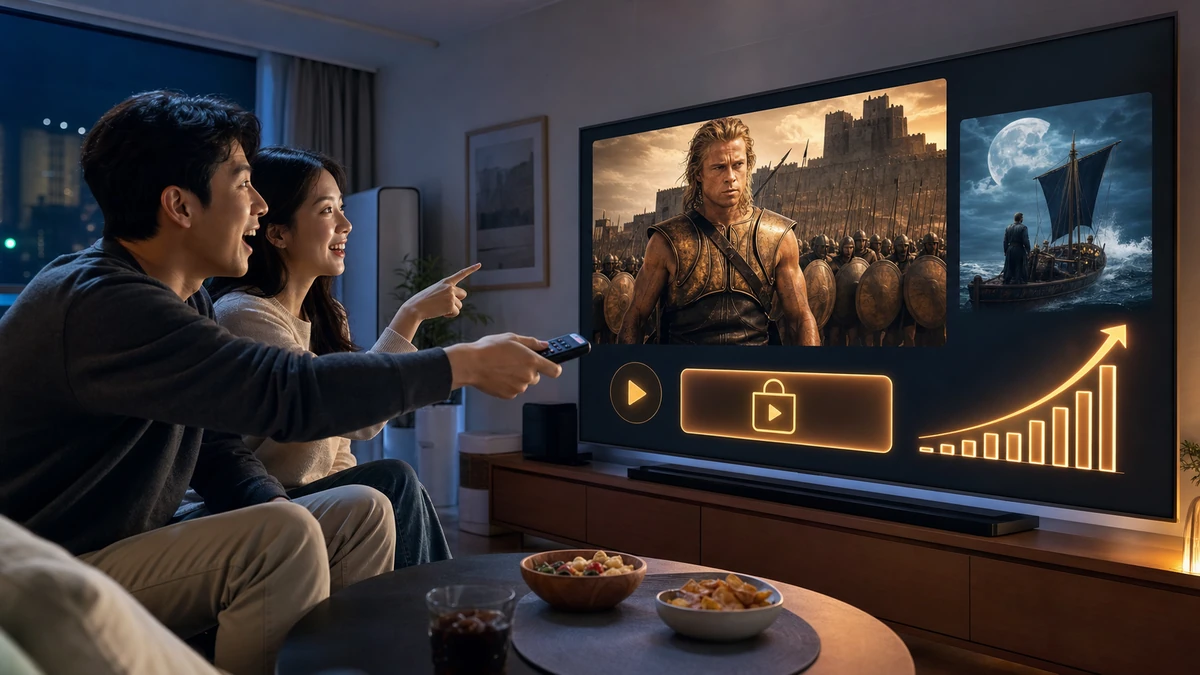
Image to help understand the article
A New Hollywood Epic Revives an Old Story in South Korea
A blockbuster inspired by ancient Greek mythology has created an unexpected ripple effect in South Korea: audiences are returning to a 22-year-old war epic after watching a new adaptation of one of the world’s oldest literary journeys.
Christopher Nolan’s “The Odyssey” has not only drawn millions of moviegoers to theaters but has also driven a dramatic surge in online purchases of the 2004 film “Troy.” According to South Korea’s Korean Film Council online distribution tracking system, purchases of “Troy” through internet-based television platforms including SK Btv, LG Uplus TV and Genie TV reached 23,653 transactions between Aug. 1 and Aug. 26. That was a 4,020.7% increase from July, when the film recorded just 574 purchases.
The phenomenon highlights a growing pattern in global entertainment: audiences are no longer consuming movies as isolated experiences. Instead, a successful new release can encourage viewers to explore related stories, historical backgrounds and earlier interpretations across multiple platforms.
For American audiences, the trend resembles how a new installment in a major franchise can send older films back up streaming charts. But in this case, the connection is more unusual. “Troy” was not a direct sequel, was not directed by Nolan and does not share the same cast as “The Odyssey.” The two films are connected through mythology, storytelling traditions and Nolan’s own creative history.
From the Trojan War to Odysseus’ Long Journey Home
The reason South Korean viewers have been rediscovering “Troy” is rooted in the timeline of ancient Greek mythology. “Troy,” released in 2004, dramatizes the Trojan War, the legendary conflict between the Greeks and the city of Troy. The story centers on figures familiar from classical literature: Achilles, Hector, Paris and Helen.
The film featured major Hollywood stars including Brad Pitt as Achilles, Eric Bana as Hector, Orlando Bloom as Paris and Diane Kruger as Helen. While the movie took creative liberties with the mythology, it introduced millions of viewers to one of Western civilization’s most enduring legends.
“The Odyssey,” meanwhile, follows the next chapter of that mythology: the journey of Odysseus as he attempts to return home to Ithaca after the Trojan War. Nolan’s film stars Matt Damon as Odysseus and explores the hero’s struggle against monsters, gods and personal challenges on his long voyage home.
For viewers watching both films together, the experience becomes a larger historical and emotional narrative. “Troy” explains the war that shaped the world of these heroes, while “The Odyssey” explores what happened after the battlefield disappeared and the survivors attempted to rebuild their lives.
This kind of audience-driven storytelling has become increasingly common in modern entertainment. Viewers are not simply watching what studios release next; they are actively constructing their own viewing order and searching for deeper connections between stories.
Nolan’s Two-Decade Creative Connection to ‘Troy’
The renewed interest in “Troy” carries a special connection to Nolan himself. Before creating “The Odyssey,” Nolan had encountered the world of the Trojan War during the development process of earlier projects, including work related to “Troy.” Although he did not direct the 2004 film, the imagery of ancient warfare and the Trojan Horse remained part of his creative memory.
That long-lasting influence became part of the foundation for his own interpretation of Homer’s epic. The current South Korean audience response has therefore created an unusual cultural loop: a filmmaker’s decades-old inspiration has encouraged viewers to revisit a different filmmaker’s earlier interpretation of the same mythology.
Unlike traditional franchises such as superhero universes or long-running science-fiction series, the connection between “Troy” and “The Odyssey” is based on shared cultural heritage rather than corporate storytelling continuity. There are no official crossover characters, no connected cinematic universe and no marketing campaign requiring audiences to watch both films.
Instead, viewers are creating the connection themselves. They are exploring how different filmmakers interpret the same ancient stories and how those interpretations change depending on the era, technology and cultural environment in which they are produced.
South Korea Shows How Theaters and Streaming Can Work Together
The “Troy” resurgence also reveals how movie consumption is changing in South Korea. “The Odyssey” became a major theatrical success after opening Aug. 5, maintaining the No. 1 position at the box office and surpassing 8 million admissions by its 24th day of release, according to the reported figures.
The film’s appeal was closely tied to its large-scale cinematic presentation. It was promoted as the first film shot entirely with IMAX film cameras, emphasizing the type of visual spectacle designed for premium theaters.
“Troy,” by contrast, found renewed life through home entertainment platforms. Rather than competing with the theatrical experience, the older film served a different purpose: helping audiences understand the mythology and background behind the new release.
This illustrates a broader shift in the entertainment industry. The success of one movie can create demand across multiple platforms, including theaters, digital rentals, streaming services and physical media. A film’s commercial value is increasingly measured not only by its opening weekend but also by how it influences audience behavior afterward.
South Korea has become one of the world’s most digitally connected entertainment markets, with viewers accustomed to accessing movies, television shows and music through online services. The “Troy” revival demonstrates how quickly audience interest can move from cinemas to digital platforms when a cultural conversation gains momentum.
What This Means for the United States and Hollywood’s Global Strategy
The South Korean reaction to “The Odyssey” offers lessons for American studios and entertainment companies. Hollywood has long relied on sequels, prequels and shared universes to encourage audiences to revisit older content. The Marvel Cinematic Universe, Star Wars franchise and other major properties have built entire business models around interconnected storytelling.
But the “Troy” example shows that audiences can create connections even when studios do not design them. A new film can generate interest in older works simply because viewers want to understand the larger cultural landscape behind a story.
For U.S. companies operating in the global entertainment market, this trend reinforces the importance of maintaining access to older titles across digital platforms. A decades-old movie can suddenly become valuable again when a new cultural moment brings it back into public attention.
The development is also relevant to the growing entertainment relationship between the United States and South Korea. Korean audiences have become an important market for Hollywood blockbusters, while Korean films, television dramas and music have expanded their influence among American consumers. The same audiences that helped Korean content reach global platforms are also demonstrating sophisticated viewing habits when engaging with Hollywood productions.
American streaming services and studios are increasingly competing in a world where audiences move freely between domestic and international content. A viewer in Seoul revisiting “Troy” after watching “The Odyssey” represents the same global behavior seen among American fans who explore earlier films, behind-the-scenes material or related works after discovering a major release.
The key question for the industry is whether studios can better recognize and support these audience-driven journeys. Rather than treating older titles as finished products, companies may increasingly view their libraries as living collections that can regain commercial and cultural value when new stories bring them back into conversation.
The Rise of the “Story Universe” Beyond Traditional Franchises
The return of “Troy” in South Korea reflects a larger transformation in how people experience entertainment. Audiences today often approach films like researchers, looking for connections, historical context and deeper meaning beyond a single viewing.
This behavior is especially visible among younger viewers who grew up with streaming platforms, online communities and instant access to global media libraries. They are comfortable moving backward and forward through time, comparing different versions of stories and creating their own interpretations.
The success of “The Odyssey” did not simply revive interest in an older movie. It revived interest in an entire mythology. The Trojan War, ancient Greek heroes and classical literature became part of a modern entertainment conversation involving Hollywood filmmaking, digital distribution and international audiences.
While the long-term impact of the “Troy” sales surge remains uncertain, the immediate result is clear: a new blockbuster has transformed the way audiences engage with older content. In South Korea, a 2004 film has returned to the spotlight because millions of viewers wanted to understand the world behind a new epic.
For Hollywood and global entertainment companies, the lesson is significant. The next major hit may not only create demand for its own sequel. It may also reopen the door to stories audiences thought they had already seen.
Comments
Post a Comment