Image to help understand the article
Japan’s Younger Politicians Explore a New Route for China Dialogue
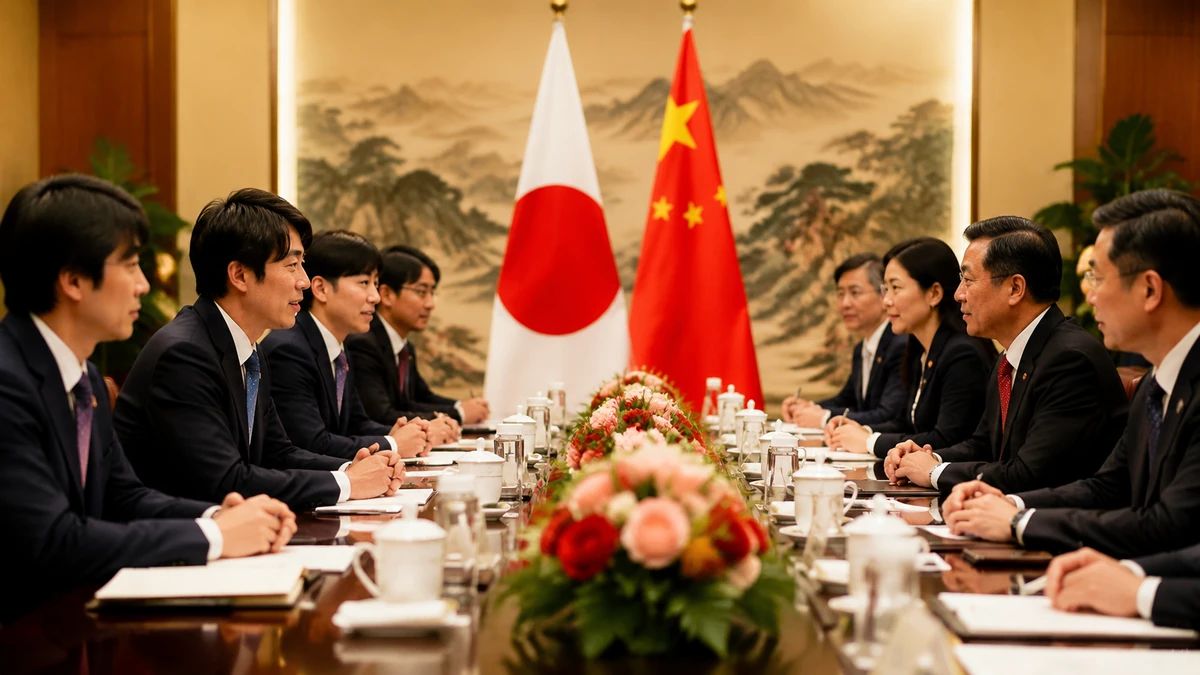
A group of younger Japanese lawmakers is preparing to visit China in September 2026, a move that could become a small but significant test of whether political dialogue can continue between two of East Asia’s most influential powers despite deep disagreements over security and regional affairs.
The planned trip involves members of the Japan-China Friendship Parliamentarians’ Union, a bipartisan group of Japanese legislators that has historically worked to maintain communication between Tokyo and Beijing. Hiroshi Moriyama, the group’s chairman, said lawmakers are reviewing plans for a China visit and will coordinate details such as timing and possible meetings with Chinese counterparts.
For audiences in the United States, the development may resemble the kind of behind-the-scenes political engagement that has often taken place between Washington and Beijing during periods of tension. While lawmakers do not control national foreign policy in the same way as executive branch officials, congressional and parliamentary exchanges can provide channels for communication when official relations become strained.
The proposed visit does not represent a breakthrough agreement between Japan and China. Instead, it reflects a broader diplomatic reality in Asia: countries with major economic ties often seek ways to manage competition rather than allow disagreements to completely shut down communication.
Taiwan Issue Remains at the Center of Japan-China Tensions
The most sensitive issue affecting Japan-China relations is Taiwan, the self-governing island that Beijing claims as part of its territory. China considers Taiwan a sovereignty issue and has repeatedly warned other governments against actions or statements that appear to support Taiwanese independence.
Japan has increasingly discussed the security implications of a possible Taiwan crisis because of Taiwan’s geographic proximity to Japanese territory and the importance of regional shipping routes. Japanese officials have expressed concern that instability around Taiwan could affect Japan’s own national security environment.
Tensions increased after comments by former Japanese Prime Minister Sanae Takaichi in November 2025 suggested that Japan could consider involvement in a Taiwan-related emergency under certain circumstances. Beijing strongly criticized the remarks, arguing that Japan should not interfere in what China considers an internal matter.
The disagreement highlights a major challenge for Tokyo and Beijing. Japan and China are economically connected, with extensive trade, tourism, and business relationships, but their security views have become increasingly divided. The United States is also deeply involved in this regional balance because Washington is Japan’s key security ally and has long maintained close unofficial relations with Taiwan.
For American observers, the situation reflects a familiar foreign policy dilemma: how governments can maintain economic cooperation while managing strategic competition. Similar questions have shaped US-China relations in areas ranging from technology exports to military communication.
Parliamentary Diplomacy Attempts to Keep Communication Open
The planned visit follows recent contacts between Japanese lawmakers and Chinese officials. Last month, a delegation of Japanese politicians traveled to China and met with Chinese representatives, including Lu Kang, a Chinese official involved in international party and political relations.
The discussions reportedly included proposals to restart youth and cultural exchanges. These types of exchanges have historically played an important role in Japan-China relations, especially among younger generations who may have limited direct experience with the historical conflicts that shaped relations between the two countries.
Cultural diplomacy is often viewed as a lower-risk area where governments can maintain connections even when political disagreements continue. Student exchanges, tourism, academic cooperation, and local government partnerships can create relationships that survive periods of diplomatic tension.
However, previous meetings also demonstrated the limits of parliamentary diplomacy. Chinese officials reportedly maintained that Beijing’s approach toward Japan would not significantly change without movement from Tokyo on Taiwan-related issues. The message showed that while dialogue channels remain open, the most difficult disputes remain unresolved.
Experts generally view lawmakers’ exchanges as a tool for reducing misunderstandings rather than a mechanism that can quickly solve major security disputes. National strategy decisions involving military policy, alliances, and territorial questions remain controlled by national governments.
Why Japan-China Relations Matter Beyond East Asia
The relationship between Japan and China has consequences far beyond their borders. Together, the two countries represent some of the world’s largest economies and play central roles in Asian trade networks, manufacturing supply chains, and regional security discussions.
For global companies, stability between Tokyo and Beijing affects business planning. Japanese corporations have significant operations in China, while Chinese companies rely on regional markets and international investment networks. Political tensions can influence consumer sentiment, regulatory decisions, and corporate strategies.
The relationship has always contained both cooperation and rivalry. Japan and China have worked together economically while also facing disagreements over history, maritime issues, and security policy. This combination makes their relationship more complicated than a simple alliance or rivalry.
The proposed visit by younger Japanese lawmakers reflects an effort to preserve communication during a period when governments are under pressure from domestic politics and international competition. Younger politicians may also represent a long-term investment in maintaining contacts between future leaders.
At the same time, analysts caution against viewing the visit as evidence that a major diplomatic shift is already underway. The success of the trip will depend on whether both sides can use dialogue to reduce tensions without requiring immediate agreement on the most difficult issues.
What This Means for the United States and American Interests
The United States has a direct interest in how Japan and China manage their relationship. Japan is one of Washington’s closest allies in Asia, and the US-Japan security partnership is a central part of American strategy in the Indo-Pacific region.
For American companies, investors, and consumers, a stable East Asian environment matters because Japan and China remain major players in industries such as automobiles, electronics, advanced manufacturing, and technology. Disruptions caused by political crises could affect supply chains that connect Asian factories with American businesses.
American technology companies also watch regional tensions closely because disputes involving China, Japan, Taiwan, and semiconductor production have global consequences. Taiwan plays a major role in the global chip industry, while Japan and China are important parts of the broader technology ecosystem.
The United States has faced its own challenges maintaining communication with China while competing over security and technology issues. Similar to US-China diplomatic channels, political exchanges between Japanese and Chinese lawmakers can serve as a way to reduce risks during periods of heightened tension.
For American audiences interested in Asian affairs, the key question is not whether one parliamentary visit will transform relations, but whether it contributes to a larger pattern of crisis management. In international politics, maintaining communication can sometimes be as important as reaching agreements.
The visit could also affect American perceptions of Japan’s diplomatic role. Japan has traditionally been viewed as a close US ally, but Tokyo also seeks to manage its economic relationship with China. Balancing alliance commitments with regional economic realities is one of Japan’s most important foreign policy challenges.
A Test of Whether Dialogue Can Survive Strategic Competition
The planned China trip by younger Japanese lawmakers represents a small opening in one of Asia’s most complicated relationships. It does not remove disagreements over Taiwan, security policy, or regional influence. It does not guarantee improved relations between Tokyo and Beijing.
Instead, the initiative demonstrates how countries attempt to manage rivalry through multiple layers of contact. Government negotiations, business ties, academic exchanges, and parliamentary diplomacy all create channels that can prevent competition from becoming permanent confrontation.
The coming months will determine whether the proposed visit actually takes place and what discussions emerge from it. If successful, it may provide another communication channel between two countries that need stability despite deep differences.
For the United States and other international observers, the development offers a reminder that modern diplomacy is often less about dramatic breakthroughs and more about maintaining connections during difficult periods. In an increasingly competitive Asia, even limited dialogue can play a role in preventing misunderstandings from becoming larger crises.
Comments
Post a Comment