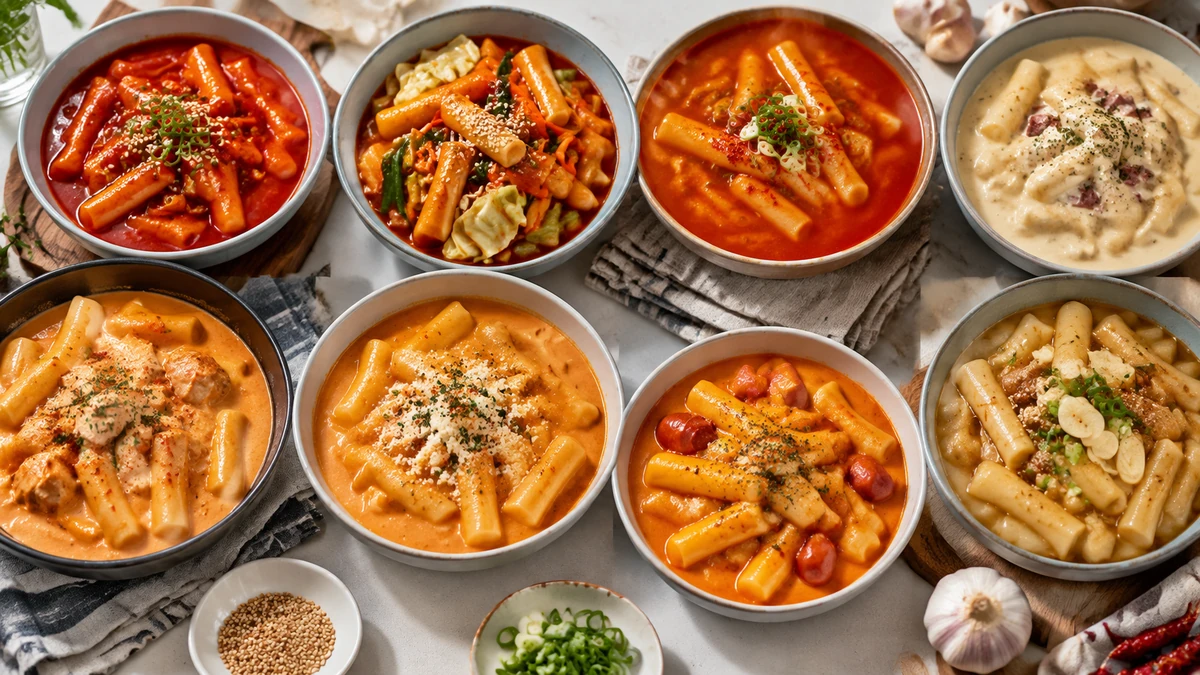
Image to help understand the article
Korea’s Beloved Spicy Rice Cake Dish Gets a Nutrition Breakdown
Tteokbokki, one of South Korea’s most recognizable street foods, is often associated with late-night snacks, school-area food stalls and casual meals shared among friends. The dish features chewy rice cakes simmered in a sweet and spicy sauce, but modern versions have expanded far beyond the traditional recipe. Cream-based sauces, chicken toppings and sausage additions have created a wide range of variations that appeal to changing tastes.
A recent comparison using data from South Korea’s Ministry of Food and Drug Safety’s Food Nutrition Database examined eight types of tteokbokki based on nutrition information per 100 grams. The analysis showed that the nutritional profile of the dish can vary significantly depending on ingredients and cooking methods.
For American consumers who have become increasingly familiar with Korean cuisine through K-pop, Korean dramas and the global expansion of Korean restaurants, tteokbokki represents another example of how traditional foods are being transformed for new audiences while maintaining cultural roots.
The comparison covered traditional tteokbokki, vegetable tteokbokki, soup-style spicy tteokbokki, carbonara-style tteokbokki, rose chicken tteokbokki, rose tteokbokki, rose Vienna sausage tteokbokki and garlic tteokbokki. The data was collected from studies conducted between 2017 and 2023.
Traditional Tteokbokki Versus Modern Variations: Ingredients Change the Numbers
Traditional tteokbokki showed 144 calories per 100 grams, with 25.96 grams of carbohydrates, 3.51 grams of protein, 2.96 grams of fat, 4.4 grams of sugar and 391 milligrams of sodium.
Because rice cakes are primarily made from rice, carbohydrates are naturally a major component of the dish. However, additional ingredients can significantly change the nutritional balance. Vegetable tteokbokki, for example, recorded 258 calories per 100 grams and 57.06 grams of carbohydrates, making it the highest-calorie option among the eight varieties compared.
At the same time, vegetable tteokbokki had a lower sodium level than traditional versions, with 269 milligrams per 100 grams. This highlights an important point for consumers: adding vegetables does not automatically mean fewer calories, because the overall recipe and portion composition determine the final nutritional profile.
In recent years, Korean food culture has increasingly embraced fusion dishes. The popularity of “rose” sauces, which combine spicy Korean flavors with creamy ingredients, reflects a broader trend similar to how American food culture has adapted dishes through combinations such as buffalo chicken pizza or mac-and-cheese variations.
Calories and Sodium Levels Differ Across Tteokbokki Styles
The nutrition comparison found meaningful differences in calorie content among the eight varieties. Soup-style spicy tteokbokki had the lowest recorded calorie level at 139 calories per 100 grams, followed by traditional tteokbokki at 144 calories and garlic tteokbokki at 147 calories.
Other varieties were higher: carbonara-style tteokbokki recorded 180 calories, rose chicken tteokbokki 176 calories, rose tteokbokki 187 calories, and rose Vienna sausage tteokbokki 175 calories per 100 grams.
Sodium levels also showed wide variation. Soup-style spicy tteokbokki had the highest sodium content at 614 milligrams per 100 grams. Rose Vienna sausage tteokbokki followed with 534 milligrams, while garlic tteokbokki recorded 519 milligrams.
For comparison, traditional tteokbokki contained 391 milligrams of sodium per 100 grams. Vegetable and carbonara-style versions showed relatively lower levels at 269 milligrams and 288 milligrams respectively.
For American audiences, sodium has become an increasingly familiar nutrition topic, especially as consumers pay closer attention to packaged foods, restaurant meals and daily intake recommendations. Korean dishes, like many popular global cuisines, can vary greatly depending on sauces and preparation methods.
Protein Content Reflects the Rise of More Filling Korean Food Trends
Beyond calories and sodium, protein content has become an important consideration for many consumers seeking balanced meals. Among the eight tteokbokki varieties, rose chicken tteokbokki recorded the highest protein level at 7.57 grams per 100 grams.
Rose tteokbokki followed with 5.03 grams, while rose Vienna sausage tteokbokki contained 4.6 grams. Carbonara-style tteokbokki had 4.3 grams, and soup-style spicy tteokbokki contained 4.09 grams.
Traditional tteokbokki contained 3.51 grams of protein, while vegetable tteokbokki recorded 3.12 grams. The higher protein content in chicken-based versions reflects how adding meat ingredients can change the nutritional composition of a traditionally carbohydrate-focused dish.
This shift mirrors broader changes in food preferences in South Korea and other developed markets. Consumers increasingly look for foods that provide both enjoyment and nutritional value, leading restaurants and food manufacturers to create versions with added protein sources.
However, nutrition experts generally emphasize that individual meals should be considered within an overall diet. A single food’s nutrition numbers do not determine whether a person’s entire eating pattern is balanced.
What Tteokbokki’s Global Growth Means for the U.S. Food Market
Tteokbokki’s growing recognition in the United States is part of the larger expansion of Korean cuisine, supported by the popularity of Korean entertainment and increasing consumer interest in international flavors. Korean restaurants, grocery retailers and food brands have introduced more Korean products to American shoppers, from instant tteokbokki kits to frozen meals.
For U.S. consumers, understanding nutrition differences among Korean dishes may become increasingly relevant as these foods move from specialty restaurants into everyday dining choices. Similar to how Americans compare pizza toppings, burger styles or pasta variations, Korean food customers may begin paying more attention to how ingredients affect calories, sodium and protein.
The tteokbokki comparison also reflects a broader trend in the global food industry: traditional dishes are being redesigned for different audiences. In the United States, consumers have long embraced modified versions of international foods, including American-style sushi rolls, fusion tacos and regional adaptations of Italian cuisine.
As Korean food companies continue expanding internationally, including into the U.S. market, clear nutrition information may become increasingly important for consumers who want both authentic flavors and dietary awareness. The available data does not indicate a specific market outcome, but it illustrates how Korean food culture is adapting to a global audience that often evaluates food through both cultural interest and nutritional information.
How Consumers Can Use Nutrition Information When Choosing Tteokbokki
The nutrition comparison provides a practical guide for people who enjoy tteokbokki but want to make choices based on personal dietary goals. Because all figures are calculated per 100 grams, actual intake depends on serving size, restaurant preparation and additional ingredients.
Consumers focused on lower calorie options may look at varieties such as soup-style spicy tteokbokki, traditional tteokbokki or garlic tteokbokki based on the database figures. Those paying closer attention to sodium may compare sauce-heavy options and consider portion size.
People looking for higher protein options may consider versions containing chicken or other protein-rich ingredients. Rose chicken tteokbokki recorded the highest protein content among the varieties included in the comparison.
Ultimately, tteokbokki remains a cultural food experience as much as a nutritional choice. In Korea, the dish is connected with memories of school days, street markets and social gatherings. As it reaches more international consumers, including Americans, understanding its different variations allows people to appreciate both its cultural background and its changing role in modern food culture.
Comments
Post a Comment