Image to help understand the article
Meta’s Zuckerberg Argues AI Safety Should Be Driven by Corporate Responsibility
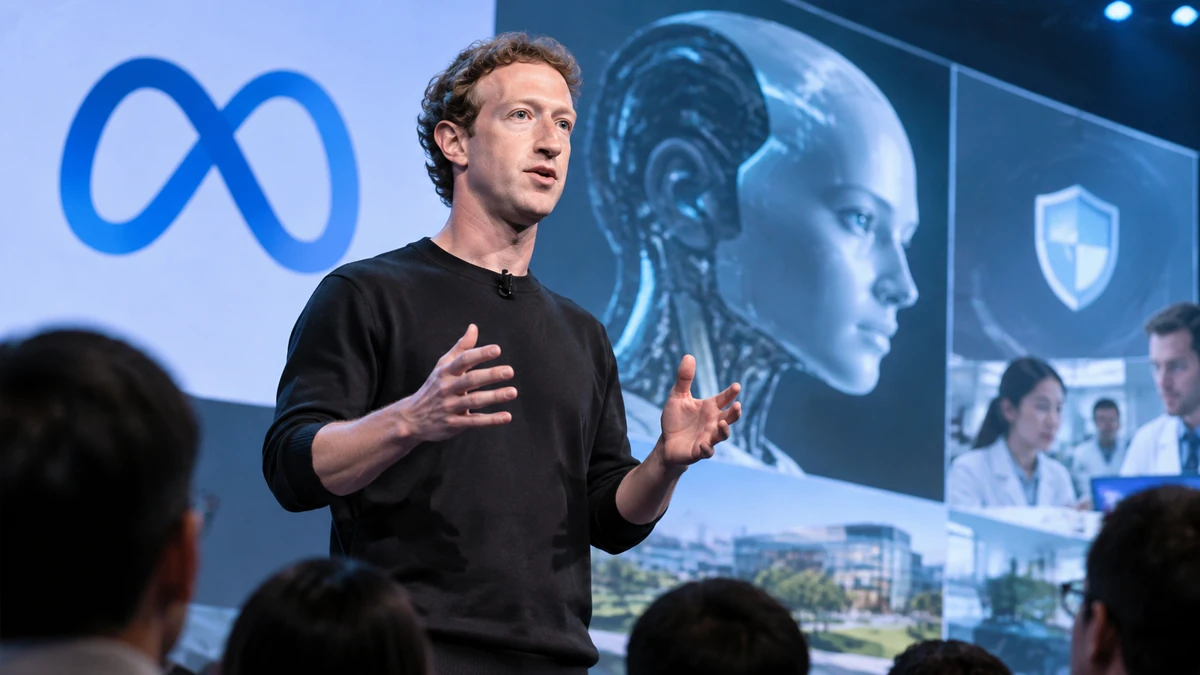
Meta Platforms CEO Mark Zuckerberg is defending a company-by-company approach to artificial intelligence safety, arguing that AI developers should be responsible for building their own safeguards rather than slowing development through broad industry restrictions.
Zuckerberg’s comments come as governments, technology leaders and researchers around the world continue debating how quickly advanced AI systems should be developed and what rules should guide them. The discussion has become one of the defining policy questions of the technology industry, affecting companies from Silicon Valley to Asia.
In remarks reported in South Korea on Sept. 16, Zuckerberg said every AI research organization has a responsibility to operate at a pace that allows models to be trained safely and that companies have the ability and incentive to create their own internal protections. His position reflects Meta’s broader strategy of continuing AI investment while emphasizing internal review processes.
For American audiences, the debate resembles earlier technology policy discussions involving internet platforms, cybersecurity and data privacy. A central question remains whether innovation moves fastest and safest when companies create their own standards, or when governments and industry groups establish stronger shared rules.
Internal Testing and Outside Evaluation at the Center of Meta’s Approach
Zuckerberg highlighted the role of independent evaluations and outside advisers as part of responsible AI development. He said Meta delayed the release of its AI model called Muse for several months while focusing on safety and security considerations.
The Meta CEO pointed to a larger ecosystem of independent evaluators as a potential way to improve accountability. Rather than relying only on government regulation or a single industry standard, he argued that more diverse testing organizations could help assess AI systems before and after release.
The idea of external evaluation has become increasingly important as AI models grow more capable. Large language models can generate text, analyze information, create software and assist with complex tasks, but researchers have also raised concerns about inaccurate outputs, security risks, misuse and unintended behavior.
In the United States, similar discussions are taking place among federal agencies, technology companies, academic institutions and lawmakers. American policymakers have explored approaches ranging from voluntary commitments by AI companies to possible future regulations focused on transparency, safety testing and accountability.
A Different View From Anthropic’s Dario Amodei on AI Development Pace
Zuckerberg’s comments contrast with a more cautious approach promoted by Dario Amodei, CEO of AI company Anthropic. Amodei has argued that leading AI companies should work together on voluntary safety standards and consider measures that reduce risks as increasingly powerful systems are developed.
The disagreement reflects a wider divide within the AI industry. Some technology leaders emphasize maintaining rapid progress and making AI tools widely available, while others focus on preventing potential harms from highly advanced systems that could become difficult to control.
Zuckerberg said Meta’s priority is not racing toward recursive self-improvement but instead using computing resources to provide AI services to people. His comments suggest that Meta sees practical applications and broad user access as a central part of responsible AI development.
This debate is not unique to the United States. South Korea, where the original discussion was reported, has become a major AI market with strong semiconductor, telecommunications and digital service industries. Korean companies and policymakers are also watching how global AI standards develop because decisions made in the U.S. and other technology centers may influence international business practices.
Why AI Safety Has Become a Major Issue for American Technology Companies
The United States remains one of the world’s largest centers for AI research and investment. Companies including Meta, Google, Microsoft and other technology firms are competing to develop advanced AI systems while facing increasing questions about safety, copyright, employment impacts and national security.
For American consumers, AI safety discussions are becoming more visible through everyday products. Generative AI tools are being integrated into search engines, workplace software, social platforms and customer services. As adoption grows, companies are under pressure to demonstrate that their systems are reliable and responsibly managed.
The debate also connects to America’s regulatory tradition. The U.S. technology sector has historically grown through private innovation, with government intervention often focused on specific risks rather than directing product development. However, AI’s rapid advancement has led to renewed arguments about whether existing approaches are sufficient.
Different stakeholders in the U.S. have expressed different views. Technology companies often emphasize innovation and competitiveness, while researchers, civil society groups and some policymakers have called for stronger safeguards. The disagreement is not only about regulation but also about how responsibility should be distributed between companies, governments and independent organizations.
What Zuckerberg’s Position Means for the U.S.-Korea Technology Relationship
The AI safety debate has implications beyond American companies because AI development is increasingly international. The United States and South Korea have close technology ties, particularly in areas such as semiconductors, cloud computing, telecommunications and digital services.
South Korea is home to major technology companies and a highly connected consumer market. Korean businesses are investing in AI applications across industries including manufacturing, finance, healthcare and entertainment. As global AI standards develop, companies in both countries will need to consider how safety practices affect international cooperation and competition.
For American companies operating in Korea and Korean companies working with U.S. partners, differences in AI governance approaches could become an important business issue. Companies may need to adapt their testing systems, documentation practices and risk management procedures depending on the markets where their AI products are offered.
The relationship between the two countries also extends into research cooperation. Universities, startups and technology firms in both nations are participating in the global AI race, making international discussions about evaluation methods and responsible deployment increasingly relevant.
The Next Phase of the Global AI Safety Debate
Zuckerberg’s comments highlight a broader transition in the AI industry. Early AI competition focused primarily on building larger and more powerful models. The current debate increasingly centers on how those systems should be tested, released and managed after deployment.
The future of AI safety is likely to involve multiple approaches rather than a single solution. Company-led safeguards, independent evaluations, government policies and international cooperation may all play roles as the technology develops.
For users in the United States and around the world, the practical question is becoming how AI can deliver useful services while maintaining trust. The choices made by major companies such as Meta will influence not only the technology market but also public expectations about responsibility in the AI era.
As AI competition continues between major technology centers including the United States, South Korea, China and Europe, the balance between speed, openness and safety will remain one of the most closely watched issues in global technology policy.
Comments
Post a Comment