North Korea Declares Nuclear Status ‘Irreversible’ at Beijing Security Forum, Criticizes U.S.-South Korea-Japan Cooperation
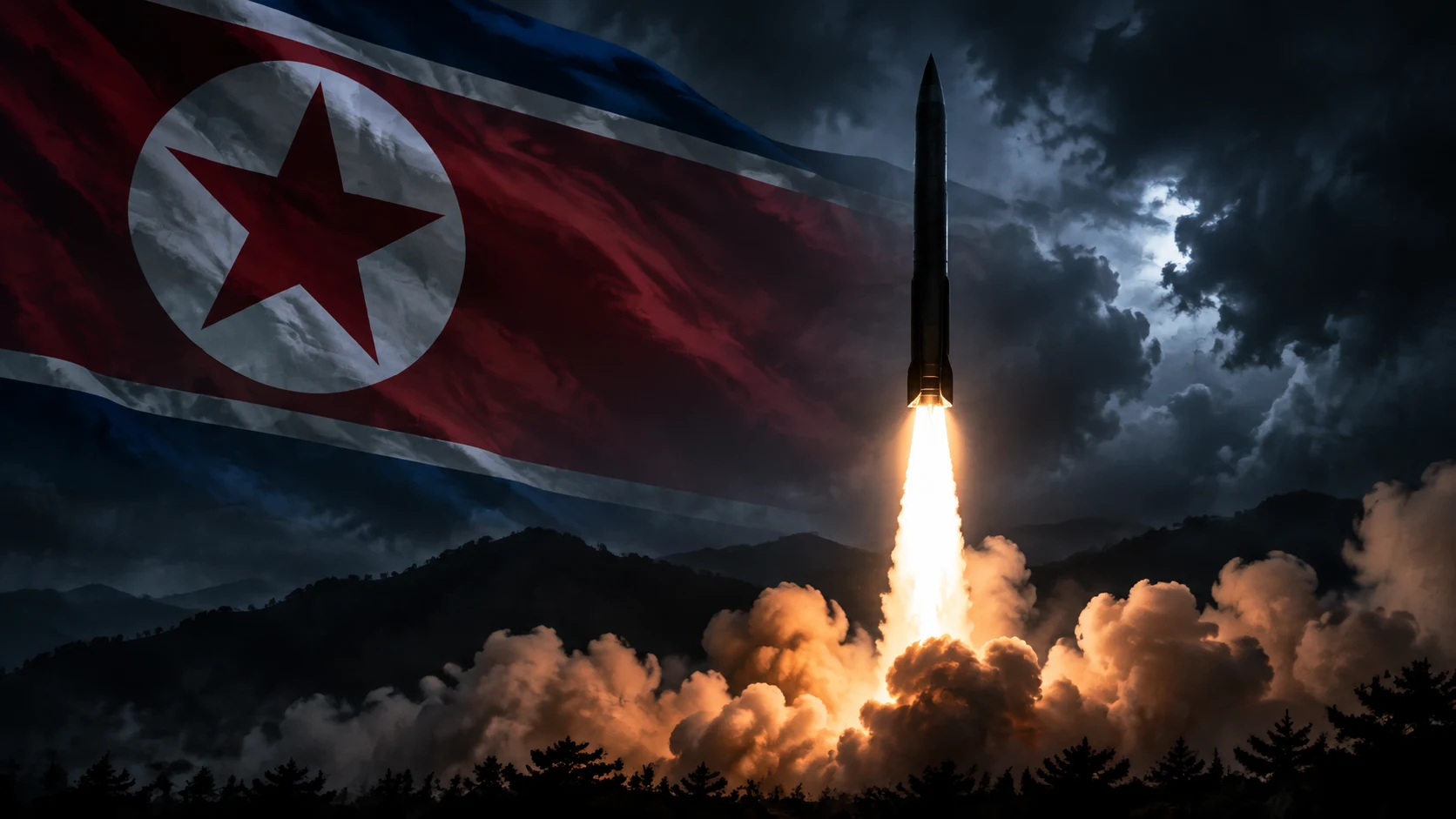
Image to help understand the article
North Korean Official Uses Beijing Security Forum to Reaffirm Nuclear Policy
North Korea used a major international security gathering in Beijing to repeat its claim that its nuclear weapons status cannot be reversed, signaling that Pyongyang intends to continue prioritizing its nuclear capabilities despite international calls for denuclearization.
Kim Kang Il, a vice minister at North Korea’s Ministry of National Defence, made the remarks during a session of the Xiangshan Forum, a Chinese-hosted multilateral security conference often compared with the Shangri-La Dialogue in Singapore. The annual event brings together defense officials, military experts and security representatives from various countries to discuss regional and global security issues.
Speaking at the Beijing International Convention Center, Kim argued that North Korea’s nuclear position had become permanently established under its domestic legal framework. He said demands for denuclearization were unrealistic and maintained that Pyongyang would continue strengthening what it describes as its nuclear deterrent.
For international audiences, including those in the United States, the statement reflects a long-running divide between North Korea’s view of its nuclear program as a security guarantee and the position of Washington and its allies, which have historically called for the complete denuclearization of the Korean Peninsula.
Understanding North Korea’s Nuclear Strategy and Political Messaging
North Korea’s nuclear program has been one of the most persistent security challenges in East Asia for decades. Unlike countries that developed nuclear weapons during the Cold War and later reduced their arsenals through arms control agreements, North Korea has continued expanding its nuclear capabilities while facing international sanctions.
The term “nuclear deterrence” is central to Pyongyang’s official messaging. In international security discussions, deterrence refers to the idea that possessing powerful weapons can prevent an adversary from attacking. North Korean officials frequently argue that nuclear weapons are necessary to protect the country from what they describe as threats from the United States and its allies.
Kim repeated that argument in Beijing, saying North Korea would continue expanding its nuclear capabilities as long as it perceived hostile military pressure. His remarks reflected a broader pattern in which North Korean officials present nuclear development as a defensive measure rather than an offensive strategy.
However, the United States, South Korea and Japan have consistently viewed North Korea’s nuclear and missile programs as destabilizing because they could threaten regional security and challenge existing nonproliferation efforts.
North Korea’s reference to its nuclear status being “irreversible” is also significant because it suggests a rejection of previous diplomatic frameworks that centered on trading sanctions relief and security guarantees for steps toward dismantling nuclear capabilities.
Pyongyang Targets U.S.-South Korea-Japan Security Cooperation
During his speech, Kim criticized growing security cooperation among Washington, Seoul and Tokyo, describing the three-way partnership as a move toward what he called a nuclear alliance.
The United States, South Korea and Japan have increased military coordination in recent years, including expanded discussions on missile defense, military exercises and information sharing. Supporters of the cooperation describe it as a response to North Korea’s advancing missile capabilities and regional security concerns.
North Korea has repeatedly criticized this cooperation, arguing that joint military activities increase tensions on the Korean Peninsula. Kim placed responsibility for regional instability on the United States, South Korea and Japan, while accusing them of pursuing military expansion.
The competing narratives highlight one of the central security dilemmas in East Asia: actions viewed by one side as defensive preparations can be interpreted by another side as provocative steps.
For American readers, the situation has similarities with other global security disputes in which military alliances and weapons development become part of a cycle of suspicion. Governments often argue that strengthening defenses prevents conflict, while opposing governments may see those same measures as threats requiring further military responses.
China’s Xiangshan Forum Provides Platform for Regional Security Debate
The Xiangshan Forum is organized by China’s Ministry of National Defense and has become one of Asia’s notable venues for defense diplomacy. The conference serves as a meeting place for officials and experts to discuss issues ranging from regional conflicts to military modernization.
North Korea’s decision to present its nuclear position at a China-hosted event carries diplomatic significance. Beijing has historically maintained relations with Pyongyang while also calling for stability on the Korean Peninsula. China has supported United Nations sanctions related to North Korea’s nuclear activities while opposing measures it considers likely to increase instability.
The forum also reflects China’s broader role in regional security discussions. Beijing has sought to promote itself as a major diplomatic actor in Asia, while the United States continues to maintain alliances with countries including South Korea and Japan.
Security forums like Xiangshan provide opportunities for governments with different interests to communicate, but they do not necessarily produce agreements on disputed issues. Instead, they often serve as platforms where countries explain and defend their own policies before an international audience.
What North Korea’s Message Means for the United States
For the United States, North Korea’s declaration that its nuclear status is permanent reinforces one of Washington’s most difficult foreign policy challenges in Asia.
The U.S. has maintained a security alliance with South Korea since the Korean War era, with American forces stationed on the Korean Peninsula as part of a broader deterrence strategy. Washington has also strengthened security coordination with Japan and South Korea as concerns over North Korean missile tests and regional military competition have increased.
North Korea’s latest remarks are unlikely to change the fundamental positions of the countries involved, but they demonstrate the continuing gap between diplomatic goals and Pyongyang’s stated policy direction.
The issue also affects American communities and businesses because tensions in Northeast Asia can influence regional stability, trade confidence and international relations. The United States is a major economic partner for both South Korea and Japan, and developments on the Korean Peninsula are closely watched by policymakers, investors and companies operating in Asia.
For Americans familiar with Cold War-era nuclear tensions, the situation may resemble earlier debates over deterrence, arms competition and diplomatic negotiations. However, the Korean Peninsula presents its own unique history, shaped by the unresolved legacy of the Korean War and decades of confrontation between North Korea and U.S.-aligned countries.
A Continuing Security Challenge in East Asia
Kim Kang Il’s speech at the Xiangshan Forum does not represent a new nuclear policy announcement as much as a reaffirmation of North Korea’s existing position. Pyongyang continues to argue that nuclear weapons are essential to its security, while the United States, South Korea and Japan continue to view North Korea’s nuclear activities as a major regional concern.
The competing positions create a difficult diplomatic environment. Any future negotiations would likely require addressing both security concerns and the broader political relationship between North Korea and the countries opposing its nuclear program.
As East Asia remains one of the world’s most strategically important regions, statements made at forums such as Xiangshan are closely monitored beyond the region. For the United States and its allies, North Korea’s continued emphasis on nuclear weapons remains a central issue in planning security policy and managing regional risks.
Comments
Post a Comment