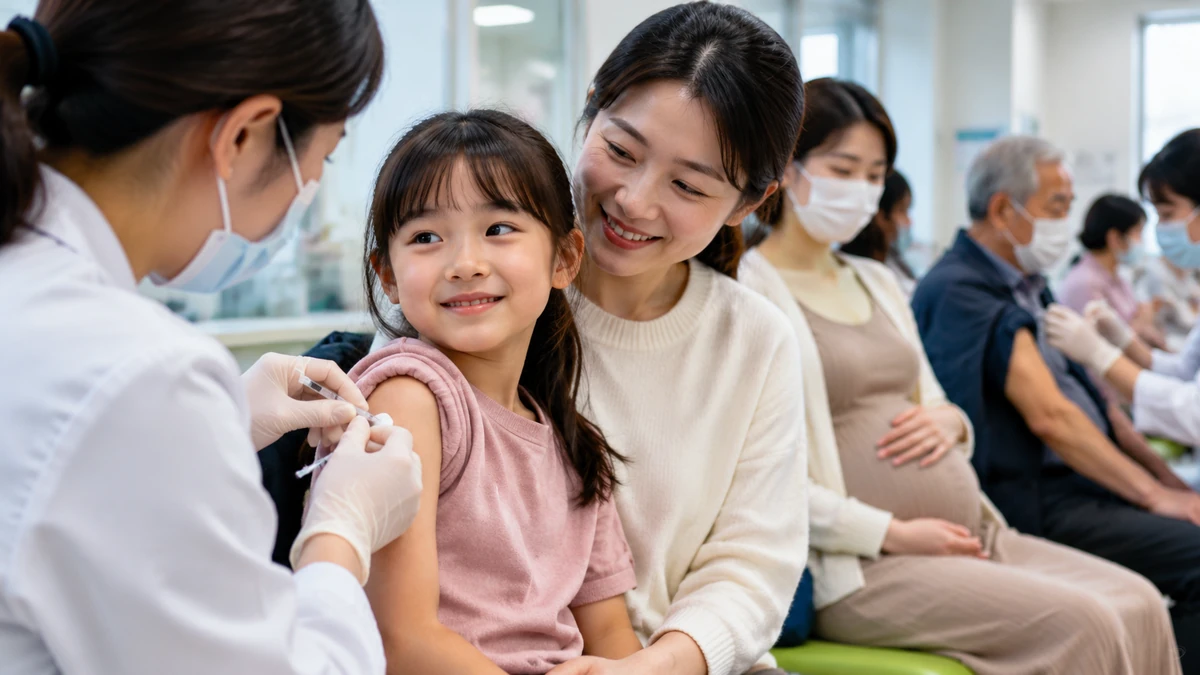
Image to help understand the article
Iksan Expands Free Flu Vaccine Access Amid Growing Influenza Concerns
South Korea is preparing for a wider influenza season as local governments increase vaccination efforts, with the city of Iksan announcing a free flu vaccination program beginning Sept. 21. The initiative in Iksan, a city in North Jeolla Province known for its agricultural economy and historical sites, is designed to improve access to preventive healthcare as flu activity rises across the country.
The program reflects a broader feature of South Korea’s public health system: local governments often supplement national medical programs with additional support for vulnerable residents. While many Americans are accustomed to receiving vaccines through private insurance, employers or pharmacies, South Korea combines national health programs with municipal-level initiatives to reach specific populations.
Iksan officials said the free vaccination rollout will begin with children ages 6 months to 14 years old and pregnant women. The city will later expand eligibility to older adults based on age groups to reduce crowding at clinics.
South Korea’s Seasonal Flu Response Prioritizes Vulnerable Groups
The vaccination schedule in Iksan follows a tiered approach. Children and pregnant women are among the first groups eligible starting Sept. 21. The expansion of free coverage for children now includes those up to age 14, adding more young residents to the government-supported vaccination program.
For older adults, appointments are divided by age category. Residents born in 1951 or earlier, representing people age 75 and older, become eligible beginning Oct. 6. Those ages 70 to 74 can receive vaccinations starting Oct. 12, while people ages 65 to 69 become eligible from Oct. 15.
This scheduling system is intended to prevent overcrowding, a concern that became especially visible during South Korea’s intensive vaccination campaigns during the COVID-19 pandemic. The country has frequently used appointment systems and phased eligibility rules to manage demand for public health services.
Eligible children, pregnant women and seniors can receive free vaccinations at designated medical facilities nationwide, regardless of their registered place of residence. The nationwide access model is part of South Korea’s effort to make preventive healthcare more convenient for residents who may move between cities or travel for work and family reasons.
Why South Korea Issued a Flu Alert This Year
The vaccination campaign comes after South Korea’s disease authorities detected influenza activity above the level used to define an outbreak. According to the Korea Disease Control and Prevention Agency, the number of suspected flu patients among outpatient visitors reached 25.3 cases per 1,000 people, exceeding the outbreak threshold of 12.9 cases per 1,000.
In South Korea, influenza warnings are used as public health signals encouraging residents to seek vaccination, practice hygiene measures and take precautions around high-risk groups. The term “flu season” may carry particular importance in countries with dense urban populations, where people frequently use public transportation and spend significant time indoors during colder months.
Health officials have emphasized that influenza is not simply a severe cold. For older adults, young children and pregnant women, complications can include more serious respiratory problems and other health risks. Iksan health officials are urging residents to complete vaccination according to their eligibility schedule while continuing basic prevention measures such as handwashing and proper cough etiquette.
Local Support for Low-Income Residents Highlights South Korea’s Healthcare Model
Beyond the nationally supported groups, Iksan is using its own city budget to provide free vaccinations for additional vulnerable residents ages 15 to 64. The locally funded program covers residents who are registered in Iksan and include groups such as recipients of basic livelihood assistance, near-poverty households, national merit recipients, people with severe disabilities and residents of social welfare facilities.
This type of municipal healthcare support is a notable aspect of South Korea’s administrative system. Local governments, known as “si” or cities, frequently create targeted welfare programs based on local demographics and community needs. Similar efforts can include support for medical costs, childcare, transportation or services for elderly residents.
For international observers, including Americans studying South Korea’s healthcare structure, the Iksan program illustrates how national and local governments can work together. South Korea’s universal health insurance system provides broad medical coverage, while municipalities often add programs aimed at specific groups facing greater barriers to care.
What South Korea’s Flu Campaign Means for the United States
The Iksan vaccination effort also offers a point of comparison for the United States, where influenza vaccination campaigns are generally organized through a mix of federal recommendations, private healthcare providers, pharmacies and insurance systems. American public health agencies similarly emphasize vaccination for high-risk groups, including older adults, young children and pregnant people.
The difference is often in delivery. In South Korea, residents may receive highly coordinated announcements from central and local governments, with detailed schedules designed around age groups and public facilities. In the United States, vaccine access can vary more depending on insurance coverage, employer programs, pharmacy availability and state-level public health efforts.
The comparison is relevant as both countries continue adapting their public health systems after the COVID-19 pandemic. The pandemic increased awareness in both South Korea and the U.S. about the importance of vaccination infrastructure, public communication and protecting vulnerable populations.
For American companies involved in healthcare technology, pharmaceuticals or digital health services, South Korea remains a closely watched market because of its rapid adoption of health-related technologies and its aging population. However, the Iksan program itself is a local vaccination initiative rather than a direct commercial partnership or market expansion announcement.
A Broader Trend: Preventive Healthcare in an Aging Society
The flu vaccination campaign in Iksan reflects a larger demographic challenge facing many developed economies. South Korea has one of the world’s fastest-aging populations, creating increased demand for preventive healthcare services that can reduce pressure on hospitals and improve quality of life for older adults.
Preventive care has become an increasingly important policy focus in countries including South Korea and the United States. Rather than treating illnesses only after they become severe, governments are investing in early interventions such as vaccinations, screenings and health education programs.
For Americans following South Korea beyond entertainment and technology headlines, local programs like Iksan’s provide another view of the country’s social policies. The Korean Wave, including K-pop, films and television dramas, has introduced many global audiences to Korean culture, but public systems such as healthcare and local government programs also reveal how the country manages everyday challenges.
As influenza activity changes through the season, health officials in both South Korea and the United States will continue watching vaccination rates, infection trends and pressure on medical facilities. Iksan’s phased approach shows how one Korean city is responding locally while participating in a wider national effort to limit the impact of seasonal flu.
Comments
Post a Comment